Power of Attorney for Health and Welfare Explained: A Complete UK Guide (2026)

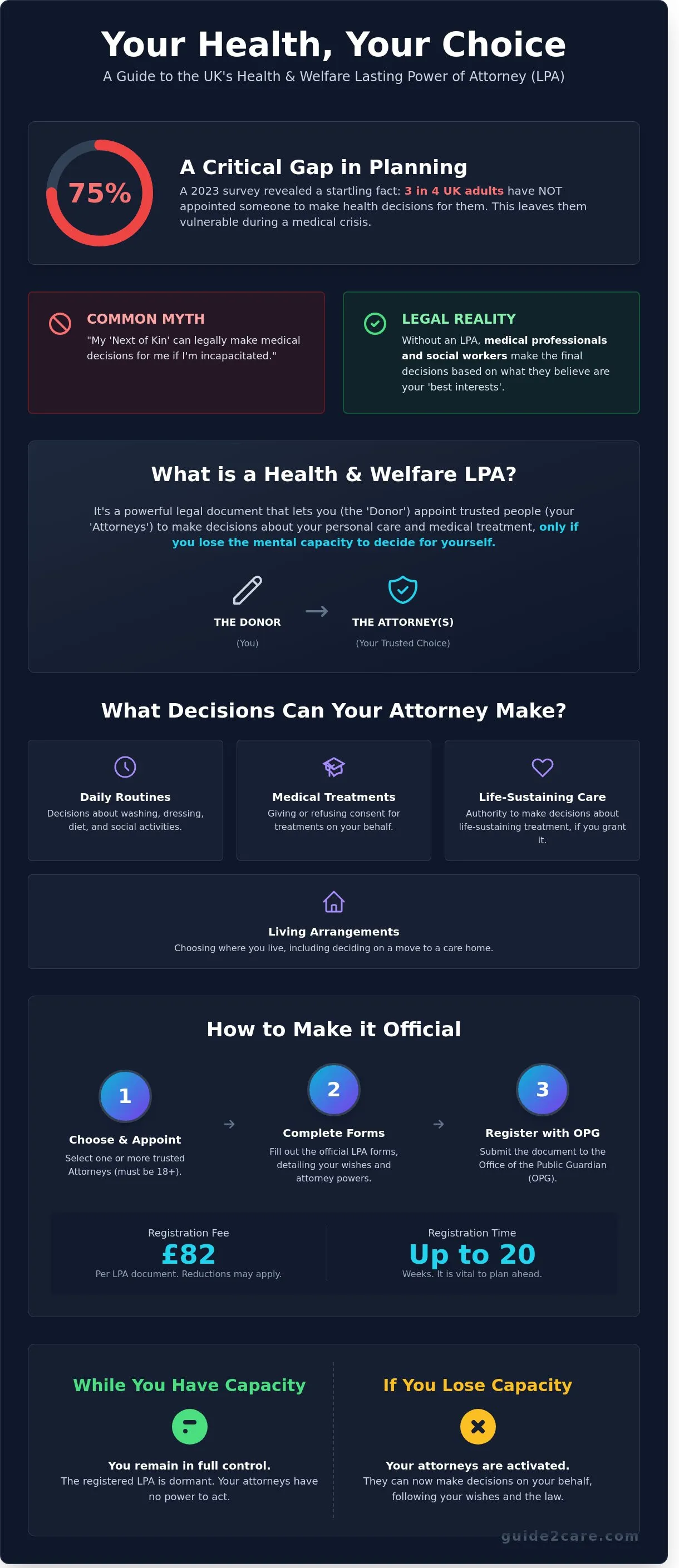
Did you know that your "next of kin" has no legal right to make medical decisions for you in the UK? A 2023 survey by Solicitors for the Elderly revealed that 75% of UK adults haven't set up a Lasting Power of Attorney. Under the Mental Capacity Act 2005, family members cannot automatically intervene during a health crisis. Without a formal legal appointment, medical professionals make the final decisions about your treatment or move into a care home. This makes having the power of attorney for health and welfare explained a vital step for your future planning in 2026.
It's common to feel confused by the difference between health and financial powers or fear losing control over your personal choices. You deserve to know that your specific medical preferences will be followed by doctors and local authorities. This guide simplifies the process of setting up a Health and Welfare Lasting Power of Attorney (LPA). We'll outline the £82 registration fee, the role of the Office of the Public Guardian, and how to provide a clear roadmap for your family to follow.
Key Takeaways
- Understand how a power of attorney for health and welfare explained allows you to appoint trusted individuals to manage your non-financial care needs.
- Identify the specific decisions an attorney can make regarding your daily routines, medical treatments, and life-sustaining care.
- Compare the proactive nature of an Advance Decision with the delegated authority of an LPA to ensure your medical preferences are protected.
- Navigate the registration process with the Office of the Public Guardian and learn how to select attorneys based on trust and capability.
- Master the "Best Interests" principle to effectively represent a donor when communicating with UK healthcare professionals and social workers.
What is a Health and Welfare Lasting Power of Attorney (LPA)?
A Health and Welfare Lasting Power of Attorney (LPA) is a legal document used in England and Wales. It allows you to appoint one or more people to make decisions about your personal care and medical treatment. This document is strictly for non-financial matters. It covers your daily routine, your diet, and where you live. It also includes decisions about life-sustaining treatment. Choose your attorneys carefully, as they'll have significant influence over your quality of life.
The person who creates the document is the "Donor." The people appointed to make decisions are "Attorneys." You must be 18 or older and have the mental capacity to understand the document when you sign it. This legal tool is distinct from a Property and Financial Affairs LPA. While a financial LPA can sometimes be used while you still have capacity, a health and welfare LPA only activates when you can't make decisions for yourself. This power of attorney for health and welfare explained guide clarifies how to protect your future preferences.
To better understand this concept, watch this helpful video:
The "Next of Kin" Myth in the UK
Many people assume a spouse or child has the legal right to make medical decisions if they fall ill. This is a common misconception. In the UK, the term "Next of Kin" carries no legal weight for healthcare choices. If you don't have an LPA in place, doctors and social workers hold the final say. They'll make decisions based on what they believe is in your "best interests." This often leads to family conflict; relatives may disagree with a doctor's plan or a care home placement. Data from the Office of the Public Guardian (OPG) shows that 1,073,537 LPAs were registered in the 2022/23 financial year. This high number suggests that more people are moving away from informal family status toward formal legal protection.
When does an LPA come into effect?
Your LPA isn't ready for use the moment you sign it. You must register it with the OPG first. This process currently takes up to 20 weeks and involves a registration fee of £82 per document. Register your document early to avoid legal delays during a health crisis. Once registered, the document remains dormant until you lose mental capacity. The Mental Capacity Act 2005 defines this as being unable to understand, retain, or weigh information long enough to make a choice. It's a decision-specific concept. For example, you might have the capacity to choose your clothes but lack the capacity to consent to a complex surgical procedure. Your attorneys only step in for the specific decisions you can no longer manage. Having your power of attorney for health and welfare explained by a professional ensures you understand these nuances before registration.
- The LPA must be registered with the OPG before use.
- It covers daily care, medical treatments, and care home moves.
- Attorneys only act when the Donor lacks mental capacity.
- "Next of Kin" status provides no legal decision-making power in care settings.
The Scope of Authority: What Decisions Can an Attorney Make?
A Health and Welfare attorney holds significant legal power. This authority only begins when the donor lacks the mental capacity to make specific decisions for themselves. Under the Mental Capacity Act 2005, every decision made must be in the donor's best interests. This power of attorney for health and welfare explained simply means the attorney steps into the donor's shoes to manage their personal life and medical needs. To grant this authority, you must organise and register a Health and Welfare LPA with the Office of the Public Guardian before capacity is lost.
The scope of authority covers daily routines and lifestyle choices. Attorneys manage practical aspects of the donor's life to ensure their comfort and dignity. These decisions include:
- Daily Routine: Determining what time the donor wakes up, eats, and goes to sleep.
- Personal Care: Decisions regarding washing, dressing, and hair care.
- Dietary Requirements: Choosing what the donor eats and drinks, accounting for nutritional needs and personal preferences.
- Social Activities: Deciding which social clubs, family visits, or hobbies the donor participates in.
This responsibility can also extend to managing specific health conditions through lifestyle changes. For instance, if the donor has health issues related to weight, an attorney might need to research and approve a structured medical program. Services like foundry offer clinically-supported weight loss plans that an attorney could consider as part of managing the donor's overall health and welfare.
Medical care is the second pillar of an attorney's authority. Attorneys have the legal right to give or refuse consent for medical treatments. This includes routine dentistry and medication reviews. It also extends to complex procedures like major surgery or experimental clinical trials. The attorney must consult with healthcare professionals, but the final decision rests with them if the donor cannot decide. They must weigh the clinical benefits against the donor's known values and previous statements.
Choosing Residential or Home Care
Attorneys decide where the donor lives. They often use their power to find care homes near you that match the donor’s specific cultural or religious values. If a donor is currently in a facility where care standards are not met, the attorney has the right to move them to a different provider. They must balance the donor’s past wishes with their current safety needs. For example, a donor might have wanted to stay at home, but a 24-hour residential setting may become necessary for their safety.
In situations involving substance dependency, this authority extends to choosing a specialised facility, and an attorney may need to research options for private drug rehab UK to ensure the donor receives appropriate, dedicated treatment.
Life-Sustaining Treatment: The Ultimate Decision
The LPA form contains a specific tick-box in Section 7 regarding life-sustaining care. The donor must choose between Option A and Option B. Option A gives the attorney the power to give or refuse consent to life-sustaining treatment. Option B leaves these decisions to the doctors, though they must still consult the attorney. Life-sustaining treatment is any medical procedure, including hydration, that keeps a person alive. If the donor does not explicitly grant this power on the form, the attorney cannot make these critical choices. For more information on care options, explore Guide2Care to understand available support levels.
LPA vs. Advance Decisions: Understanding Your Options
Choosing how you receive medical treatment in the future involves more than just appointing an attorney. While having the power of attorney for health and welfare explained usually focuses on who makes decisions, you also have the option to make specific choices yourself in advance. An Advance Decision, often called a Living Will, allows you to legally refuse specific medical treatments if you lose the capacity to communicate in the future.
An Advance Decision is proactive. It's a clear instruction to doctors about what you do not want to happen. In contrast, a Health and Welfare LPA is delegated. You're giving someone else the legal power to make those choices for you. This distinction is vital because it changes how medical teams interact with your family. An Advance Decision speaks for you when you can't, whereas an LPA gives your attorney the right to join the conversation and clarify the decisions an attorney can make regarding your daily routine and life-saving care.
Conflict can arise if you have both documents and they say different things. Under the Mental Capacity Act 2005, the most recent document usually takes precedence. If you sign an Advance Decision after your LPA, your attorney cannot override your refusal of treatment. If you sign an LPA after an Advance Decision, you must state in the LPA if you want your attorney to have the power to override your previous Advance Decision. Without this specific wording, the Advance Decision remains the final word on those specific treatment refusals.
Advance Statements offer a different, non-binding approach. These documents list your preferences, such as your dietary requirements, religious beliefs, or your preference for a bath over a shower. While doctors and attorneys aren't legally forced to follow an Advance Statement, they must take it into account when deciding what's in your best interests. It provides a practical roadmap for your care team.
Advance Decisions (Living Wills) Explained
An Advance Decision is a powerful tool for refusing life-sustaining treatments like CPR, mechanical ventilation, or artificial nutrition and hydration. To be legally valid for life-sustaining treatment, it must be in writing, signed, witnessed, and contain a specific statement that it applies even if your life is at risk. It carries more legal weight than a verbal wish from an attorney. Combining an LPA with an Advance Decision ensures you have a legal voice for specific refusals while having an attorney to handle unexpected health issues.
Property and Financial LPAs: Do You Need Both?
Financial management is entirely separate from health care decisions. A health attorney has no legal right to access your bank account or pay your utility bills. If you're moving into a care home or hiring home care providers, someone needs the authority to sign contracts and manage your pension. Appointing attorneys for both property and finance alongside health and welfare ensures your care is managed holistically. Without a financial LPA, your family might have to apply to the Court of Protection, which is a process that can take over 12 months and cost more than £400 in application fees alone.
How to Organise and Register a Health and Welfare LPA
Creating a Lasting Power of Attorney (LPA) requires a structured approach to ensure the document is legally binding and reflects your wishes. Having the power of attorney for health and welfare explained simply helps you avoid common administrative errors that can delay the process by several months. Follow these five steps to complete your registration.
- Step 1: Choose your attorneys. Select individuals who are reliable and understand your values regarding medical treatment and daily care. You can appoint one person or several people to act on your behalf.
- Step 2: Complete the LP1H form. You can fill this out using the GOV.UK online service or by requesting paper forms from the Office of the Public Guardian (OPG). This form specifies your preferences and instructions for your future care.
- Step 3: Appoint a Certificate Provider. This must be an impartial person, such as a GP or a solicitor, who confirms you have the mental capacity to make the LPA and are not being pressured into it.
- Step 4: Notify "People to be Told." While optional, you can name up to five people to be notified of your application. This provides a safeguard against fraud or coercion.
- Step 5: Pay the fee and submit. Send the completed forms to the OPG with the registration fee. As of 2024, the OPG reports an average processing time of 20 weeks, so early application is vital.
After registering your LPA, it's wise to store it securely where your attorneys can find it. To organize this and other important life documents in one central hub, you can visit SafeKeep.
With the legal formalities addressed, many people feel a renewed sense of freedom to plan for their future in more enjoyable ways. This is often the perfect time to pursue lifelong travel goals. For those dreaming of exploring Asia, specialists like Tailormade Journeys Limited offer bespoke luxury holidays to destinations across the continent.
Choosing the Right Attorney
You must decide if your attorneys will act "jointly" or "jointly and severally." If you choose "jointly," all attorneys must agree on every decision. This can cause delays in medical emergencies. Choosing "jointly and severally" allows any one attorney to make a decision independently, which is often more practical for health matters. While you can appoint a professional attorney, most people choose family or friends for health and welfare because they understand personal care preferences better than a corporate entity. Prepare your attorneys for the emotional weight of making life-sustaining treatment decisions on your behalf.
Costs and Financial Support
The standard OPG registration fee is £82 per document. If you are registering both a Health and Welfare LPA and a Property and Financial Affairs LPA, the total cost is £164. You may qualify for a 50% reduction if your annual income is less than £12,000. Individuals receiving certain "means-tested" benefits, such as Universal Credit or Income Support, may be exempt from the fee entirely. While you can complete the forms yourself to save money, a solicitor may charge between £300 and £1,000 for professional assistance. Consider legal help if your family situation is complex or if there are disputes regarding your care.
Ensuring your future care is managed by people you trust is a vital part of long-term planning. To find professional support and resources for your care journey, you can find the care you need through our directory.
Acting as an Attorney: Navigating the UK Care System
Once the Office of the Public Guardian registers the document, your responsibilities as an attorney begin. You only step in when the donor loses the mental capacity to make specific decisions themselves. Having the power of attorney for health and welfare explained helps you understand that this role is governed by the Mental Capacity Act 2005. This legislation requires you to follow five statutory principles. The most vital is the "Best Interests" principle. You don't make choices based on your own preferences. Instead, you must consider the donor's past and present wishes, their beliefs, and the values that shaped their life. Consult with family members and close friends to build a complete picture of what the donor would want.
Proving your authority to the UK healthcare system is now a digital process. You should use the "Use an LPA" service provided by the government. This service generates a 13-character access code. You give this code to GPs, hospital consultants, and social workers. They enter the code on the official portal to see a summary of your powers. It's a faster system than carrying original paper documents. It ensures that medical teams recognise your legal right to consent to or refuse treatment on the donor's behalf. If you encounter a professional who refuses to acknowledge your status, provide them with the official OPG guidance for healthcare staff.
Disagreements with healthcare professionals can happen. A doctor might recommend a specific medical intervention that you believe the donor would have refused. In these situations, your legal standing is strong. Unless the donor is detained under specific sections of the Mental Health Act 1983, your decision usually carries the same weight as if the donor were making it themselves. If a conflict remains unresolved, you can request a second opinion or involve a hospital advocate. For long-term planning, you can find the care you need by using the Guide2Care directory. This helps you locate providers who respect the legal frameworks of the Mental Capacity Act.
Communicating with Care Providers
Provide the care home manager with your 13-character access code during the admission process. They must keep a verified copy of your authority on their digital systems. Use your position to advocate for the donor's specific daily routines. If the donor prefers a shower at 8:00 pm or requires a specific diet for religious reasons, ensure these are written into the formal care plan. Your role is to ensure the care provider maintains the donor's dignity and personal identity.
When the LPA Ends
A health and welfare LPA ends automatically the moment the donor passes away. You no longer have the legal power to make decisions about their body or their care. The authority shifts to the executors named in the donor's will. You must notify the Office of the Public Guardian of the death and return any original paper documents. If you can no longer act as an attorney while the donor is alive, you must formally "disclaim" your role using form LPA005.
Secure Your Future Healthcare Decisions Today
Having the power of attorney for health and welfare explained is the first step toward maintaining control over your personal care. Registering your LPA with the Office of the Public Guardian currently requires a £82 application fee. This document ensures your chosen attorney can make vital decisions regarding medical treatments and daily living arrangements if you lose mental capacity. Without this legal framework, families often face the Court of Protection, where deputy application fees start at £408 and can lead to significant delays in care delivery. It's a practical move that protects your preferences and provides clarity for your loved ones.
Once your legal documents are settled, you'll need to identify suitable support services. Guide2Care simplifies this process by hosting a comprehensive directory of CQC-registered care homes and home care agencies. We provide independent resources for funding and legal guidance; our platform is already trusted by thousands of families across the UK to streamline their care searches. Use our tools to compare providers and access the latest sector data.
Find the care you need by exploring our directory of UK providers
You're now equipped to make informed choices that ensure your long-term wellbeing is managed exactly as you wish.
Frequently Asked Questions
Can a Health and Welfare Attorney refuse life-saving treatment?
An attorney can refuse life-sustaining treatment only if the donor specifically granted this power in Section 5 of the LPA form. If you didn't tick the "Yes" box, doctors make these decisions based on your best interests. This specific choice is a vital part of having a power of attorney for health and welfare explained to your family before capacity is lost.
Is a Health and Welfare LPA valid immediately after signing?
A Health and Welfare LPA only becomes active once it's registered with the Office of the Public Guardian and the donor lacks mental capacity. Unlike a Property and Financial Affairs LPA, it can't be used while the donor still has capacity. Registration includes a mandatory 4-week waiting period for objections. This ensures the process is transparent and legally sound before any care decisions are made.
What is the difference between an LPA and a Deputyship?
An LPA is a document you create while you have mental capacity, but a Deputyship is a court order issued after capacity is lost. A Deputyship application costs £371 plus potential legal fees and an annual £320 supervision fee. An LPA costs a flat £82 to register. Choosing an LPA early saves families approximately £600 in initial application and court costs.
Can I have more than one Health and Welfare Attorney?
You can appoint as many attorneys as you like, but the standard form provides space for 4 primary attorneys and 2 replacements. You must decide if they act "jointly" or "jointly and severally." Choosing "jointly and severally" allows one attorney to make a decision if the others are unavailable. Most people select 2 attorneys to balance accountability with practical efficiency.
How long does it take for the Office of the Public Guardian to register an LPA?
The Office of the Public Guardian currently takes up to 20 weeks to process and register an LPA application. This period includes a statutory 28-day waiting period where notified parties can lodge formal objections. You should account for this 5-month delay when planning for future care needs. This power of attorney for health and welfare explained timeline helps you avoid emergency applications to the Court of Protection.
Does a Power of Attorney for Health and Welfare cover financial decisions?
A Health and Welfare Power of Attorney doesn't cover financial decisions like paying bills or selling a house. You need a separate Property and Financial Affairs LPA to manage your assets and income. In 2023, the OPG registered over 1 million total LPAs, many of which were dual applications covering both health and financial matters to ensure complete protection.
What happens if my family disagrees with my chosen attorney?
Your attorney has the legal right to make decisions even if your family disagrees. If relatives believe the attorney isn't acting in your best interests, they can contact the Office of the Public Guardian. The OPG's 2022/23 report showed they handled 22,000 safeguarding referrals. This system protects your wishes from being overruled by family disputes without legal cause.
Can an attorney put someone in a care home against their will?
An attorney can move you into a care home against your wishes if you lack mental capacity and the move is in your best interests. The care provider must follow the Deprivation of Liberty Safeguards (DoLS) process to ensure the move is legal. In 2022, there were 300,765 DoLS applications in England, highlighting how common this legal framework is in care settings.