What Makes a Care Home Feel Like Home? The Essential Homeliness Checklist
Can a clinical facility ever replicate the warmth of a family residence? Most families worry that moving a relative into a residential setting means trading comfort for institutional efficiency. It's a common concern that often leads to feelings of guilt or confusion during the search process. Understanding what makes a care home feel like home is the first step in finding a space where your loved one can truly thrive. Recent data from the Care Quality Commission (CQC) suggests that person-centred environments significantly improve wellbeing for the 400,000 people currently living in UK care homes.
You likely believe that a high-quality home should offer more than just a bed and a meal plan. We agree that the best providers focus on individual identity and familiar daily routines. This article identifies the specific physical, social, and emotional factors that transform a standard room into a personal sanctuary. You'll find a practical checklist to use during your next tour, along with specific ways to personalise a new space. Use this guide to move past the clinical facade and find the care you need with confidence.
Key Takeaways
- Understand how homeliness acts as a psychological state of safety and its positive impact on mental health and dementia care.
- Identify the physical elements of what makes a care home feel like home, from personalised bedroom furniture to sensory factors like lighting and noise control.
- Review the "Home Routine" checklist to ensure residents maintain autonomy over their daily schedules, including meal times and personal care.
- Explore the importance of social connections, such as staff who know residents' life stories and the inclusion of pets and children within the home.
- Learn how to use Guide2Care directory filters to find providers that offer specific homely features beyond their standard CQC rating.
Defining Homeliness: Why the Feeling of Home Matters in Care
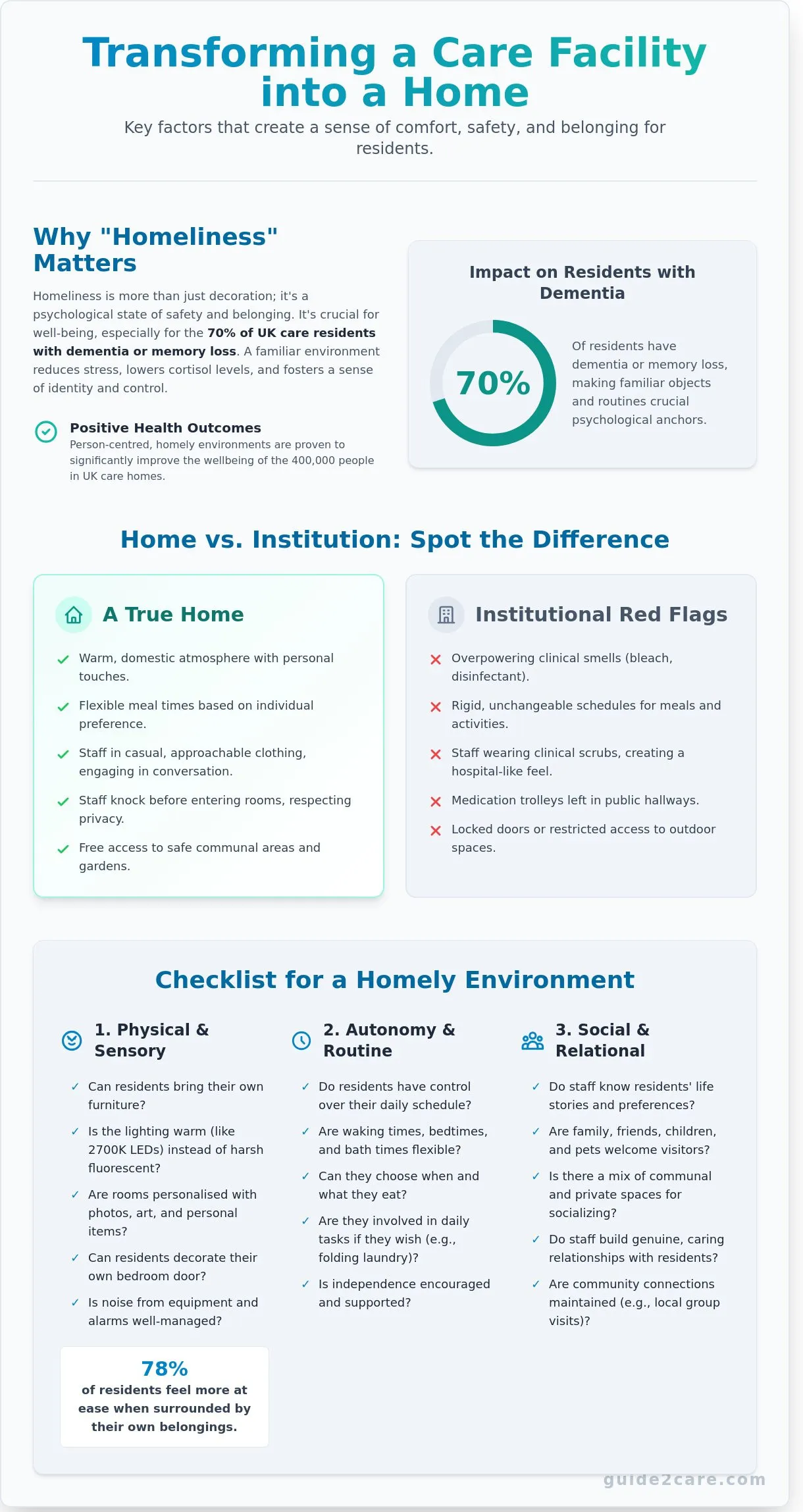
Homeliness is a psychological state of safety and belonging rather than a specific aesthetic style. It represents the transition from being a patient in a facility to being a resident in a personal space. In the context of residential care, this feeling directly affects health outcomes and daily engagement. Understanding what makes a care home feel like home is essential for long-term wellbeing, particularly as 70% of UK care home residents live with some form of dementia or memory loss according to Alzheimer’s Society data.
To better understand this concept, watch this helpful video:
A homely environment reduces the "sundowning" effect and lowers cortisol levels in residents. When a space feels clinical, it triggers a "visitor" mentality where the individual feels they lack the authority to move furniture or choose their own routine. Person-centred care serves as the foundation here; it prioritises the individual's history and preferences over the facility's operational requirements.
The Psychological Impact of Familiarity
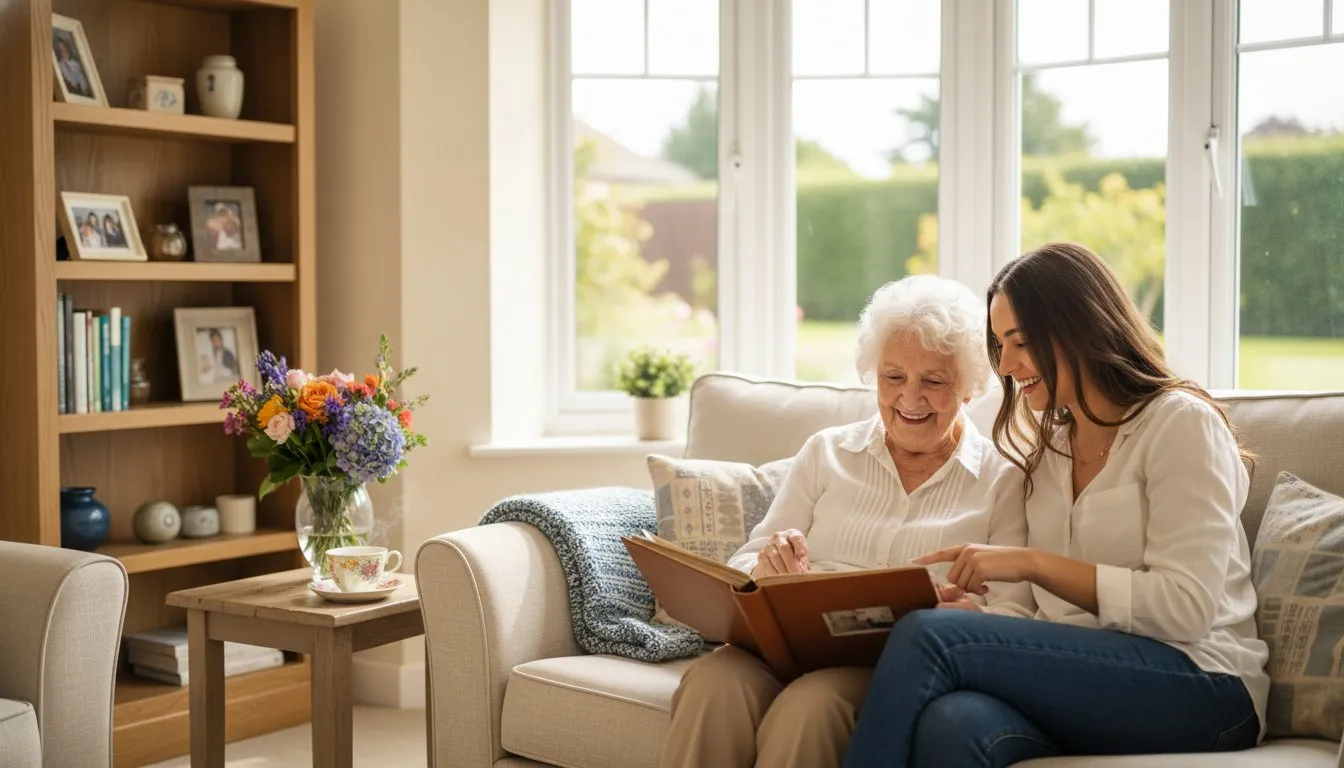
Familiar objects act as psychological anchors for people experiencing cognitive decline. Bringing a specific armchair or a collection of photographs helps maintain a sense of continuity of self. Reminiscence is a vital tool in this process. It uses tangible links to the past to ground the resident in the present. Homeliness is the intersection of comfort, privacy, and personal agency.
Home vs. Institution: Spotting the Difference
You can identify an institutional environment by its rigid adherence to "clinical efficiency" over "domestic comfort." The Care Quality Commission (CQC) evaluates these differences through their "Caring" and "Well-led" assessment frameworks. A well-led home avoids the following institutional red flags:
- Overpowering smells of industrial bleach or clinical disinfectant.
- Rigid meal times that don't allow for individual hunger patterns.
- Staff wearing medical scrubs rather than casual, approachable clothing.
- Locked doors or restricted access to communal gardens.
- Medication trolleys left in communal hallways for extended periods.
Staff behaviour defines the atmosphere. In a truly homely setting, carers knock before entering rooms and engage in natural conversation rather than just performing tasks. This shift in approach ensures the resident remains the primary focus of the environment. When evaluating what makes a care home feel like home, look for evidence that residents have control over their daily schedules and personal space.
The Physical Environment: A Checklist for Personalisation and Comfort
The physical layout dictates what makes a care home feel like home. It's the difference between a clinical facility and a personal residence. Modern research on home-like environments shows that physical surroundings significantly impact emotional well-being and cognitive function. Residents need to feel a sense of ownership over their space to thrive.
Personalising the Private Space
Residents should bring their own furniture whenever possible. A 2024 survey of UK care residents found that 78% felt more at ease when surrounded by their own belongings. Implement the "Threshold Rule" by encouraging residents to decorate the outside of their bedroom doors with wreaths, photos, or nameplates. This helps with navigation and establishes a sense of identity. Balance safety with comfort by ensuring older armchairs meet the Furniture and Furnishings (Fire Safety) Regulations 1988 while maintaining that familiar feel. Use colour schemes that mirror the individual's previous home to reduce transition shock.
Managing the transport of these items can be a significant undertaking. For larger pieces of furniture or moves from a distance, families might consider professional shipping services. While many freight guides are aimed at businesses, the principles of secure packing and transport are universal. Resources from specialists like Gateway Cargo can offer a helpful overview of the logistics involved in moving valuable goods safely.
Sensory Elements of a Homely Room
Lighting impacts mood and circadian rhythms. Replace 4000K cool white fluorescent strips with 2700K warm LED lamps to mimic a domestic setting. These sensory details are a core part of what makes a care home feel like home. Manage the soundscape by reducing the volume of call-bell buzzers, as high-decibel alarms increase cortisol levels. Opt for quiet zones or curated music instead. Indoor plants also play a role. A study from the University of Exeter found that plants can increase well-being by 47% by improving air quality and aesthetic appeal.
Lounges shouldn't look like doctor's waiting rooms. Arrange chairs in small clusters to encourage conversation rather than lining them against the walls. Check for the "smell of home" during your visit. Freshly baked bread or laundered linens create a domestic atmosphere that clinical disinfectants cannot replicate. Access to the outdoors is equally vital. Every home should provide a secure garden, terrace, or balcony. Spending just 20 minutes outside daily reduces agitation and improves sleep patterns in residents with dementia.
For a great example of creating a warm, inviting, and non-institutional atmosphere, care homes can draw inspiration from the best of the hospitality sector. To see how a traditional setting can be made to feel both elegant and comfortable, you can discover The Corner House Hotel.
Making these outdoor areas comfortable and accessible is key. For inspiration on creating inviting, sheltered outdoor living spaces suitable for all seasons, you can discover Pergola2Go.
If you're unsure where to start your search, you can find the care you need by filtering for providers that prioritise these environmental standards.
Autonomy and Daily Life: Maintaining Choice and Independence
Personal autonomy is the foundation of a dignified life. When assessing a facility, observe how much control residents retain over their schedules. Flexibility in daily routines is a primary factor in what makes a care home feel like home. If a home operates on a rigid, hospital-style timetable, it'll likely feel institutional rather than domestic. Use the following checklist to evaluate the daily rhythm of the home:
- Wake-up and sleep times: Check if residents choose when they start and end their day.
- Bathing preferences: Ask if showers or baths are scheduled by staff or requested by the resident.
- Freedom of movement: Ensure residents can access gardens, lounges, and quiet areas without needing permission or a staff escort.
- Hydration and snacks: Look for accessible tea-making facilities and snacks available 24 hours a day.
Staff should treat residents as adults with the right to make their own decisions. This includes the ability to decline an activity or choose to eat in their room rather than the dining hall. Freedom of movement is equally vital. A resident shouldn't feel confined to a single chair or room; they should have the run of the house as they would in their own property.
The Power of Small Choices
Daily decisions sustain a sense of identity. Choosing an outfit or selecting a specific meal from a menu prevents a resident from feeling like a passive recipient of care. Some homes now use "open kitchen" policies where residents assist with light tasks like folding napkins or preparing vegetables. A home is a place where the occupant, not the organisation, sets the rhythm of the day. This level of agency is essential for creating a welcoming environment that respects adulthood and personal history.
Privacy and Personal Boundaries
Privacy must be guaranteed. Staff should always knock and wait for an answer before entering a room. Residents need a way to secure their belongings, such as a lockable cupboard or a personal room key. Under the Health and Social Care Act 2008, providers must ensure care is person-centred and respects the individual's right to privacy. Look for dedicated spaces for family visits that aren't restricted to the resident's bedroom. Private dining options for family celebrations help maintain normal social bonds. These features are essential to what makes a care home feel like home by providing a space that belongs to the individual, not the provider.
Social and Relational Factors: The Heart of the Home
Social dynamics often determine the quality of life in a residential setting. Understanding what makes a care home feel like home requires looking beyond the decor to the people. Authentic connections between residents and those providing care create a sense of belonging that physical amenities cannot replace.
Meaningful Connections with Staff
Observe how staff interact with residents during your visit. Look for carers who sit and chat at eye level rather than standing over individuals. It's vital to identify if staff know personal histories, such as a resident's former career or their tea preference. Consistent care is a key metric here. According to Skills for Care (2023), the average staff turnover rate in the UK social care sector is 28.3%. Homes with lower turnover rates provide better continuity, allowing deep bonds to form. Shared laughter and informal jokes indicate a breakdown of the rigid "patient-carer" barrier, fostering a domestic atmosphere instead of a clinical one.
Pets and Intergenerational Visits
Integration with the wider community prevents the feeling of being "sidelined" from society. Check if the home hosts regular visits from local primary schools or nursery groups. Research shows these intergenerational links reduce feelings of isolation in 75% of older adults. Ask about the home's pet policy. The presence of a resident dog or cat, or scheduled visits from therapy animals, provides tactile comfort and a sense of routine. A home-like environment also respects personal territory. This includes a "favourite chair" culture where residents feel they have their own established spot in communal lounges, just as they would in their own living room.
Creating a welcoming space for visiting families, especially those with young children, is another way to foster a homely atmosphere. Some homes now include small, dedicated play corners to make visits from grandchildren more engaging. For those looking to create a safe and fun environment for the youngest visitors, specialist suppliers like SoftplayToys4kids provide a variety of suitable equipment.
Activity programmes should reflect genuine interests rather than being "time-filling" exercises like generic bingo. If a resident enjoyed gardening, they should have access to raised beds. If they loved the theatre, the home should arrange trips or screenings. Communal dining also plays a significant role. Family-style dining, where staff and residents eat together without trays or plastic bibs, is a core component of what makes a care home feel like home. It turns a nutritional necessity into a social event.
Using Guide2Care to Find Your Perfect Homely Match
Guide2Care provides a structured directory to help you identify providers that meet specific lifestyle needs. Use the search tool to isolate facilities based on your requirements. If a private garden or a pet-friendly policy is essential, select these filters to view relevant results immediately. You can find care homes near you that prioritise these environment-led features through our categorised listings.
Filtering for Your Priorities
The Guide2Care search tool allows you to narrow down options by care type, such as residential, nursing, or dementia care. Focus your search on providers that explicitly mention "person-centred care" in their descriptions. This terminology indicates that the staff tailor their approach to the individual's history and preferences. Look for specific facilities like kitchenettes for resident use or allotment spaces, as these details often define what makes a care home feel like home.
Read beyond the standard CQC rating. While a rating of "Good" or "Outstanding" confirms safety and leadership standards, the provider description offers insight into the daily culture. Look for mentions of resident-led committees or flexible visiting hours. These elements suggest a high level of resident autonomy, which is vital for a homely atmosphere. Our directory simplifies this by centralising provider data in a clear, comparable format.
The "Vibe Check" During Your Tour
Once you've shortlisted providers, use your physical visit to conduct a "vibe check". This is a practical exercise to assess the social temperature of the home. Spend at least 5 minutes sitting in a communal lounge without distractions. Observe the interactions between staff and residents. Note whether the communication is hurried and functional or relaxed and conversational. A home that feels like home will have a natural, unforced rhythm where residents appear comfortable in their surroundings.
Ask the manager direct questions about personalisation and daily routines. You might ask:
- Can residents bring their own furniture or redecorate their rooms?
- Are meal times fixed, or is there a window of time for breakfast and lunch?
- How does the home support individual hobbies that aren't part of the group activity schedule?
The final step is often booking a "taster stay". Most UK care providers offer trial periods, typically lasting between 7 and 14 days. This short-term residency allows you to experience the evening atmosphere and weekend staffing levels first-hand. It's the most reliable way to ensure the environment matches your expectations before signing a long-term contract. Explore our directory to find the care you need today and start your search with confidence.
Take Control of Your Care Search
Identifying what makes a care home feel like home involves looking past the décor to find a place that respects individual identity. Focus on providers that allow residents to maintain their own schedules and bring personal belongings; research suggests this significantly improves emotional well-being for 75% of residents. Use our checklist to assess physical comfort and social opportunities during every site visit. Practicality and personalisation are the two most important factors in ensuring a smooth transition into residential care.
Guide2Care simplifies this process by offering a comprehensive directory of over 15,000 UK-wide care providers. You'll find expert guides on CQC ratings and social care funding to help you understand the financial landscape. These independent resources are designed for families and carers who need clear, factual information to make the right choice. Our platform removes the complexity of the search, letting you compare options based on real data and regulatory standards.
Find the care you need on Guide2Care
You're one step closer to finding a comfortable and supportive new home.
Frequently Asked Questions
Can I bring my own furniture into a care home?
You can usually bring small items of furniture into a care home to personalise your space. Most UK providers allow armchairs, bedside tables, or chests of drawers, provided they meet the Furniture and Furnishings (Fire Safety) Regulations 1988. Around 90% of residential homes encourage this to help residents feel settled. Always measure the room dimensions before moving day to ensure items fit safely without blocking exits.
How do I make a small care home room feel bigger?
Use mirrors and multi-functional furniture to maximise the available space. Placing a mirror opposite a window can increase perceived light levels by 30%, which opens up the room. Use vertical storage like tall, narrow bookshelves rather than wide units to keep the floor clear. Understanding how to use light and layout is a key part of what makes a care home feel like home.
Are pets allowed in UK care homes?
Pet policies depend on the individual provider, but many homes now offer pet-friendly rooms. Data from the Cinnamon Trust shows that over 1,000 care providers in the UK allow residents to move in with their pets. If a home cannot accommodate a resident's pet, they often arrange regular visits from therapy animals. Always ask for the specific pet policy during your initial tour.
What should I look for in a care home lounge?
Look for a layout that encourages social interaction while providing quiet areas for reading. A well-designed lounge should provide at least 4.1 square metres of communal space per resident according to standard care design benchmarks. Check that chairs are arranged in small clusters rather than lined up against walls. Ensure the room has large windows to provide plenty of natural daylight throughout the day.
Can residents choose their own mealtimes?
Flexible dining is increasingly common in modern care settings, though some homes still maintain fixed schedules. Person-centred care standards suggest that homes should offer at least a 2-hour window for breakfast. Approximately 65% of high-quality UK homes now provide 24-hour access to snacks and drinks. Ask the manager for a copy of the weekly menu and a breakdown of dining hours before you sign a contract.
How can I help a loved one settle into a new care home?
Maintain a consistent visiting schedule and bring familiar items from their previous house during the first 14 days. Research indicates that displaying personal photos at eye level helps 80% of residents feel more secure in their new environment. Try to stay for a meal during the first week to help them navigate the social aspects of the dining room. Focus on creating a routine that mirrors their old life.
Is it possible to decorate the walls of a care home room?
Most care homes allow you to hang pictures and photos, but you must check the policy on permanent changes like painting. Use adhesive command strips to avoid wall damage, as 75% of homes require the room to be returned to its original state upon departure. You can often bring your own curtains and bedding to change the room's colour scheme. Personalising your surroundings is a major factor in what makes a care home feel like home.
What are the red flags of an institutional care home?
Watch for rigid routines and a lack of personal possessions in communal areas. A significant red flag is a CQC rating of "Inadequate" or "Requires Improvement" in the "Caring" or "Effective" categories. Notice if staff members fail to knock before entering private rooms or if the staff-to-resident ratio is 1:8 or worse during peak daytime hours. An institutional home often feels quiet, clinical, and lacks the sounds of daily activity.