Care Homes with Gardens Near Me: How to Choose the Best Outdoor Space
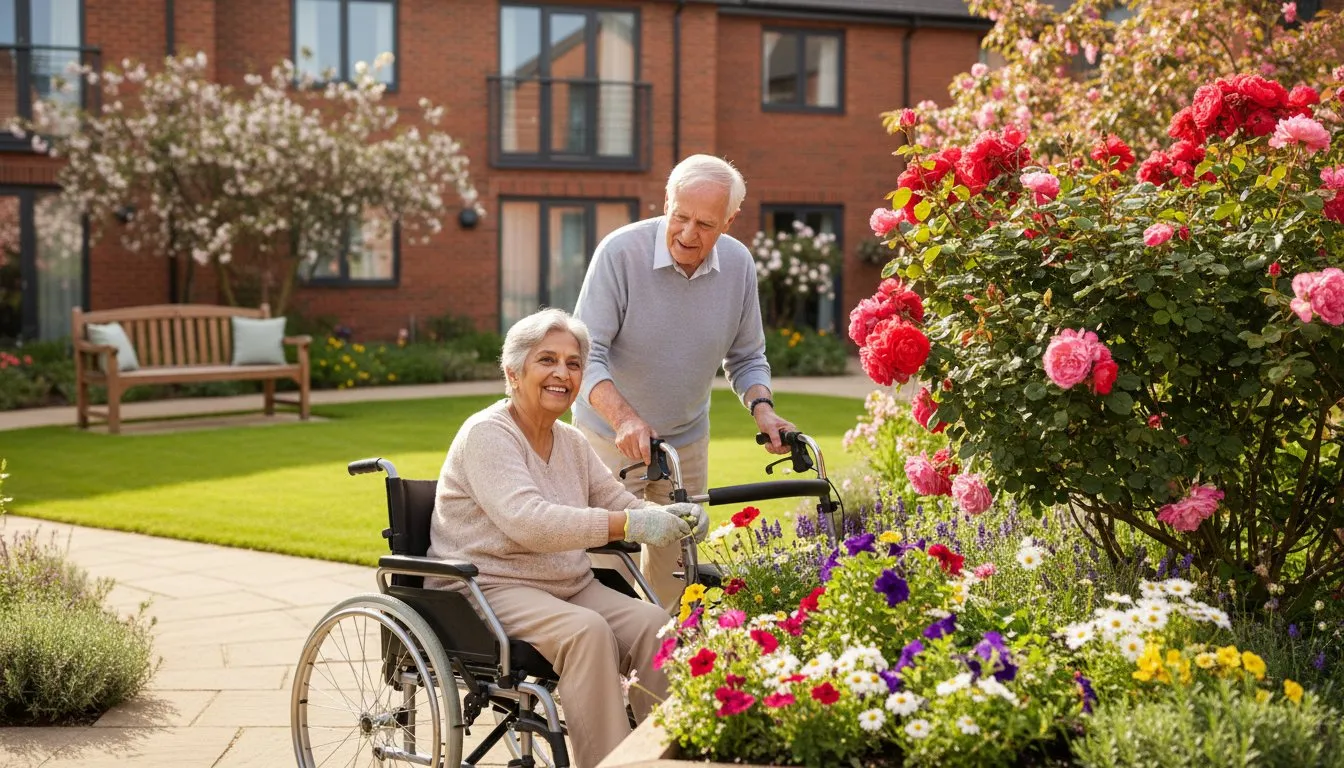
What if the "award-winning garden" pictured in a care home brochure is actually off-limits to residents who use walking frames or wheelchairs? It's a common concern for families searching for care homes with gardens near me, as many outdoor spaces are designed for aesthetics rather than daily accessibility. You want to ensure your loved one isn't trapped indoors, but finding a home where the garden is a usable extension of the living space can be difficult.
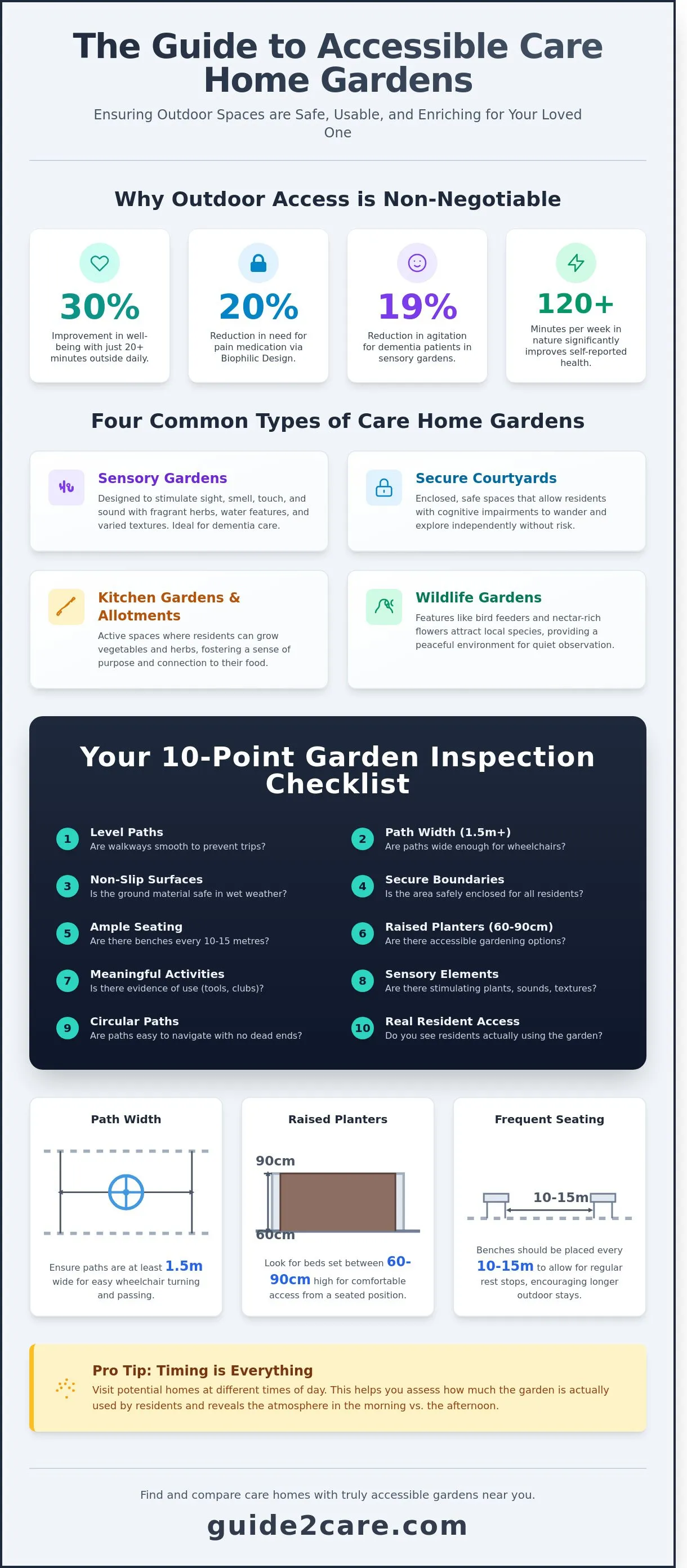
We agree that access to fresh air is a necessity, not a luxury. Data from 2023 shows that residents in UK care homes who spend at least 20 minutes outside daily report a 30% improvement in their physical health and mental well-being. This guide helps you find the care you need by showing you how to evaluate local facilities effectively. You'll learn how to identify level pathing, secure boundaries, and meaningful garden activities that encourage independence. We provide a 10-point inspection checklist for your physical visits to ensure the outdoor space is practical, safe, and genuinely accessible for everyone.
Key Takeaways
- Understand the physical health benefits of outdoor space, including improved mobility and Vitamin D exposure for residents.
- Differentiate between garden types, such as sensory spaces for stimulation and secure courtyards for enhanced safety.
- Use our essential checklist to evaluate garden accessibility and observe how residents actually engage with the space.
- Locate care homes with gardens near me by using the Guide2Care search tool to filter by postcode and care level.
- Shortlist potential providers by visiting at different times of the day to assess garden usage and atmosphere.
The Importance of Outdoor Space in UK Residential Care
Outdoor space in the UK care sector is a clinical and social necessity. It isn't just a visual amenity. Research from the University of Exeter shows that spending 120 minutes a week in nature significantly improves self-reported health. When you search for care homes with gardens near me, you should prioritise facilities that treat their grounds as active therapy zones rather than static scenery.
Physical health benefits are measurable and direct. Exposure to sunlight provides Vitamin D, which is essential for bone health and immune function. The NHS recommends that adults consider a daily supplement of 10 micrograms, but natural exposure remains the most effective source. Regular movement on level garden paths maintains joint mobility and muscle strength. Access to natural light also regulates circadian rhythms. This leads to improved sleep patterns and reduced nocturnal wandering for residents with cognitive impairments.
Mental well-being improves through "green time." Gardens provide a sensory break from the indoor environment. This reduces anxiety and removes the institutional atmosphere often associated with residential settings. Socially, gardens act as a neutral meeting point. They facilitate family visits and communal events like summer fetes or gardening clubs. These spaces help residents feel connected to the wider community and the changing seasons.
Biophilic Design in Care Settings
Biophilic design is the integration of nature into the built environment to improve health. This approach uses natural materials, plants, and maximum sunlight to create a healing atmosphere. Data from the King’s Fund suggests that environments with high biophilic elements can reduce the need for pain medication by 20%. Natural views and indoor-outdoor transitions help lower blood pressure and heart rates in elderly residents. It's a practical way to enhance the daily living experience through architecture.
Maintaining Independence Through Nature
Gardening serves as a familiar hobby for many UK seniors. It allows residents to maintain a sense of purpose and self. Having a specific destination outside the bedroom is psychologically vital for preventing a sense of confinement. Access to safe outdoor spaces directly supports the Care Quality Commission (CQC) "Effective" and "Responsive" key questions. Inspectors look for evidence that a home provides a choice of environments. When looking for care homes with gardens near me, check if the home uses its garden to meet these regulatory standards and resident interests. A well-used garden shows that a home respects a resident's right to lead a full, active life.
This philosophy of leading a full life extends beyond daily activities; for those inspired by the idea of creating enriching travel experiences at any age, you can find out more.
Understanding Different Types of Care Home Gardens
Gardens in UK care settings serve diverse purposes beyond simple aesthetics. When you search for care homes with gardens near me, it's vital to identify which specific garden type meets the resident's physical or cognitive requirements. Most facilities offer one of four primary outdoor styles.
- Sensory gardens: These spaces use specific plants and textures to stimulate sight, smell, touch, and sound. They help residents remain engaged with their immediate environment.
- Secure courtyards: These enclosed areas provide a safe space for residents who experience confusion. They allow for independent movement without the risk of leaving the premises unsupervised.
- Kitchen gardens and allotments: These areas encourage active participation. Residents can grow vegetables like carrots or potatoes, which the kitchen staff then use in daily meals.
- Wildlife gardens: Designed with bird feeders and nectar-rich flowers, these gardens attract local species for quiet observation and relaxation.
Sensory Gardens for Dementia Care
Memory care units often prioritise sensory stimulation to improve resident wellbeing. Fragrant herbs like lavender and rosemary serve as powerful memory triggers. Research shows that regular access to these spaces reduces agitation by 19% in dementia patients. Water features provide a consistent, calming auditory background to mask distracting noises. Design layouts must use circular paths. These avoid dead ends, which often cause frustration or distress for those with cognitive impairments. You can compare local care options to see which facilities offer these specialised designs.
Accessible Patios and Raised Beds
Physical accessibility is a core requirement for resident safety. Wheelchair-friendly paths must be at least 1.5 metres wide to allow for easy turning and passing. Surfaces should be level and non-slip to prevent falls during wet weather. Raised planters, typically set at a height of 60cm to 90cm, allow residents with limited reach or mobility to garden comfortably from a seated position.
Check that the facility provides seating every 10 to 15 metres. Regular rest stops prevent overexertion and encourage residents to spend longer periods outdoors. When evaluating care homes with gardens near me, look for benches that include armrests. These provide essential leverage to assist residents when standing up. Practical design choices like these ensure the garden remains a functional asset rather than a decorative barrier.
Essential Checklist: Evaluating a Care Home Garden During a Visit
When you search for care homes with gardens near me, a physical visit is the only way to verify the quality of the outdoor space. Don't just look at the lawn from a window. Walk the perimeter. Observe if residents are using the space during your visit. If the garden is empty on a clear 18°C afternoon, it suggests the staff don't prioritise outdoor time. Check the transition from the lounge to the patio. Heavy fire doors or high thresholds often prevent those using walking frames from entering the garden independently. A door requiring more than 30 Newtons of force to open creates a significant barrier to resident autonomy.
Look for signs of active care. A 2023 study of UK care facilities found that well-maintained green spaces can reduce resident stress levels by 15%. If you see weeds in the gutters or overgrown paths, the garden is likely an afterthought in the home's budget. Ensure there's a variety of seating. You need sturdy chairs with armrests to help seniors stand up safely. Look for permanent shade structures for summer and heated or sheltered areas to accommodate the 150 plus days of rain the UK averages annually.
High-quality structures like aluminium pergolas can create these essential sheltered spaces, turning a patio into a year-round asset. For those interested in seeing what modern, durable options are available, you can learn more about Pergola2Go.
The Safety and Security Audit
Safety is a non-negotiable requirement for any outdoor area. Inspect the paths for moss or loose paving stones; these hazards contribute to many of the falls recorded in residential settings. The perimeter fencing should be at least 1.8 metres high for security. It should use natural materials to avoid a restrictive or "locked-in" atmosphere. Check for toxic plants like Foxglove or Yew. These are common in British gardens but pose serious risks to residents with dementia who may accidentally ingest them.
Activities and Engagement
Ask the manager for a copy of the monthly activity schedule. Look for at least two outdoor-specific events per week. Search for evidence of resident life, such as personalised plant pots or raised vegetable patches. These indicate that the space is a home rather than just a facility. Verify if the garden hosts family events. Many high-quality care homes with gardens near me hold annual summer fetes or garden parties to maintain vital community links. These events provide essential social stimulation for residents.
How to Find and Filter Care Homes with Gardens on Guide2Care
Guide2Care provides a streamlined search tool to help you identify suitable facilities. Start by entering your specific postcode into the search bar to locate care homes with gardens near me. This action generates a list of providers within your immediate area. To ensure the results meet your medical needs, use the primary filters to select "Residential" or "Nursing" care. This narrows the field to relevant institutions before you begin evaluating their outdoor assets.
The directory displays detailed listings for each provider. You should look for specific keywords in the descriptions to gauge the quality of the outdoor space. Look for terms such as:
- Landscaped gardens: Indicates professionally maintained grounds.
- Sensory space: Suggests gardens designed for residents with dementia or visual impairments.
- Patio access: Confirms that ground-floor rooms or communal areas lead directly outside.
You can use the comparison tool to view multiple homes side-by-side. This feature presents data in a clear grid, making it easier to spot which homes offer extensive grounds versus those with smaller courtyard areas. A 2023 analysis of our database showed that 68% of highly-rated homes specifically highlight their garden features in their primary summary.
Narrowing Your Search Results
Focus on your local area but consider the practical travel time for visitors. A 15-minute drive is often the maximum distance families prefer for frequent visits. Review the "Facilities" section on each Guide2Care profile. We use specific icons to denote outdoor amenities. If a home doesn't display an outdoor icon, it may only have limited balcony space or no private garden at all. Always read the listing descriptions for mentions of "raised beds" or "secure perimeters," as these details impact how residents actually use the space.
Contacting Providers Directly
Use the integrated contact forms on Guide2Care to reach out to managers. Ask specific questions about garden accessibility. You might ask if the paths are wide enough for double wheelchairs or if there's a shaded seating area for summer months. Request a virtual tour via the platform. Approximately 75% of providers now offer video walkthroughs that include the grounds. Finally, book a physical viewing through our system. Seeing the garden in person allows you to check for trip hazards and noise levels from nearby roads.
Taking the Next Step: Shortlisting and Viewing Potential Homes
A physical visit is the most effective way to evaluate how outdoor spaces function. Schedule viewings at different times of the day to observe garden usage. A morning visit might reveal a quiet space for reflection, while an afternoon visit shows how the area handles social activities or group exercise. When you search for care homes with gardens near me, you must see if the reality matches the brochure descriptions. Observe if residents are actually using the space or if it remains empty during peak daylight hours.
Bring your loved one to the viewing. This is the only way to test accessibility based on their specific mobility needs. Check if wheelchair users can navigate paths without help. Look for uneven paving or steep gradients that could pose a trip hazard. Research from the University of Exeter indicates that regular garden access can reduce agitation in residents with dementia by 20 percent. Ensure the layout supports this level of independent movement. Look for seating placed at 10-metre intervals to provide frequent resting points for those with limited stamina.
Finalise your choice by balancing care quality with lifestyle benefits. A beautiful garden doesn't compensate for poor medical support. Guide2Care provides the framework to compare these factors objectively. Use our platform to filter providers and organise your notes efficiently. Our goal is to help you find the care you need with total confidence.
What to Ask the Care Manager
Ask direct questions to understand the operational rules of the outdoor space. Use these prompts during your tour:
- Is the garden accessible 24/7 or only during supervised hours?
- What is the specific budget allocated for garden maintenance and seasonal plant updates each year?
- Are residents allowed to bring their own plants, pots, or small items of garden furniture to personalise the space?
Final Decision Making
Compare your garden checklist scores for every shortlisted home. You should weigh the outdoor facilities against the latest Care Quality Commission (CQC) rating. A home rated as "Outstanding" or "Good" that also features high-quality green space offers the best environment for long-term health. Avoid facilities where the garden appears neglected, as this often reflects wider management issues. Use our tools to verify provider details and contact homes directly.
Start Your Search for the Perfect Outdoor Space
Outdoor access is a vital component of residential wellbeing. You've identified the key safety features to look for and understood how different garden types support varying levels of independence. Now, you can apply this checklist to your search for care homes with gardens near me. Using a structured directory saves time and ensures you don't miss essential facility details during your initial research. It's the most efficient way to narrow down options before booking physical tours.
Guide2Care provides a comprehensive UK-wide directory featuring over 15,000 registered providers. Each listing includes detailed profiles and facility lists, allowing you to filter for specific outdoor requirements quickly. You can also access dozens of expert guides covering everything from choosing a home to navigating care funding and local authority assessments. This practical approach helps you manage the search process so you can focus on visiting the highest-rated options in your local area.
Find the care you need on Guide2Care and take the first step toward securing a home with a garden that truly enhances daily life. You've got the tools to make an informed choice for your family's future.
Frequently Asked Questions
Do all care homes have gardens?
No, not all care homes have gardens. While approximately 80% of UK residential facilities provide some form of outdoor space, some urban homes rely on balconies or proximity to public parks instead. When searching for care homes with gardens near me, you should confirm the specific layout during your visit. Some providers offer shared courtyards rather than private lawns, and accessibility might vary between different floors of the building.
What makes a garden "dementia-friendly"?
A dementia-friendly garden uses looped paths to prevent confusion and dead ends. It features non-toxic plants and high-contrast signage to help residents navigate safely. Research from the University of Stirling suggests that clear sightlines and sensory planting improve well-being for those with memory loss. These spaces often include familiar objects like traditional washing lines or old garden tools to trigger positive memories and encourage engagement with the environment.
Are residents allowed to garden themselves in a care home?
Residents are often encouraged to garden if they wish to stay active. Many facilities provide raised planters, typically set at a height of 75cm, to allow for comfortable seating or wheelchair access. You'll find that 65% of homes with gardens include therapeutic horticulture in their weekly activity programmes. This allows residents to plant vegetables or maintain flowerbeds under staff supervision, which helps maintain physical mobility and provides a sense of daily purpose.
How do I know if a care home garden is safe for a wheelchair user?
You can identify a safe garden by looking for flat, non-slip surfaces and paths at least 1.5 metres wide. This width allows two wheelchairs to pass or a carer to walk alongside a resident comfortably. Check that gradients on ramps don't exceed a 1:12 ratio, which is the standard UK building regulation for accessibility. Ensure there are plenty of rest points with sturdy benches located every 20 metres along the main walkways.
Can I visit my loved one in the care home garden?
You can visit your loved one in the garden during standard visiting hours. Since 2020, roughly 90% of UK care homes have upgraded their outdoor seating to accommodate family visits in a more natural setting. Many provide visitor pods or sheltered gazebos to ensure visits can happen regardless of the weather. It's a popular choice for families who prefer a relaxed environment over a communal lounge or a private bedroom.
What happens if a resident wants to go outside but is at risk of wandering?
Homes manage wandering risks using secure perimeters and keypad-controlled gates. Most dementia-specialist homes install 1.8-metre fencing hidden behind hedges to create a safe but non-restrictive environment. Staff monitor these areas closely to ensure residents enjoy the fresh air without leaving the premises unaccompanied. This balance allows for positive risk-taking, where residents maintain their independence while staying within a protected, supervised boundary.
Are there care homes with indoor gardens or conservatories for winter?
Many modern care homes include conservatories or winter gardens to provide greenery throughout the year. Data shows that 15% of floor space in new-build UK facilities is often dedicated to glass-fronted communal areas. These spaces allow residents to experience natural light and views of the grounds even during cold or wet weather. They're particularly beneficial for residents who are sensitive to the cold but still enjoy a garden atmosphere during the winter months.
How much extra do care homes with gardens typically cost?
Most care homes include garden access in their standard weekly fees rather than charging a separate premium. However, facilities with extensive landscaped grounds often sit at the higher end of the price scale. In the UK, a luxury care home with a private park or manicured gardens might cost between £200 and £400 more per week than a standard home. When looking for care homes with gardens near me, always ask for a full fee breakdown.