Finding a Pet Friendly Care Home in the UK: A Step-by-Step Guide
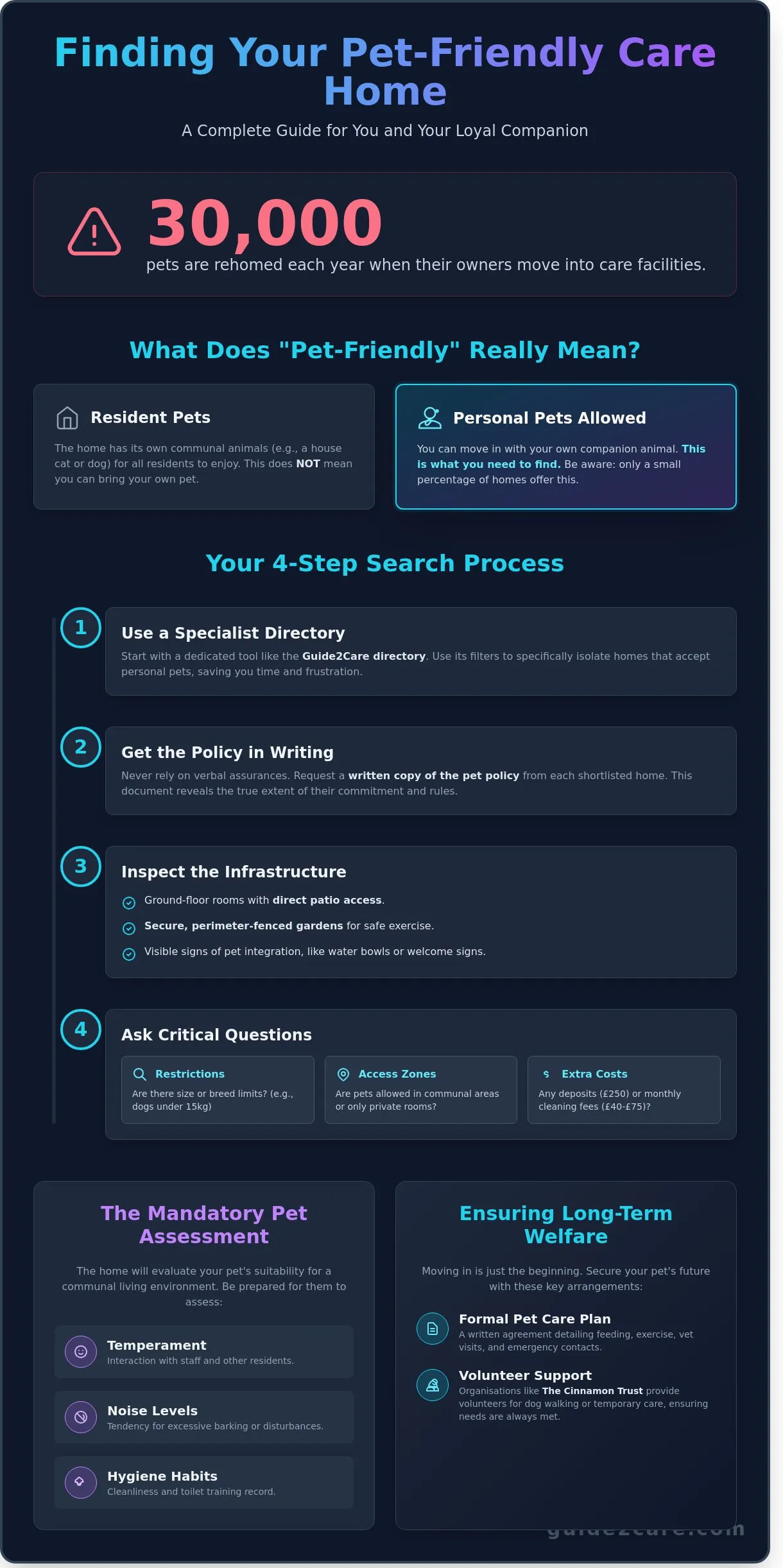
According to research from the Cinnamon Trust, approximately 30,000 pets are rehomed every year because their owners enter care facilities that lack animal-friendly policies. This statistic highlights why finding a pet friendly care home uk is a critical task for those who don't want to leave a loyal companion behind. You likely believe that a care home should support your emotional well-being, which includes keeping your pet by your side. It's frustrating when providers use vague terminology that makes it difficult to understand what "pet-friendly" actually means in practice.
This guide simplifies your search by providing a clear framework for evaluating residential homes and nursing facilities. You'll discover how to verify pet policies, manage the logistics of the move, and secure long-term welfare arrangements. We'll examine the specific criteria you must check before signing a contract, ensuring you find the care you need without compromising your pet's future. From initial inquiries to the day you move in, these steps provide the clarity and structure required for a successful transition for both you and your animal.
Key Takeaways
- Use the Guide2Care directory to simplify finding a pet friendly care home uk by filtering for providers that accept personal pets.
- Distinguish between homes that house their own resident pets and those that allow you to move in with your own animal companion.
- Prepare for the mandatory pet assessment by understanding how providers evaluate temperament, noise levels, and hygiene habits.
- Follow a structured search process to shortlist potential homes and secure written copies of their specific pet policies.
- Discover how to maintain long-term animal welfare through formal Pet Care Plans and specialist volunteer support organisations.
Understanding Pet Friendly Care Homes in the UK
A pet-friendly care home is a facility that incorporates animals into the residential environment. In the context of care homes in the United Kingdom, this term covers two distinct arrangements. Some homes keep resident pets, such as a communal cat or a house dog, which live in shared spaces for everyone to enjoy. Others allow residents to bring their own personal pets to live in their private rooms.
Research from the Society for Companion Animal Studies (SCAS) indicates that while many facilities describe themselves as pet-friendly, only a small percentage allow personal dogs or cats to move in permanently. Policies vary significantly between regions. For example, modern purpose-built homes in the South East often have better provisions for pets than older converted buildings in urban centers. When finding a pet friendly care home uk, you must clarify whether the policy applies to visiting animals or permanent residents.
To better understand how these policies work in practice, watch this helpful video:
Why Pet Ownership Matters in Later Life
Pets play a vital role in maintaining physical and mental health. A 2019 study by the University of York demonstrated that animal interaction reduces blood pressure and lowers cortisol levels in older adults. For many, a pet provides a clear sense of routine and purpose. Feeding, grooming, and walking a dog creates a structured day. This activity helps combat the passivity often associated with residential care. The human-animal bond in UK care standards represents a mutually beneficial relationship that supports the psychological health of the resident while ensuring the physical welfare of the animal.
The Legal Landscape: Animal Welfare and Care Settings
The Animal Welfare Act 2006 governs how animals must be treated in all settings, including care homes. It mandates that every animal has a suitable environment and protection from pain. You don't have a legal right to bring a pet into a care home. Each provider sets its own rules. The Care Quality Commission (CQC) oversees these environments. They check that pets don't compromise hygiene or safety. Finding a pet friendly care home uk involves reviewing these CQC reports to see how the home manages its shared spaces. Look for specific risk assessments regarding animal health and resident allergies.
How to Identify Truly Pet Friendly Care Homes
Finding a pet friendly care home UK requires looking beyond marketing brochures to identify concrete evidence of support. Start by using the Guide2Care directory search filters. These tools allow you to isolate residential homes and nursing facilities that officially accept animals. Once you have a shortlist, examine the "Pet Policy" section on each individual profile. A written policy suggests the home has considered the practicalities of animal care, including hygiene and safety protocols, rather than making ad-hoc decisions.
Physical infrastructure is a key indicator of suitability. Look for ground-floor rooms that feature direct patio access. This layout allows for easier exercise and toilet breaks for dogs. Check if the property has secure, perimeter-fenced gardens. You should also verify if the home has received external validation. Organizations like The Cinnamon Trust provide a directory of care homes that meet specific criteria for pet ownership, offering an extra layer of reassurance for prospective residents and their families.
Essential Questions to Ask the Care Manager
Direct questions help you understand the boundaries of a home's policy. Ask the manager if they have specific size or breed restrictions. Some providers limit residents to dogs weighing under 15kg. Inquire about designated zones. You need to know if pets are welcome in communal lounges or if they must stay in private rooms. Always ask about costs. You may encounter a one-off pet deposit of £250 or a recurring monthly cleaning surcharge ranging from £40 to £75.
Observing the Environment During a Visit
Observe the daily reality during an in-person tour. Look for visible signs of pet integration, such as water bowls in the reception area or signage indicating pet-friendly zones. Watch the staff's reactions. If they seem genuinely enthusiastic and engage with resident animals, the culture is likely supportive. Check the immediate vicinity for exercise options. Use a digital map to locate public parks or safe walking routes within a 400-meter radius of the home. To narrow down your search efficiently, find the care you need using our comprehensive comparison tools.
Evaluating Pet Policies and the Assessment Process
The process of finding a pet friendly care home uk requires a thorough understanding of individual home regulations. While a facility may advertise as pet-friendly, the reality depends on their specific internal policies. You must distinguish between pet-tolerant and pet-integrated homes. A pet-tolerant home may allow an animal to live in your private room but restricts access to communal lounges or dining areas. A pet-integrated home actively incorporates animals into daily life, often featuring secure gardens and shared pet-friendly zones. When guidance on pets in care homes was launched by Care England and the RSPCA in 2023, it emphasized that successful pet ownership in residential settings depends on clear boundaries and individual assessments.
The Resident Pet Assessment: What to Expect
Most providers require a formal assessment before move-in day. The care manager will observe the pet's temperament, noise levels, and hygiene habits. They need to ensure the animal doesn't pose a trip hazard or a noise disturbance to other residents. Assessments often take 30 to 60 minutes. You must provide up-to-date records for vaccinations, flea treatments, and worming. Creating a pet CV helps. This document should list the pet's age, breed, and medical history. Include evidence of good behaviour, such as training certificates or a reference from a previous landlord or vet.
Key Clauses in a Care Home Pet Contract
A signed agreement is mandatory for finding a pet friendly care home uk. This contract protects both you and the provider. It typically includes specific clauses regarding:
- Contingency plans: You must name a person or animal charity responsible for the pet if you become too ill to care for it.
- Financial liability: You're responsible for costs related to damage to carpets, doors, or furniture. Some homes require a specific pet deposit, often ranging from £200 to £500.
- The notice period: The home can request a pet's removal if it becomes aggressive or consistently disruptive. This often requires a 28-day notice period to find alternative accommodation.
Review these terms carefully before signing. Ensure the home specifies who handles daily tasks like dog walking or litter box cleaning if you're unable to do so on a particular day. Most homes expect the resident or their family to manage 100% of the animal's physical care.
A Step-by-Step Guide to Moving into Care with a Pet
Finding a pet friendly care home uk requires a structured approach to ensure the transition is successful for both the resident and the animal. Follow these five steps to manage the process efficiently.
- Step 1: Conduct an initial search. Use a specialist UK care directory to filter providers. Focus on homes that explicitly list pet-friendly facilities to save time during the enquiry stage.
- Step 2: Shortlist and request policies. Narrow your choice to 3 or 5 homes. Request their written pet policy immediately. Check for clauses regarding weight limits, breed restrictions, and the resident's responsibility for daily care.
- Step 3: Arrange a visit. If the manager permits, bring the pet for an informal meet-and-greet. This allows staff to observe the animal's temperament in a communal setting and confirms if the room layout is suitable.
- Step 4: Update medical records. Visit the vet 14 days before the move. Secure a health certificate and confirm all vaccinations are current. Update the pet's microchip details with the care home's contact information.
- Step 5: Pack a settling-in kit. Include items with familiar scents, such as unwashed blankets or favorite toys. This kit should also contain a 7-day supply of their regular food to avoid digestive upset.
Preparing Your Pet for the Transition
Reduce stress by arranging 2 or 3 short "taster" visits to the home if the manager agrees. Maintain a strict feeding and walking schedule during the final 7 days at home. Consult your vet about using pheromone diffusers or calming aids. Start these treatments 48 hours before the move to help the pet manage the initial 72-hour adjustment period in the new environment.
Managing the Logistics on Moving Day
Efficiency is vital on the day of the move. Ensure the pet is the last passenger to leave the old house and the first to arrive at the new room. Set up the pet’s corner with their bed and water bowl immediately. This creates a secure "home base" within the room. Provide care staff with a written 24-hour routine sheet. Clear communication ensures the pet’s habits are respected from the first afternoon. To begin your search for suitable providers, find the care you need using our comprehensive directory.
Life in the Home: Managing Long-Term Pet Care
Successful long-term residency depends on a formal Pet Care Plan. This document integrates into your overall care assessment and ensures staff understand the animal's specific needs. It should detail feeding schedules, required medications, and exercise routines. A well-defined plan reduces the risk of care gaps if your health needs change. Use this document to specify who takes responsibility for daily tasks like refilling water bowls or cleaning litter trays.
Organising external services is a practical necessity. Most UK residential homes allow mobile vets and groomers to visit the premises. You should coordinate these visits with the home manager to ensure they don't clash with meal times or scheduled activities. Setting up a recurring schedule for flea and worming treatments helps maintain the health of both the pet and the wider care home community.
Professional pet care providers like H&H Dog can be a valuable resource for these on-site services, offering everything from mobile grooming to supplementary walks and training support.
Establishing a relationship with a reliable local vet is a key part of this. For instance, London residents can rely on the 24-hour services of a multi-award-winning practice like Streatham Hill Veterinary Surgery for consistent, long-term support for your pet's health needs.
Utilising Support Networks in the UK
The Cinnamon Trust is a primary resource for elderly pet owners in the UK. They maintain a network of over 18,000 volunteers who provide free dog walking and pet care assistance for those in residential settings. If you require a temporary hospital stay, their pet fostering service provides short-term care until you return. You can use Guide2Care resources to identify local providers that actively work with these volunteer organisations. These partnerships are vital for finding a pet friendly care home uk that offers sustainable long-term support.
Ensuring Your Pet Remains a Good Neighbour
Living in a communal setting requires proactive management of your pet's behaviour. Focus on these key areas to maintain a positive relationship with other residents:
- Noise Management: Address territorial barking or vocalisation through consistent routines and calming aids.
- Hygiene Standards: Follow the home's waste disposal policy strictly. Regular professional cleaning of your room prevents odours.
- Social Interaction: Always supervise interactions between your pet and other residents. Some individuals may have allergies or phobias.
The death of a pet is a sensitive but inevitable reality in a care setting. Discuss the home's end-of-life protocol before moving in. This protocol should cover veterinary arrangements, cremation preferences, and how the home supports residents during bereavement. Clear procedures ensure that the process is handled with dignity and minimal stress for the owner. Establishing these details early is a core part of finding a pet friendly care home uk that truly understands the bond between a resident and their animal.
Take the Next Step Toward Pet-Friendly Care
Moving into a new environment is a major transition. You've now learned how to identify inclusive providers and navigate the formal assessment process. Successfully finding a pet friendly care home uk depends on matching a provider's specific pet policy with your animal's daily needs. There are more than 15,000 registered care homes across the UK; many of these facilities now integrate animal companionship into their long-term care plans. Our platform helps you organize this search by providing a structured, categorical approach to information.
You can access our comprehensive UK-wide directory to compare detailed provider profiles and the latest CQC ratings. We offer expert guidance on funding structures and different types of care to help you make a practical decision. Use these resources to simplify your search and find a solution that works for both you and your pet. Find pet-friendly care homes near you today. You can secure a comfortable future without leaving your companion behind.
Frequently Asked Questions
Can I bring my dog to a care home in the UK?
Yes, you can bring a dog to a care home, though success depends on the provider's specific policy. Data from the 2023 Care Home Pet Policy Survey shows that 30% of facilities now allow residents to live with their animals. Finding a pet friendly care home uk involves checking the home's "pet contract" to understand your responsibilities regarding exercise and hygiene.
Do care homes charge extra for pets?
Most UK care homes don't charge a monthly fee for pets, but they often require a specific financial commitment for cleaning. A 2022 report by Anchor Hanover found that providers typically request a one-off deep cleaning fee between £150 and £500. This payment covers the cost of professional steam cleaning for carpets and upholstery when the resident leaves the room.
What happens if I can no longer look after my pet in the home?
If your health declines, the home manager will assess whether the pet's needs are still being met. Most homes don't provide staff to walk or feed animals. The Cinnamon Trust provides a network of 18,000 volunteers who visit care homes to assist with these tasks. If care becomes impossible, the trust's lifelong fostering program ensures the animal finds a new home.
Are there breed restrictions for dogs in UK care homes?
Breed restrictions are common in UK care homes to ensure the safety of all residents and staff. Providers must follow the Dangerous Dogs Act 1991, which bans specific breeds like the Pit Bull Terrier. Guidelines from Barchester Healthcare often limit residents to one small dog weighing under 10kg. These rules prevent trip hazards in communal corridors and ensure the animal fits comfortably in a standard room.
Is it possible to bring a cat to a residential care home?
It's possible to bring a cat to many residential settings, as they're well-suited to indoor living. The 2023 PFMA report indicates that cats reside in 15% of pet-inclusive care facilities across the UK. You must provide a litter tray and ensure the cat remains within your private suite. Managers usually require proof of up-to-date vaccinations and flea treatments before the cat moves in.
What is The Cinnamon Trust and how do they help?
The Cinnamon Trust is a specialist charity founded in 1985 to help elderly people stay with their pets. They maintain a national register of over 1,500 care homes that accept animals. Their volunteers help with practical tasks like dog walking or vet trips. This support is vital for the thousands of elderly owners who fear being separated from their companions when moving into care.
Can I visit a care home with my pet before moving in?
You should always visit a potential home with your pet before signing a residency agreement. This trial allows the manager to observe the animal's behavior in a busy environment. A 2024 survey by Care Home Management magazine found that 90% of pet-friendly homes require at least one pre-move assessment. These visits confirm the pet won't cause distress to other residents or react poorly to medical equipment.
What should I do if my favourite care home doesn’t accept pets?
If your preferred home doesn't allow pets, you can present a "pet CV" to the manager to demonstrate responsible ownership. This document should include vet records and references from previous landlords. When finding a pet friendly care home uk, 12% of residents successfully negotiate pet entry by providing these formal guarantees. If the home still refuses, you must prioritize facilities that have pre-existing pet-friendly certifications.