What is Included in Care Home Fees? A Comprehensive Guide to UK Costs

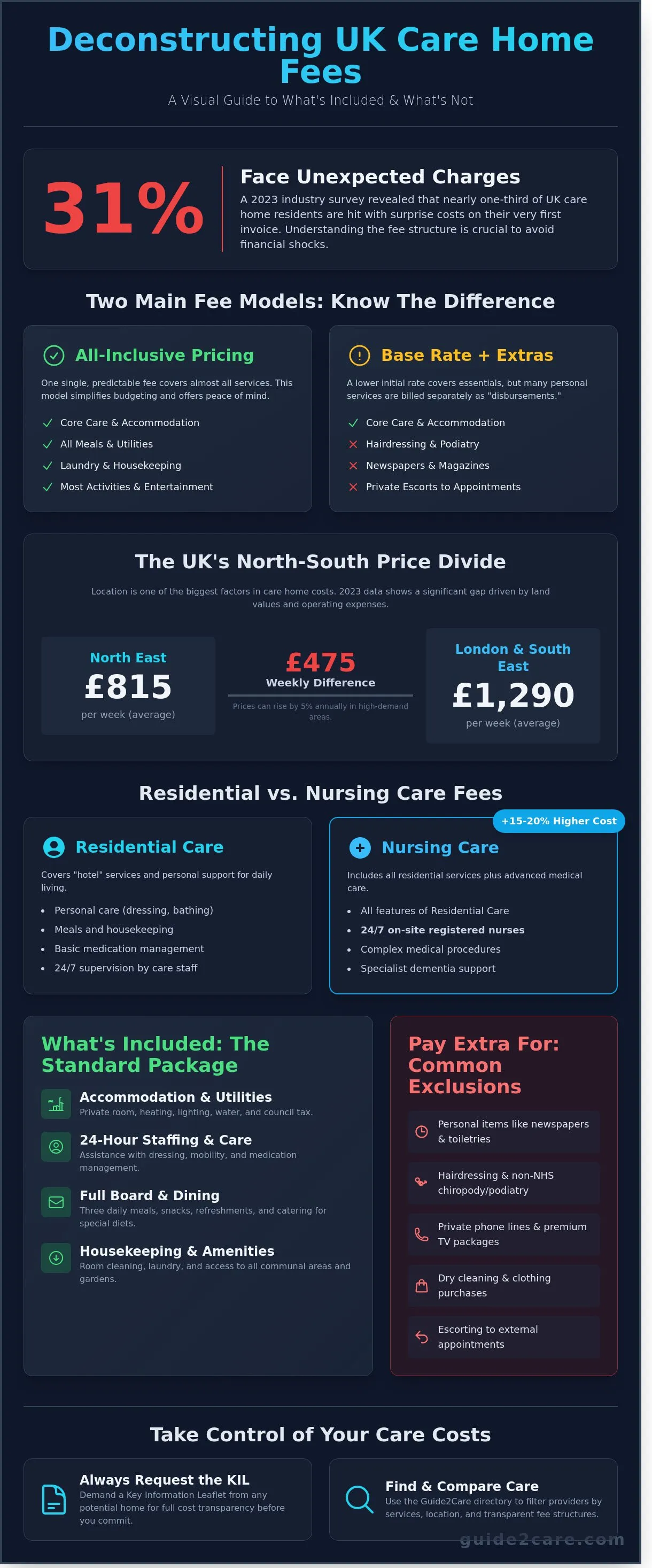
Did you know that a 2023 industry survey revealed 31% of UK care home residents face unexpected charges on their first monthly invoice? Understanding exactly what is included in care home fees is the only way to avoid these financial shocks. When you see a weekly rate of £1,200 or more, it's easy to assume every service is covered; however, fee structures vary significantly between different providers.
Comparing homes is difficult when one provider offers an all-inclusive rate and another uses a complex pay-as-you-go model. You likely feel frustrated by the lack of transparency when trying to budget for long-term support. We've designed this guide to remove that confusion by detailing exactly what your money buys, from accommodation and meals to specialist medical equipment.
You'll find a clear checklist of standard inclusions and a breakdown of the price differences between residential and nursing care. This information ensures you're prepared to review any contract with confidence. Explore our guide to find the care you need without the fear of hidden costs.
Key Takeaways
- Identify the differences between all-inclusive and base-rate fee structures to manage your monthly budget effectively.
- Understand exactly what is included in care home fees, covering essential accommodation, 24-hour staffing, and nutritional requirements.
- Prepare for additional costs by learning which personal services and specialist medical treatments are typically excluded from standard rates.
- Find the care you need by using the Guide2Care directory to filter providers by service type and location.
- Request a Key Information Leaflet from potential homes to ensure full transparency and cost clarity before visiting a facility.
Understanding the Structure of UK Care Home Fees
Care home fees are the recurring charges for residential support, accommodation, and board. Most UK providers bill these on a weekly or monthly basis. You must understand what is included in care home fees to compare different providers accurately. The Care Quality Commission (CQC) monitors these services. Their 2024 guidelines demand transparency in how homes present their costs. This prevents families from facing unexpected bills after a resident moves in.
Location significantly impacts the price. Data from 2023 shows a clear North-South divide in the UK. A residential room in London or the South East averages £1,290 per week. A similar room in the North East costs around £815 per week. This £475 difference stems from varied land values and regional operating expenses. High-demand areas in the South often see prices rise by 5% annually.
These regional variations are also influenced by the initial construction and infrastructure costs. Developing a new care facility involves significant groundworks and civil engineering to ensure the site is safe and accessible, with specialists like GCS Contractors Ltd managing everything from drainage to highway access for new commercial projects.
The Distinction Between Residential and Nursing Fees
Residential fees pay for personal care and "hotel" services. These include meals, housekeeping, and basic assistance with daily tasks like dressing. Nursing fees are more expensive because they require registered nurses on-site 24 hours a day. Specialist dementia care also adds to the total. Homes often charge 15% to 20% more for these units. This covers the intensive staffing and specific safety features required for cognitive support.
The professionals providing this essential care, such as doctors and nurses, often have unique financial circumstances that require specialist support, particularly for major investments like homeownership. For those in the medical field, it can be beneficial to discover Mortgages for Doctors and services tailored to their career paths.
Fixed vs Variable Fee Models
Providers offer two main pricing structures. All-inclusive pricing simplifies budgeting by covering all utilities, food, and basic care. Base rate models often exclude "disbursement" charges. These are costs for extras like newspapers, hair styling, or private podiatry. If a Local Authority funds the placement but the home's rate is higher, a "top-up fee" is required. This is a voluntary payment made by a third party to cover the shortfall between the council's budget and the home's actual fee.
Core Inclusions: The "Hotel" and Basic Care Services
Understanding what is included in care home fees helps families budget accurately for long-term support. Most UK providers bundle living costs and essential support into a single weekly rate. This base fee covers your accommodation, including the ongoing maintenance of the building and grounds. You don't pay separate bills for heating, lighting, or water; these are part of the service. Council tax is also handled by the home, removing another administrative burden from the resident.
Fees include essential daily assistance. Staff provide help with dressing, bathing, and mobility as part of the standard package. Medication management is also a core inclusion. In 2023, data indicated that approximately 82% of residential providers include these core tasks in their base rate. This ensures that basic health and hygiene needs are met without additional hourly charges.
Room Standards and Maintenance
A standard room usually includes a bed, wardrobe, and chair. Premium suites often feature en-suite wet rooms or private garden access. These upgrades can increase weekly costs by £150 to £400 depending on the facility's location. Housekeeping teams perform daily cleaning tasks. Deep cleaning of carpets and upholstery occurs on a scheduled basis, typically every 6 to 8 weeks. Safety is a priority. All rooms feature 24-hour call-bell systems and accessible furniture designed for those with limited mobility.
Dining and Dietary Requirements
The weekly fee covers three full meals a day plus snacks. Residents have 24-hour access to tea, coffee, and light refreshments. Modern UK homes are moving towards a "fine dining" model. This includes table service and daily menus with multiple choices. Providers must cater to medical diets, such as soft food for dysphagia, or religious requirements like Halal or Kosher meals. These adjustments are part of what is included in care home fees at no extra cost. If you need to compare specific providers in your area, find the care you need through our directory.
Standard inclusions typically cover:
- Full board and lodging in a private or shared room.
- 24-hour staffing for safety and basic assistance.
- All utility bills and building insurance.
- Laundry services for clothing and bed linen.
- Access to communal lounges, libraries, and gardens.
Professional Care and Wellbeing Inclusions
Care home fees primarily cover the cost of maintaining a safe, supervised environment. A significant portion of what is included in care home fees relates to the 24-hour availability of trained staff. According to Skills for Care, the adult social care sector employs 1.52 million people in England. Residential homes must maintain specific staff-to-resident ratios to meet Care Quality Commission (CQC) standards. This ensures assistance with mobility, medication, and personal care is available 24/7. Fees also fund the administration of care planning. Every resident has a bespoke care programme that staff review every 30 days to reflect changing health needs. These plans include detailed risk assessments and nutritional tracking to ensure physical safety.
The financial models underpinning the care sector are complex, designed to cover extensive operational costs from staffing to regulatory compliance. This financial complexity is not only a concern for residents but also for the owners and investors in the industry. For those interested in the business side of healthcare, you can discover Healthcare Biz Brokers, Inc., a firm that specializes in the buying and selling of these types of facilities.
The Activities and Social Programme
Social engagement is a core service. Most homes employ a dedicated Activities Co-ordinator to manage a weekly schedule. These professionals tailor events to the cognitive and physical abilities of the residents. Typical programmes include:
- Daily group exercise or chair yoga sessions.
- Creative workshops such as painting, pottery, or gardening.
- Reminiscence therapy sessions designed for residents with dementia.
- Musical entertainment from visiting local performers.
Internal entertainment and group sessions are usually part of the standard package. However, external excursions often require an additional payment. Families should expect to pay for transport and ticket costs for trips to local garden centres, museums, or theatres. Understanding what is included in care home fees helps you budget for these optional extras. Always ask for a monthly activities calendar to see the variety of engagement offered.
Laundry and Domestic Services
Standard laundry services are a baseline inclusion in almost all UK care contracts. This covers the regular washing and ironing of personal clothing and the frequent changing of bed linens and towels. Hygiene is a priority. Most homes follow strict infection control protocols, changing linens at least twice weekly or immediately if required.
Specialised dry cleaning for delicate fabrics like silk or heavy wool isn't typically included in the standard fee. If a resident requires these services, the home will likely outsource the work and bill it as a separate expense. Many providers charge a one-off fee, often between £20 and £50, for professional heat-press labelling services. This prevents lost items in the communal laundry system. Check your contract to see if this is bundled or listed as a move-in cost.
Common Exclusions: What You Will Likely Pay Extra For
Standard monthly rates cover your room, meals, and basic care. However, many residents find their final bill is higher due to "disbursements" or additional service charges. Understanding what is included in care home fees helps you budget accurately for these extras. Costs vary between providers, but certain items almost always sit outside the core contract.
Personal grooming is a standard exclusion. While staff assist with basic washing, professional services like hairdressing or manicures are extra. A basic haircut in a UK care home typically costs between £15 and £30. Similarly, lifestyle choices like daily newspapers, branded toiletries, and alcoholic beverages are rarely covered. If you prefer a specific brand of soap or want a glass of wine with dinner, expect these to appear on your monthly statement. Communication is another variable. While most homes provide communal Wi-Fi, you'll often pay a premium for high-speed connections or private telephone lines in individual rooms.
Professional and Medical Services
The NHS provides many medical supplies for free, including standard incontinence products and basic dressings. You'll still pay for private treatments. Private chiropody or dental visits often cost between £30 and £60 per session. Specialist equipment also falls into this category. If a resident needs a bespoke profiling bed or a specific riser-recliner chair not provided by the home, the family must purchase it. Escort services are a significant hidden cost. Homes often charge £15 to £25 per hour for a staff member to accompany a resident to hospital appointments.
Personal Disbursements and Social Extras
Social lives involve costs that the care home doesn't cover. Most homes charge for guest meals, usually between £5 and £10 per person, so family members can eat with residents. You're also responsible for maintaining a personal wardrobe. This includes the cost of new clothing and footwear. While the home handles standard laundry, dry cleaning for delicate items is an additional charge. Transport for personal outings or family events is rarely included. You'll pay for private taxis or fuel if the home's minibus isn't available for individual trips.
Find the care you need by using our directory to see exactly what is included in care home fees across different facilities.
How to Compare Fees and Find the Right Provider
Use the Guide2Care directory to filter providers by location and service type. This tool helps you identify which homes meet your specific clinical requirements and budget. Always request a "Key Information Leaflet" before booking a tour. This document clarifies what is included in care home fees and prevents surprises during the admission process. Comparing these leaflets is the fastest way to see what is included in care home fees across different local providers.
Interview the Registered Manager about their fee structure during your visit. Ask for the last three years of fee increase data to understand historical trends. Confirm the notice period for terminating the contract. This is typically 28 days in the UK. Compare the "value for money" by looking at the ratio of staff to residents. A higher fee might be justified if the home maintains a 1:5 ratio instead of a 1:8 ratio, as this directly impacts the quality of personal care.
Reviewing the Care Contract
Examine the "annual fee review" clause closely. Most contracts increase fees every April. These increases are often based on the Consumer Price Index (CPI) plus an additional 2% to 5%. Check the "fees after death" section. Competition and Markets Authority (CMA) regulations generally limit these charges to three days or until the room is cleared. Note the deposit requirements. Some homes charge a "community fee" or "administration fee" of £2,000 or more upon entry. Ensure this is refundable or clearly justified in the contract terms.
Leveraging Online Resources
Use Guide2Care to find providers that offer transparent pricing and clear service breakdowns. Cross-reference these costs with Care Quality Commission (CQC) ratings. A home rated "Requires Improvement" shouldn't charge the same premium as an "Outstanding" facility. Seek local advocacy groups like Age UK for independent financial advice. They provide data on average local authority rates versus private payer rates. These resources help you determine if a provider's quote aligns with the 2024 market average for your specific region.
Navigate Your Care Options With Confidence
Understanding what is included in care home fees is essential for managing your long-term finances. Most UK contracts cover the "hotel" costs of accommodation and meals alongside basic personal care. However, data from 2024 shows that average weekly costs for residential care now sit between £800 and £1,200, while nursing care often exceeds £1,400 per week. Identifying hidden extras like hairdressing or private dental visits early prevents unexpected bills later. It's important to compare providers using transparent data to find the right fit for your budget.
Guide2Care acts as a neutral facilitator to help you manage this process efficiently. Our platform offers a comprehensive directory of UK-wide care providers and free educational resources on funding and selection. Use these tools to organise your search and secure the support your family requires. Find the care home you need in our UK directory today and take control of your care journey.
Frequently Asked Questions
How much are average care home fees in the UK in 2026?
In 2026, average residential care fees in the UK are projected to reach £920 per week, while nursing care averages £1,250 per week. These figures represent a 5% annual increase from 2024 levels based on ONS inflation trends. Costs vary significantly by region. For instance, London providers often charge 25% more than those in the North West. Always request a written breakdown of what is included in care home fees before signing a contract.
Is laundry always included in the weekly care home fee?
Basic laundry services are included in the standard weekly fee for most UK care homes. Staff wash, dry, and iron everyday items like clothes and bed linen. However, 85% of homes charge extra for specialist dry cleaning or delicate fabrics. You must label all garments with the resident's name to prevent loss. Check your residency agreement for specific exclusions regarding luxury fabric care or items that aren't machine washable.
Do I have to pay for my own hairdressing and chiropody?
You usually pay for hairdressing and chiropody as additional costs outside the standard weekly rate. Most homes have an on-site salon or visiting professionals who charge between £15 and £40 per session. While the NHS provides basic podiatry for those with medical needs like diabetes, private routine foot care is a personal expense. Budget approximately £50 per month for these personal grooming services to ensure consistent care.
Are incontinence pads included in care home fees?
Incontinence pads are typically included in care home fees if a resident has a documented medical need. If the NHS funds your care, they provide these supplies through a central contract. Private residents usually find these costs covered within their core nursing or residential rate. Approximately 70% of homes include standard products, but you might pay extra for specific premium brands or high-absorbency options that the provider doesn't stock regularly.
What happens to the fees if a resident is admitted to hospital?
You must continue paying your care home fees during a hospital stay to ensure the room remains reserved. Most UK providers charge the full rate for the first 14 days of absence. After this period, some homes offer a fee reduction of 10% to 20% because food and utility costs decrease while the resident is away. Review your contract's absence clause to confirm the exact percentage and the timeframe for these discounts.
Can a care home increase their fees whenever they want?
Care homes can't increase fees whenever they want; they must follow the terms set in your residency agreement. Most providers implement an annual price review every April, often linked to the Consumer Price Index (CPI) plus a fixed 2% to 5% to cover rising staff wages. Homes must give you at least 28 days' written notice before any price change takes effect. Unscheduled increases only happen if your care needs change significantly.
Is Wi-Fi usually included in the price of a care home room?
Wi-Fi is now included in the base price of 90% of UK care homes. Most modern facilities provide high-speed internet access in communal areas and individual bedrooms. While the connection is usually free, some older buildings have dead zones due to thick stone walls. Always test the signal strength in the specific room you're considering. You might need a personal 4G or 5G router if the home's internal infrastructure is outdated.
Do care home fees include the cost of excursions and trips?
Care home fees cover the coordination of on-site activities, but you usually pay extra for external excursions. While the home provides the minibus and staff support, residents typically fund their own theatre tickets, entrance fees, and restaurant meals. These costs average £10 to £30 per trip depending on the destination. Check if the home maintains a comforts fund or if you need to provide a personal allowance for these social outings.