Paying for Extras in a Care Home: A Guide to Avoiding Hidden Costs

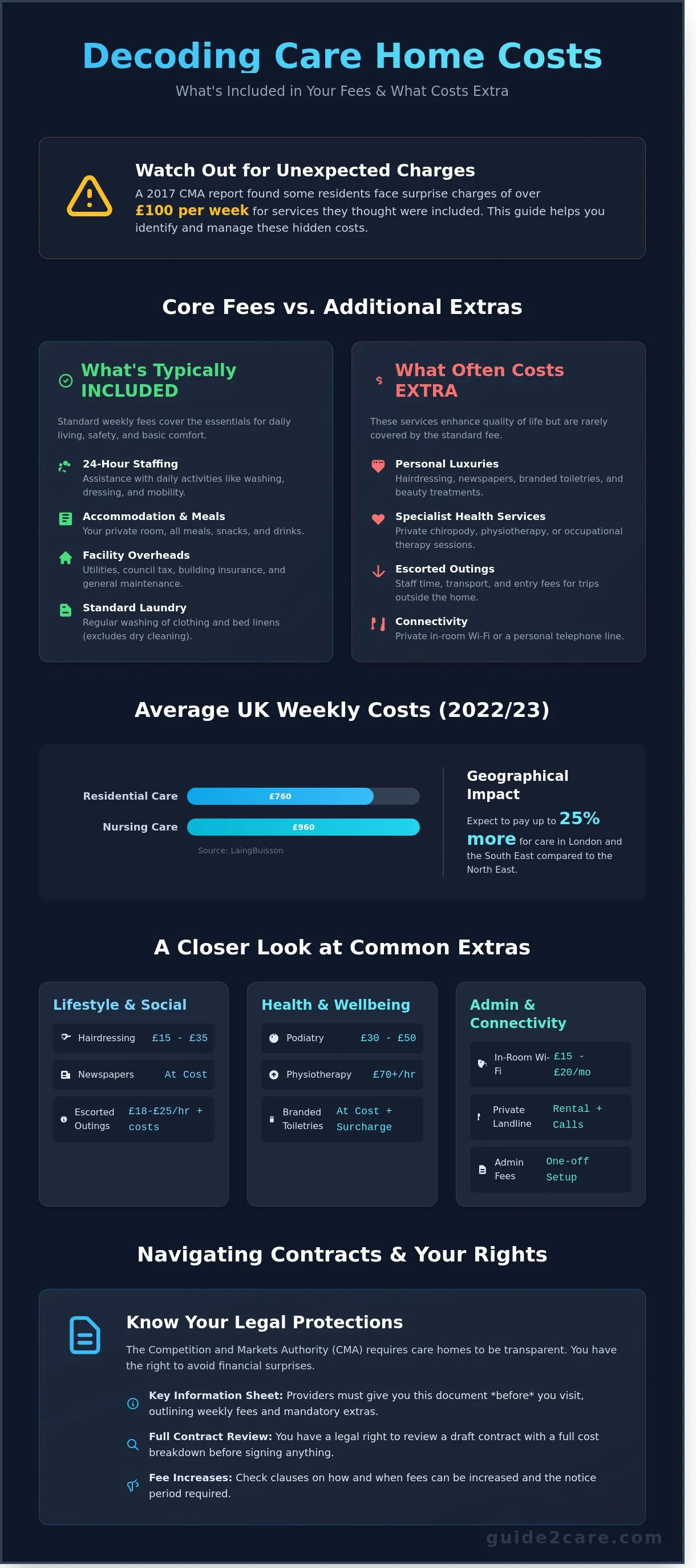
A 2017 Competition and Markets Authority report found that some residents face unexpected charges of over £100 per week for services they assumed were included in their base rate. You likely expect your weekly fee to cover all essential support, yet paying for extras in a care home often leads to monthly invoices that exceed your initial budget. It's frustrating when a lack of transparency makes it difficult to plan your long-term finances or protect your savings from depleting faster than planned.
We've designed this guide to help you manage these costs effectively. You'll learn exactly which services should be included in standard fees and how to spot hidden charges before signing any agreement. This article provides a clear checklist for contract reviews, a practical system for tracking personal spending, and an overview of your legal rights regarding fee increases. Use these tools to ensure your funds last as long as possible while securing the quality care you need.
Key Takeaways
- Distinguish between core residential fees and additional charges to establish an accurate baseline budget for long-term care.
- Identify specific lifestyle, health, and administrative costs that are frequently excluded from standard care home contracts.
- Evaluate the financial predictability of all-inclusive pricing models versus pay-as-you-go options when paying for extras in a care home.
- Learn how to utilize personal allowance accounts and monthly spending caps to manage daily incidental expenses effectively.
- Recognize critical contract clauses regarding fee increases and notice periods to protect yourself from unexpected price hikes.
Understanding the Difference Between Core Fees and Extras
Core residential fees represent the baseline cost of living in a facility. These fees generally cover three primary pillars: accommodation, meals, and basic personal care. In the UK, the average weekly cost for a residential care home reached £760 in the 2022/23 period, while nursing care averaged £960 according to LaingBuisson data. It's vital to distinguish between "hotel costs" and "care costs." Hotel costs refer to your room and board, while care costs cover professional medical or personal support. This distinction is critical for those receiving local authority funding, as councils often set strict limits on the care component they will subsidise.
Fees fluctuate based on geography and the specific level of support required. A care home in London or the South East typically charges 25% more than a facility in the North East. Many providers now use "all-inclusive" marketing to attract residents. Scrutinise these contracts. If you don't check the fine print, an all-inclusive label might cover social activities but exclude transport to private medical appointments. Understanding these nuances prevents you from paying for extras in a care home that you assumed were part of the base rate.
What is Typically Included in the Standard Weekly Fee?
The standard fee ensures your basic needs and safety are met around the clock. It's designed to cover the following essential services:
- 24-hour staffing: Assistance with Activities of Daily Living (ADLs) such as washing, dressing, and mobility support.
- Standard laundry: Regular washing of everyday clothing and bed linens, though this excludes dry cleaning or specialist care for delicate fabrics.
- Facility overheads: All utility bills, building insurance, council tax, and general maintenance of your room and communal areas.
The Legal Requirement for Fee Transparency
The Competition and Markets Authority (CMA) introduced strict consumer protection guidelines in November 2018. These rules require care homes to be upfront about their pricing structures. Providers must give you a "Key Information" sheet before you even visit the home. This document highlights the weekly fee and any mandatory additional charges. You have a legal right to review a full breakdown of costs and a draft contract before signing any residency agreement. This transparency allows you to compare providers accurately. It identifies exactly where you might end up paying for extras in a care home later on, such as hairdressing or chiropody services.
Common Additional Charges: From Hairdressing to Health Care
Costs for paying for extras in a care home fall into three distinct categories: Lifestyle, Health, and Administrative. While these are often labelled as "optional," many become essential for a resident's dignity and mental health. VAT at 20% applies to several of these services, such as hairdressing or beauty treatments, which can inflate the final monthly bill beyond the initial quote. Residents often encounter "hidden" charges in the first 28 days of residency, including administrative setup fees or initial care plan assessments that aren't part of the weekly room rate.
Lifestyle and Social Extras
On-site hairdressing is a standard feature in most UK care settings. Salon price lists vary, with a basic cut often costing between £15 and £35 depending on the region. Daily newspapers and magazine subscriptions are typically billed at retail price, though some homes add a small delivery surcharge. Escorted outings represent a larger expense. You usually pay for the staff member's time, often at an hourly rate of £18 to £25, alongside transport costs and entry tickets. Before booking, find the care you need by comparing how different providers bundle or charge for these social activities.
Health and Wellbeing Services
Health extras bridge the gap where standard residential care ends. Private podiatry or chiropody usually costs between £30 and £50 per session. This charge arises because the NHS rarely provides routine foot care for residents in private care settings. Specialist physiotherapy or occupational therapy can cost upwards of £70 per hour if required beyond basic mobility support. Toiletries also add up over time. Homes provide basic communal supplies, but residents preferring specific brands must pay for them. Homes often charge a premium for sourcing these items rather than families bringing them in during visits.
Administrative and Connectivity Costs
Connectivity is often tiered within modern facilities. Basic Wi-Fi in communal lounges is usually free, but high-speed internet in a private bedroom can cost £15 to £20 per month. Private landlines involve separate installation fees and monthly rental charges. Insurance is another critical factor. A home's standard policy might only cover personal items up to a total of £1,000. Valuable items like hearing aids, which can cost over £2,500, often require additional private insurance cover. Some providers also charge a 5% administration fee for managing personal spending accounts or arranging external medical appointments.
All-Inclusive vs. Pay-As-You-Go: Which Model is Better?
Choosing between an all-inclusive model and a pay-as-you-go (PAYG) structure is a critical financial decision. Families often find that paying for extras in a care home under a PAYG model creates unpredictable monthly fluctuations. An all-inclusive home provides a set weekly fee, typically ranging from £1,200 to £1,600 in the UK. This fee covers accommodation, care, meals, and lifestyle activities. Budget providers may offer a lower base rate of £800 to £950, but these figures often exclude essential services.
Compare the long-term data before signing a contract. A budget home charging £900 per week plus £200 in monthly extras costs £49,200 annually. An all-inclusive home at £1,250 per week costs £65,000. While the budget home appears cheaper, the gap narrows if the resident requires frequent hair styling, chiropody, or escorted hospital trips. Calculate the total cost of care over a 12-month period to see the true impact on your savings.
The Pros and Cons of All-Inclusive Care
Peace of mind is the primary benefit of the all-inclusive model. This structure simplifies life for executors and families managing a resident's affairs because the invoice remains constant. However, you might pay for premium facilities like on-site cinemas or private dining rooms that the resident rarely uses. Data suggests 20% of residents in luxury homes don't utilize high-end amenities. Always check if health-related extras are included. Many all-inclusive contracts still charge separately for specialist chiropody or physiotherapy sessions, which can cost £40 to £60 per visit.
The Pay-As-You-Go (PAYG) Reality
Lower base fees make PAYG models attractive for residents with very simple needs who don't require external escorting or specialized activities. The risk is "bill shock" when monthly invoices arrive with dozens of small line items for toiletries or newspapers. Pay-As-You-Go is a model where transparency is the primary risk factor. Families often face a heavy administrative burden tracking these individual costs. If paying for extras in a care home becomes a weekly occurrence, the financial predictability of the contract disappears.
Use this method to perform a "total cost of care" calculation for the year:
- Request a full list of non-care charges from the provider's current price list.
- Estimate the frequency of lifestyle costs like hairdressing, which usually costs £15 to £25 per session.
- Add a 10% contingency fund to cover unexpected medical escorts or transport requirements.
- Multiply the weekly base fee by 52 and add your estimated annual extras to find the true figure.
Premium facilities like private dining rooms add value only if the resident intends to host guests regularly. If the resident prefers eating in their room or the main dining hall, these "extras" become an unnecessary drain on capital. Evaluate the resident's current habits against the home's features to avoid paying for a lifestyle they won't lead.
Managing the Budget: Personal Spending Accounts and Itemised Billing
Care homes typically manage daily incidental costs through a "Personal Allowance" or "Resident Account." This system eliminates the need for residents to keep cash on their person or in their rooms. When paying for extras in a care home, these accounts cover small, frequent expenses such as stationery, confectionery, and basic toiletries. You should view these accounts as a pre-paid debit system rather than an open-ended credit line.
Effective budget management starts with transparency. Ask the home for a monthly itemised statement that lists every single transaction. This statement must include the date of purchase, the specific item or service, and the exact price charged. Standard practice involves reviewing these logs every 30 days to catch errors or unauthorised spending before they become habitual. If a home cannot provide a clear breakdown, it's a significant red flag regarding their administrative standards.
Setting Up a Personal Spending Account
Funding usually happens via a monthly direct debit or a manual "as and when" top-up. Most UK providers request an initial float of £100 to £200. It's vital to set a hard monthly spending cap in writing with the manager. You must decide who authorises larger purchases. For example, you might permit the home to spend up to £15 on a haircut but require a phone call for anything more expensive. This creates a clear audit trail and ensures every newspaper and salon visit is accounted for without overspending.
Avoiding the "Mark-up" on External Services
In-house services often come with a convenience surcharge. A 2024 survey of care providers showed that in-house hairdressing can be 25% more expensive than local high street rates. Check your residency agreement to see if you can bring in your own chiropodist or stylist. Some contracts allow external professionals if they provide proof of insurance and DBS clearance. This flexibility can save significant sums over the course of a year.
Staff escorts for non-emergency medical visits are a common hidden cost when paying for extras in a care home. These charges frequently reach £25 to £35 per hour. You can bypass this fee by organising family transport or using local community transport schemes. Additionally, bulk-buying toiletries like soap and toothpaste from supermarkets can save a family roughly £150 per year compared to paying care home prices for the same items. Find the care you need by researching homes with transparent billing policies and fair service charges.
Navigating Contracts and Avoiding Financial Surprises
The care home contract is your primary tool for managing costs. Read the Terms and Conditions carefully before signing any document. Look for specific clauses regarding fee increases. Most providers review prices annually, often in April to align with the financial year. The contract should specify the index used for these hikes, such as the Consumer Price Index (CPI) or a fixed percentage. If a home reserves the right to increase fees at any time without a clear trigger, ask for this to be amended.
Notice periods are a legal requirement. Under Competition and Markets Authority (CMA) guidance, providers must give at least 28 days' notice before raising prices. This window allows you to review the changes or find alternative care if the new costs are unaffordable. Check if the contract allows for immediate price changes for specific "extras" like hairdressing or chiropody. Avoid contracts that allow unilateral price changes for these services without a defined notice period. Clear communication prevents disputes when paying for extras in a care home.
Hospital stays require specific contractual attention. If a resident is admitted to hospital, you usually continue to pay a percentage of the core fee to retain the room. This is often around 80% of the standard rate after the first week. However, you should not pay for additional services during this period. Services like escorted trips, private therapy, or specialized activities cannot be delivered if the resident isn't on the premises. Ensure the contract states that charges for non-essential extras cease immediately upon hospital admission.
Contractual Red Flags to Watch For
Watch out for vague phrases such as "additional services as required" or "discretionary charges." These terms allow homes to add costs to your bill without prior agreement. Some contracts include clauses that permit the home to change the price of extras without notice. Reject these terms during the negotiation phase. Any fee increase must be justified by clear cost changes or service improvements. This justification should be provided in writing alongside the notice of increase.
Your Rights and How to Complain
If you receive an invoice with unauthorized charges, challenge it immediately in writing. Use the care home's formal grievance procedure first to resolve the matter internally. If the home doesn't resolve the issue within a reasonable timeframe, contact the Local Government and Social Care Ombudsman. They investigate complaints about adult social care in England and can recommend refunds for overcharged fees. Transparency is essential for long-term financial planning. Find a care home with transparent fees on Guide2Care to ensure your provider follows best practices for billing and paying for extras in a care home.
Secure Your Financial Future in Care
Managing your long-term budget requires a clear understanding of what your weekly fee covers. The Competition and Markets Authority (CMA) 2018 consumer law advice requires providers to be transparent about all additional costs before you sign a contract. You must differentiate between core residential fees and discretionary services like hairdressing, social trips, or private medical treatments. Comparing all-inclusive contracts against pay-as-you-go models helps you avoid monthly financial surprises. Always review the itemised billing terms and personal spending account rules to ensure every charge is documented correctly. paying for extras in a care home shouldn't be a source of stress or confusion for your family.
When you have the right information, you can make a choice that fits your specific financial situation. Guide2Care provides the practical tools you need to navigate these complex decisions with confidence. We offer a comprehensive UK-wide directory alongside independent guides on funding and provider selection. Our neutral platform simplifies the search process by presenting clear, factual data on various care options. You'll find reliable information without the jargon.
Find the care you need with Guide2Care; explore our directory of transparent providers
Take the next step toward finding a supportive environment that respects your budget and your needs.
Frequently Asked Questions
Are toiletries included in care home fees?
Basic toiletries like soap, toilet paper, and standard toothpaste are typically included in your weekly fees. If you prefer specific brands or luxury items, you'll need to pay for these yourself. Most homes maintain a list of provided items in their resident contract. Check your agreement to see what's covered before paying for extras in a care home.
Do I have to pay for a hairdresser in a care home?
You usually pay for hairdresser services separately as they aren't part of standard care fees. Visiting stylists or on-site salons typically charge between £15 and £45 depending on the treatment. These costs are often managed through a personal comforts fund or billed monthly. You can also arrange for an external hairdresser to visit if the home's policy allows it.
How much is the personal expenses allowance for care home residents?
The Personal Expenses Allowance (PEA) in England is £30.15 per week as of April 2024. Residents in Scotland receive a Personal Expenses Allowance of £34.50 per week. This money is set aside from your income to cover small personal items. It ensures you have funds for stationery, snacks, or gifts after your care fees are paid.
Can a care home charge for staff to take a resident to a hospital appointment?
Care homes can charge for staff to escort residents to hospital appointments if a family member isn't available. Hourly rates for this service often range from £20 to £35 per hour plus travel expenses. Review your contract's additional charges section to see the specific rates. Some homes include a set number of escorted visits per year, but this isn't a legal requirement.
What happens if I cannot afford the "extras" in my care home?
Your local authority must ensure your basic care needs are met even if you can't afford optional extras. If you're funded by the council, you'll still receive your weekly Personal Expenses Allowance of £30.15. This allowance covers your essential personal spending. You won't be forced to pay for luxury services like premium TV packages or private outings if you don't have the funds.
Are care home fees all-inclusive for dementia patients?
Care home fees for dementia patients are rarely all-inclusive and usually follow the same structure as residential care. While 24-hour supervision is included, costs for chiropody, hair styling, or newspapers remain additional. When paying for extras in a care home, clarify if specialist dementia activities or sensory therapies carry separate charges. Most providers list these costs in their Key Information Document.
Can I provide my own furniture to avoid extra rental charges?
You can usually provide your own furniture to personalize your room, but this won't reduce your weekly fees. Most UK care homes provide a bed, wardrobe, and chest of drawers as standard. Bringing your own items, such as a more comfortable ergonomic chair, is about comfort rather than cost-saving. For any specialized furniture, it's wise to consult buying guides; for example, even sites like TopGamingChair.com offer detailed reviews that are useful for understanding ergonomic features. Ensure all personal furniture meets fire safety regulations, specifically the Furniture and Furnishings (Fire Safety) Regulations 1988.