Stroke Rehabilitation Care Centres UK: A Complete Guide to Choosing Recovery
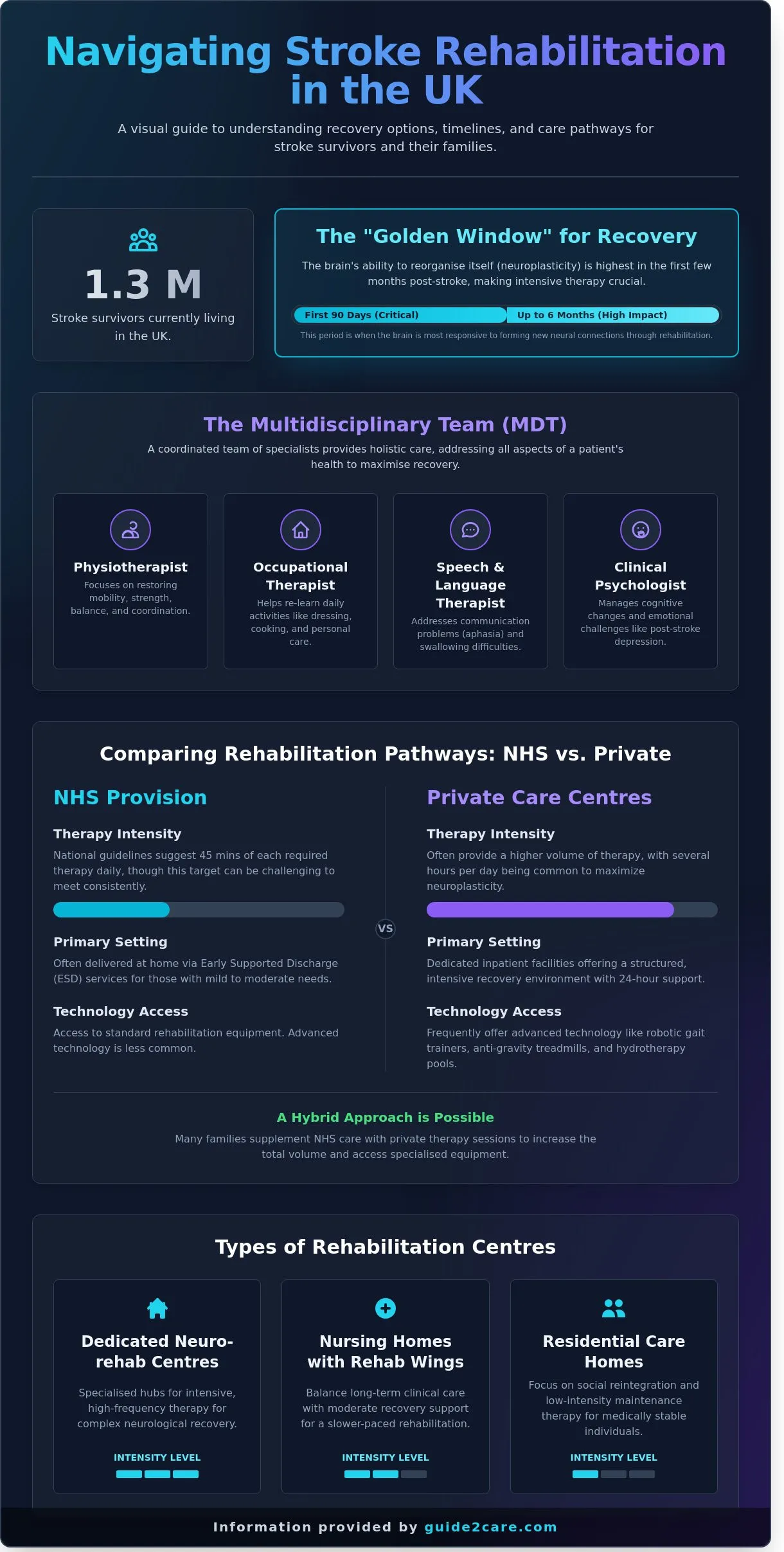
Research from the Stroke Association confirms there are 1.3 million stroke survivors currently living in the UK. The first 90 days after an incident are often described as the "golden window" for recovery, making the choice of facility a time-sensitive priority. You're likely feeling the pressure of this timeline while trying to understand the differences between NHS provision and private funding. Finding reliable stroke rehabilitation care centres uk shouldn't be a process defined by stress or confusion. It's vital to act quickly but with the right information at your disposal.
This guide provides a practical framework to help you evaluate and select the right recovery environment. You'll learn how to assess clinical expertise, understand the costs involved, and verify the quality of local providers. We'll examine the specific types of intensive therapy available, such as physiotherapy and speech and language therapy. We also provide a clear checklist to ensure your chosen centre meets the latest Care Quality Commission standards. Use this resource to simplify your search and focus on the practical steps of rehabilitation.
Key Takeaways
- Understand the critical "golden window" for recovery and how multidisciplinary teams support neuroplasticity in the first six months.
- Compare different stroke rehabilitation care centres uk to determine whether a specialised neuro-hub or a residential wing best suits your recovery goals.
- Explore how innovative technology, including anti-gravity treadmills and hydrotherapy pools, can accelerate the process of regaining independence.
- Use our practical checklist to evaluate clinical excellence, equipment standards, and facility accessibility during your onsite visits.
- Identify the various funding routes available in the UK, from NHS Continuing Healthcare (CHC) to local authority support and self-funding options.
Understanding Stroke Rehabilitation Options in the UK
Stroke rehabilitation is a structured, goal-oriented process designed to help survivors regain independence. It focuses on relearning physical, cognitive, and communication skills lost due to brain injury. According to the Stroke Association, there are more than 100,000 strokes in the UK every year. Each survivor requires a unique recovery plan based on the severity of the event. Recovery relies on neuroplasticity, which is the brain's ability to reorganise itself by forming new neural connections. Clinical data shows that the first six months are the "golden window" for recovery. This is the period when the brain is most adaptable and responsive to intensive therapy.
The journey typically begins in an acute hospital stroke unit. Once a patient is medically stable, the focus shifts to long-term recovery settings. This transition is a critical step in the pathway. Many families choose to move their loved ones to stroke rehabilitation care centres uk to ensure they receive consistent, specialised support. These centres bridge the gap between hospital care and returning home, providing a safe environment for intensive daily practice.
The Role of the Multidisciplinary Team (MDT)
Effective recovery requires more than just physical exercise. A Multidisciplinary Team (MDT) provides a holistic approach to care. Physiotherapists focus on mobility and strength, while Occupational Therapists (OTs) help survivors adapt to daily tasks like dressing and cooking. Speech and Language Therapists (SLTs) are essential for managing aphasia and swallowing difficulties. Clinical psychologists play a vital role too. They address cognitive changes and manage post-stroke depression, which affects roughly 33% of survivors within the first year. A coordinated MDT ensures that all aspects of a patient's health are monitored and improved simultaneously.
NHS vs Private Stroke Rehabilitation
The UK offers two primary pathways for recovery. The NHS provides Early Supported Discharge (ESD) for patients with mild to moderate disabilities. This service allows survivors to receive therapy in their own homes rather than staying in a hospital ward. However, NHS resources are often stretched. National guidelines suggest 45 minutes of each required therapy daily, but meeting this target can be challenging in some regions.
Private stroke rehabilitation care centres uk offer an alternative for those seeking higher intensity. These facilities often provide several hours of therapy per day and access to advanced technology, such as robotic gait trainers or functional electrical stimulation. It's possible to use a hybrid approach. Many families supplement NHS primary care with private therapy sessions to increase the total volume of rehabilitation. This flexibility helps maximise the chances of a functional recovery during the critical early months.
Types of Rehabilitation Centres: NHS, Private, and Residential
Selecting the correct setting for recovery depends on medical stability and the required frequency of therapy. Stroke rehabilitation care centres uk provide different levels of intensity through inpatient and outpatient programmes. Inpatient care involves staying at a facility for 24-hour clinical monitoring. Outpatient care allows patients to live at home while attending a centre for scheduled therapy sessions during the day.
- Dedicated Neuro-rehabilitation Centres: These are specialised hubs designed for intensive, high-frequency therapy.
- Nursing Homes with Rehabilitation Wings: These facilities balance long-term clinical care with recovery support.
- Residential Care Homes: These settings focus on social reintegration and low-intensity maintenance for medically stable individuals.
The choice between these options often rests on the patient's ability to tolerate intensive activity. The National Institute for Health and Care Excellence (NICE) recommends that patients receive at least 45 minutes of each required therapy daily. If a patient cannot meet this physical demand, a slower-paced environment is usually more effective.
Specialist Neuro-rehab Units
Specialist units focus on high-dependency needs and complex neurological recovery. These centres employ multidisciplinary teams including neurologists, physiotherapists, and speech and language therapists. Staffing ratios are significantly higher in these units than in standard wards; you'll often find a ratio of one nurse to every four patients to manage acute needs. A typical daily schedule involves blocks of intensive motor skill training, cognitive exercises, and swallow assessments. This structure ensures that every hour of the day contributes to regaining independence.
Care Homes with Stroke Support
Nursing homes with rehabilitation wings differ from specialist units in their therapy delivery. Instead of daily intensive blocks, these homes often provide one or two sessions per week. This pace suits individuals who require long-term assistance or those who find intensive programmes too exhausting. It's vital to check that the home has "stroke-aware" staff training. Look for providers where care assistants hold Level 2 or 3 Diplomas in Health and Social Care with specific stroke modules. Ensure the facility has necessary equipment such as standing frames, specialized hoists, and adapted bathrooms. You can find the care you need by comparing local providers through our detailed directory.
Residential homes represent the final tier of support. They don't provide 24-hour nursing care but offer a safe environment for social recovery. These homes help residents practice daily living skills like cooking or dressing in a supervised setting. Choosing the right stroke rehabilitation care centres uk requires a clear understanding of these distinctions to match the facility's resources with the patient's specific recovery stage.
Evaluating Clinical Excellence and Innovative Technology
Selecting stroke rehabilitation care centres uk requires a close look at the clinical tools available for patient recovery. Modern facilities use specific equipment to accelerate physical and cognitive progress. Anti-gravity treadmills, such as the AlterG system, allow patients to practice walking with up to 80% of their body weight removed. This reduces the risk of falls while building muscle memory. Exoskeletons provide external structural support for those with severe mobility loss, while Functional Electrical Stimulation (FES) uses small electrical pulses to activate paralysed or weakened muscles.
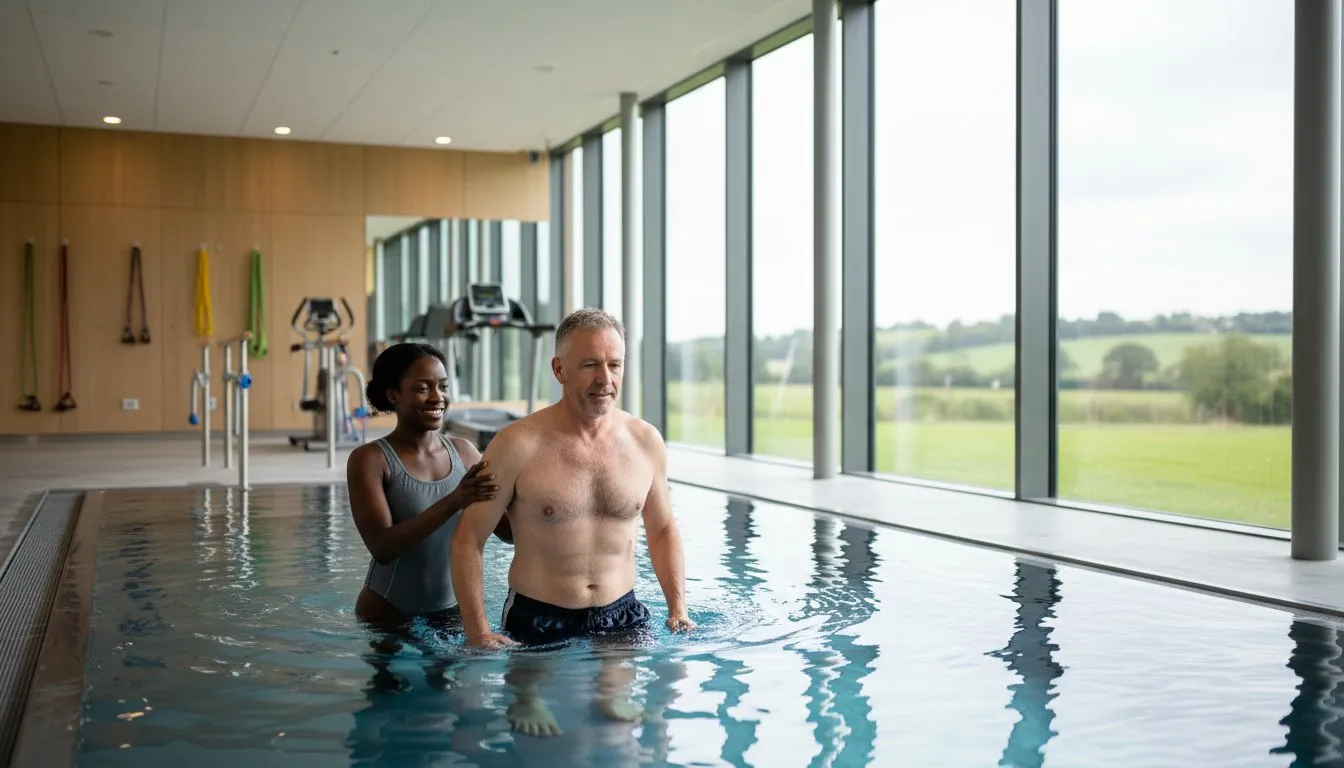
Hydrotherapy pools are another vital feature, typically maintained at a constant 34°C to 35°C. Water provides natural buoyancy, reducing joint impact by approximately 90% when a patient is submerged to chest level. This environment allows for movement and strength training that isn't possible on land. Virtual reality (VR) and gaming technologies engage patients in cognitive and motor-skill tasks, making repetitive exercises more interactive. These systems track progress with millimetre precision. High-quality centres use this data to adjust treatment plans every 24 to 48 hours, ensuring the intensity matches the patient's current ability.
The Importance of CQC Ratings
The Care Quality Commission (CQC) monitors and inspects all stroke rehabilitation care centres uk to ensure they meet national standards. You should examine the latest inspection report, specifically looking at the "Effective" and "Well-led" categories. An "Effective" rating confirms the care is based on current evidence and achieves positive outcomes for residents. Use Guide2Care to filter your search for providers currently holding "Good" or "Outstanding" ratings. As of 2024, these ratings indicate a high standard of clinical governance and safety.
Advanced Rehabilitation Technology
Robotic-assisted therapy is essential for achieving the high volume of repetitions required for motor recovery. While traditional physiotherapy might manage 30 to 40 repetitions in a standard session, robotic devices can facilitate over 1,000 repetitions. Neuroplasticity refers to the brain's ability to reorganise itself by forming new neural connections in response to repetitive movement and learning. Intelligent software also supports speech and language therapy (SLT) and cognitive tasks. These digital platforms provide 24/7 access to exercises that supplement face-to-face sessions, allowing for continuous stimulation of the brain's language centres.
The Buyer’s Checklist: What to Look for During a Visit
Preparation is the first step toward an effective site visit. Bring a copy of the hospital discharge summary and a complete list of current medications. These documents allow the facility's clinical team to provide an accurate assessment of whether they can meet the specific needs of the survivor. Choosing between various stroke rehabilitation care centres uk requires a methodical approach to ensure the environment supports both physical and cognitive recovery.
Observe the facility's layout and atmosphere during your tour. Look for evidence of a rehabilitative culture rather than just a residential one. This includes seeing patients engaged in activities outside their rooms and therapy equipment that's in good repair. Ask about the specific experience the staff has with different stroke types, such as ischaemic or haemorrhagic. A facility that tracks its own "outcomes data," such as the percentage of residents who return home, demonstrates a commitment to results.
Financial clarity is essential before signing any agreement. In 2023, the average cost for nursing care in the UK reached £1,160 per week. Request a transparent fee schedule that outlines exactly what the base price includes. Ask specifically about "extra" charges for items like laundry, specialist dressings, or transport to external consultant appointments. These hidden costs can add hundreds of pounds to a monthly bill if not identified early.
Practical Questions for the Management
Verify the intensity of the rehabilitation programme. Ask the manager exactly how many hours of direct 1-to-1 therapy are guaranteed each week. National guidelines suggest at least 45 minutes of each required therapy daily, but actual provision varies. Inquire about their family training policy. A high-quality centre will invite family members to shadow therapists. This ensures a safer transition when the patient eventually returns home. Finally, ask for their emergency protocol. Confirm they have a 24-hour nursing presence and a direct link to the local Acute Stroke Unit.
Assessing the Living Environment
Physical accessibility must be absolute. Check that corridors are wide enough for large electric wheelchairs and that all flooring is level to prevent trips. Look for specialised bathrooms equipped with ceiling track hoists and height-adjustable sinks. Nutrition requires specific attention because approximately 50% of stroke survivors experience dysphagia, or swallowing difficulties. Ask the catering manager how they manage textured diets and if they follow the International Dysphagia Diet Standardisation Initiative (IDDSI) frameworks. Communal spaces should be bright and inviting to encourage the social interaction necessary for psychological health.
Find the right facility for your specific recovery goals by using our directory to compare stroke rehabilitation care centres uk today.
Funding and Finding Stroke Care Centres via Guide2Care
Managing the costs of long term recovery is a primary concern for families. You must identify which funding stream applies to your situation before committing to a provider. The UK system splits support into social care and healthcare. These categories determine who pays the bill and how much you contribute from personal savings. Finding the right stroke rehabilitation care centres uk requires a clear understanding of these financial frameworks.
Understanding Care Funding
Social care is means-tested and managed by local authorities. In England, if the survivor's assets exceed £23,250, they're usually responsible for the full cost of residential care. This threshold includes savings and often the value of their property. Local councils conduct a financial assessment to calculate exact contributions. You should request this assessment as soon as the hospital mentions discharge planning.
NHS Continuing Healthcare (CHC) is different. It's a package of care funded solely by the NHS for individuals with a "primary health need." This is not means-tested. It's based on the complexity and intensity of the survivor's clinical requirements. You must ask the hospital's discharge coordinator for a CHC screening. If the initial checklist is positive, a full assessment using the Decision Support Tool follows. This tool evaluates 12 domains of need, such as cognition, communication, and mobility.
Private rehabilitation providers often have different fee structures. Some charge a flat weekly rate, while others use a "care type" model where costs increase with the level of support. Always ask for a written breakdown of what the base fee covers. Extra charges for specialized physiotherapy or speech and language therapy are common in private stroke rehabilitation care centres uk.
Using the Guide2Care Directory
The Guide2Care directory is a functional tool designed to streamline your search. You can filter results by specific care types to find the most appropriate setting. Select "Nursing Homes" if the survivor requires 24-hour medical intervention from registered nurses. Choose "Home Care" if the goal is to receive domiciliary support while living at home.
Each profile provides data on the facility's Multi-Disciplinary Team (MDT) structure. Check if the provider employs on-site specialists or relies on visiting therapists. Facilities with dedicated gyms and neuro-physiotherapy equipment often yield better recovery outcomes. Reading these profiles helps you build a shortlist of providers that match the survivor's clinical profile. Find the care you need by exploring our UK directory today.
The final stage involves booking a formal assessment. A representative from the chosen care centre will visit the hospital to meet the survivor. They review medical notes and speak with the current ward staff. This step ensures the facility can safely manage the survivor's specific needs. Once the provider confirms they can accept the placement, the hospital discharge team organises the transport. They ensure all medication and discharge summaries accompany the survivor to their new recovery environment.
Secure the Best Path to Recovery
Choosing the right environment is a vital step in the recovery process. Effective stroke rehabilitation care centres uk provide the specific clinical support and innovative technology needed to regain independence. The Stroke Association reports that intensive therapy in the early stages of recovery leads to better functional outcomes for the 100,000 people who have a stroke in the UK each year. Always check Care Quality Commission (CQC) ratings to ensure a facility meets national standards for safety and care.
Use Guide2Care to streamline your search. Our platform offers a comprehensive UK-wide directory with verified CQC rating information and detailed guides on funding and selection. You can compare providers and understand your financial options in one place. This structured approach helps you make an informed choice quickly and efficiently. Whether you're looking for private residential care or NHS-funded options, the right information makes the process manageable.
Find the Care You Need in our UK Directory
You've the tools to find the right support for a successful recovery.
Frequently Asked Questions about Stroke Rehabilitation
What is the best type of rehab after a stroke?
The best type of rehab is a multidisciplinary programme that delivers at least 45 minutes of each required therapy daily. This approach follows NICE guidelines and includes physiotherapy, occupational therapy, and speech and language therapy. High-intensity stroke rehabilitation care centres uk provide the coordinated environment necessary to maximise neuroplasticity in the first six months of recovery.
How long does stroke rehabilitation usually last in a care centre?
Residential stroke rehabilitation typically lasts between 3 and 6 months for most patients. Clinical data from the Sentinel Stroke National Audit Programme shows that the first 90 days are the most critical for regaining physical function. Some individuals stay longer if they have complex nursing needs or require intensive 24-hour support to reach their independence goals.
Can I get private stroke rehab while still receiving NHS treatment?
You can pay for private stroke rehabilitation sessions while you're still receiving NHS care. Department of Health rules allow patients to supplement their statutory treatment with private therapists as long as the services are kept separate. This is a common way to increase the frequency of therapy sessions beyond the standard NHS allocation provided by stroke rehabilitation care centres uk.
How much does private stroke rehabilitation cost per week in the UK?
Private residential stroke rehabilitation costs between £2,000 and £5,000 per week depending on the level of specialist nursing required. These fees cover 24-hour care, all therapy sessions, and use of specialist gym equipment. Prices in London and the South East are often 20% higher than equivalent facilities in the North of England or Wales.
What should I look for in a CQC report for a stroke rehab centre?
Look for a "Good" or "Outstanding" rating in the "Effective" and "Caring" categories of the Care Quality Commission report. Check that the inspection occurred within the last 24 months to ensure the data is current. The report should specifically mention neurological rehabilitation or specialist stroke care rather than just general residential support for older people.
Is home-based rehab better than a residential care centre?
Residential care centres are better for patients who need more than three hours of intensive therapy per day. Home-based rehab is often more suitable for those who have regained basic mobility and want to practice daily living skills in their own environment. Statistics show that 40% of stroke survivors benefit from the 24-hour clinical supervision that only a residential facility provides.
How do I know if a centre is suitable for someone with aphasia?
A suitable centre must have on-site Speech and Language Therapists available at least three days per week. Ask if the staff are trained in "Total Communication" techniques and if the facility uses specialised software like Therapy-Box. Since 33% of stroke survivors experience aphasia, the centre should provide quiet, dedicated spaces for one-to-one communication practice.
What happens when stroke rehabilitation funding runs out?
The local Integrated Care Board must conduct a Checkpoint Assessment for NHS Continuing Healthcare (CHC) when initial funding ends. If the patient isn't eligible for CHC, the local authority performs a financial means test under the Care Act 2014. In England, individuals with capital and assets below £23,250 may qualify for state-funded support to help cover their ongoing care costs.