Bariatric Care Homes UK: Finding Specialist Obesity Support in 2026
Over 25.9% of adults in England are now classified as obese according to the Health Survey for England. Families across the UK often struggle to find facilities that balance complex clinical needs with personal dignity. Locating suitable bariatric care homes uk requires a clear understanding of structural requirements and staff training that goes beyond traditional nursing care. Identify settings where specialist equipment is a standard feature rather than an afterthought.
Finding the right provider doesn't have to be a source of stress. This guide provides a practical framework for finding specialist support in 2026. We define the essential heavy-duty equipment needed, such as bariatric beds with a 300kg capacity and reinforced ceiling-track hoists. We also explain the differences between standard and specialist obesity care. Use this resource to build a shortlist of qualified providers. Learn exactly what to ask during a site visit to ensure a high standard of clinical and personal support.
Key Takeaways
- Define the specific clinical requirements for bariatric support, focusing on the complex health needs associated with a BMI over 40.
- Identify essential infrastructure upgrades, including reinforced flooring and oversized furniture, necessary for a safe care environment.
- Compare residential and nursing options to select the most appropriate level of support among bariatric care homes uk.
- Evaluate provider quality by reviewing CQC reports and assessing specialist staff training in bariatric handling.
- Access the Guide2Care directory to filter specialist providers and secure a placement before bed availability becomes limited.
Defining Bariatric Care in UK Residential Settings
Bariatric care refers to the specialist medical and residential support provided to individuals with a Body Mass Index (BMI) typically over 40. This type of care addresses the complex health needs associated with severe obesity, such as respiratory difficulties and skin integrity issues. The primary goal is to provide a safe, non-judgemental environment that promotes independence where possible. Bariatric care is a multidisciplinary approach involving nutrition, mobility, and psychological support.
Providers in the medical field of bariatrics focus on both physical health and emotional well-being. It's not just about weight management; it's about dignity and safety. Specialist bariatric care homes uk offer environments specifically designed for larger bodies, ensuring that residents can move safely and receive clinical monitoring for chronic conditions. These settings remove the barriers often found in standard care environments.
To better understand the medical complexities and the necessity for specialised care pathways, watch this helpful video from the Royal College of Physicians:
Who requires specialist bariatric support?
Several groups of people need the high-level support found in specialist facilities. These include:
- Individuals with limited mobility: Those who cannot move independently often require bariatric hoists and ceiling-track systems rated for higher weight capacities.
- Post-surgery patients: Individuals recovering from bariatric surgery need clinical monitoring to prevent complications and manage nutritional needs during recovery.
- Those with obesity-related comorbidities: Obesity often occurs alongside Type 2 diabetes, heart disease, or sleep apnoea, requiring a higher ratio of trained nursing staff.
The rising demand for bariatric facilities in the UK
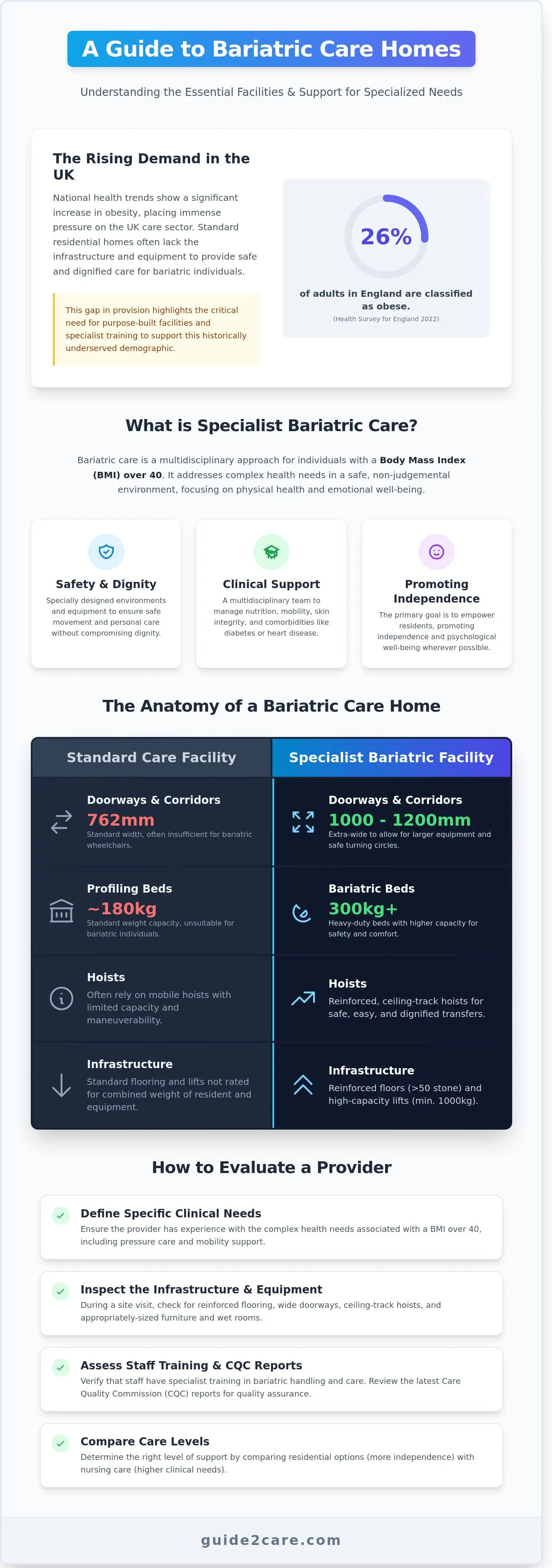
The demand for bariatric care homes uk is increasing due to national health trends. Data from the Health Survey for England 2022 shows that 26% of adults are classified as obese. This puts immense pressure on the care sector. Standard residential homes often cannot meet these needs because they lack the necessary infrastructure. Most general homes don't have the floor reinforcement or extra-wide door frames required for bariatric equipment.
Essential Facilities and Equipment for Bariatric Care
Bariatric care homes uk require specific architectural designs to support residents safely. Standard residential settings often lack the space or structural integrity needed for specialist equipment. Facilities must accommodate higher weight limits and larger equipment dimensions while maintaining a domestic atmosphere. This balance ensures safety without sacrificing the resident's quality of life. Effective care environments use reinforced infrastructure to prevent accidents and ensure staff can provide support without physical strain.
Structural modifications in bariatric care homes
Standard UK door widths of 762mm are insufficient for bariatric wheelchairs. Specialist homes install doors measuring 1000mm to 1200mm to allow for 1.5-metre turning circles. Flooring requires reinforcement to handle static loads exceeding 50 stone. This includes the weight of the resident and heavy-duty profiling beds.
Wet rooms are essential for dignified care. These spaces feature reinforced wall-mounted toilets and shower seats rated for high weight capacities. Lifts must have a minimum capacity of 1000kg to transport a resident and multiple staff members during an emergency. Emergency exit routes must be wider than standard regulations to ensure rapid evacuation for those using oversized mobility aids. Providers often use subtle design choices, such as recessed storage for hoists, to keep the environment from feeling like a clinical centre.
Specialist pressure care and skin management
Managing skin health is a priority in bariatric settings. Residents have a higher risk of developing pressure ulcers due to limited mobility and skin-fold moisture. Providers must follow the NICE guidelines for obesity management to maintain clinical standards. Specialist mattresses reduce the risk of pressure sores by distributing weight evenly across a larger surface area. These systems use dynamic air-flow technology to adjust to the resident's movements automatically.
Specialist equipment for hygiene and skin-fold care includes:
- Dynamic air-flow mattresses with high-weight sensors for constant pressure relief.
- Bariatric-rated profiling beds with extra-wide frames and reinforced motors.
- Heavy-duty ceiling track hoists with 360-degree rotation for safe transfers.
- Recliner chairs featuring reinforced steel frames and wider seat bases.
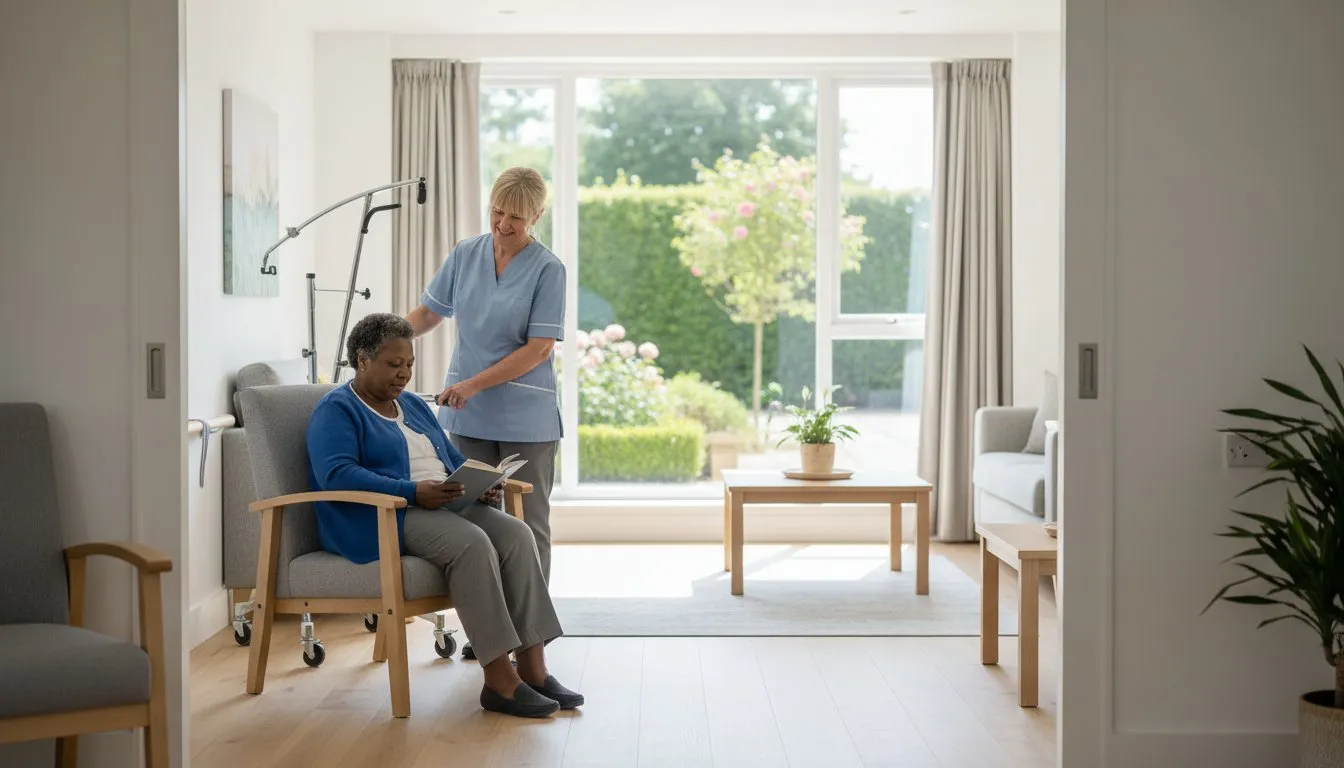
These facilities use soft furnishings and neutral decor to prevent the room from feeling like a hospital ward. Modern bariatric care prioritises comfort alongside clinical safety. If you need to see available options, explore Guide2Care to find providers with these specific facilities.
Comparing Residential, Nursing, and Home Bariatric Care
Choosing the right care setting depends on an individual's level of independence and their specific clinical requirements. Specialist bariatric care homes uk provide environments specifically engineered for higher weight capacities, featuring reinforced flooring and wider door frames. The choice between residential, nursing, or home-based support impacts both the quality of daily life and the level of medical safety provided.
Residential bariatric care is most suitable for individuals who maintain some mobility but struggle with standard domestic environments. These homes provide adapted furniture and communal spaces that accommodate larger frames comfortably. Residents receive help with daily living tasks such as dressing and personal hygiene, but they don't require constant medical intervention.
Nursing care is the necessary choice for those with complex clinical needs or severe immobility. These facilities employ registered nurses 24 hours a day to manage chronic conditions. Staff in these settings follow the NICE guidelines for obesity management to ensure that patient handling and clinical assessments meet national safety standards. This setting is often the safest option for individuals at high risk of skin breakdown or respiratory distress.
Consider these primary factors when comparing options:
- Equipment availability: Nursing homes typically have ceiling track hoists and bariatric beds already in place.
- Social interaction: Residential settings offer structured social programmes to reduce the risk of isolation.
- Clinical oversight: Nursing care provides immediate access to medical staff for medication adjustments.
- Cost: Home care requires private funding for structural modifications, while care home fees often include all equipment and utility costs.
When is a bariatric nursing home necessary?
A nursing home becomes essential when 24/7 clinical monitoring is required. This includes the management of complex medication regimes for co-morbidities like type 2 diabetes or heart disease. Many residents also require respiratory support, such as CPAP or BiPAP machines, which need professional supervision. If you're recovering from weight-loss surgery, the clinical environment of a nursing home provides the necessary post-operative monitoring to prevent complications like infections or nutritional deficiencies.
The pros and cons of bariatric home care
How to Evaluate a Bariatric Care Provider
Selecting from the available bariatric care homes uk requires a methodical approach. You must look beyond standard residential care features. Specialist bariatric support demands specific infrastructure and high-level staff competency. It's not just about larger rooms; it's about the technical ability to provide safe, dignified care.
First, examine the physical environment. Standard doorways are often too narrow for bariatric beds or wide-base wheelchairs. Ensure corridors and bedrooms allow for at least 1,200mm clearance. Check the maintenance logs for specialist equipment. Ceiling track hoists and floor-based lifts must have valid LOLER (Lifting Operations and Lifting Equipment Regulations) certificates. These are typically updated every six months to ensure mechanical safety.
Staff training is the next priority. Ask to see the home's training matrix. It should show specific modules for Plus-Size Patient Handling and Tissue Viability. Bariatric skin care is complex. Staff need to know how to prevent pressure sores in deep skin folds. This training must be refreshed at least every 12 months to ensure the team remains proficient in the latest manual handling techniques.
Key questions to ask during a care home visit
Direct questions help you assess a home's actual capacity. Don't accept vague assurances. Use this checklist during your visit:
- What is the exact maximum weight capacity of your ceiling hoists and bariatric beds? Look for limits of at least 50 stone (317kg).
- How often is staff training updated for bariatric manual handling?
- Can the kitchen accommodate specific bariatric nutritional plans, such as high-protein or post-bariatric surgery diets?
- Is there a dedicated bariatric lead or clinical champion on the nursing team?
Understanding CQC ratings for bariatric services
The Care Quality Commission (CQC) monitors all bariatric care homes uk. When reviewing a report, look for mentions of the Safe and Effective domains. A home rated Good or Outstanding in these areas demonstrates a commitment to resident safety. Check if the provider is registered for Accommodation for persons who require nursing or personal care with a specific focus on physical disabilities. You can learn more about these benchmarks in our guide on Understanding CQC Ratings.
Culture is harder to measure but vital for mental health. Observe how staff interact with residents. Dignity should be a visible priority. This includes having appropriately sized gowns, chairs, and bathroom facilities that don't make the resident feel like an exception. A positive culture avoids the medicalisation of the resident's weight and focuses on their overall quality of life.
Finding the Right Bariatric Care Home with Guide2Care
Locating suitable bariatric care homes uk requires a methodical approach. Specialist bed availability is often limited across the country. Industry data indicates that fewer than 15% of UK care facilities possess the structural reinforcement and specialist hoisting equipment needed for residents over 25 stone. You should start your search at least three to six months before a planned move to secure a placement in a high-demand facility.
To help with the logistics of moving heavy personal belongings or specialized bariatric furniture during this transition, you can visit Courier Pro to find courier services with the necessary capacity for large-item transport.
Guide2Care provides a transparent platform to identify these specialist providers. Our directory removes the guesswork by categorising homes based on their specific capabilities. We focus on providing factual data to help you make an informed decision without unnecessary complexity. Our goal is to simplify the search process by presenting clear, actionable information about bariatric support services.
Using our directory to simplify your search
Start by using the search filters on our homepage. Select your preferred location and then filter by Type of Care to identify specialist bariatric providers. Each provider profile lists available facilities, such as wide-access doorways and bariatric-rated beds. You can Find Care Homes Near Me to see which local options meet your specific weight-management requirements. This targeted search saves time. It ensures you only contact homes capable of providing safe, dignified support.
Planning the transition into bariatric care
The transition process begins with a formal pre-admission assessment. The care home manager or a senior nurse will visit you to evaluate physical needs and equipment requirements. They will check if the home's environment is suitable. This includes checking floor load capacities and bathroom dimensions. This assessment is a standard requirement. It ensures the home can maintain your safety and personal dignity from the day you arrive.
Secure Your Specialist Bariatric Support
Finding the right bariatric care homes uk requires a clear understanding of specific equipment needs and medical requirements. You must ensure a facility provides reinforced hoists and wide-access doorways to maintain safety and dignity. Since obesity affects 26% of adults in England according to the 2022 Health Survey for England, the demand for these specialist beds is increasing. Making an informed choice involves comparing residential support against clinical nursing care based on individual mobility levels.
Guide2Care simplifies this search by providing a comprehensive UK-wide directory. You can access neutral and transparent provider information without navigating complex jargon. Use our easy-to-use search filters to identify specialist care that meets your exact criteria. It's important to act now to secure a placement in a facility that truly understands bariatric needs. Our platform removes the stress of the search by categorising providers by their specific capabilities. You'll find the information you need to make a confident decision for yourself or a loved one.
Find the specialist bariatric care you need today
Frequently Asked Questions
What is the difference between standard and bariatric care?
Bariatric care differs from standard care through the use of heavy-duty equipment and increased staff-to-resident ratios. Standard facilities often lack the structural capacity to support residents over a certain weight limit. Bariatric units provide wider door frames, often 1200mm or more, and reinforced flooring to ensure safety for both staff and residents.
How much does bariatric care in a nursing home cost in the UK?
Weekly costs for bariatric care typically range from £1,300 to £2,000 depending on your location and specific needs. These fees are higher than standard nursing care because they cover specialised maintenance and additional moving and handling personnel. Industry data suggests these costs are often 20% to 40% higher than average residential rates.
Can I get NHS funding for bariatric residential care?
You can receive NHS funding for bariatric care through Continuing Healthcare (CHC) if your primary need is health-related. If you aren't eligible for CHC, you might qualify for NHS Funded Nursing Care (FNC). This provides a flat rate of £235.88 per week towards nursing costs in 2024/25, though this rate is reviewed annually.
What equipment should I look for in a bariatric care home?
Essential equipment includes ceiling track hoists with a safe working load of 318kg or more. You should also check for extra-wide profiling beds, bariatric wheelchairs, and specialist pressure-relieving mattresses. These items are vital for maintaining skin integrity and ensuring safe transfers for residents with limited mobility.
Do all care homes accept residents with high BMI?
Many care homes cannot accept residents with a high BMI due to physical building constraints and insurance limitations. Facilities must have specific CQC registration to provide specialist support. It's estimated that fewer than 35% of UK care homes are currently equipped to handle complex bariatric needs safely.
How do I know if a care home is properly equipped for bariatric needs?
Check the home’s Statement of Purpose to confirm they're registered for bariatric care homes uk services. You should also ask to see their moving and handling policy and verify the weight limits on their lifting equipment. A physical visit allows you to see if the corridors and rooms are wide enough for bariatric chairs.
Is bariatric care only for people who have had weight-loss surgery?
Bariatric care is for any individual whose weight impacts their daily living and health, not just those recovering from surgery. It addresses complex needs like chronic oedema, respiratory issues, and limited mobility. Specialist homes provide the tailored nutrition and physiotherapy required for long-term obesity management and improved quality of life.
How can I find bariatric care homes near me?
You can find bariatric care homes uk by using the Guide2Care search tool to filter for specialist obesity support. This directory provides verified information on local providers, their CQC ratings, and the specific facilities they offer. It's an efficient way to narrow down your options based on your specific postcode and care requirements.