Finding a Reliable Home Caregiver: The Complete UK Guide for 2026

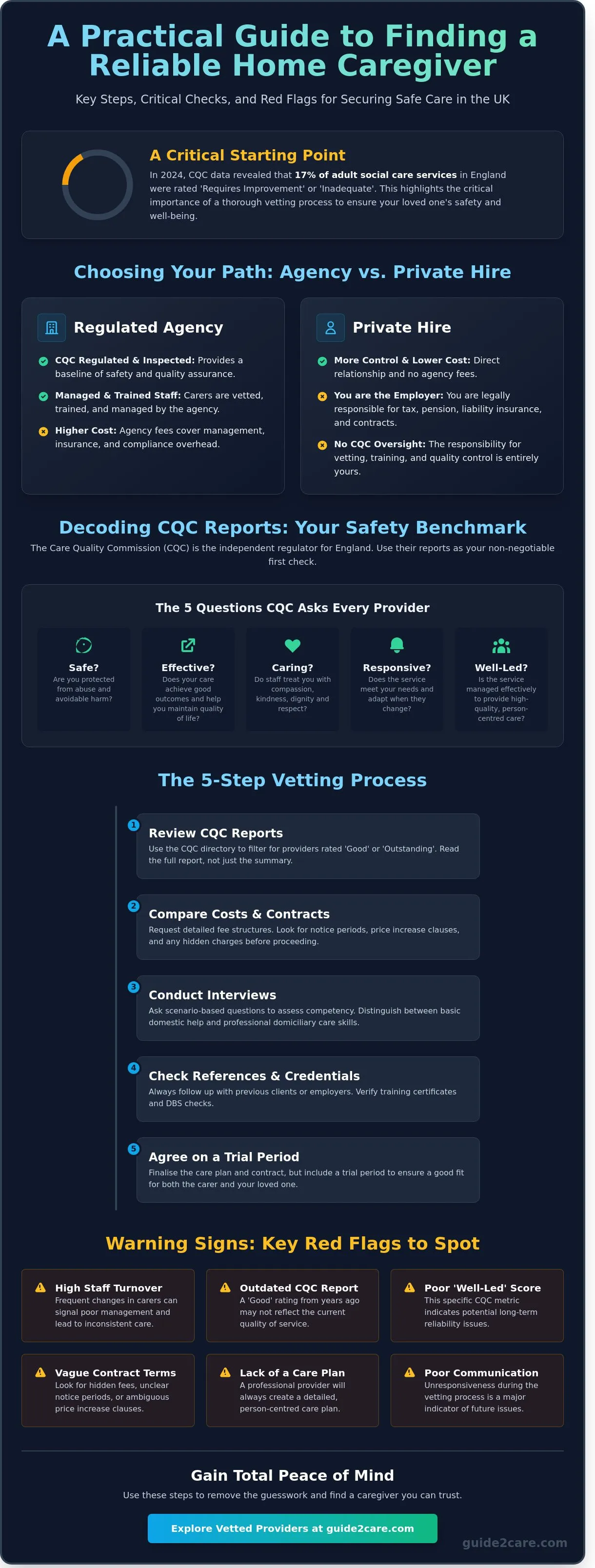
In 2024, Care Quality Commission (CQC) data revealed that 17% of adult social care services in England required improvement or were rated as inadequate. This statistic highlights why finding a reliable home caregiver is the most critical decision you'll make for a family member's safety. You likely feel the weight of this responsibility. It's common to worry about the rising costs of domiciliary care or feel confused by the legal differences between hiring a private carer and using a regulated agency. You want to avoid the risk of neglect while ensuring your budget covers the necessary support.
You deserve a clear path forward that removes the guesswork from the UK care system. This guide provides the practical steps you need to vet providers effectively and secure high-quality support for 2026. We'll break down how to interpret CQC reports, manage the legalities of private contracts, and follow a strict 5-step vetting process. Use this information to find the care you need and gain total peace of mind regarding your loved one's independence. We'll also compare agency fees against private hire costs to help you plan your finances accurately.
Key Takeaways
- Use CQC ratings as your primary benchmark to ensure providers meet essential safety and quality standards in England.
- Compare the agency model against private hiring to understand your legal responsibilities regarding tax, training, and liability.
- Streamline the process of finding a reliable home caregiver by using a structured two-phase vetting system to assess competency and schedule alignment.
- Identify red flags during the interview stage to distinguish between basic domestic help and high-quality domiciliary care.
- Review service contracts and living care plans to identify notice periods, price increase clauses, and hidden fees before signing.
Understanding Home Care in the UK: What Does a Reliable Carer Do?
Home care, often referred to as domiciliary care, involves professional support delivered directly in a person's private residence. This Overview of home care in the UK explains how the system allows individuals to retain their independence while receiving essential help. Most families start the process of finding a reliable home caregiver during a crisis point. This usually happens after a sudden fall, a new medical diagnosis, or a hospital admission. Staying at home provides significant emotional benefits. It maintains social links and familiar routines that residential care cannot easily replicate. Recent surveys indicate that 71 percent of UK adults prefer to be cared for in their own homes rather than moving into a facility.
To better understand this concept, watch this helpful video:
Care levels vary based on the individual's health. Personal care includes help with hygiene, bathing, and dressing. Domestic help focuses on laundry, cleaning, and shopping. Specialist nursing care involves clinical tasks performed by registered professionals for conditions like dementia or Parkinson's. It's vital to distinguish between these categories to ensure safety and compliance with UK regulations; for instance, MyHomeDoc demonstrates how specialist house calls can be integrated into home care to provide high-level medical oversight. Choosing the right level of support prevents unnecessary hospital readmissions.
The Core Responsibilities of a Home Carer
A carer's daily tasks are diverse and practical. They manage medication schedules, support mobility to prevent falls, and prepare nutritious meals. Companionship is a critical, measurable outcome that reduces social isolation. Isolation currently affects 1.4 million older people in the UK. By 2026, domiciliary care is defined as a regulated, person-centred service that uses integrated technology to support safe and independent living in a domestic environment. Families can also discover FIVESTEP 五步健 to find specialized products that aid this independence. Carers act as the primary link between the individual and the wider healthcare system.
This link often involves transporting individuals to medical appointments and social engagements, making vehicle safety a key consideration. To ensure these journeys are as secure as possible, Safe & Sound Mobile offers nationwide installation of professional vehicle security and audio systems, providing peace of mind for both families and caregivers on the road.
Assessing Your Specific Care Needs
Navigating the Regulatory Landscape: Using CQC Ratings Effectively
The Care Quality Commission (CQC) is the independent regulator of health and adult social care in England. It monitors, inspects, and regulates services to ensure they meet fundamental standards of quality and safety. When you begin the process of finding a reliable home caregiver, the CQC website is your first point of reference. Every registered provider must display their rating on their premises and website by law.
A "Good" or "Outstanding" rating serves as a non-negotiable baseline for reliability. The CQC assesses agencies by asking five specific questions. Is the service safe? Is it effective? Is it caring? Is it responsive? Is it well-led? Each category receives an individual score. You can find the most recent inspection report for any UK agency by searching the CQC online directory using the provider's name or postcode. To simplify your search, you can explore our directory to filter providers based on these official ratings.
Reading Between the Lines of a CQC Report
A high-level rating doesn't tell the whole story. You must read the full text of the report to identify hidden red flags. Look for mentions of high staff turnover. If an agency frequently loses staff, your loved one won't receive consistent care. Pay close attention to the "Well-led" category. This metric determines if the management has the oversight required for long-term reliability. Check the inspection date. A "Good" rating from March 2024 is more reliable than an "Outstanding" rating from 2021, as management teams and staff cultures can change significantly over three years.
What to Do if a Provider is Unregulated
Some introductory agencies in the UK don't register with the CQC. These agencies match you with a carer but don't manage the care itself. This shifts the legal responsibility to you. If you choose an unregulated provider, you must conduct your own rigorous checks. Ensure the carer has a valid Enhanced DBS (Disclosure and Barring Service) check. This is a legal requirement for anyone working in a regulated activity with vulnerable adults.
You must also verify the carer's Right to Work in the UK and their professional certifications, such as the Care Certificate. Using an unregulated service often requires more administrative work from the family. For a broader overview of these responsibilities, consult Age UK's guide to finding homecare. Always ask to see physical copies of training certificates and insurance documents before signing any private contract.
Agency vs. Private Hire: Weighing Risks and Responsibilities
Finding a reliable home caregiver involves a choice between two distinct paths. You can use a CQC-regulated agency or hire an independent carer directly. Each option changes your legal status and your daily responsibilities. Understanding these differences is essential for long-term stability.
The Agency Model
In the agency model, the care provider is the legal employer. They manage the heavy lifting of human resources. This includes recruitment, background checks, and payroll. The agency covers sick pay, holiday pay, and maternity leave. If a carer is unwell or takes a holiday, the agency is responsible for providing a replacement. This ensures your care remains consistent without you needing to find a backup at short notice.
The Private Hire Model
Hiring a private carer means you become the employer. You gain more control over who enters your home, but you also take on full legal liability. You must ensure the workplace is safe and the worker has the right to work in the UK. For families considering international options or moving to join relatives overseas, Where Can I Live provides expert advice on navigating residency and the logistics of moving abroad. If a private carer gets the flu, you're responsible for finding a replacement or providing the care yourself.
Cost Analysis and Risk Mitigation
Private carers often charge a lower hourly rate, sometimes between £12 and £18 per hour. Agency rates are higher, typically ranging from £22 to £30 per hour. However, the agency rate includes the cost of recruitment, training, and insurance. When you hire privately, you must factor in the "hidden" costs of National Insurance, pension contributions, and the time spent on administration. The higher agency fee acts as a form of risk mitigation, protecting you from the financial impact of employment disputes or sudden service failures.
The Administrative Burden of Being an Employer
Hiring privately requires you to register with HMRC as an employer. You're responsible for managing PAYE, National Insurance, and workplace pension contributions for your carers. You also need to purchase Employers Liability Insurance for your home; this is a legal requirement in the UK that protects you if a carer is injured while working. Incorrectly labeling a carer as self-employed when they meet the criteria for employment is a serious legal risk that leads to back-dated tax bills and financial penalties from HMRC. To ensure you remain compliant, consulting with experts like Altum HR can help you navigate the nuances of employment law and the strategic use of zero-hour contracts.
Training and Professional Oversight
Agencies provide a layer of professional oversight that is missing in private arrangements. They ensure all staff are up-to-date with mandatory training, such as Manual Handling, First Aid, and Safeguarding. This reduces the risk of accidents in the home. You also benefit from having a Care Manager. This person acts as a point of escalation if you have complaints or if the care needs change. For more details on vetting these services, see our guide on What to Look For in a Home Care Provider. Finding a reliable home caregiver is much simpler when a professional body handles the quality control and staff performance reviews on your behalf.
The Vetting Process: Interviewing and Spotting Red Flags
Finding a reliable home caregiver requires a structured approach to filter out unsuitable candidates early. This rigorous vetting is essential whether you are hiring locally or seeking specialized disability support from a registered NDIS provider like Accessible Care in Melbourne and Adelaide, Australia. The process follows four distinct phases to ensure safety and competency.
Phase 1 begins with a 15-minute phone screen. Confirm the candidate's availability matches your required hours and verify their right to work in the UK. For guidance on complex visa or residency issues when hiring privately, 1 Absolute Advisor offers expert immigration consultancy to ensure full legal compliance. If they lack specific experience, such as PEG feeding or hoist training, end the process here to save time. This initial filter ensures you only dedicate resources to viable candidates.
Move to Phase 2 for a formal interview focused on competency. Ask for specific examples of how they handled past emergencies. A candidate who can't describe a time they managed a difficult situation may lack the practical experience needed for solo care. According to Skills for Care, 39% of the adult social care workforce in England left their roles in 2022/23, making thorough vetting essential to avoid high turnover and ensure continuity of care.
Reference checking constitutes Phase 3. You must speak to at least two previous families or employers. Written testimonials are easily faked. Ask direct questions about punctuality and how the carer handled their last day of employment. If a previous employer is hesitant to recommend them, treat this as a significant red flag. Always verify that a Disclosure and Barring Service (DBS) check is current and enhanced for adult workforce roles.
The final step is the Phase 4 home trial. Observe the carer's soft skills during a paid two-hour session. Watch how they interact with your loved one. Do they make eye contact? Do they speak clearly? Chemistry is just as vital as technical skill when finding a reliable home caregiver. This trial allows you to see how they manage the environment without making a long-term commitment.
Essential Interview Questions for Care Agencies
If you're using a domiciliary care agency, your questions should target their operational resilience. Ask these three specific questions:
- "How do you handle staff absences at short notice?" A reliable agency should have a shadow or on-call roster to cover sickness within 60 minutes.
- "What is your specific training protocol for dementia or mobility issues?" Ensure their staff hold the Care Certificate and receive annual refreshers.
- "How do you use technology to track care delivery and medication?" Manual paper logs are prone to error and lack real-time oversight.
Modern Reliability Metrics: Care Tech in 2026
Digital care logs provide real-time transparency for families. These systems allow you to see exactly when a carer arrives and what tasks they complete via a secure app. GPS-verified check-ins ensure the carer is on-site for the full duration of the visit, reducing the risk of time clipping. By 2026, integration with remote monitoring and fall detection sensors will be standard. These tools alert families and agencies instantly if a person falls, allowing for an immediate response even between scheduled visits. This data-driven approach removes the guesswork from monitoring care quality.
Making the Final Choice: Contracts, Costs, and Trials
The process of finding a reliable home caregiver concludes with formalizing the arrangement. You must treat the Care Plan as a living document. It shouldn't be a static form filled out once and filed away. Instead, ensure it's reviewed every three to six months to reflect changes in health, mobility, or personal preferences. A rigid plan often leads to gaps in care as needs evolve over time; to maintain oversight, SafeKeep provides a secure digital platform to help families organise these essential life documents and admin in one central hub.
Review the service contract with a focus on three areas: notice periods, price increases, and hidden fees. Standard notice periods in the UK typically range from 14 to 28 days. Check for clauses that allow the agency to increase prices annually; these are often linked to the Consumer Price Index (CPI). Look for additional charges such as initial assessment fees or administrative costs for changing schedules at short notice.
Implementation should begin with a two-week trial period. This timeframe allows you to assess the "fit" between the caregiver and your family member. It's enough time to observe punctuality, competence, and personality compatibility. If the match doesn't work, use this window to request a different staff member without terminating the entire contract. Finding a reliable home caregiver is often about trial and refinement.
During the trial period, it is also important to monitor how the new arrangement affects household pets. For those with urban cats, you can visit London Veterinary Surgeries to discover strategies for maintaining a stress-free environment for your feline during changes to their home routine.
Understanding the True Cost of Home Care
Budgeting accurately is essential for long-term sustainability. For 2026, estimated hourly rates for domiciliary care in the UK range between £20 and £35. These figures vary based on your specific region and the complexity of the care required. You must account for additional expenses that aren't always included in the base rate:
- Bank Holidays: Rates often increase to time-and-a-half or double time.
- Mileage: Caregivers may charge approximately 45p per mile for errands or medical appointments.
- Specialist Equipment: Costs for hoists, hospital beds, or pressure mattresses are usually separate.
For more detailed information on financial support and eligibility, read our guide on Understanding Care Funding.
Starting the Journey with Confidence
Transitioning from family care to professional support can cause distress for some seniors. Start by introducing the caregiver gradually. Have them shadow a family member for the first few visits to build trust and ensure routine continuity. Establish a clear communication rhythm immediately. Decide if you prefer a digital logbook, a physical notebook in the home, or a weekly phone call with the agency manager.
Maintaining a stable environment also means looking after the pets that provide so much comfort to seniors. To find high-quality care for these animal companions, you can check out London Veterinary Surgeries, a multi-award winning group of independent practices dedicated to pet health in London.
In addition to veterinary health, specialized sitting services can help maintain a cat's routine; you can discover Mission Cats In-Home Care to see how professional in-home support provides a stress-free alternative to traditional boarding during times of family transition.
For those who may have residences abroad or are looking for premium examples of mobile pet services, a peluquería canina móvil Sotogrande like The Fur Seasons offers a professional model of how luxury grooming can be delivered directly to the home, ensuring pet well-being is maintained without the stress of travel.
Set firm boundaries regarding house rules and specific tasks from Day 1. Clear expectations prevent misunderstandings and foster a professional environment. Once you're ready to begin your search, use our resources to identify local providers who meet your criteria.
Take the Next Step in Your Care Search
Finding a reliable home caregiver requires a structured approach to safety and quality standards. You now have the tools to evaluate Care Quality Commission (CQC) ratings and conduct thorough interviews to identify potential red flags. Whether you choose a managed agency or hire a private carer, prioritizing clear contracts and transparent cost structures is essential for long-term success. These steps ensure that the support provided meets legal requirements and personal expectations in 2026.
Guide2Care helps you navigate these decisions with a comprehensive directory of CQC-registered providers. We offer free resources on care funding and selection to help you understand the financial landscape across the United Kingdom. Our platform is trusted by families nationwide to simplify complex sector information into actionable steps. You don't have to manage this process alone; use our verified data to find the right solution for your household.
Find The Care You Need: Search our UK Home Care Directory
Start your search today to secure the professional and dependable support your family deserves.
Frequently Asked Questions
How much does a home caregiver cost per hour in the UK in 2026?
Home care costs in 2026 are projected to average between £32 and £40 per hour for agency-provided services. These rates vary by region, with London and the South East typically reaching the higher end of this scale. Factors like the National Living Wage increases and provider overheads influence these specific figures.
Can I get help from the council to pay for a home carer?
You can receive financial assistance from your local council if your capital and savings fall below £23,250. This threshold applies in England, though limits differ in Scotland, Wales, and Northern Ireland. Request a financial assessment from your local authority to determine your eligibility for a personal budget or direct payments.
What is the difference between a home carer and a personal assistant?
A home carer is typically employed by a CQC-regulated agency that manages their training, insurance, and scheduling. A personal assistant is usually hired directly by the individual, making the care recipient a legal employer. This distinction changes your legal responsibilities and the level of administrative oversight you must provide.
How do I check if a home care agency is properly registered?
Verify an agency's status by searching the Care Quality Commission (CQC) online directory for providers in England. For Scotland, use the Care Inspectorate website; for Wales, check Care Inspectorate Wales. These databases show the provider's current rating and the date of their last inspection report.
What should I do if I am unhappy with the care being provided?
Contact the care provider directly to follow their formal complaints procedure as required by the Health and Social Care Act 2008. If the issue remains unresolved after this step, escalate the matter to the Local Government and Social Care Ombudsman. You should also notify the CQC if the care standards fall below legal requirements.
Is it better to hire a carer privately or through an agency?
Hiring an agency offers more protection because they handle background checks, sick pay, and emergency cover. Private hires are often cheaper but require you to manage payroll, taxes, and liability insurance yourself. Finding a reliable home caregiver through an agency reduces your administrative burden and ensures regulatory compliance.
What are the red flags to look for when interviewing a carer?
Watch for candidates who cannot provide a full five-year employment history or valid references from previous care roles. A lack of up-to-date Disclosure and Barring Service (DBS) certification is a critical red flag. Be cautious if a carer avoids discussing specific training, such as manual handling or medication management qualifications.
Do I need to pay for a care needs assessment?
A care needs assessment is free of charge and provided by your local council regardless of your financial situation. Under the Care Act 2014, local authorities have a legal duty to carry out this assessment for anyone who appears to need support. This process identifies the level of care required before any financial means testing occurs.