What Is a Nursing Home? A Clear Guide to 24-Hour Medical Care
When a loved one requires constant medical attention, the search for care can feel overwhelming. The terms 'care home' and 'nursing home' are often used interchangeably, causing confusion when you need clear answers. A nursing home is distinct because it provides 24-hour care and supervision from qualified nursing staff, a crucial service for individuals with complex health conditions, disabilities, or post-operative recovery needs.
This guide is designed to simplify the process. Here, you will find a clear definition of what a nursing home offers and who it is for. We will provide a practical checklist to help you assess the quality of different homes and compare services. Furthermore, we will explain the funding options available in the UK, giving you the information required to plan financially. Our aim is to equip you with the knowledge to find the right care with confidence.
Defining a Nursing Home: The Key Difference is Medical Care
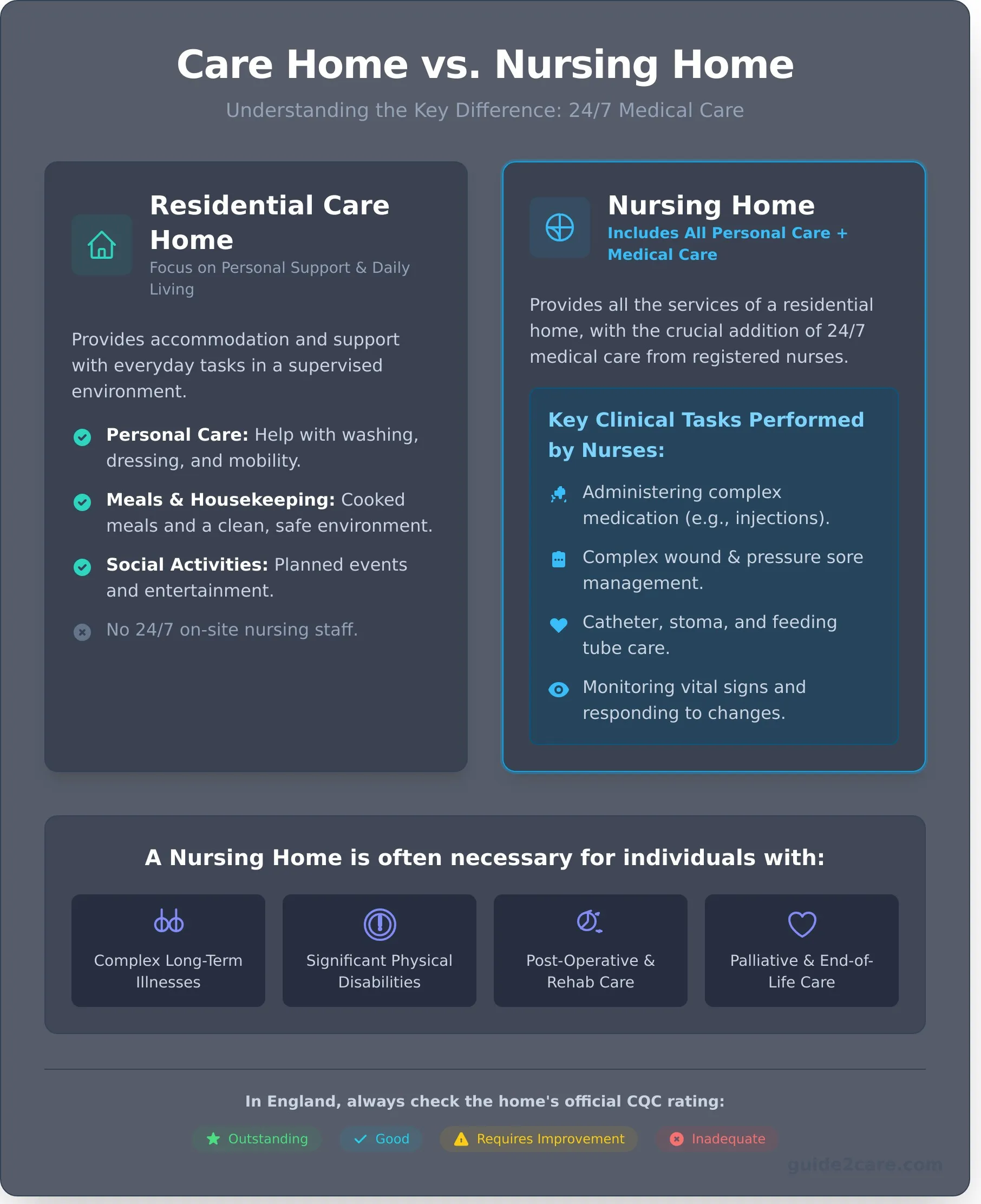
A nursing home provides residential accommodation combined with 24-hour medical care delivered by qualified, registered nurses. This is the single most important distinction when comparing it to a standard residential care home. While both offer support with daily living, a nursing home is equipped to manage significant and complex health needs. For a detailed overview, you can explore the question: What is a nursing home?
This short video provides a clear visual explanation of the services offered.
Think of it this way: a residential home is like living at home with support for personal care, meals, and mobility. A nursing home includes all of this, plus a layer of clinical and medical supervision. The Care Quality Commission (CQC), the regulator in England, officially refers to these establishments as 'care homes with nursing' to reflect this key difference.
What 'Nursing Care' Actually Means
The term 'nursing care' refers to specific clinical tasks that can only be performed by a registered nurse. This level of care is necessary for individuals with long-term conditions, post-operative needs, or significant physical disabilities. Key tasks include:
- Administering certain medications, such as via injection.
- Complex wound and pressure sore management.
- Catheter, stoma, and feeding tube care.
- Monitoring vital signs and responding to medical changes.
- Coordinating with GPs, hospitals, and other healthcare professionals.
The Role of the Care Quality Commission (CQC)
In England, all care providers, including nursing homes, must be registered with and inspected by the Care Quality Commission (CQC). The CQC is the independent regulator of health and social care. It assesses homes based on safety, effectiveness, and quality of care, issuing one of four ratings: Outstanding, Good, Requires Improvement, or Inadequate. Before considering any home, always check its latest CQC report on their official website.
Who Needs a Nursing Home? Assessing Care Requirements
Deciding on the right care environment depends entirely on an individual's specific health requirements, not their age. A nursing home is designed for people who need 24-hour care that includes medical treatment from registered nurses. This level of support goes beyond the personal care provided in a residential setting.
Common Health Conditions Requiring Nursing Care
A nursing home is typically necessary when an individual has significant health needs that are complex, unpredictable, or require regular medical intervention. Key scenarios include:
- Complex long-term illnesses: Conditions such as Parkinson's disease, motor neurone disease, multiple sclerosis, or advanced stages of cancer often require specialist nursing attention.
- Significant physical disabilities: Individuals with profound mobility issues who may need hoisting, frequent repositioning to prevent pressure sores, or management of feeding tubes.
- Post-operative or rehabilitation care: Recovery from major surgery, a severe injury, or a stroke can require intensive medical supervision and therapy administered by qualified nurses.
- Palliative and end-of-life care: This requires skilled pain management, symptom control, and compassionate support that registered nurses are trained to provide.
The Needs Assessment Process
To formally determine the level of care required, you should request a free needs assessment from your local council's adult social services department. This evaluation is carried out by a trained professional, such as a social worker or nurse, to build a complete picture of an individual's physical, mental, and emotional needs.
The assessment considers what a person can do for themselves and where they need support. The outcome determines their eligibility for council-funded support and recommends the most appropriate care setting. It can also identify if a person qualifies for specific health funding, such as NHS-funded nursing care, which is a contribution paid directly to the care home to cover nursing tasks.
Can Someone with Dementia Live in a Nursing Home?
Yes. Many nursing homes have dedicated dementia units that provide a safe, secure environment. While some individuals in the early stages of dementia can live well in a residential care home, a nursing home becomes necessary as the condition progresses. The expertise of registered nurses is required to manage complex symptoms, administer medication, and handle behavioural challenges or associated physical health problems that may arise.
Services and Staffing: What to Expect Day-to-Day
Understanding the daily operations within a care setting is essential for making an informed choice. A nursing home provides a structured environment with 24-hour support, combining accommodation with continuous medical care delivered by qualified staff. This section outlines the services, staff, and daily life you can expect.
The Care Team Explained
A multi-disciplinary team works together to meet residents' needs. Key roles include:
- Registered Nurses (RGNs/RMNs): Qualified nurses lead the clinical care team. They assess residents, create care plans, administer complex medications, and manage medical needs.
- Care Assistants (Carers): The majority of staff, carers provide direct personal support with daily tasks like washing, dressing, eating, and mobility.
- Activities Coordinators: These staff members plan and run a schedule of social events, hobbies, and entertainment to promote well-being and engagement.
- Ancillary Staff: Cooks, cleaners, and maintenance workers ensure the home is clean, safe, and comfortable for all residents.
Typical Medical and Personal Care Services
The primary function of a nursing home is to provide round-the-clock medical and personal support. Core services include:
- Medication Management: Safe storage, administration, and recording of all prescribed medicines by nursing staff.
- Personal Care: Dignified assistance with bathing, dressing, grooming, and using the toilet.
- Continence Care: Sensitive and professional support with continence management.
- Healthcare Coordination: Liaising with GPs, physiotherapists, dietitians, and other external healthcare professionals to ensure integrated care.
Daily Life, Activities, and Facilities
Daily life is structured around care routines, meals, and social activities. Most homes feature communal lounges for socialising, dining rooms for shared meals, and often accessible gardens. Mealtimes are a key part of the day, with catering teams providing nutritious meals and accommodating special dietary requirements.
Activities are varied and designed to cater to different interests and abilities. Common examples include:
- Gentle exercise classes like chair yoga
- Arts, crafts, and music sessions
- Bingo, quizzes, and film afternoons
- Visits from local community groups or entertainers
Family involvement is encouraged, and homes typically have flexible visiting policies to help residents maintain important connections.
Understanding Nursing Home Costs and Funding in the UK
The financial aspect of care is a primary concern for many families. Understanding the costs and available funding routes is essential for making informed decisions. In the UK, the cost of a nursing home can vary significantly based on location and the level of care required, with average weekly fees typically ranging from £1,000 to £1,700.
These fees generally cover a comprehensive package of services. However, some items are often charged as extras.
- What's usually included: Accommodation, meals and snacks, 24-hour care from registered nurses and care assistants, utilities, and laundry.
- What may cost extra: Hairdressing, chiropody, newspapers, personal toiletries, and private phone line installation.
There are three main pathways to funding care in the UK. Your eligibility depends on your financial situation and health needs.
Self-Funding Your Care
You are considered a 'self-funder' if your capital (savings, investments, and some property) is above the upper capital limit, which is £23,250 in England (2024/25). In this case, you are responsible for paying the full cost of your care. If your capital is tied up in a property, you may be eligible for a Deferred Payment Agreement, where the council pays your fees and reclaims the cost when your property is sold.
Local Authority Funding
If your capital falls below the £23,250 threshold, you can request a financial assessment (means test) from your local authority. The council will then determine how much you can contribute towards your care fees, and they will pay the remaining amount up to their standard rate. If you choose a care home that is more expensive than the council's rate, a third party, such as a family member, may need to pay the difference as a 'top-up fee'.
NHS Continuing Healthcare (CHC) and Funded Nursing Care (FNC)
The NHS may cover your care costs if you have significant health needs. NHS Continuing Healthcare (CHC) is a package of care fully funded by the NHS for individuals with a 'primary health need'. If you are not eligible for CHC but require care from a registered nurse in a nursing home, you may qualify for NHS Funded Nursing Care (FNC). This is a fixed weekly contribution paid directly to the care home to cover the nursing component of your care. The rate in England for 2024/25 is £235.88 per week.
To explore care options and understand funding in more detail, explore Guide2Care and find the care you need.
How to Find and Choose a Quality Nursing Home
Finding the right care setting requires careful research and planning. Starting your search early, before care is urgently needed, allows for a more thorough and less stressful process. This structured approach helps you compare options and make an informed decision about a future nursing home.
Step 1: Create a Shortlist
Begin by identifying potential homes in your preferred location. A systematic search is the most effective way to build a strong list of candidates.
- Use online directories to find care homes in your area.
- Filter your search specifically for 'nursing care' or a 'care home with nursing' to ensure they meet the required medical needs.
- Check the Care Quality Commission (CQC) ratings for each home and read their latest inspection reports online.
- Ask for recommendations from your GP, social worker, or trusted friends who have experience in this area.
Step 2: Visit Your Top Choices
Once you have a shortlist, arranging a visit is essential. An in-person tour provides insights that you cannot get from a brochure or website. Try to visit at different times of the day to get a complete picture of the home's daily life.
- Observe the atmosphere. Do residents appear comfortable, happy, and engaged in activities?
- Assess the environment for cleanliness, safety features, and accessibility.
- Speak directly with staff and residents, if appropriate, to understand their experiences and the general culture of the home.
Step 3: Key Questions to Ask the Manager
Prepare a list of questions for the home manager to address specific operational and care-related details. Clear answers to these questions will help you directly compare your options and understand the level of care provided.
- What is the ratio of staff to residents during the day and at night?
- How are individual care plans developed, reviewed, and updated for each resident?
- What is the formal procedure for handling complaints or medical emergencies?
- Can you provide a full, itemised breakdown of all fees and any potential extra costs?
Taking these steps will equip you with the information needed to choose a quality setting that provides the right level of support. When you are ready, you can find detailed listings and further information to help your search.
Start your search for a nursing home near you.
Finding the Right Nursing Home: Your Next Steps
Choosing the right care setting is a significant decision. As this guide has shown, the defining feature of a nursing home is its provision of 24/7 medical care administered by registered nurses, making it suitable for individuals with complex health conditions. Before you begin your search, it is crucial to complete a thorough needs assessment to confirm this level of care is required. Equally important is understanding the costs and funding options available in the UK, as this will shape your choices and ensure long-term sustainability.
Once you are prepared, our platform is here to help you find and evaluate your options efficiently. Guide2Care offers comprehensive UK-wide listings, allowing you to see what is available near you. You can review detailed provider profiles, check CQC ratings, and access a wealth of free information and guidance resources to support your decision-making process. Take the next step with confidence.
Use our directory to find and compare CQC-rated nursing homes in your area. With the right tools and information, you can navigate this process and find the care you need.
Frequently Asked Questions
What is the difference between a nursing home and a residential home?
A nursing home provides 24-hour medical care from registered nurses on-site. This is for individuals with complex health needs, long-term conditions, or those requiring regular medical intervention. In contrast, a residential home offers personal care and support, such as help with washing, dressing, and meals. Staff are trained carers, but a registered nurse is not required to be on the premises, making the key distinction the level of qualified medical support available.
Can a resident in a nursing home keep their own GP?
Yes, a resident can usually keep their own GP if the practice's catchment area includes the care home. If the home is outside this area, the resident must register with a new, local GP. The nursing home staff will assist with this registration process to ensure there is no interruption to medical care. It is advisable to confirm the policy with the specific home and the resident's current GP before the move to manage the transition.
What happens if a resident's health deteriorates in a residential home?
If a resident's health declines, the residential home will conduct a new care needs assessment, often involving their GP and social services. If this assessment determines they now require consistent nursing care that the home cannot provide, a move will be necessary. This is typically to a nursing home equipped to manage more complex medical conditions. The home manager will support the resident and their family throughout this process.
Are nursing home fees tax-deductible in the UK?
In the UK, nursing home fees are not generally tax-deductible. Payments are made from income that has already been taxed. The only related relief is the NHS-funded Nursing Care (FNC) contribution. This is a tax-free, flat-rate payment made directly from the NHS to the care home to cover the cost of nursing care provided by a registered nurse. This specific portion of the fees is not taxed, but other private payments are not eligible for tax relief.
How much notice is required to leave a nursing home?
The notice period required to leave a nursing home is specified in the resident's contract or residency agreement. While the typical period is 28 days, this can vary between different care providers. It is essential to review the terms and conditions of the contract carefully before signing. This document will clearly outline the exact notice period and any financial obligations related to ending the agreement, ensuring full transparency for all parties involved.
What are the typical visiting hours in a nursing home?
Most nursing homes in the UK now operate a flexible or open visiting policy, encouraging friends and family to visit at times that suit the resident. However, some homes may have protected mealtimes or prefer visits to be avoided very early in the morning or late at night. It is always best to contact the specific care home directly to confirm their current visiting hours and any specific procedures they may have in place.