The Resident Experience: A Guide to Life in a UK Care Home
Considering a move into a care home often raises more questions than answers. How will daily routines work? What happens to personal independence? It is difficult to look past the glossy brochures and understand what life is truly like for the resident. This uncertainty can cause significant anxiety for both individuals and their families, who worry about dignity, rights, and the quality of care provided.
This guide is designed to provide clarity. We will outline the structure of a typical day in a UK care home, explain the fundamental rights and expectations you should have, and detail how to assess a home's environment beyond its appearance. Our objective is to give you the practical knowledge needed to ask insightful questions during your visits. With this information, you can make a confident choice, ensuring the care home selected is a place that respects identity and promotes a high quality of life.
Defining 'The Resident': More Than Just a Person in Care
In the context of a care home, the term 'resident' is used deliberately. It marks a significant shift away from the clinical label of 'patient'. While a patient receives specific medical treatment, a resident is an individual living in a place they call home. This distinction is central to modern UK care philosophy. It requires providers to look beyond a person's health conditions and see their entire life story, personality, and what matters most to them. For a comprehensive overview of UK care homes and their structure, understanding this person-first principle is essential. It is the foundation upon which high-quality, compassionate care is built.
This approach moves care from a task-oriented model to one focused on relationships and well-being. It acknowledges that a person's identity is not defined by their need for care. Instead, it is shaped by their history, their relationships, and their personal choices. A quality care service sees and respects this individuality in every interaction.
Understanding Resident-Centred Care
Resident-centred care is a care model where all services are tailored to the individual's specific needs, personal preferences, and established values. It places the person at the heart of all decisions, making them an active partner in their own care rather than a passive recipient. This means care providers must work collaboratively with residents and their families to develop a detailed care plan. This plan should respect their background, lifestyle choices, and daily routines. In practice, this empowers the resident to maintain control over their life, from choosing meal options and what time they wake up to deciding which social activities they wish to join.
The Legal and Human Rights of a Resident
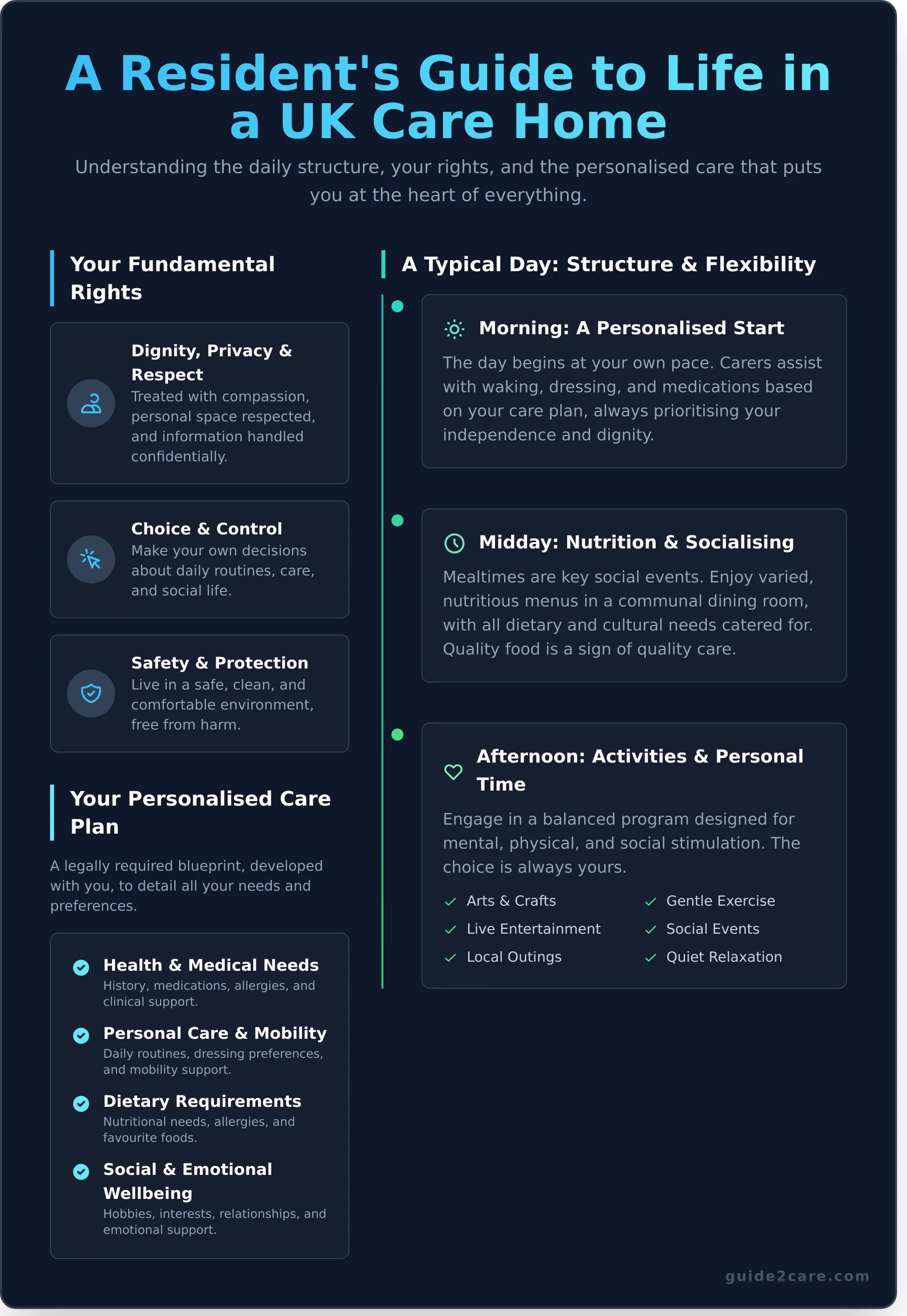
In the UK, every resident's rights are protected by law, including the Human Rights Act 1998 and the Health and Social Care Act 2008. These rights form a core part of the CQC's inspection framework, and care homes must prove they are upholding them. Every individual in care is guaranteed fundamental rights, which include:
- Dignity, Privacy, and Respect: This means being treated with compassion and ensuring personal space is respected. It also covers the right to make private phone calls, receive visitors, and have personal information handled confidentially.
- Choice and Control: Residents have the right to make their own decisions about their daily routine, care, and social life. This includes consenting to or refusing care and treatment, provided they have the capacity to do so.
- Safety and Protection: Every resident has the right to live in a safe, clean, and comfortable environment, free from all forms of abuse, neglect, and improper treatment.
These rights are not just guidelines; they are legal requirements that ensure care supports a person's overall quality of life and well-being.
A Day in the Life: What to Expect in a Care Home
Understanding the daily structure of a residential care home can reduce uncertainty for new residents and their families. A well-managed home provides a predictable routine while respecting the individual freedom of the resident. This balance is key to fostering a sense of community, purpose, and well-being. While every home is different, a typical day is structured around personal care, meals, and activities.
Morning Routines and Personal Care
Mornings typically begin with support tailored to individual needs. Carers can assist with waking, dressing, personal hygiene, and administering medication according to a pre-agreed care plan. The primary goal is always to maintain as much independence as possible. In a quality care home, staff respect personal preferences, allowing each person to start their day at a comfortable and dignified pace.
Mealtimes, Nutrition, and Socialising
Mealtimes are central to the daily schedule and serve as important social events. Most homes offer a communal dining room where residents can eat together. Kitchens provide varied, nutritious menus and cater to specific dietary requirements, from medical needs like diabetes to personal or cultural tastes. The quality of food and the dining environment are key indicators of a home's standard of care. Inspection reports, which inform the official CQC ratings, often comment on how well a provider manages nutrition and hydration.
Activities, Engagement, and Personal Time
A full and varied activities programme is the hallmark of a responsive care home. It should offer a balance between organised events and opportunities for personal relaxation. The schedule is designed to provide mental, physical, and social stimulation. Common activities include:
- Arts, crafts, and hobby groups
- Gentle exercise classes like chair yoga
- Live entertainment and music
- Social events, quizzes, and games
- Local outings to shops or parks
Crucially, the home must also respect when the resident prefers quiet time for reading, watching television, or spending time in their own room. Good homes make an effort to support individual interests and hobbies.
The Personalised Care Plan: The Blueprint for a Resident's Care
A care plan is the most important document for any individual in a care setting. It is a comprehensive, legally required record that details a person's specific needs, preferences, and the support they require. This plan is the foundation of person-centred care, ensuring that every aspect of support is tailored to the individual. It is developed collaboratively, with input from care home staff, healthcare professionals, family members, and, most importantly, the resident themselves.
What Information Does a Care Plan Contain?
A detailed care plan goes beyond basic medical needs. It provides a complete picture of the person, ensuring their dignity and individuality are respected. Key information includes:
- Health and Medical Needs: This covers medical history, current conditions, medication management schedules, allergies, and any required clinical procedures.
- Personal Care and Mobility: Details daily routines, such as preferences for a bath or shower, assistance needed with dressing, and mobility support required to move safely.
- Dietary Requirements: Includes nutritional needs, food allergies, intolerances, and personal preferences, such as meal times or favourite foods.
- Social and Emotional Wellbeing: Outlines hobbies, interests, social activities, spiritual beliefs, and the support needed to maintain relationships and emotional health.
The Resident's Role in Their Care Plan
Every individual has the right to be fully involved in creating and agreeing to their care plan. The goal is to ensure the care provided aligns with their wishes and values. It is vital that the resident's voice is heard and documented accurately. Understanding this right is a key part of the process of choosing a care home, as it ensures care is truly personalised. If a person lacks the capacity to participate fully, family members or an independent advocate should be involved to represent their best interests and ensure their preferences are central to all decisions.
Reviewing and Updating the Care Plan
A care plan is a living document, not a static one. People's needs and preferences change over time, and the plan must evolve to reflect this. Care plans should be formally reviewed at least once a month, or more frequently if there is a significant change in a person's condition. This could be triggered by a hospital admission, a change in mobility, or a new health diagnosis. Ongoing communication between staff, family, and the individual is essential to identify these changes promptly and adapt the plan to ensure care remains safe, effective, and appropriate.
How CQC Ratings Directly Impact The Resident's Experience
A CQC rating is more than a label. It provides a clear forecast of the daily life and quality of care a person will receive. To determine a rating, inspectors assess a service against five key questions: Is it Safe, Effective, Caring, Responsive, and Well-led? A well-led service typically ensures high standards across all other areas. Understanding these categories helps you translate a report into a realistic expectation of life inside a care home.
What 'Safe' and 'Effective' Mean for Daily Life
These two domains focus on the fundamental pillars of good care. A service rated 'Good' or 'Outstanding' for safety and effectiveness demonstrates that it protects people and helps them maintain good health. For the resident, this means:
- Safety: Medication is managed correctly, the environment is clean and free from hazards, and there are sufficient numbers of suitably qualified staff on every shift.
- Effectiveness: Staff are well-trained and follow the latest best practices. Care plans are evidence-based, and residents receive the support they need to maintain their health and nutrition.
High ratings here significantly reduce risks and lead to better health outcomes.
Why 'Caring' and 'Responsive' are Crucial
While safety is essential, the 'Caring' and 'Responsive' ratings reveal the human side of a care service. They are key indicators of a positive and dignified experience.
The 'Caring' domain assesses whether staff treat people with kindness, compassion, and respect. 'Responsive' measures how well a service listens to individuals and adapts care to their personal preferences and changing needs. An 'Outstanding' service will show exceptional examples of personalised care, such as creating unique activity plans based on a resident's life history or quickly adapting meal plans to suit new preferences.
These ratings show whether a care home is simply a facility or a true home where people feel valued. You can find detailed reports on providers in your area to assess these crucial factors.
Search for CQC rated care homes in your area.
Choosing a Home from The Resident's Perspective
A CQC rating provides an essential measure of a care home's safety and quality. However, a rating cannot tell you how a home feels. The final step in your decision is to assess the environment from the perspective of the person who will live there. A personal visit is crucial to understand the home's atmosphere, community, and daily life.
Use your visit to look beyond the facilities and focus on the human interactions that define the experience for the resident. This practical checklist helps you gather the information you need.
Key Questions to Ask Staff and Management
Your discussion with the home's leadership should focus on their approach to individual care and support. Ask direct questions to understand their processes.
- How do you support new residents to settle in and feel welcome? Look for a structured and personalised induction process.
- Can you describe your approach to resident-centred care? They should provide specific examples of how care plans are tailored to individual needs and preferences.
- How do you handle complaints or concerns from residents or their families? A clear, accessible, and respectful complaints procedure is a sign of a well-run home.
Observing the Environment and Interactions
Pay close attention to the general atmosphere during your visit. The way staff and residents interact is a powerful indicator of the home's culture.
- Do staff seem friendly, unhurried, and engaged with residents? Positive, respectful communication is key.
- Are residents active and socialising, or are they passive? Observe common areas to see if there is a sense of community and engagement.
- Does the home feel calm, welcoming, and clean? Note the general upkeep, cleanliness, and any unpleasant odours.
Talking to Current Residents and Their Families
If the opportunity arises, speaking with people who already live in the home offers invaluable insight. Their direct feedback provides a perspective that you cannot get anywhere else.
- Ask residents if they feel listened to and respected by the staff.
- Inquire about the quality and variety of the food and available activities.
- Ask families about their communication with the home and if they feel well-informed.
Combining CQC data with your own observations will empower you to make a confident and well-informed choice. Explore listings and arrange visits to homes near you on guide2care.com.
Your Next Step in Finding the Right Care Home
Choosing a suitable care home requires careful research and consideration. As we have explored, understanding the daily routine, the central role of a personalised care plan, and how to interpret CQC ratings are fundamental to this process. Ultimately, every decision should be guided by the unique needs, preferences, and overall wellbeing of the resident.
To move forward with confidence, you need access to clear, reliable information. Guide2Care is designed to provide just that. Our platform simplifies your search with a comprehensive UK-wide care directory. We also offer expert guides on key topics, from choosing a home to understanding funding, all presented in a direct and easy-to-understand format.
Take the next step in your search today. Find the support you need with a tool built for clarity and efficiency.
Use our directory to find and compare care homes near you.
Making an informed choice is the most effective way to secure a safe, supportive, and positive living environment for yourself or your loved one.
Frequently Asked Questions
What rights does a resident have in a UK care home?
Residents in UK care homes are protected by the Human Rights Act and fundamental standards of care. This ensures they have the right to be treated with dignity, live in a safe environment, and receive personalised care that meets their needs. Key rights include being involved in care planning, making personal choices about their daily life, having privacy, and being able to complain without negative consequences. The care provider must uphold these standards at all times.
Can a resident keep their own GP after moving into a care home?
A resident can often keep their own GP if the surgery's catchment area covers the care home's location. You should confirm this with both the GP practice and the care home. If the GP cannot continue providing care, the home will help the resident register with a local practice that serves the home. This ensures continuous access to NHS medical services. The home's staff will coordinate with the new GP for all health-related needs and appointments.
What happens if a resident is unhappy with their care?
If a resident is unhappy, the first step is to use the care home’s official complaints procedure, usually by speaking to the manager. If the issue remains unresolved, you can escalate the complaint to the Local Government and Social Care Ombudsman (LGSCO). For serious concerns about safety or quality, you can also report the provider to the Care Quality Commission (CQC). The CQC uses this information to inform its inspections and regulatory actions.
How are residents' personal belongings and finances managed?
Residents are encouraged to bring personal belongings to make their room feel like home. The home should have a clear policy on insuring valuable items. Regarding finances, the resident retains full control unless they appoint someone with Power of Attorney to act on their behalf. A care home may agree to manage a small personal expenses allowance for day-to-day items, but it cannot manage a resident's wider financial affairs without the proper legal authority.
What are the typical visiting policies for family and friends?
Most UK care homes have an open visiting policy, meaning family and friends are welcome at any reasonable time. There are typically no restrictive visiting hours, which allows for flexibility. It is always good practice to check the specific policy with the care home manager. During public health concerns, homes must follow official government guidance, which may require temporary safety measures or changes to visiting arrangements to protect all residents.
How much personal choice and independence can a resident expect?
High-quality care promotes a resident's personal choice and independence. Residents should expect to have a say in their daily routine, including meal choices, what time they wake up, and which social activities they participate in. A person-centred care plan is created with the resident and their family to ensure personal preferences and goals are respected. The aim is to support the individual to live as independently and fully as possible within a safe environment.