Understanding Diverticulitis: A Plain English Guide to Symptoms, Diet, and Care
A sudden and painful abdominal issue can be alarming. When the diagnosis is diverticulitis, it often leads to more questions than answers. You may feel confused by medical terms, unsure what foods to avoid during a flare-up, and worried about when to seek help. Finding simple, practical advice can be a challenge, leaving you uncertain about how to manage your symptoms effectively.
This guide is designed to provide clear answers. Here, you will find a plain English explanation of what diverticulitis is and how it differs from diverticulosis. We outline the common symptoms and their causes. You will also get a straightforward diet plan to help manage a flare-up and practical steps to reduce the risk of future attacks. Gain the confidence to manage your condition and know precisely when to contact your GP for support. Explore the facts and take control of your care.
What is Diverticulitis? (And What It's Not)
Imagine the lining of your large intestine, or colon, is like the inner tube of a bicycle tyre. Over time, small, bulging pouches can push outwards through weak spots in the colon's muscular wall. These pouches are called diverticula. Understanding the difference between simply having these pouches (diverticulosis) and having them become acutely inflamed (diverticulitis) is the first step in managing the condition. For a detailed medical overview, Wikipedia offers a comprehensive guide to diverticulitis.
To better understand the condition and its warning signs, watch this helpful video:
Defining the Terms Simply
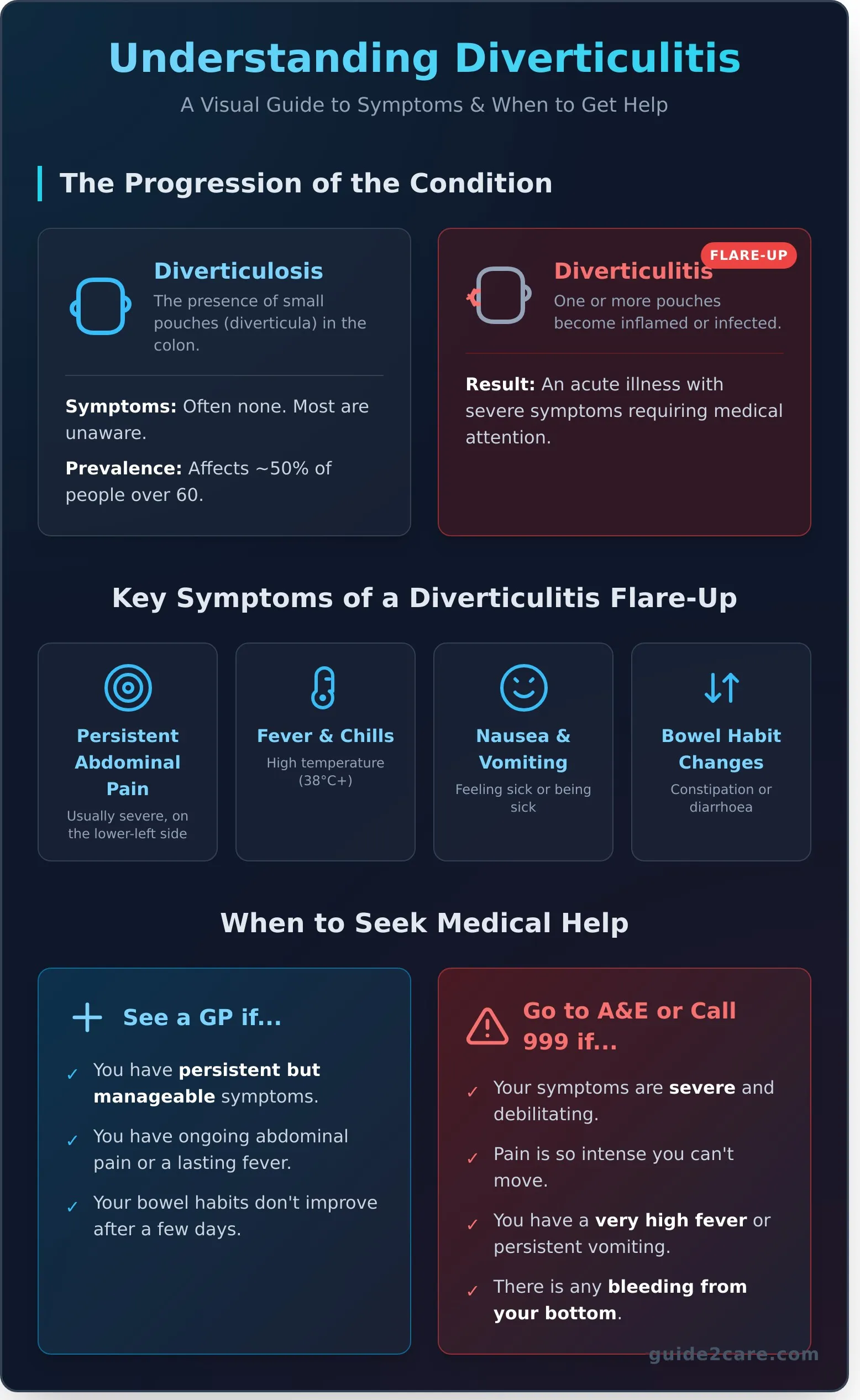
The terms diverticulosis, diverticular disease, and diverticulitis are often confused, but they describe different stages of the condition. The table below provides a clear comparison.
| Condition | Description | Common Symptoms |
|---|---|---|
| Diverticulosis | The simple presence of pouches (diverticula) in the colon wall. | Often none. Most people are unaware they have it. |
| Diverticular Disease | When the pouches cause intermittent symptoms like pain or bloating. | Mild, cramping lower abdominal pain, bloating, constipation or diarrhoea. |
| Diverticulitis | An acute illness where one or more pouches become inflamed or infected. | Severe, constant abdominal pain (usually lower left), fever, and nausea. |
Diverticulosis is very common in the UK, affecting an estimated 50% of people over 60. It is important to know that most people with diverticulosis will never develop an acute flare-up of diverticulitis.
How and Why Do These Pouches Form?
The leading theory suggests that these pouches form when high pressure inside the colon pushes against natural weak spots in the colon wall. This pressure is often linked to a long-term, low-fibre diet, which was historically common in Western countries. A lack of fibre can lead to constipation, meaning more strain is required to pass stools.
The formation of diverticula is a structural change that happens over many years. It is not an illness you "catch" or something caused by a single action. It is a common condition related to age, diet, and genetics.
Recognising the Key Symptoms of a Diverticulitis Flare-Up
Understanding the signs of a diverticulitis flare-up is the first step toward managing the condition. While diverticular disease can cause mild, intermittent cramps, the symptoms of diverticulitis are typically more severe and persistent. A flare-up happens when the small pouches in your large intestine (diverticula) become inflamed or infected, requiring prompt attention.
The pain associated with a flare-up is distinct. It is usually constant and localised, rather than a general ache that comes and goes. Knowing what to look for helps you seek the right medical advice at the right time.
Common Symptoms to Watch For
The most common signs of a flare-up often develop over a few days but can also appear suddenly. Key indicators include:
- Persistent abdominal pain: This is the most classic symptom. The pain is usually severe and felt on the lower-left side of your abdomen.
- Fever: You may have a high temperature (38C or above) and experience chills or shivering.
- Nausea and vomiting: Many people report feeling sick (nausea), and some may be sick (vomit).
- Changes in bowel habits: You might experience constipation or, less commonly, diarrhoea.
When You Must Seek Medical Help
It is important not to self-diagnose severe or persistent abdominal pain. You should always consult a healthcare professional for an accurate diagnosis and treatment plan.
See a GP if:
You have symptoms that are persistent but manageable. This includes ongoing abdominal pain, a lasting fever, or changes to your bowel habits that do not improve. Your GP can diagnose the issue and may prescribe antibiotics or suggest a temporary change in what you eat. Following official Diverticulitis diet recommendations is often a key part of the recovery plan.
Go to A&E or call 999 if:
Your symptoms are severe. This includes intense abdominal pain that makes it difficult to move, a very high fever, persistent vomiting that stops you from keeping fluids down, or any bleeding from your bottom. These can be signs of a serious complication that requires immediate medical intervention.
The Diverticulitis Diet: What to Eat During and After a Flare-Up
Managing diverticulitis involves changing your diet based on your symptoms. The dietary plan follows two distinct phases. The immediate goal during a flare-up is to give your digestive system a rest. The long-term objective is to adopt a diet that prevents future episodes.
Phase 1: During a Flare-Up (Bowel Rest)
During an acute attack of diverticulitis, your doctor will likely recommend a clear liquid or low-fibre diet for a few days. This approach reduces the amount of work your bowel has to do, allowing the inflammation to subside. This is a short-term measure and should only be followed under medical guidance. Foods to consume may include:
- Water, clear fruit juices without pulp (like apple juice)
- Clear broths (chicken, beef, or vegetable)
- Plain jelly
- Ice lollies (without fruit pieces or pulp)
If your symptoms are less severe, you may be able to have low-fibre foods like white bread, plain white pasta, and white rice.
Phase 2: After Symptoms Improve (Reintroducing Fibre)
Once your symptoms have improved, your doctor will advise you to slowly reintroduce fibre into your diet. This must be done gradually to avoid triggering discomfort, such as bloating or gas. Start with small amounts of low-fibre foods and increase your intake over several days or weeks. Good initial choices include well-cooked vegetables without skin, canned fruits, and low-fibre cereals.
Long-Term Prevention: The High-Fibre Diet
A high-fibre diet is the primary strategy for preventing future flare-ups. Fibre helps to keep stools soft and bulky, which reduces the pressure inside your colon and allows waste to pass more easily. Understanding the symptoms and causes of diverticulitis highlights why reducing this internal pressure is so important for long-term health. Aim for a daily intake of 25-35 grams of fibre.
Incorporate these high-fibre foods into your regular diet:
- Fruits: Apples, pears, berries, and oranges
- Vegetables: Broccoli, carrots, Brussels sprouts, and leafy greens
- Whole Grains: Brown rice, whole-wheat pasta, oats, and quinoa
- Legumes: Beans, lentils, and chickpeas
Important Tip: As you increase your fibre intake, you must also drink plenty of water. Fibre absorbs water, and without enough fluid, it can worsen constipation.
Common Causes and Risk Factors for Diverticulitis
While the precise trigger for the inflammation of diverticula is not always known, research has identified several key risk factors. Understanding these factors can help you and your GP manage your health. Some risks relate to lifestyle and can be modified, while others are fixed and cannot be changed.
The Role of Diet and Lifestyle
Lifestyle choices play a significant role in the development of diverticular disease and subsequent diverticulitis. A diet consistently low in fibre is considered the primary risk factor. Without enough fibre, stools can become hard and difficult to pass, which increases pressure inside the colon. Over time, this pressure may cause weak spots in the colon wall to bulge outwards, forming the pouches known as diverticula.
Key lifestyle factors include:
- Low-Fibre Diet: A diet lacking sufficient fruits, vegetables, and whole grains is strongly linked to the condition.
- Lack of Exercise: A sedentary lifestyle can contribute to poor bowel function and is associated with an increased risk.
- Obesity: Carrying excess body weight is linked to a higher chance of developing diverticulitis and its complications.
Other Factors You Cannot Change
Certain risk factors are inherent and cannot be altered through lifestyle adjustments. It is important to be aware of these so you can monitor your health and discuss any concerns with a healthcare professional.
- Age: The risk increases significantly with age. The condition is most common in people over the age of 40.
- Genetics: Having a close family member with the condition may suggest a genetic predisposition, increasing your personal risk.
- Smoking: People who smoke are at a greater risk of developing diverticulitis than those who do not.
Recognising these risk factors is the first step in managing your condition and making informed decisions about your health and diet.
How Diverticulitis is Treated and Managed
The treatment for diverticulitis depends entirely on the severity of your symptoms. Most cases are considered uncomplicated and can be managed effectively at home with guidance from your GP. Hospitalisation is only necessary for more severe flare-ups or if complications develop.
Understanding the treatment pathway can provide reassurance. The goal is to clear any infection, manage pain, and allow your digestive system to rest and recover.
Managing a Mild Flare-Up at Home
For a mild flare-up, your GP will likely recommend a home treatment plan. This approach focuses on simple, effective measures to ease symptoms and support your body's healing process. Key steps include:
- Dietary Changes: You may be advised to stick to a clear liquid diet for a few days. This can include water, clear broths, and fruit juices without pulp. As you feel better, you can gradually reintroduce low-fibre foods.
- Pain Relief: Use simple painkillers like paracetamol to manage abdominal pain. It is important to avoid non-steroidal anti-inflammatory drugs (NSAIDs) such as ibuprofen and aspirin, as they can increase the risk of complications.
- Rest: Allow your body time to recover. Resting until your symptoms improve is a crucial part of managing a flare-up at home.
Medical Treatment: Antibiotics and Hospital Care
If your GP suspects a bacterial infection is causing your diverticulitis, they will prescribe a course of antibiotics. It is essential to complete the full course as prescribed, even if you start to feel better.
In cases of severe pain, a high fever, or an inability to keep fluids down, you may need to be admitted to hospital. Hospital treatment allows for more intensive care, which can involve:
- Intravenous (IV) antibiotics to fight the infection directly.
- Intravenous (IV) fluids to prevent dehydration.
- A period of bowel rest, where you may not be able to eat or drink.
When is Surgery Considered?
Surgery is not a standard treatment and is reserved for a small number of cases. It is typically only considered if serious complications occur, such as a perforation (a tear in the bowel), an abscess (a collection of pus), or a fistula (an abnormal connection between the bowel and another organ).
An operation may also be an option for individuals who experience frequent and severe flare-ups that significantly impact their quality of life. For most people, however, the condition can be managed successfully with diet and medical treatment.
Living with Diverticular Disease: Long-Term Prevention and Care
Once an acute flare-up of diverticulitis has resolved, the focus shifts to long-term management of diverticular disease. Taking proactive steps can significantly reduce the risk of future episodes and improve your overall digestive health. By adopting a consistent wellness strategy, you can take control and minimise the impact of the condition on your daily life.
Making sustainable lifestyle changes is the foundation of preventing future flare-ups. These simple, effective habits support a healthy digestive system.
Key Lifestyle Habits for Prevention
Adopting consistent, healthy habits is the most effective strategy for long-term management. Focus on these four key areas to support your digestive health:
- Eat a high-fibre diet: Gradually increase your intake of fibre from fruits, vegetables, and whole grains. Fibre helps soften stool and reduces pressure inside the colon.
- Stay well-hydrated: Drink plenty of water and other fluids throughout the day. Good hydration is essential for fibre to work effectively.
- Engage in regular exercise: Aim for at least 30 minutes of moderate activity, such as brisk walking, on most days. Physical activity promotes normal bowel function.
- Maintain a healthy weight: Managing your weight can help reduce pressure on the colon and lower your risk of complications.
Managing the Condition in a Care Setting
If you receive care, clear communication with your provider is essential. Care homes and home care services can be valuable partners in managing your diet and monitoring your health. They can assist with meal planning and preparation to ensure you receive adequate fibre and fluids. Carers can also help watch for early symptoms of a flare-up, ensuring you get timely medical advice. Find care providers who can support your health needs.
Managing Diverticulitis: Your Path Forward
Navigating a diagnosis of diverticulitis can feel overwhelming, but understanding the condition is the first step to taking control. The key takeaways are clear: recognise the distinct symptoms of a flare-up to seek timely advice, and understand the crucial role diet plays-from a temporary low-fibre diet during an attack to a sustained high-fibre diet for long-term prevention. Proactive management, in partnership with your healthcare provider, is essential for minimising future episodes and maintaining your quality of life.
For those who need additional support managing their health and daily activities, finding the right professional care is a critical next step. Guide2Care provides a straightforward, reliable tool to help. Our comprehensive UK-wide directory is designed to give you clear guidance and resources. You can easily find and compare CQC-rated care providers, ensuring you choose a service you can trust. Use our directory to find care homes and home care providers near you.
Taking informed, proactive steps is the best way to manage your health and live well.
Frequently Asked Questions About Diverticulitis
What foods should be avoided completely with diverticulitis?
During a diverticulitis flare-up, your GP will likely advise a temporary low-fibre or clear liquid diet to allow your colon to rest. This means avoiding foods like whole-grain breads, nuts, seeds, raw vegetables, and fruits with skin. Once you recover, these high-fibre foods are gradually reintroduced. There are no specific foods that must be permanently avoided by everyone, but it is important to identify any personal triggers with your doctor or a dietitian.
Can stress cause a diverticulitis flare-up?
While stress is not a direct cause of diverticulitis, it can significantly impact gut health and may contribute to a flare-up in some individuals. Stress can affect gut motility and increase inflammation, which may worsen your symptoms. Managing stress through relaxation techniques, adequate sleep, and gentle exercise is a practical step for supporting your digestive system. Always consult your GP for personalised advice on managing your condition and stress levels.
How long does it take to recover from a diverticulitis attack?
The recovery time from a diverticulitis attack depends on its severity. A mild case, often treated at home with antibiotics and temporary dietary changes, typically improves within a few days to a week. More severe cases that require hospital treatment may take several weeks for a full recovery. It is essential to follow the treatment plan provided by your healthcare professional to ensure your colon has adequate time to heal properly.
Is it safe to exercise if I have diverticular disease?
Regular exercise is generally recommended for managing diverticular disease (diverticulosis) as it promotes normal bowel function. Activities like walking, swimming, or cycling can be beneficial. However, you should avoid strenuous activity during an active diverticulitis flare-up to allow your body to heal. Always consult your GP before beginning a new fitness programme to ensure it is safe and appropriate for your specific condition.
Do I have to avoid nuts and seeds if I have diverticulosis?
It was previously common advice to avoid nuts, seeds, and popcorn. However, current medical guidance has changed, as there is no scientific evidence to suggest these foods cause flare-ups. In fact, the high fibre content in nuts and seeds may be beneficial for preventing diverticulitis. Unless you find that these foods are a personal trigger for your symptoms, there is no medical reason to exclude them from your diet.
Will I need a colonoscopy to diagnose diverticulitis?
A colonoscopy is not used to diagnose an active diverticulitis attack due to the risk of perforating the inflamed bowel. Your GP will typically diagnose a flare-up based on your symptoms and may order a CT scan to confirm it. A colonoscopy is usually recommended around six to eight weeks after you have recovered. This follow-up procedure is done to assess the extent of the diverticular disease and rule out other conditions.