Simple BMI Calculator: Check Your Body Mass Index

Understanding how your weight relates to your overall health is a common concern. Faced with confusing medical information and complex charts, it is often difficult to find a clear answer. This guide simplifies the process by providing a straightforward starting point: a simple bmi calculator designed for adults in the UK.
Use our free tool to get an immediate indication of your Body Mass Index (BMI). We will then explain what your result means according to current NHS guidelines, helping you understand if your weight is healthy for your height.
You will also find practical, non-alarming guidance on the next steps. Whether your goal is to maintain your current weight or make a change, this article offers clear, actionable information to support your long-term health and mobility. Find the clarity you need to make informed decisions.
What is Body Mass Index (BMI) and Why Does It Matter?
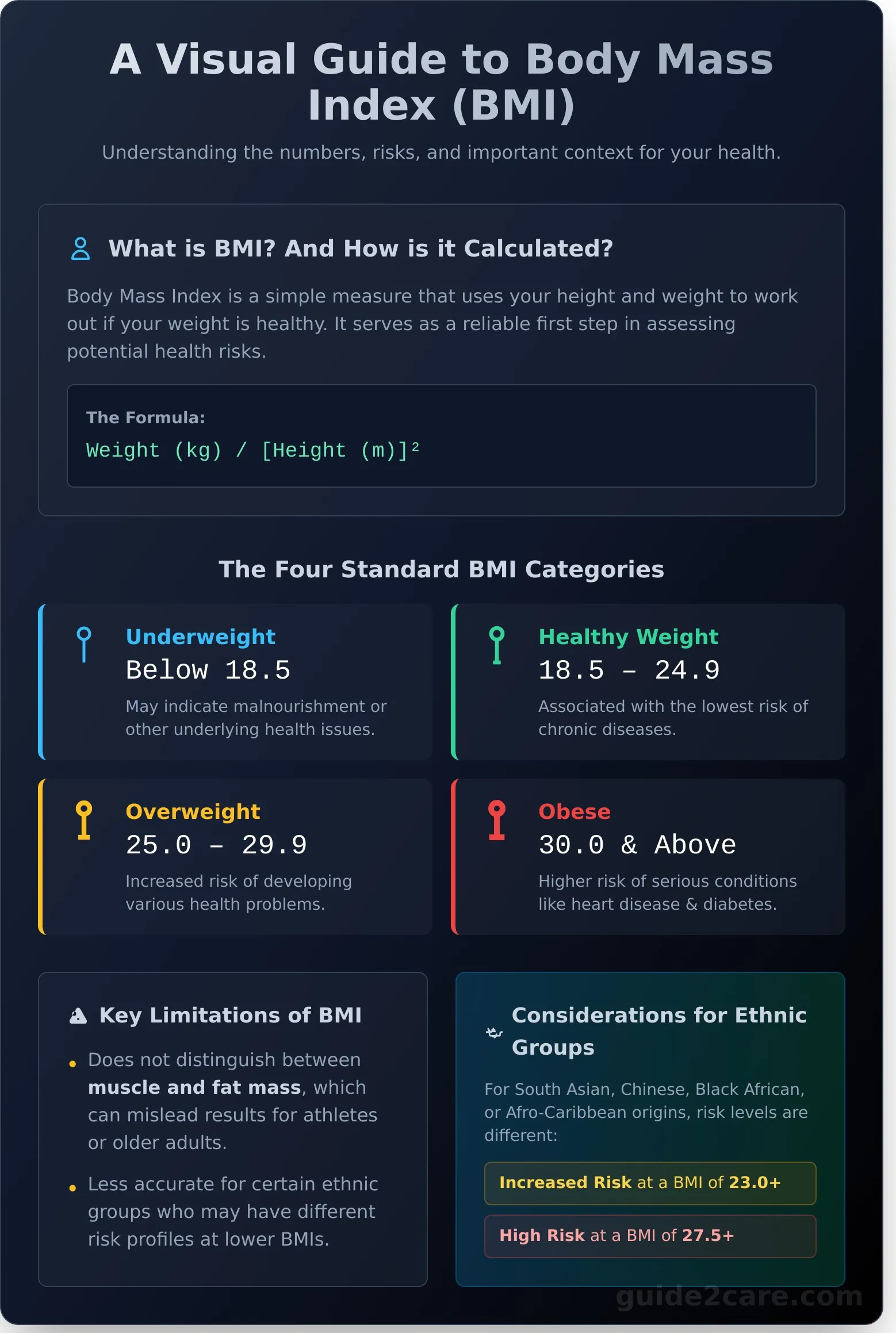
Body Mass Index (BMI) is a measure that uses your height and weight to work out if your weight is healthy. It is a straightforward way to check your weight relative to your height and is widely used as a general indicator of potential health risks. While the concept of What is Body Mass Index includes a detailed history and formula, its main purpose is to serve as a simple screening tool.
To better understand this concept, watch this helpful video:
The NHS and other healthcare professionals use BMI as a starting point to open a conversation about your overall health. Because it is easy to measure and calculate, it is a common tool for assessing weight status at a population level and identifying potential issues for further discussion.
How is BMI Calculated?
The standard formula for calculating BMI is your weight in kilograms (kg) divided by the square of your height in metres (m²). While a different formula exists for imperial measurements (pounds and inches), you do not need to perform this calculation manually. Our free bmi calculator does all the maths for you, providing an instant and accurate result.
Why is BMI a Useful Indicator for Adults?
For most adults, BMI provides a useful estimate of whether their weight is healthy. A high BMI is linked to an increased risk of developing serious health conditions, such as:
- Type 2 diabetes
- Heart and circulatory diseases
- Certain types of cancer
Conversely, a very low BMI may indicate malnourishment or other underlying health issues. It is important to view BMI as one piece of a larger health puzzle. It does not distinguish between fat and muscle mass, but it serves as a reliable first step in assessing your weight and health.
Understanding Your BMI Result: The Standard Categories
Once you have used a bmi calculator, your result will place you into one of four standard weight categories. These classifications, used by the NHS and the World Health Organization (WHO), provide a general indication of your health risk based on your weight and height. It is important to remember that these are general guidelines for adults over 18. They do not account for individual factors like muscle mass or age-related body changes, which create recognised limitations of BMI in older adults. For a complete health assessment, always consult a healthcare professional.
BMI Categories Table (WHO Classification)
The table below shows the standard BMI classifications for adults.
| BMI Range | Classification |
|---|---|
| Below 18.5 | Underweight |
| 18.5 - 24.9 | Healthy weight |
| 25.0 - 29.9 | Overweight |
| 30.0 and Above | Obese |
- Underweight (Below 18.5): This may indicate you are underweight, which can pose different health risks.
- Healthy weight (18.5 - 24.9): This range suggests you are at a healthy weight for your height, associated with a lower risk of chronic diseases.
- Overweight (25.0 - 29.9): This indicates you may be carrying excess weight, which can increase your risk of developing health problems.
- Obese (30.0 and Above): A BMI in this range is linked to a higher risk of serious health conditions like type 2 diabetes and heart disease.
Important Context for Different Ethnic Groups
The standard BMI chart is a useful starting point, but it is less accurate for people from certain ethnic backgrounds. Research shows that individuals of South Asian, Chinese, Black African, or Afro-Caribbean origin may have a higher risk of developing long-term health conditions at a lower BMI.
For these groups, a BMI of 23 or more is considered an increased risk, while a BMI of 27.5 or more is classified as high risk. This is due to differences in body composition. Because the standard bmi calculator does not adjust for ethnicity, it is essential to discuss your result with a GP. They can provide personalised advice based on your individual health profile.
The Limitations of BMI, Especially for Older Adults
A bmi calculator provides a useful estimate of health risk, but it is not a perfect tool. It does not tell the whole story about an individual's body composition. For this reason, it is important to understand its limitations, particularly when assessing the health of older adults.
BMI should be used as a starting point, not a final diagnosis. Consider it alongside other health indicators and advice from a healthcare professional.
Muscle Mass vs. Body Fat
The primary limitation of BMI is that the calculation cannot distinguish between body fat and muscle mass. Muscle is significantly denser than fat, meaning it takes up less space for the same amount of weight. This can lead to misleading results in certain individuals.
For example, a fit, muscular athlete may have a high BMI that classifies them as 'overweight' despite having very low body fat. Conversely, as people age, they often experience a natural, gradual loss of muscle mass (sarcopenia). An older adult might have a 'healthy' BMI score, but this could mask an unhealthy ratio of high body fat to low muscle mass, which can still pose health risks.
Other Important Measurements: Waist Circumference
To get a more complete picture of your health, use your BMI result alongside other measurements. Waist circumference is a simple and valuable complementary tool. This measurement helps to assess the amount of visceral fat you carry around your vital organs in your abdomen. High levels of this type of fat are strongly linked to an increased risk of conditions like type 2 diabetes, heart disease, and stroke.
According to NHS guidance, you may have a higher risk of health problems if your waist is:
- 94cm (37 inches) or more for men
- 80cm (31.5 inches) or more for women
How to measure your waist correctly:
- Find the bottom of your ribs and the top of your hips.
- Place a tape measure midway between these two points.
- Wrap the tape measure around your waist.
- Breathe out naturally before taking the measurement.
Using the information from a bmi calculator is a good first step. For a complete assessment, consider these other factors and always consult your GP for personalised advice regarding your health and weight.
Health Considerations Related to BMI in Later Life
For older adults, the figure from a bmi calculator is more than just a number. It is a useful indicator of potential health risks that can impact mobility, independence, and overall quality of life. Understanding your BMI can help you and your GP make informed decisions about your health and wellbeing.
Maintaining a healthy weight is crucial for staying active. Both high and low BMI readings can present different challenges that may affect your ability to live independently.
Risks Associated with a High BMI
A higher BMI in later life can place significant stress on the body. This can lead to several health challenges that affect daily living. Key risks include:
- Increased joint strain: Extra weight puts more pressure on weight-bearing joints, particularly the knees and hips, which can worsen arthritis symptoms.
- Higher risk of chronic conditions: A high BMI is linked to an increased likelihood of developing high blood pressure, type 2 diabetes, and heart disease.
- Reduced mobility: Difficulty with movement can make everyday tasks like climbing stairs or walking to the shops more challenging, potentially increasing the risk of falls.
Risks Associated with a Low BMI
While often overlooked, a low BMI can also present serious health concerns for older adults. It may signal underlying issues that require attention. Potential risks include:
- Malnutrition and underlying illness: A low BMI can be a sign that the body is not getting enough essential nutrients, or it may point to an undiagnosed health condition.
- Weaker bones and muscle loss: It is associated with reduced bone density (osteoporosis) and sarcopenia (age-related muscle loss), increasing the risk of fractures from a fall.
- Weakened immune system: Inadequate nutrition can impair the body's ability to fight off infections. It is important to speak with a healthcare professional about any unintentional weight loss.
If health concerns related to your weight are beginning to affect your daily living, it may be time to explore your options for care. You can use our directory to find support in your area and help manage your needs at home.
What Are the Next Steps After Checking Your BMI?
After using a bmi calculator, your result provides a useful starting point for understanding your health. However, it is just one piece of a larger picture. This tool is for informational purposes only and is not a substitute for a professional medical diagnosis. The most important next step is to use this information to have a productive conversation with a healthcare professional about your overall well-being.
Consulting a Healthcare Professional
Your GP or a practice nurse can provide a full health assessment. They will interpret your BMI result in the context of other important factors to get a complete picture of your health. These factors often include:
- Blood pressure
- Cholesterol levels
- Family medical history
- Your current lifestyle and activity levels
This comprehensive view helps determine if your weight poses any health risks. Never make significant changes to your diet or exercise routine without first seeking medical advice. Your GP can help you create a safe and effective plan tailored to your individual needs.
Focusing on Healthy Habits
Regardless of your BMI, adopting healthy habits is beneficial for everyone. The key is to focus on small, sustainable changes rather than drastic measures. Simple steps like incorporating a short walk into your daily routine or adding more vegetables to your meals can have a significant long-term impact on your health.
For reliable, evidence-based guidance on diet, exercise, and well-being, the NHS Live Well website is an excellent resource. At Guide2Care, we also provide information to support your health goals. Explore our resources on staying healthy and independent at home.
Your BMI Result and Your Next Steps
Understanding your Body Mass Index is a practical first step in assessing your health. While a simple bmi calculator provides a useful starting indicator, it is important to remember its limitations. For older adults, factors like muscle mass and bone density mean the result is just one part of a larger health picture. View your BMI not as a diagnosis, but as a prompt to discuss your overall wellbeing with a GP or healthcare professional.
If your next steps involve finding support for your health or daily living, Guide2Care is your starting point. Our comprehensive UK-wide directory provides clear guidance and resources to help you make informed decisions. Find CQC-rated care providers and other essential services in your area. Use our directory to find care and support services near you.
Taking control of your health information is a powerful and proactive choice.
Frequently Asked Questions
Is the BMI calculation different for men and women?
No, the standard BMI calculation is identical for adult men and women. The formula uses only your height and weight, without factoring in sex. It is important to note that body composition, including muscle mass and fat distribution, can differ. This means health risks may vary between a man and a woman with the same BMI. For a full health evaluation, consult your GP to discuss your result.
Does BMI change or become less relevant as you get older?
While the BMI categories remain the same, its interpretation can change with age. Older adults often experience a natural loss of muscle mass and an increase in body fat, even if their weight is stable. This change means a 'healthy' BMI might not fully represent their health status. Other measurements, such as waist circumference, can provide additional useful information. Always consult a healthcare provider for a complete assessment of your health.
What is considered a healthy BMI for someone over 70?
Research suggests the standard 'healthy' BMI range of 18.5 to 24.9 may not be optimal for older adults. For some individuals over 70, a slightly higher BMI, often in the 25 to 29.9 range, may be associated with better health outcomes. It is particularly important to avoid being in the underweight category. You should consult your GP to determine the most appropriate weight and BMI target for your personal health circumstances.
Can my BMI be in the 'healthy' range but I'm still unhealthy?
Yes, this is possible. BMI does not distinguish between fat and muscle, nor does it show where body fat is stored. A person can have a 'healthy' BMI but have a high body fat percentage and low muscle mass, a condition sometimes known as 'skinny fat'. Lifestyle factors like diet, smoking, and physical activity levels are also critical determinants of your overall health. BMI is a screening tool, not a complete diagnostic.
How often should I check my BMI?
For most adults, checking your BMI once or twice a year is sufficient for a general overview. If you are actively managing your weight on the advice of a healthcare professional, they may recommend more frequent checks. It is more effective to monitor long-term trends rather than minor fluctuations. Our simple bmi calculator provides a consistent tool for these periodic checks and can help you track progress over time.
Is this BMI calculator suitable for children or teenagers?
No, this bmi calculator is designed for adults aged 18 and over. Calculating BMI for children and teenagers is more complex as it must account for their age and sex while they grow. In the UK, the NHS uses specific growth charts to assess a child's weight relative to their peers. If you have concerns about a child's weight, you should consult a GP or school nurse for an accurate assessment and guidance.