Vitamin D for Seniors: A Plain English Guide

As we get older, maintaining bone strength and staying steady on our feet is a key concern. You might worry about the risk of falls or feel confused about supplements, particularly if you spend less time in the sun. A crucial part of managing your health is understanding vitamin d. This essential nutrient plays a vital role in keeping bones strong, but official advice can often seem complicated.
This plain English guide provides clear, straightforward information specifically for seniors in the UK. We will explain exactly why vitamin D is so important for your age group and what the official recommendations are. You will learn the most effective ways to get the right amount, whether through sunlight, diet, or taking a supplement.
We will also show you how to spot the common signs of a deficiency. By the end of this article, you will have the practical knowledge to feel confident in your routine, reduce your risk of fractures, and stay mobile.
What is Vitamin D and Why is it Crucial for Seniors?
Vitamin D is a crucial nutrient often called the ‘sunshine vitamin’ because our bodies produce it when skin is exposed to sunlight. Its primary role is to help the body absorb and use calcium, a mineral essential for building and maintaining strong bones. To understand the specifics of what is Vitamin D and its functions, it is important to know why its role becomes more critical as we age. Beyond bone health, it also supports muscle function and the immune system, both of which are vital for maintaining independence and wellbeing in later life.
This video provides a clear overview of recommended intake levels for older adults.
Maintaining Strong Bones and Preventing Osteoporosis
Think of calcium as the bricks for your bones and vitamin D as the mortar that holds them together. Without enough of this vitamin, your body cannot effectively absorb calcium from your diet. This deficiency can lead to osteoporosis, a condition where bones become weak and brittle. For seniors, this significantly increases the risk of serious fractures from even minor falls, such as a broken hip or wrist, which can have life-altering consequences.
Supporting Muscle Function to Reduce Falls
Strong bones need strong muscles to support them. This nutrient is also vital for maintaining muscle strength and function. Low levels can lead to muscle weakness, particularly in the legs, which directly increases the risk of falls. Research shows that maintaining adequate vitamin D levels can help improve balance, stability, and overall mobility in older adults, reducing the likelihood of a dangerous fall and helping to preserve independence.
Boosting Your Immune System
A well-functioning immune system is your body’s defence against illness. Vitamin D plays an important part in helping immune cells fight off infections like colds and the flu. This is especially important for older adults, whose immune responses can be slower. A robust immune system is crucial in residential care settings or during the UK winter months, when exposure to viruses is typically higher and sunlight is scarce.
Recognising the Signs of Vitamin D Deficiency in Older Adults
Identifying a lack of vitamin d can be difficult. Its symptoms are often subtle and easily mistaken for the general aches, pains, and fatigue associated with ageing. It is important not to dismiss these signs. Understanding what to look for is the first step towards addressing this common and highly treatable issue, which affects a significant number of seniors across the UK.
Common Symptoms to Watch For
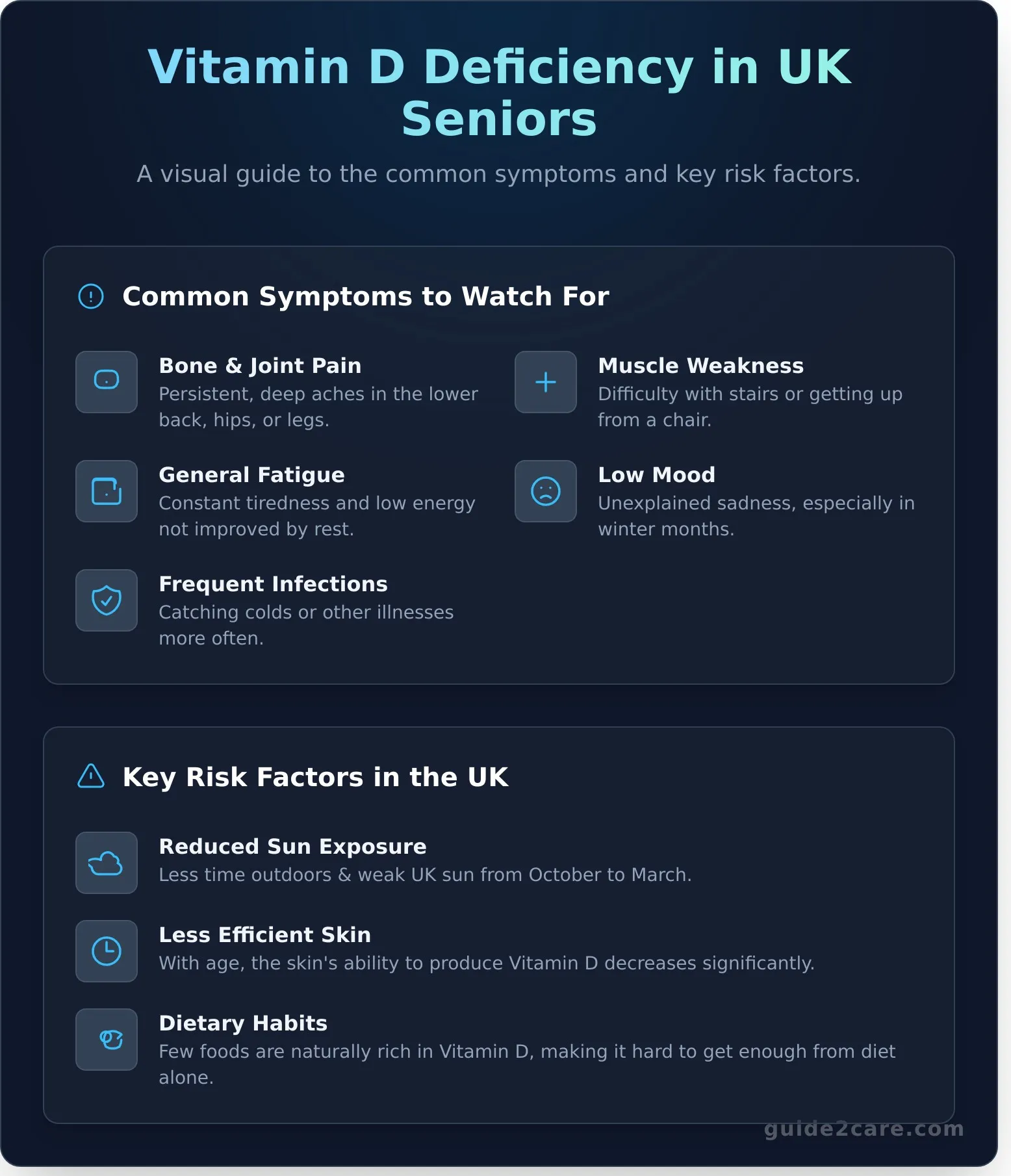
While symptoms can vary, several common indicators may suggest a deficiency. Be aware of the following signs:
- Bone and joint pain: A persistent, deep ache in the bones, particularly in the lower back, hips, or legs.
- Muscle weakness: Feeling weaker than usual, which may make everyday tasks like climbing stairs or getting up from a chair more difficult.
- General fatigue: A feeling of constant tiredness and low energy that is not relieved by rest.
- Low mood: Unexplained feelings of sadness or depression, which can be more pronounced during the winter months.
- Frequent infections: A weakened immune system can lead to catching colds or other infections more often.
Key Risk Factors for Seniors in the UK
Older adults in the UK are particularly susceptible to vitamin D deficiency for several key reasons:
- Reduced sun exposure: Many seniors spend less time outdoors due to mobility issues or living in a care home. The UK's northern latitude also means sunlight is not strong enough for vitamin D production between October and March.
- Less efficient skin: As we age, our skin's ability to produce vitamin D from sunlight decreases significantly.
- Dietary habits: Few foods are naturally rich in vitamin D. While some foods are fortified, it can be hard to get enough from diet alone.
How is Deficiency Diagnosed?
The only certain way to know if you have a deficiency is through a medical diagnosis. Your GP can arrange a simple blood test to measure your 25-hydroxyvitamin D levels, which is the standard indicator. If you are concerned about your symptoms or believe you are at high risk, speak to your doctor. They can confirm your status and recommend the correct course of action. For further details on UK recommendations, the official NHS guide to Vitamin D provides comprehensive information.
How to Get Enough Vitamin D: A Practical UK Guide
There are three ways to get enough vitamin D: sunlight, food, and supplements. For seniors in the UK, a practical approach is essential to maintain levels throughout the year. This guide explains how to use each source safely and effectively to support your health.
Safe Sun Exposure in the UK
Your body creates most of its vitamin D from direct sunlight on the skin. This process is only effective in the UK from late March or early April until the end of September. The best method is short, regular exposure on your forearms, hands, or lower legs without sunscreen.
Aim for 10-15 minutes outside once or twice a day during these months. You do not need to sunbathe. It is critical that your skin does not turn red or burn. Note that sunlight passing through a window is not effective, as glass blocks the necessary UVB rays.
Vitamin D in Your Diet
While some foods contain this essential vitamin, it is very difficult to get the recommended daily amount from diet alone. Key food sources include:
- Oily fish (e.g., salmon, sardines, mackerel)
- Red meat and liver
- Egg yolks
- Fortified foods like some breakfast cereals and fat spreads
The Role of Supplements
Due to weak sunlight from October to March, official NHS guidance recommends that everyone in the UK considers taking a daily supplement during these months. For at-risk groups, including seniors, a year-round supplement may be necessary. As the Signs of Vitamin D Deficiency can be easily missed, supplementation offers a reliable way to maintain healthy levels.
This advice highlights the importance of supplements for older adults. The next section will guide you on how to choose the right one. Good nutritional support is a key part of overall wellbeing. Use our directory to find care providers who support residents' health needs.
Choosing and Using Vitamin D Supplements Safely
Navigating the world of supplements can be confusing. This section provides clear, practical guidance on choosing and using vitamin d supplements. It is essential to remember that you should always consult your GP before starting any new supplement regimen to ensure it is right for your specific health needs.
How Much Do You Need? Understanding the Dose
For most adults in the UK, the NHS recommends a daily supplement containing 10 micrograms (mcg) of vitamin D throughout the autumn and winter. This is equivalent to 400 International Units (IU). You can use this simple conversion to understand packaging labels: 1 microgram = 40 IU. If a blood test shows you have a deficiency, your GP may recommend a higher dose for a set period to bring your levels back to normal.
Vitamin D3 vs. Vitamin D2: Does it Matter?
You will see two types of vitamin D listed on supplements: D2 and D3. Vitamin D3 is the type our bodies produce naturally from sunlight exposure and is generally considered more effective at raising and maintaining vitamin D levels in the blood. Most supplements available in the UK are vitamin D3, making it the straightforward choice for many.
Tips for Taking Your Supplement
To get the most from your supplement, follow these simple tips. Vitamin D is fat-soluble, which means your body absorbs it better when you take it with a meal that contains some fat or oil.
- Take your supplement with a main meal, such as breakfast or dinner.
- Make it part of your daily routine to help you remember.
- If you find swallowing tablets difficult, look for alternative forms like oral sprays or liquid drops.
Can You Take Too Much Vitamin D?
Taking too much vitamin D over a long period can cause a build-up of calcium in the body, which can weaken bones and damage the kidneys and heart. However, toxicity is very rare and typically only occurs with extremely high, unprescribed doses. The NHS advises that most adults should not take more than 100 micrograms (4,000 IU) per day. Always stick to the dose recommended by your GP or on the product label.
Your Next Steps for Vitamin D and Healthy Ageing
To summarise, ensuring you have enough vitamin d is a crucial part of healthy ageing for seniors. It plays a vital role in maintaining strong bones, supporting muscle function, and bolstering your immune system. As we've discussed, the limited sunlight in the UK means that diet and safe sun exposure alone are often not enough. For most older adults, a daily 10 microgram supplement, especially during the autumn and winter months, is the most reliable strategy. Always consult with your GP or a pharmacist before starting any new supplement regimen to confirm it is safe for your individual health needs.
Making proactive health choices is fundamental to planning your future care. At Guide2Care, we provide clear, practical information to empower UK seniors. All our health guidance is based on current NHS guidelines, making us a trusted resource for you and your family. We simplify complex topics to help you make the best decisions for your well-being. Explore our resources to help you make informed care decisions. Taking these informed steps today can make a significant difference to your quality of life tomorrow.
Frequently Asked Questions
Do I need a vitamin D supplement all year round if I live in the UK?
In the UK, the sun is not strong enough for the body to make vitamin D between October and early March. Public Health England advises that all adults, including seniors, consider taking a daily 10 microgram supplement during these months. Individuals who are housebound, live in a care home, or have darker skin may benefit from taking a supplement all year round. Consult your GP for personal advice on your specific needs.
Can I get enough vitamin D from my diet alone as a senior?
It is very difficult to get sufficient vitamin D from your diet. While foods like oily fish, red meat, and egg yolks contain some, the amounts are often too small to meet your daily needs. Some foods like breakfast cereals and fat spreads are fortified. However, for most seniors, diet alone is not enough. Sunlight exposure and supplementation remain the most effective ways to maintain adequate levels, especially during the UK's autumn and winter months.
Does using sunscreen stop my body from making vitamin D?
Sunscreen blocks the UVB radiation your body needs to produce vitamin D. When applied correctly, it can significantly reduce production. However, most people do not apply it perfectly, which may allow some UVB to reach the skin. The NHS advises that short periods in the sun without sunscreen can help your body make vitamin D. It is important to balance this with protecting your skin from burning and reducing the risk of skin cancer.
Does vitamin D interact with common medications like statins or blood thinners?
Yes, vitamin D can interact with certain medications. For example, some steroid medications can lower your vitamin D levels, while high doses of supplements may affect specific heart medications or diuretics. It is essential to discuss any new supplements with your GP or pharmacist. They can review all your current medications, including statins or blood thinners, and advise on a safe dosage to avoid any negative interactions and ensure your treatment remains effective.
Is a vitamin D blood test available on the NHS for seniors?
The NHS does not routinely offer vitamin D blood tests to the general population. A test may be requested by your GP if you have symptoms of a deficiency, such as persistent bone pain or muscle weakness. It may also be offered if you have a medical condition that affects how you absorb vitamins. If you are concerned about your levels, speak to your GP to discuss your symptoms and risk factors.
How long does it take to feel better after starting vitamin D supplements?
The time it takes to feel an improvement depends on the severity of your deficiency. Some people may notice a reduction in symptoms like muscle aches within a few weeks of starting supplements. However, to fully restore your body's levels and for bone health benefits to become apparent, it can take several months of consistent use. Follow the dosage prescribed by your doctor and allow time for the supplements to work effectively.
What is the difference between vitamin D and calcium supplements?
Vitamin D and calcium both support bone health, but they have different roles. Calcium is the mineral that builds and maintains the physical structure of your bones and teeth. Vitamin D functions like a key, allowing your body to absorb calcium from your diet and use it effectively. Without enough vitamin D, your body cannot absorb the calcium it needs, even if your diet is calcium-rich. They work together to maintain strong bones.