A Guide to Understanding Endometriosis

Severe period pain that disrupts your daily life is not always normal. For many, it can be a primary symptom of endometriosis, a long-term condition affecting one in ten women and those assigned female at birth in the UK. Feeling unheard or confused by medical terms can make the situation more challenging, leaving you with valid concerns about your long-term health and fertility.
This guide provides the clear, practical information you need to understand your health. We will break down what endometriosis is in simple terms, outline the common symptoms, and explain the steps involved in getting a diagnosis through the NHS or privately. You will also find a comprehensive overview of the various treatment and management options available in the UK, empowering you to have more informed conversations with your doctor and find the care you need.
What is Endometriosis? A Plain English Explanation
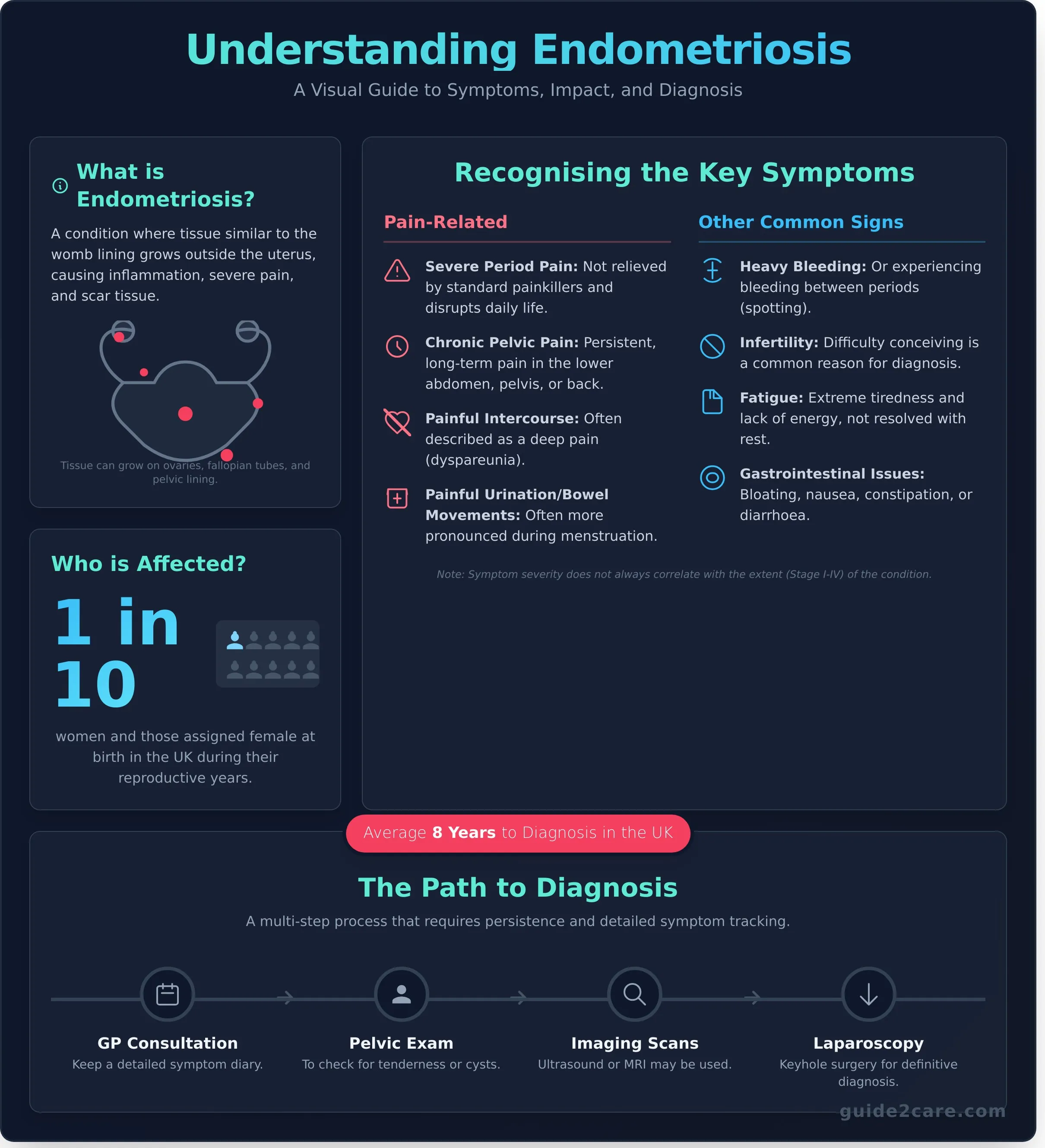
Endometriosis is a long-term condition where tissue, similar to the lining of the womb, starts to grow in other places. Instead of staying inside the uterus, this tissue can be found on the ovaries, fallopian tubes, and the lining of your pelvis. It is a common condition that can affect individuals in different ways.
To better understand this concept, watch this helpful video from a leading medical expert:
The main problem with this tissue is how it behaves. Each month, it acts like the womb lining: it thickens, breaks down, and bleeds. However, because it is outside the womb, this blood has no way to leave the body. This trapped blood can cause inflammation, severe pain, and the formation of scar tissue (adhesions). For a more detailed look, Wikipedia offers a comprehensive guide to endometriosis and its pathophysiology. It is important to note that the amount of tissue does not always correspond to the level of pain experienced; some people with minimal tissue growth report severe pain, while others with extensive growth may have few symptoms.
The Four Stages of Endometriosis
Clinicians may classify endometriosis into four stages based on the location, amount, and size of the tissue growths. The stages are:
- Stage I: Minimal
- Stage II: Mild
- Stage III: Moderate
- Stage IV: Severe
This staging system describes the physical extent of the condition but does not reliably predict pain levels or infertility. Treatment decisions are based on your specific symptoms and goals, not the stage.
Who is Affected by Endometriosis?
Endometriosis affects an estimated 1 in 10 women and those assigned female at birth in the UK during their reproductive years. The condition can impact anyone who has a uterus, from puberty through to menopause. Symptoms often begin in the teenage years, but a formal diagnosis can take many years to receive. Understanding who is affected is the first step toward seeking the right support and care.
Recognising the Key Symptoms of Endometriosis
The signs of endometriosis vary significantly from one person to another. The severity of symptoms does not always correlate with the extent of the condition. While some individuals experience debilitating symptoms, others may have no noticeable signs at all. The most common indicator is pain, which is often, but not always, linked to the menstrual cycle.
This pain is typically more severe than standard period cramps and can significantly impact daily life. It is crucial to distinguish between normal menstrual discomfort and the persistent, often debilitating pain associated with this condition. Understanding the full range of potential symptoms and diagnosis of endometriosis is the first step toward seeking appropriate medical advice and care.
Common Pain-Related Symptoms
Pain is the primary symptom reported by most individuals. It can manifest in several ways and may not be confined to your period. Key types of pain include:
- Severe period pain (dysmenorrhea): Pain that is not relieved by standard painkillers and is strong enough to interfere with work, school, or other daily activities.
- Chronic pelvic pain: A persistent, long-term pain in the lower abdomen and pelvis, which may also present as lower back pain.
- Pain during or after sexual intercourse (dyspareunia): This is often described as a deep pain, which is different from pain felt at the entrance of the vagina.
- Painful urination or bowel movements: This symptom is often more pronounced during menstruation as endometrial-like tissue can affect the bladder and bowel.
Other Common Signs and Symptoms
Beyond pain, the condition can cause a range of other physical issues that affect your wellbeing. Be aware of other potential signs, which can sometimes be mistaken for other conditions:
- Heavy bleeding (menorrhagia): You may experience very heavy periods or bleeding between periods (spotting).
- Infertility: Some individuals first discover the condition when they have difficulty conceiving.
- Fatigue: Extreme tiredness and lack of energy that is not resolved with rest, especially around your period.
- Gastrointestinal issues: Symptoms such as bloating, nausea, constipation, or diarrhoea are common, particularly during menstruation.
The Path to Diagnosis: How Doctors Identify Endometriosis
Receiving a diagnosis for endometriosis can be a long journey. In the UK, the average time from the onset of symptoms to a formal diagnosis is eight years. This process always begins with a visit to your GP. To make your consultation as effective as possible, it is advisable to keep a symptom diary. Track the type of pain, its location, its severity on a scale of 1-10, and when it occurs during your menstrual cycle. This detailed record provides your doctor with crucial information.
Initial GP Consultation and Examinations
During your appointment, expect your GP to ask detailed questions about your symptoms, their impact on your life, your menstrual cycle, and your personal and family medical history. They will likely perform a pelvic examination. This involves gently feeling your abdomen and internally examining your pelvis to check for any tenderness, cysts, or scarring. It is important to understand that endometriosis often does not cause visible or palpable abnormalities, so a normal exam result does not rule out the condition.
Imaging Tests and Scans
If your GP suspects endometriosis, they may refer you for further investigation with imaging tests. An ultrasound scan is often the first step. This may be a transvaginal ultrasound, where a small probe is inserted into the vagina, as this provides a clearer view of the pelvic organs. While ultrasound can detect larger cysts on the ovaries (endometriomas), it cannot see smaller patches of tissue. An MRI scan can provide more detailed images and may be used in complex cases, but it still cannot provide a definitive diagnosis.
Laparoscopy: The Gold Standard for Diagnosis
The definitive method for diagnosing endometriosis is a surgical procedure called a laparoscopy. Performed under general anaesthetic, this is a form of keyhole surgery where a surgeon makes a small incision near your navel to insert a thin tube with a camera (a laparoscope). This allows them to directly view the pelvic organs and identify any endometrial-like tissue. A small sample of tissue (a biopsy) is usually taken for laboratory analysis to confirm the diagnosis. In many cases, the surgeon can proceed with treatment to remove the endometriosis tissue during the same operation. Discussing all available endometriosis treatment options with your specialist is a vital next step after receiving a diagnosis.
Managing Endometriosis: An Overview of Treatment Options
While there is currently no cure for endometriosis, several effective treatments can manage symptoms and improve quality of life. The best approach depends on your individual circumstances, including the severity of your symptoms, your age, and whether you wish to have children. A specialist will work with you to create a personalised plan, which often involves a combination of the strategies outlined below.
Finding the right treatment path is a key step in living with this long-term condition. The goal is to reduce pain, slow the growth of endometrial tissue, and address any fertility issues.
Pain Management and Relief
Pain is often the primary symptom requiring management. Initial steps typically involve over-the-counter anti-inflammatory drugs like ibuprofen. If these are not sufficient, your GP can prescribe stronger pain relief. Many also find complementary therapies useful for day-to-day management, such as using heat pads or a Transcutaneous Electrical Nerve Stimulation (TENS) machine to help reduce pelvic pain and cramping.
Hormonal Treatments
Hormonal treatments aim to limit or stop the production of oestrogen, the hormone that encourages endometrial tissue to grow and shed. By slowing this growth and preventing menstruation, these treatments can significantly reduce pain. Common options include:
- The combined oral contraceptive pill or patch
- The progestogen-only pill
- The contraceptive implant or injection
- An intrauterine system (IUS), such as the Mirena coil
For more severe symptoms, specialists may suggest Gonadotropin-releasing hormone (GnRH) analogues, which induce a temporary and reversible menopause.
Surgical Treatments
Surgery aims to physically remove or destroy the patches of endometrial-like tissue. This is typically performed via laparoscopy (keyhole surgery). The two main techniques are ablation, which uses heat or a laser to destroy the tissue, and excision, which involves cutting the tissue out. For very severe cases where other treatments have failed and the person has completed their family, a hysterectomy (removal of the womb) may be considered as a last resort.
Living with Endometriosis: Beyond Medical Care
Managing a long-term condition like endometriosis extends beyond medical appointments and treatments. The symptoms can significantly affect daily life, including work, education, and personal relationships. Chronic pain and fatigue often have a considerable impact on mental health, making a comprehensive management plan essential for overall well-being.
Impact on Fertility and Pregnancy
Endometriosis can affect fertility by causing scar tissue (adhesions) or inflammation that impacts the function of the ovaries and fallopian tubes. However, many people with the condition conceive naturally without assistance. For those who experience difficulties, fertility treatments such as In-Vitro Fertilisation (IVF) are available options to discuss with a healthcare provider.
Managing Diet and Lifestyle
Certain lifestyle adjustments may help to manage symptoms. While not a cure, these practical strategies can support your medical care plan. Consider the following:
- Anti-inflammatory Diet: Some people find that reducing foods known to cause inflammation, such as processed items and red meat, while increasing fruits, vegetables, and omega-3s, can help lessen symptoms.
- Gentle Exercise: Low-impact activities like walking, swimming, and yoga can help manage pain, reduce stress, and improve mobility without placing excessive strain on the body.
- Stress Management: Techniques such as mindfulness, meditation, or gentle stretching can be effective tools for coping with the stress associated with chronic pain.
Finding Support and Resources
Building a strong support network is a vital component of managing your health. Connecting with others who understand the condition can reduce feelings of isolation. In the UK, organisations like Endometriosis UK provide reliable information, local support groups, and a dedicated helpline. Online forums and communities also offer a valuable space to share experiences and practical advice.
Managing a long-term condition can be complex. Explore our resources to find the care you need.
Your Next Steps in Managing Endometriosis
Gaining a clear understanding of endometriosis is the crucial first step. By recognising the key symptoms, you can pursue a formal diagnosis and begin exploring the treatment options that work for you. Living with a chronic condition presents unique challenges, but a proactive management plan, combining medical treatment and lifestyle support, can significantly improve your quality of life.
Building the right professional care team is essential for this plan. Guide2Care simplifies the task of finding qualified support. Our comprehensive UK-wide directory is a trusted resource for families and providers, offering clear, practical information to connect you with specialists and services.
Take control of your care journey today. Use our directory to find care providers in your area. With the right support network, you can move forward with confidence.
Frequently Asked Questions
Can endometriosis be cured completely?
Currently, there is no complete cure for endometriosis. Medical treatments focus on managing symptoms, reducing pain, and slowing the progression of the condition. Options available through the NHS and private care include hormonal therapies, pain relief medication, and surgical procedures. The goal of these interventions is to improve quality of life by controlling the impact of the disease. Your GP or a specialist can determine the most suitable management plan for you.
Does having endometriosis increase your risk of cancer?
Research indicates a slightly increased risk of certain cancers, specifically epithelial ovarian cancer, for those with endometriosis. However, it is important to understand that the overall risk remains very low, and the vast majority of people with the condition will not develop cancer. Regular check-ups and discussing any new or worsening symptoms with your doctor are recommended for monitoring your health and allowing for early detection of any potential issues.
Can endometriosis come back after surgery?
Yes, endometriosis can recur after surgery. Surgical procedures like laparoscopy aim to remove existing endometrial lesions, but they do not prevent new ones from developing. The likelihood of recurrence depends on factors such as the completeness of the initial surgery and the stage of the disease. Following surgery, your consultant may recommend hormonal treatments to help suppress regrowth and manage symptoms long-term. A hysterectomy is also not a guaranteed cure.
What is the difference between endometriosis and adenomyosis?
Endometriosis and adenomyosis are related but distinct conditions. In endometriosis, tissue similar to the uterine lining grows outside the uterus, affecting organs like the ovaries and fallopian tubes. With adenomyosis, this same type of tissue grows directly into the muscular wall of the uterus itself. This causes the uterus to thicken and can lead to heavy, painful periods. It is possible for an individual to have both conditions at the same time.
Can diet and exercise really help manage endometriosis symptoms?
Yes, lifestyle changes can be effective complementary strategies for managing symptoms. An anti-inflammatory diet, rich in fruits, vegetables, and omega-3 fatty acids, may help reduce pain and bloating. Gentle exercise such as yoga, swimming, or walking can help alleviate pain, reduce stress, and improve overall well-being. These should be used alongside, not in place of, prescribed medical treatments advised by a healthcare professional.
Is it possible to have endometriosis after menopause?
While symptoms often improve after menopause due to falling oestrogen levels, it is possible to experience endometriosis post-menopause. The condition is oestrogen-dependent, but residual tissue can remain active and cause pain. This is particularly relevant for those taking Hormone Replacement Therapy (HRT), as it can reactivate dormant endometrial implants. If you experience new pelvic pain after menopause, consult your GP for an assessment.