Common Health Concerns for Seniors: A Plain English Guide

Navigating later life often raises new questions about health and wellbeing. It is common to feel overwhelmed by complex medical information or to worry about which changes are a normal part of ageing. When support is needed, the UK care system itself can seem difficult to understand, leaving many unsure where to turn for help or what the difference is between the NHS and social care.
This guide is designed to provide clarity. Here, you will find a plain English overview of the most common physical and mental health conditions affecting seniors. We explain the key signs to look for and offer straightforward advice on when to seek professional support.
Furthermore, we will break down the structure of care in the UK. Learn the difference between NHS and social care services and discover the types of support available, from help at home to full-time residential care. Use this guide to feel more prepared and to find the right care for your specific needs.
Understanding Health in Later Life: What to Expect
As we get older, our bodies change. Understanding these changes is the first step towards healthy ageing. In the UK, the focus is on maintaining quality of life and independence for as long as possible. Proactive management of your personal health is key. This guide provides clear, practical information to help you distinguish between normal signs of ageing and symptoms that may require medical attention. Knowledge empowers you to make informed decisions and work effectively with healthcare professionals.
This video provides a clear overview of common health topics for older adults:
Normal Ageing vs. Health Concerns
It is important to know the difference between typical age-related changes and potential health issues. Many physical shifts, such as changes to skin elasticity or slightly slower reflexes, are a normal part of getting older. For a detailed overview of the common changes in old age, various resources can provide comprehensive information. However, some symptoms should not be dismissed. Use this simple checklist to guide your awareness.
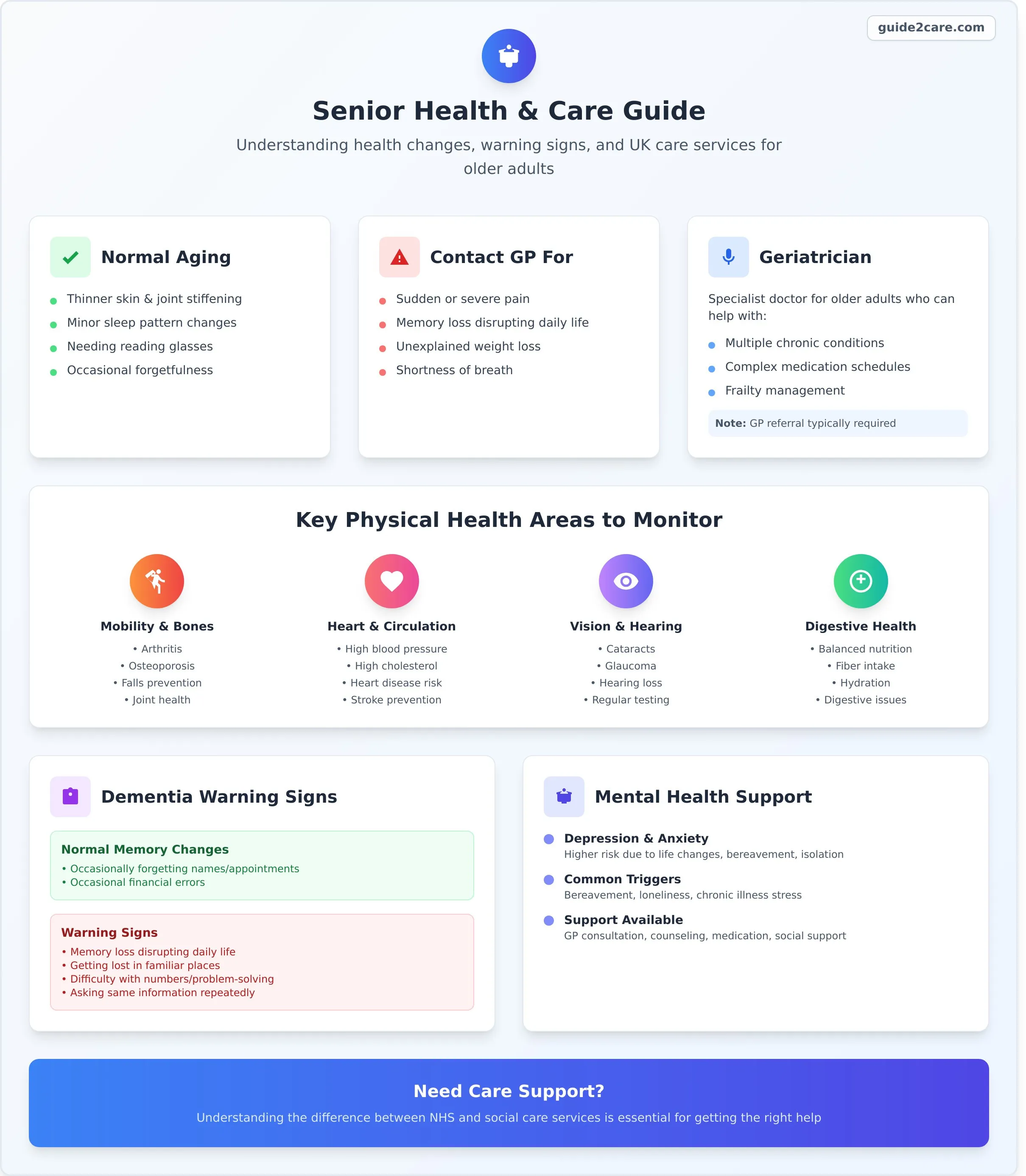
- Normal Ageing Can Include: Thinner skin, stiffening of joints, minor changes in sleep patterns, needing reading glasses.
- Contact Your GP For: Sudden or severe pain, significant memory loss that disrupts daily life, unexplained weight loss, shortness of breath, or a sudden change in bowel habits.
The Role of a Geriatrician
A geriatrician is a doctor who specialises in the health and care of older people. They are experts in managing multiple and complex conditions that are common in later life. You might consider seeing a geriatrician if you are dealing with several chronic illnesses, frailty, or complex medication schedules. To see a geriatrician on the NHS, you will typically need a referral from your GP. Discuss your concerns with your doctor to see if this specialist support is the right option for you.
Key Physical Health Areas to Monitor in Seniors
Proactive monitoring of physical health is essential for maintaining independence in later life. The UK’s approach, detailed in resources like the NHS support for older people guide, focuses on prevention and early detection. Understanding these common conditions helps you manage and maintain a good quality of life. This section outlines key areas to watch.
Mobility, Bone, and Joint Health
Maintaining mobility is crucial. Conditions like arthritis (joint inflammation) and osteoporosis (weakened bones) can increase the risk of falls, a leading cause of injury in seniors. Regular, gentle exercise helps maintain strength and balance. Foot pain, often from issues like plantar fasciitis, should also be addressed promptly to ensure stability. Falls prevention strategies are a key part of any care plan.
Heart and Circulatory Conditions
Your heart and circulatory system work harder with age. High blood pressure and high cholesterol are common and can lead to serious problems like heart disease or stroke if left unmanaged. These conditions often have no early symptoms. Regular check-ups with your GP are the most effective way to monitor your cardiovascular health and get treatment if needed. A balanced diet and active lifestyle are vital for prevention.
Sensory Changes: Vision and Hearing
Gradual changes to sight and hearing are a normal part of ageing, but specific conditions require attention. Regular eye tests can detect cataracts and glaucoma early, often preventing significant vision loss. Similarly, hearing loss can impact safety and lead to social isolation. Routine hearing tests and, if necessary, the use of hearing aids can dramatically improve daily life and communication.
Digestive and Nutritional Health
A healthy digestive system is central to overall wellbeing. Seniors may experience issues like constipation or diverticulitis. A balanced diet rich in fibre, vitamins, and minerals supports digestive function and provides necessary energy. Hydration is also critical, as dehydration can occur more quickly in older adults and can lead to confusion and other health complications. Drinking enough water is a simple but powerful habit.
Cognitive and Mental Health: An Equal Priority
Maintaining good mental health is as vital as physical fitness in later life. While many people worry about memory loss, it is important to distinguish between normal age-related changes and signs of a more serious condition. Proactive steps can support both cognitive function and emotional well-being, ensuring your overall health is managed effectively.
Understanding Dementia and Alzheimer's
Dementia is an umbrella term for a range of progressive conditions that affect the brain. Alzheimer's disease is the most common type. It is crucial to recognise the difference between typical forgetfulness and potential early warning signs.
- Normal Forgetfulness: Occasionally forgetting names or appointments but remembering them later.
- Potential Warning Sign: Memory loss that disrupts daily life, such as asking for the same information repeatedly or getting lost in familiar places.
- Normal Forgetfulness: Making an occasional error when managing finances.
- Potential Warning Sign: New and consistent difficulty with numbers, problem-solving, or following a familiar plan.
If you have concerns, it is essential to seek a medical diagnosis. Explore our comprehensive guide to understand more about Dementia and finding the right support.
Managing Mood: Depression and Anxiety
Seniors can be at a higher risk of depression. Triggers often include major life events such as bereavement, loneliness, or the stress of managing a chronic illness. Recognising these challenges is the first step toward managing your mental well-being, which is a key part of the common health conditions in older adults. Support is available; your GP is the best starting point and can discuss options from medication to talking therapies, such as Cognitive Behavioural Therapy (CBT), often available through the NHS.
The Importance of Social Connection
Social isolation is a significant risk factor for poor mental and physical health. Staying connected with others helps to keep your mind active and provides essential emotional support. Consider joining local clubs, community centres, or volunteering. For those who need more support at home, care options like domiciliary care or companionship services can be an effective way to combat loneliness. Residential care homes also provide a built-in community with structured social activities.
Navigating the UK Health and Social Care System
Understanding who provides care and how to access it is essential for managing your wellbeing. In the UK, support is primarily delivered by two separate bodies: the National Health Service (NHS) for your medical needs, and your local council for social care. Knowing which one to contact simplifies the process of getting the right help.
Your GP: The First Port of Call
Your General Practitioner (GP) is the central point of contact for most medical concerns. They diagnose and treat illnesses, manage long-term conditions, and prescribe medication. A GP also acts as a gateway to specialised services, coordinating referrals to hospital specialists, community nurses, or therapists. For those aged 75 and over, the NHS offers a free annual health check to proactively manage any emerging issues.
NHS vs. Local Authority Social Care
It is important to understand the difference between these two services and how they are funded.
- The NHS provides medical care that is free at the point of use. This includes hospital stays, district nurse visits, and treatment from specialists. It is funded through general taxation.
- Local Authority Social Care provides practical support to help you with daily life. This can include home care (domiciliary care) to help with washing and dressing, or modifications to your home. This support is means-tested.
To access social care, you must contact your local council for a needs assessment. They will evaluate your situation to determine what support you require and will also conduct a financial assessment to see if you need to contribute towards the cost of your care.
Understanding Care Quality: The CQC
All care providers in England, including care homes and home care agencies, are regulated by the Care Quality Commission (CQC). The CQC inspects services to ensure they are safe, effective, and well-led. After an inspection, providers are given one of five ratings: Outstanding, Good, Requires Improvement, or Inadequate. Always check a provider’s CQC rating before making a decision. Learn how to find CQC ratings for providers on Guide2Care.
Matching Health Needs to the Right Type of Care
Understanding specific health and support requirements is the first step toward finding the correct care solution. Different levels of need match different types of professional support. This guide helps you identify which option is most suitable for you or your loved one, empowering you to plan for current and future needs with clarity.
When Home Care is the Answer
Home care, or domiciliary care, allows an individual to receive support in their own home. It is ideal for those who wish to remain in a familiar environment but require assistance with daily tasks. This type of care is flexible and can be adapted as needs change over time.
- Post-illness recovery: Short-term help with meals, personal care, and errands after a hospital stay.
- Medication management: Regular visits to ensure medication is taken correctly and on time.
- Mobility support: Assistance with moving safely around the home to prevent falls.
If staying at home is the priority, home care is often the most practical choice. Explore home care agencies in your area.
Residential and Nursing Homes
For more comprehensive support, a care home provides a safe, supervised environment with 24-hour staffing. It is important to understand the distinction between the two main types.
Residential homes offer personal care, including help with washing, dressing, meals, and mobility. They are suited for individuals with significant mobility issues or those who require constant supervision for their safety, such as people living with early to mid-stage dementia.
Nursing homes provide the same personal care but also have qualified nurses on-site around the clock to manage medical needs. This is the correct choice for complex health conditions, severe post-stroke care, or other long-term illnesses requiring regular nursing intervention.
Assisted Living and Supported Housing
This option provides a middle ground between home care and a residential home. Assisted or supported living schemes offer private, self-contained accommodation with the benefit of communal facilities and on-site support staff. This model focuses on maintaining independence while providing the reassurance that help is available if needed. It is best for older adults who are largely independent but want the peace of mind that comes with a secure environment and an accessible support network.
Taking the Next Step for Senior Health and Wellbeing
Staying informed about common senior health concerns is the first step towards proactive care. As this guide has shown, maintaining wellbeing in later life means paying equal attention to physical conditions, cognitive changes, and mental health. Understanding how to navigate the UK's health and social care system is also crucial. By recognising potential issues early and knowing what support options are available-from domiciliary care to residential homes-you can make confident and timely decisions for yourself or a loved one.
When it is time to find professional support, Guide2Care provides the tools you need to act with clarity. Our directory is a definitive resource, featuring comprehensive listings of trusted care providers across the entire UK. We empower you with guidance from care experts and easy-to-use search and filter tools, allowing you to narrow down options by location, care type, and specific needs. The right solution is within reach.
Find the care you need. Search our UK directory of trusted providers.
Frequently Asked Questions
What is the difference between NHS continuing healthcare and social care?
NHS continuing healthcare (CHC) is a care package arranged and funded solely by the NHS for individuals with a 'primary health need'. This is determined by a complex assessment of an individual's needs. Social care is provided by your local council to help with daily tasks like washing, dressing, or meals. Social care is means-tested, meaning your income and savings will determine if you must contribute to the cost. The key distinction is whether the primary need is for health or for practical support.
How often should an older person have a full health check-up?
The NHS offers a free health check every five years for those aged 40-74. For individuals over 75, GPs should offer an annual check-up to review medication and discuss any new concerns. This is an important opportunity to assess overall health and manage long-term conditions. It is advisable to attend these appointments to proactively manage your wellbeing. If you have specific concerns at any time, you should contact your GP directly rather than waiting for a scheduled check-up.
Are memory problems always a sign of dementia?
No, memory problems are not always a sign of dementia. Normal ageing can cause minor memory lapses. Other factors such as infections, vitamin deficiencies, stress, and medication side effects can also impact memory. If you are worried about memory loss, it is essential to see a GP. A doctor can perform tests to rule out other causes and provide a proper diagnosis. Early assessment of any new health issue is always recommended for effective treatment and management.
What are the first steps to arrange a care needs assessment from the council?
To arrange a care needs assessment, you must contact the adult social services department of your local council. You can find their contact details on the council's website or by calling their general number. Simply request a 'care needs assessment' for yourself or the person you are concerned about. The council has a legal duty to conduct an assessment for anyone who appears to require care and support, regardless of their financial situation. You do not need a GP referral to start this process.
How can I find out if a care home is any good?
In England, the Care Quality Commission (CQC) inspects and rates all care providers. Visit the CQC website to search for a care home and read its latest inspection report, which provides a rating of Outstanding, Good, Requires Improvement, or Inadequate. In Scotland, use the Care Inspectorate; in Wales, use Care Inspectorate Wales; and in Northern Ireland, use the Regulation and Quality Improvement Authority (RQIA). These official reports provide an impartial assessment of a home's safety and quality.
What financial help is available for paying for care in the UK?
Financial assistance for care is typically means-tested and provided by your local council. If your capital is below a set threshold (e.g., £23,250 in England), the council may pay for some or all of your care costs. You may also be eligible for non-means-tested benefits like Attendance Allowance. For those with significant health needs, fully-funded NHS Continuing Healthcare may be available. Always get a financial assessment from your council to confirm what support you can receive.