Norovirus: A Practical Guide to Symptoms, Treatment, and Prevention in Care Homes

The news of a sickness bug in a care home can be a source of significant worry. When that illness is the highly contagious norovirus, concerns about the health of a vulnerable resident can quickly become overwhelming. You might be unsure of the symptoms to watch for, question the home’s hygiene standards, or feel confused about how an outbreak is being handled. This uncertainty makes it difficult to feel confident in your loved one's care.
This practical guide provides the essential information you need to navigate a norovirus outbreak. We will explain what the virus is, how to identify the symptoms, and what effective infection control looks like in a residential setting. You will learn the right questions to ask care providers and understand the steps they must take to protect residents. This knowledge will empower you to support your relative and ensure they receive the best possible care during recovery.
What is Norovirus and Why is it a Major Concern in Care Settings?
Norovirus is a highly contagious virus that causes gastroenteritis, an inflammation of the stomach and intestines. Commonly known as the 'winter vomiting bug', it leads to sudden-onset vomiting and diarrhoea. While most people recover within a few days, it poses a significant risk in care settings. The close-contact nature of residential homes, combined with the vulnerability of residents, makes these environments particularly susceptible to rapid and widespread outbreaks. Understanding what norovirus is and how it spreads is the first step in effective management and prevention.
Watch this video from the Centers for Disease Control and Prevention (CDC) for a clear guide on preventing its spread:
Key Symptoms of Norovirus to Watch For
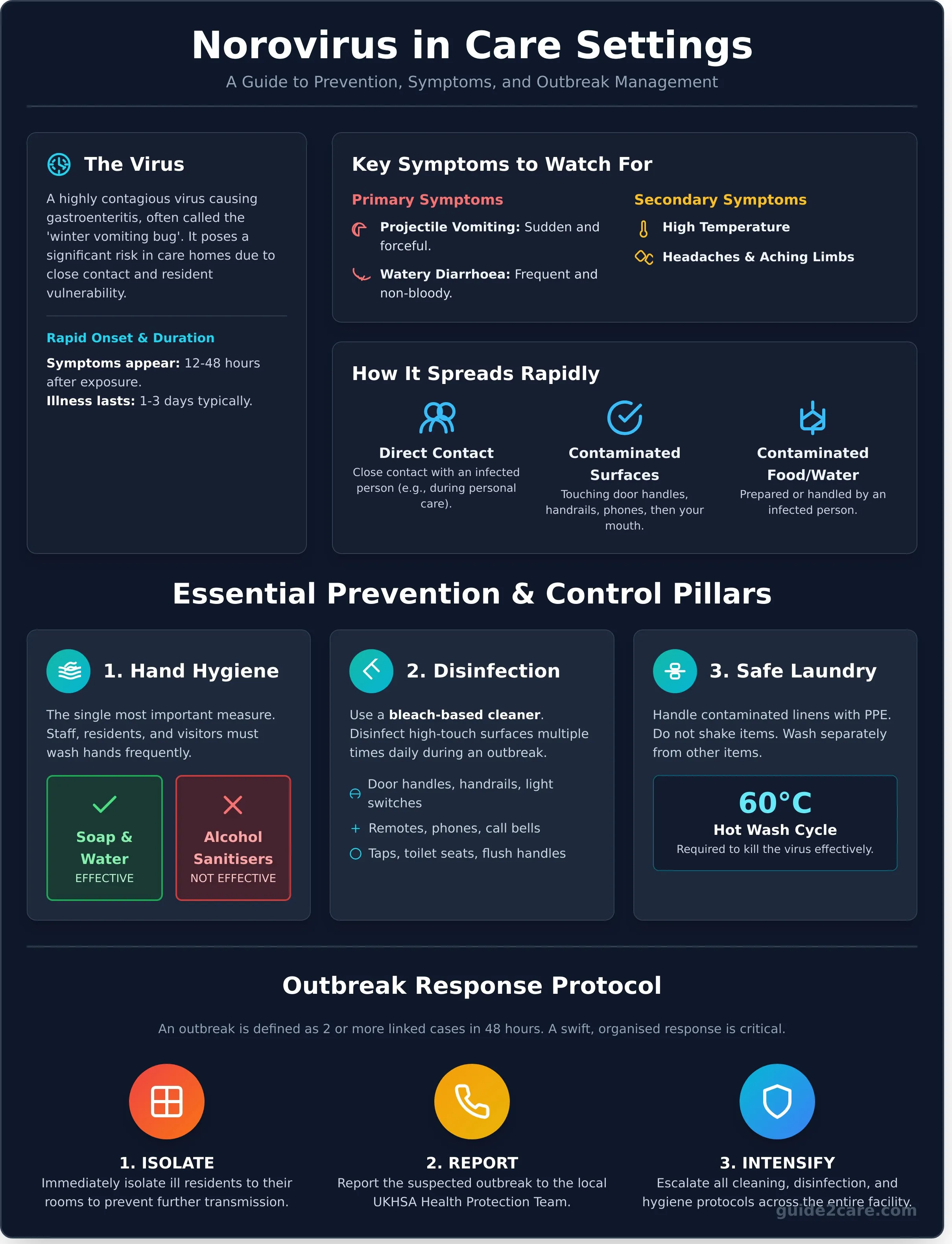
Symptoms appear very quickly, usually within 12 to 48 hours of exposure. The illness typically lasts for one to three days. It is crucial for care staff and family members to recognise the signs promptly to limit transmission.
- Primary Symptoms: The most common signs are sudden nausea, forceful (projectile) vomiting, and watery, non-bloody diarrhoea.
- Secondary Symptoms: Individuals may also experience a high temperature, headaches, and aching limbs or joints.
How Norovirus Spreads So Easily
The virus is extremely infectious and can spread rapidly through buildings like care homes. A very small amount of the virus is enough to cause infection. The main routes of transmission include:
- Direct Contact: Close contact with an infected person, such as providing personal care.
- Contaminated Surfaces: Touching surfaces or objects contaminated with the virus, like door handles, handrails, or toilets, and then touching your mouth.
- Contaminated Food/Water: Consuming food or water that has been prepared or handled by an infected person.
Specific Risks for Older and Vulnerable Adults
For frail or elderly individuals and those with underlying health conditions, the virus presents a greater threat. Dehydration is the primary concern, as fluid loss from vomiting and diarrhoea can occur quickly and lead to complications like kidney problems and confusion. Recovery times are often longer, and the illness can weaken an individual's immune system, making them more susceptible to other infections. This places significant strain on both the resident's health and the care home's resources.
Essential Prevention Strategies for Norovirus in Care Homes
The most effective defence against a norovirus outbreak in a care home is a strict and consistent infection prevention and control (IPC) policy. Preventing transmission relies on shared responsibility between staff, residents, and visitors. While these prevention strategies are critical, understanding the full cycle of the illness is also important. For detailed guidance on Norovirus treatment and recovery, refer to public health resources that outline supportive care. The core pillars of prevention are meticulous hygiene, effective cleaning, and safe management of potentially contaminated items.
The Critical Role of Hand Hygiene
Thorough handwashing with soap and water is the single most important measure. The virus is resistant to alcohol-based hand sanitisers, which are not effective at removing viral particles. All staff, residents, and visitors must wash their hands frequently.
- Before preparing or eating food.
- After using the toilet or assisting a resident.
- After contact with a person who has symptoms.
- After touching potentially contaminated surfaces.
- Upon entering and before leaving the care home.
Effective Environmental Cleaning and Disinfection
Standard cleaning products are often insufficient to kill the virus. Use a bleach-based household cleaner or a disinfectant proven to be effective against it. Pay close attention to high-touch surfaces which must be disinfected several times a day during an outbreak. These include:
- Door handles, handrails, and light switches.
- Remote controls, phones, and call bells.
- Taps, toilet seats, and flush handles.
- Communal furniture and equipment.
After an incident of vomiting or diarrhoea, the area must be cleaned and disinfected immediately. Staff must wear personal protective equipment (PPE), use disposable cloths, and ensure the area is well-ventilated.
Managing Laundry and Linens Safely
Contaminated clothing, bedding, and towels require careful handling to prevent spreading the virus. Staff must wear disposable gloves and an apron. Handle soiled items minimally and do not shake them, as this can disperse viral particles into the air. Place items directly into a laundry bag. Wash contaminated laundry separately from other items on a hot wash cycle at 60°C to ensure the virus is killed.
Managing a Norovirus Outbreak: A Step-by-Step Protocol
A swift, organised response is critical to control the spread of norovirus in a care home. An outbreak is typically defined as two or more linked cases of residents or staff showing similar symptoms of diarrhoea or vomiting within 48 hours. When this occurs, the home must immediately activate its outbreak management plan.
Care homes must report a suspected outbreak to their local UK Health Security Agency (UKHSA) Health Protection Team (HPT) or local authority Environmental Health department. Prompt reporting is a legal duty and allows for expert public health support. This action is a critical part of the formal response, as detailed in the official UK government norovirus guidance.
Immediate Steps: Isolation and Containment
The first priority is to prevent further transmission. This involves rapid implementation of strict Infection Prevention and Control (IPC) measures. Key actions include:
- Isolating ill residents: Affected residents should remain in their rooms until they have been symptom-free for at least 48 hours.
- Restricting staff movement: Where possible, staff should be cohorted to care for either affected or well residents, but not both, to reduce cross-contamination.
- Managing visitors: Suspend non-essential visits or provide clear guidance to essential visitors on hand hygiene and the use of Personal Protective Equipment (PPE).
Communication with Residents, Staff, and Families
Clear and consistent communication is essential to manage expectations and ensure cooperation. Inform families of the situation, explaining any visitor restrictions and the measures being taken to protect their loved ones. Staff must be fully briefed on the enhanced IPC protocols and their specific roles. Regular, factual updates help to build trust and reduce anxiety for everyone involved.
When to Seek Further Medical Advice
While most people recover without treatment, vulnerable residents are at higher risk of complications. Contact a GP or call NHS 111 if a resident shows signs of severe dehydration, such as confusion, dizziness, or passing very little urine. For residents with complex underlying health conditions or if there is a sudden, severe deterioration in health, call 999 for emergency medical assistance.
Treatment and Recovery: Supporting Residents Through Illness
There is no specific medication or cure for norovirus. Treatment focuses on supportive care to manage symptoms, prevent complications, and ensure the resident is as comfortable as possible. The illness is typically short-lived, with most people recovering fully within one to three days.
The primary goal during an outbreak is to keep residents hydrated and rested while the body fights the infection. Staff must monitor individuals closely, particularly those with underlying health conditions who may be more vulnerable to complications.
The Priority: Preventing and Managing Dehydration
Vomiting and diarrhoea can lead to a significant loss of fluids, making dehydration the most common complication of a norovirus infection. For older adults, this can develop quickly and have serious consequences. Effective management includes:
- Encouraging Fluids: Offer small, frequent sips of water or clear liquids. Oral rehydration solutions, available from pharmacies, are ideal for replacing lost salts and sugars.
- Monitoring for Signs: Staff should watch for symptoms of dehydration, such as dark-coloured urine, dizziness, confusion, or a dry mouth.
- Using Fluid Balance Charts: These charts are essential tools for accurately tracking a resident's fluid intake and output, providing a clear record for medical review.
Diet and Nutrition During and After Illness
Appetite is usually poor during the acute phase of the illness. It is best not to force food. Once a resident feels able to eat, reintroduce food gradually. Start with plain, easy-to-digest items to avoid irritating the stomach. Good options include toast, crackers, rice, bananas, and clear soups. Foods that are spicy, fatty, or very rich should be avoided until recovery is complete.
Post-Infection Precautions
A critical aspect of managing norovirus is understanding that an individual can remain contagious after they feel better. To prevent further spread, it is vital to follow strict post-infection protocols.
Residents should remain isolated for at least 48 hours after their symptoms have completely stopped. During this period, rigorous hand hygiene and environmental cleaning must continue. Only after this 48-hour window has passed is it generally considered safe for the resident to return to communal areas and socialise with others, in line with the care home's specific outbreak management policy.
Questions to Ask Your Care Provider About Their Norovirus Policies
When choosing a care home or engaging with a current provider, it is vital to understand their infection control procedures. Asking direct questions about their policies is a practical step that shows you are an engaged and responsible family member. This helps you assess a home’s preparedness for infectious outbreaks, including norovirus.
Use this checklist to guide your conversation with the care home management.
Questions About Staff Training and Policies
A well-prepared care home invests in its staff and has clear internal policies to protect residents. Consider asking the care home manager the following questions:
- How often is staff training on infection prevention and control reviewed and updated?
- What is your policy for staff members who show symptoms of illness? Do they stay home, and for how long?
- Do you have a designated and qualified Infection Prevention and Control (IPC) lead on staff?
Questions About Hygiene and Outbreak Management
Effective management during an outbreak is critical to resident safety. A transparent home will have a clear, documented plan. Key questions to ask include:
- What specific cleaning products and protocols do you use in the event of an outbreak?
- How do you communicate with families and residents if an outbreak is declared?
- Can I see a copy of your outbreak management plan?
Evaluating the Care Environment
In addition to asking questions, you can assess a home’s commitment to hygiene through direct observation. During your visit, look for these important indicators of a safe environment:
- Visible Cleanliness: Check that communal areas, dining rooms, and lounges are clean and free of clutter.
- Handwashing Facilities: Ensure that hand sanitiser or soap and water are readily available for visitors, particularly at entrances and exits.
A clean and well-maintained environment is a fundamental sign of a provider's commitment to resident health. When you are ready to compare options, use Guide2Care to find care homes committed to high standards.
Ensuring Safety: Key Takeaways on Norovirus Management
Effective management of norovirus in care settings is built on two core principles: robust prevention and rapid response. Strict hygiene protocols and a clear, well-rehearsed outbreak plan are not just best practice-they are essential for protecting the health and wellbeing of all residents. Understanding what these policies involve empowers you to ask the right questions when choosing a care provider.
A provider's commitment to infection control is a key indicator of quality. Guide2Care helps you assess this critical factor. Our comprehensive UK-wide directory provides the resources you need to compare homes, with a focus on official CQC ratings and quality of care. You can find detailed information to help you select a provider that prioritises resident safety above all else.
Take the next step towards finding a safe and supportive environment. Find The Care You Need: Search for quality care homes on Guide2Care.
Frequently Asked Questions About Norovirus
How long is a person contagious with norovirus?
A person is contagious from the moment they begin to feel ill until at least 48 hours after their last symptom has passed. It is important to note that the virus can still be present in faeces for up to two weeks after recovery. This extended contagious period is why care homes enforce strict 48-hour exclusion policies for staff and visitors to prevent the spread of infection and protect vulnerable residents.
Can you get norovirus more than once, and why?
Yes, you can be infected with norovirus multiple times. This is because there are many different strains of the virus. When you recover from an infection, your body develops immunity to that specific strain, but this does not provide protection against other strains. Furthermore, any immunity you do develop may only be short-term, making reinfection possible even with a similar strain after several months or years.
What is the difference between norovirus and bacterial food poisoning?
The primary difference is the cause. Norovirus is a virus, whereas food poisoning is caused by bacteria like Salmonella or Campylobacter. While symptoms are similar, norovirus is highly contagious and spreads easily from person to person. Bacterial food poisoning is contracted by consuming contaminated food or drink and is not typically passed between people. Norovirus symptoms also tend to appear very quickly, usually within 12 to 48 hours of exposure.
Are there any long-term effects of norovirus, especially for the elderly?
For most people, there are no long-term effects. However, for elderly or frail individuals, severe dehydration caused by the illness can lead to serious complications, including kidney problems and increased confusion. It is vital that older adults receive prompt support to manage symptoms and maintain fluid intake. In rare cases, a severe bout of gastroenteritis can trigger post-infectious irritable bowel syndrome (IBS) in some individuals.
What specific cleaning products are effective at killing norovirus on surfaces?
Standard disinfectants and alcohol-based gels are often ineffective against norovirus. To kill the virus on hard surfaces, you must use a bleach-based household cleaner. Public Health England recommends a solution made with detergent and hot water for initial cleaning, followed by a disinfectant that contains or is based on bleach. Always follow the manufacturer's safety instructions and ensure the area is well-ventilated during use.
Should I visit a relative in a care home during a norovirus outbreak?
It is strongly advised that you do not visit a care home during a confirmed norovirus outbreak. Care homes will implement visiting restrictions as a critical infection control measure to protect residents, staff, and the wider community. Always telephone the home before planning a visit to check their current policy. If a visit is deemed essential for compassionate reasons, you must strictly follow all hygiene instructions provided by the staff.