Calorie Calculator: A Practical Guide to Your Daily Needs

Managing your nutritional intake is a fundamental part of maintaining your health, energy, and wellbeing. Yet, with so much conflicting advice available, it can be difficult to know where to begin. This is particularly true if you are managing a health condition or notice your needs changing as you get older. This practical guide simplifies the process. It starts with a straightforward calorie calculator to give you a clear, personalised estimate of your daily requirements.
Understanding this figure is the first step towards taking control of your diet. In this article, you will learn how to use your calorie estimate to achieve your health goals, whether that involves managing your weight or boosting your energy levels. We provide simple, actionable tips for healthy eating that do not require a strict or complicated diet. Find the clarity you need to manage your nutrition effectively.
What Are Calories and Why Do They Matter for Health?
Calories are a unit of energy found in food and drink. Your body requires this energy for every function, from breathing to walking. Understanding your energy needs is the first step towards managing your health, and a calorie calculator is a tool designed to help you estimate these needs effectively. For a detailed scientific explanation, you can explore the question What is a calorie?, but for practical purposes, think of them as the fuel your body runs on.
This video provides a clear visual guide on calculating your calorie needs for specific health goals:
As we age, our energy requirements often change. Metabolism can slow down, and activity levels may decrease, making it important to adjust our energy intake to maintain a healthy weight. The goal is to achieve a balance between the energy you consume and the energy you use.
Energy for Essential Functions (BMR)
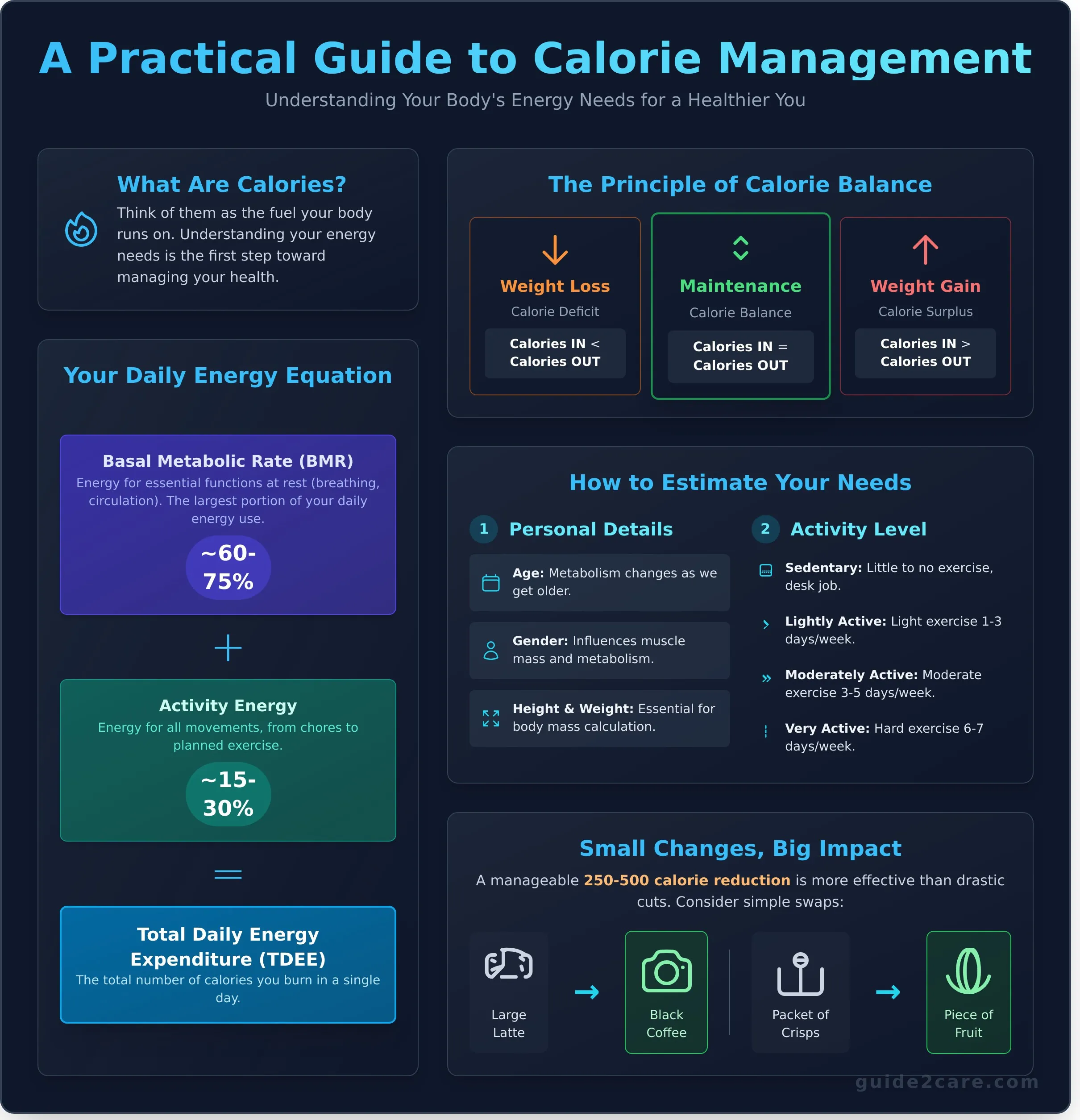
Your Basal Metabolic Rate (BMR) is the number of calories your body needs to perform its most basic, life-sustaining functions while at rest. This 'idling' energy powers breathing, blood circulation, and cell production. BMR accounts for the largest portion of your total daily energy expenditure, forming the foundation of your body's energy budget.
Energy for Daily Activities (TDEE)
Total Daily Energy Expenditure (TDEE) represents the total number of calories you burn in a day. It is your BMR plus the energy used for all other activities. This includes planned exercise as well as everyday movements like gardening, household chores, or walking to the shops. An online calorie calculator uses your BMR and activity level to estimate your TDEE accurately.
The Concept of Calorie Balance
Managing your weight involves balancing calorie intake with your TDEE. This principle can be broken down into three simple states:
- Calorie Surplus: Consuming more calories than you burn. This leads to weight gain as the excess energy is stored as fat.
- Calorie Deficit: Consuming fewer calories than you burn. This leads to weight loss as your body uses stored fat for energy.
- Calorie Maintenance: Consuming the same number of calories that you burn. This helps you maintain your current weight.
How to Use The Calorie Calculator: A Step-by-Step Guide
This section explains how to get the most accurate result from our calorie calculator. The tool is designed to give you a clear, simple estimate of your daily calorie needs to maintain your current weight. Remember, this figure is a guideline, not a strict rule. Official tools like the USDA's MyPlate Plan calculator also provide estimates to help inform your dietary choices. The most effective approach to health is making small, consistent changes over time.
Step 1: Entering Your Personal Details
To calculate your Basal Metabolic Rate (BMR)-the energy your body uses at rest-the calculator needs accurate personal information. Each factor plays a role in determining your unique energy requirements.
- Age: As we get older, muscle mass tends to decrease and metabolism slows. This means that, typically, older adults require fewer calories than younger individuals to maintain their weight.
- Gender: Men generally have a higher muscle mass and lower body fat percentage than women, which results in a faster metabolism and higher daily calorie needs.
- Height & Weight: Use your most recent measurements for an accurate result. This data is essential for calculating your body mass and estimating your energy expenditure.
Step 2: Choosing Your Activity Level
This step adjusts your BMR based on your daily physical activity. Be honest about your typical week to get the most useful estimate from the calorie calculator. Select the option that best describes your routine.
- Sedentary: You do little to no exercise. Your daily routine involves a lot of sitting, such as working at a desk.
- Lightly Active: You engage in light exercise or sports 1-3 days per week. This includes activities like gentle walks or light housework.
- Moderately Active: You perform moderate exercise or sports 3-5 days per week. Examples include brisk walking, gardening, or cycling.
- Very Active: You participate in hard exercise or sports 6-7 days a week, or you have a physically demanding job.
Once you enter this information, the calculator will provide an estimated daily calorie target. Use this number as a starting point to better understand your body’s energy needs.
Understanding Your Results: A Guide to Your Calorie Goals
Our calorie calculator provides three figures to guide your nutritional intake. These numbers are a starting point. The quality of your food is as important as the quantity. Drastically cutting calories is not advisable, particularly for older adults, as it can lead to nutrient deficiencies and increase the risk of sarcopenia, which is age-related muscle loss.
A small, manageable change is more effective than a sudden, large one. A 250-500 calorie reduction might look like:
- Swapping a large latte for a black coffee or tea.
- Choosing a piece of fruit instead of a packet of crisps.
- Removing one high-calorie item like a chocolate bar or a sugary drink from your day.
Calories for Weight Maintenance
This figure is your baseline. It is the estimated number of calories your body needs to maintain its current weight and support daily functions. If you are not seeking to change your weight, aim for this target. Use this as an opportunity to improve the nutritional quality of your diet. For a deeper understanding of your vitamin and mineral needs, you can use official tools like the USDA DRI Calculator to see your complete dietary reference intakes.
Calories for Safe Weight Loss
This target suggests a mild calorie deficit, typically 250-500 calories below your maintenance level. This gentle approach promotes a safe and sustainable rate of weight loss, usually around 0.5 to 1 pound per week. For best results, combine this nutritional plan with regular light activity, such as walking. Always consult your GP before starting any new diet or weight loss plan.
Calories for Healthy Weight Gain
In some circumstances, such as recovering from an illness or addressing being underweight, a controlled weight gain is necessary. This goal provides a small calorie surplus of 250-500 calories above your maintenance needs. Focus on consuming nutrient-dense foods like lean proteins, whole grains, and healthy fats, rather than foods high in sugar or saturated fat. For a personalised plan, it is best to consult a registered dietitian.
Beyond the Numbers: Practical Tips for Healthy Nutrition
A calorie calculator provides a useful daily target, but achieving balanced nutrition goes beyond simple numbers. Building sustainable, healthy habits is the key to long-term well-being. Use the following practical tips to improve the quality of your diet and develop a more mindful approach to eating.
Focus on Nutrient-Dense Foods
Prioritise foods that are rich in vitamins, minerals, and fibre relative to their calorie content. These are known as nutrient-dense foods. Calorie-dense foods, like processed snacks and sugary drinks, often provide energy but few essential nutrients. Focus on incorporating more fruits, vegetables, lean proteins, and whole grains into your meals.
Consider these simple swaps:
- Choose brown rice or quinoa instead of white rice.
- Eat a whole piece of fruit instead of drinking fruit juice.
- Select lean protein sources like chicken or fish over processed meats.
Mindful Portion Control
Managing how much you eat is as important as what you eat. Over time, portion sizes have increased, making it easy to consume more calories than needed. Regain control with these simple actions:
- Use smaller plates and bowls. This visually helps to manage portion sizes without feeling deprived.
- Eat slowly and without distractions. It takes time for your brain to register that you are full.
- Read food labels. Check the recommended serving size to understand how much you are consuming.
The Importance of Protein and Hydration
Protein is vital for maintaining muscle mass and strength, which is particularly important for older adults to support mobility and prevent frailty. Ensure your diet includes good sources of protein such as eggs, dairy, fish, beans, lentils, and lean meats.
Staying hydrated is also essential. The body can sometimes mistake thirst for hunger, leading to unnecessary snacking. Drink water regularly throughout the day to support overall health and manage appetite effectively.
These strategies help you build a healthier relationship with food, using the information from a calorie calculator as a guide rather than a strict rule. For more information on maintaining a healthy and active lifestyle, explore our resources for healthy living and care.
Calorie Needs and Common Health Conditions
Important Disclaimer: The information in this section is for general guidance only and is not a substitute for professional medical advice. Always consult your GP or a registered dietitian before making significant changes to your diet, especially if you have an existing health condition.
Health conditions can significantly alter your body's metabolic rate and nutritional requirements. While a general calorie calculator offers a baseline estimate, it cannot account for the specific needs of managing a chronic illness. A tool like our calorie calculator should be used as a starting point for a conversation with a healthcare professional. Stable nutrition is a critical component of managing long-term health, supporting recovery, and improving overall wellbeing.
Diabetes and Calorie Management
For individuals with diabetes, calorie management is part of a wider nutritional strategy. The primary focus is often on the type and timing of carbohydrates to maintain stable blood glucose levels. Managing weight through a balanced diet is particularly important for managing Type 2 diabetes. A dietitian can provide a personalised meal plan that aligns with your specific health needs.
Heart Health and Nutrition
Maintaining a healthy weight is crucial for heart health as it reduces strain on the cardiovascular system. While calorie awareness helps manage weight, a heart-healthy diet also involves limiting sodium, saturated fats, and trans fats. Using calorie intake as one part of a comprehensive dietary approach can support better management of heart-related conditions.
Nutrition During Recovery from Illness or Surgery
The body requires additional energy and nutrients to heal after an illness or surgery. During recovery, your calorie and protein needs may be higher than usual to repair tissue and fight infection. Inadequate nutrition can delay the healing process. It is essential to follow the specific dietary guidance provided by your medical team during this time.
Navigating nutrition with a health condition requires expert guidance. For information on accessing dietary support or finding care services that can assist with meal planning and preparation, you can explore resources at Guide2Care.
From Calculation to Action: Your Next Steps to Better Nutrition
You now have the knowledge to effectively manage your nutritional intake. The key takeaways are clear: understanding your calorie needs is the foundation, a calorie calculator is an excellent tool for estimating those needs, and this data must be paired with healthy, practical eating habits. It is also vital to recognise that individual circumstances, including specific health conditions, can significantly alter your requirements, making a personalised approach essential for success.
Putting this knowledge into practice is the most important step. If you require professional guidance to create a tailored nutrition plan or manage your diet, support is available. Making an informed decision is crucial for your long-term well-being. Guide2Care is designed to help you navigate these choices with confidence by providing clear, practical health information and resources.
Use our comprehensive UK care directory to connect with qualified professionals. Take the next step towards achieving your health goals today. Find health and nutritional support services in your area.
Frequently Asked Questions
Do you really need fewer calories as you get older?
Yes, calorie requirements generally decrease with age. This is due to a natural slowing of metabolism and a common reduction in muscle mass and physical activity. To maintain a healthy weight, it is important to adjust your energy intake to match your current energy expenditure. Focusing on nutrient-dense foods ensures you get the necessary vitamins and minerals within a lower calorie budget, which helps manage weight while supporting overall health.
How accurate are online calorie calculators?
Online calorie calculators provide a useful estimate, not an exact measurement. They use standard formulas based on your age, sex, height, weight, and activity level but cannot account for individual factors like genetics or specific metabolic rates. Use the result from a calorie calculator as a starting point. You may need to adjust your intake based on your actual weight changes over several weeks for greater accuracy.
Should I focus more on calories or the types of food I eat?
Both are important for overall health. The number of calories you consume determines weight gain or loss. However, the quality of those calories impacts your health and energy levels. Prioritise nutrient-dense foods like fruits, vegetables, lean proteins, and whole grains. These provide essential vitamins and minerals that processed, high-calorie foods often lack. A balanced approach focusing on both quantity and quality is most effective for long-term health.
Is it safe for someone over 70 to try and lose weight?
Weight loss can be safe for individuals over 70, but it requires medical supervision. The main risk is losing essential muscle mass, which is vital for strength and mobility. Unsupervised dieting can lead to nutritional deficiencies and increase frailty. Always consult your GP or a registered dietitian before starting a weight loss plan. They can help you create a safe, sustainable programme tailored to your specific health needs and conditions.
What is the easiest way to track my daily calorie intake?
The most effective way to track calories is the one you can maintain consistently. For many, smartphone apps like MyFitnessPal or Nutracheck are easiest, as they have extensive databases of UK foods. Simply scan barcodes or search for items to log them. Alternatively, a simple pen-and-paper food diary is a practical, low-tech option. Choose the method that best fits your routine and preferences for consistent, accurate tracking.
How can I increase my calorie intake in a healthy way if I have a poor appetite?
To increase calorie intake with a poor appetite, focus on small, frequent, and nutrient-dense meals. Instead of three large meals, try five or six smaller ones throughout the day. Add healthy, high-calorie foods to your meals, such as olive oil, nuts, seeds, avocado, or full-fat cheese and yoghurt. You can also supplement your intake with nutritious drinks like smoothies, milkshakes, or fortified soups, which are often easier to consume than solid food.