What is Plantar Fasciitis? A Simple Guide to Causes, Symptoms, and Relief
Does a sharp, stabbing pain in your heel greet you with your first steps in the morning? This common complaint, which can interfere with daily activities like walking or standing, is often a key symptom of plantar fasciitis. Foot pain can be concerning, especially when you do not know the cause. Understanding the condition is the first essential step toward managing it effectively and finding relief.
This guide provides a straightforward path to understanding and managing your heel pain. We will explain the primary causes and symptoms of plantar fasciitis in simple, clear terms. You will learn practical, effective steps to reduce pain at home using simple techniques and exercises. Furthermore, this article provides guidance on preventing the pain from returning and clarifies when it is important to seek professional medical advice from a GP or physiotherapist. Find the information you need to take control of your foot health.
Understanding Plantar Fasciitis: The Source of Your Heel Pain
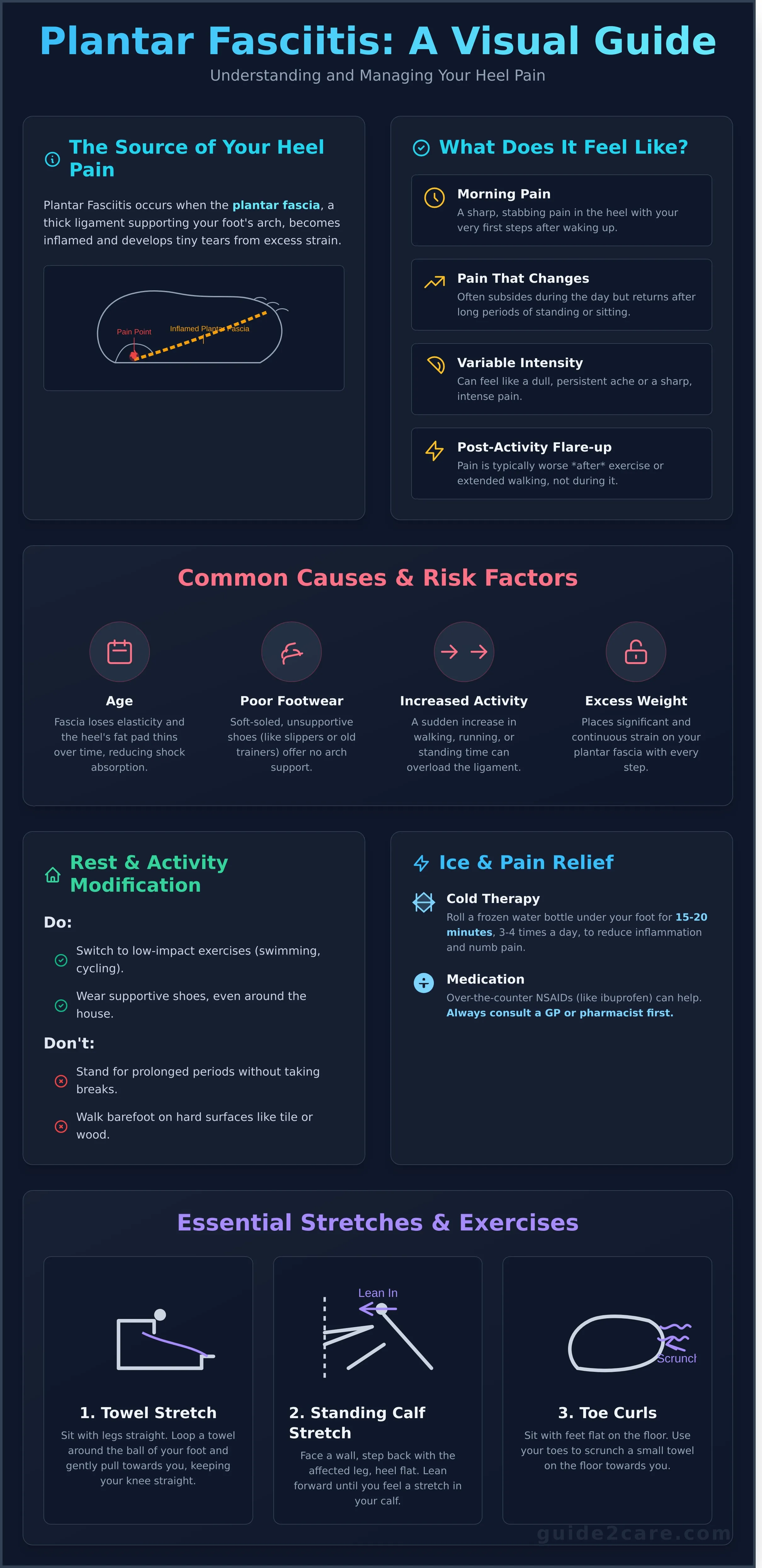
Plantar fasciitis is one of the most common causes of heel pain. It develops when the plantar fascia-a thick, web-like ligament that connects your heel to the front of your foot-becomes inflamed. This ligament acts as a shock absorber, supporting the arch of your foot as you walk. When too much pressure or strain is placed upon it, small tears can form, leading to the irritation and pain characteristic of the condition. For a detailed medical overview, you can explore this guide on what is plantar fasciitis and its underlying mechanics.
To better understand this concept, watch this helpful video:
What Does Plantar Fasciitis Feel Like?
The symptoms are often very specific, which helps to distinguish this condition from other types of foot pain. The pain is typically concentrated in the heel or the arch of the foot and follows a distinct pattern.
- The hallmark symptom: A sharp, stabbing pain with your first steps in the morning.
- Pain that changes: The pain often decreases as you move around during the day but may return after long periods of standing or after getting up from a seated position.
- Type of pain: It can range from a dull, persistent ache to a sharp, intense pain.
- Triggers: Symptoms are often worse after exercise or extended periods of walking, not during it.
Common Causes and Risk Factors
Several factors can increase your risk of developing heel pain, particularly those related to ageing and lifestyle. Understanding these can help in both prevention and management of the condition.
- Age: As we get older, the plantar fascia naturally loses some of its elasticity and the fat pad on the heel thins, reducing its ability to absorb shock.
- Footwear: Consistently wearing unsupportive shoes with soft soles or poor arch support, such as slippers or worn-out trainers, can contribute to the problem.
- Activity level: A sudden increase in physical activity, like starting a new walking programme or spending more time on your feet, can overload the ligament.
- Weight: Carrying extra weight places significant and continuous strain on your plantar fascia with every step you take.
Effective At-Home Remedies for Plantar Fasciitis Relief
Effective management of plantar fasciitis often starts at home with simple, consistent actions. Once you understand the common symptoms and causes of plantar fasciitis, you can take steps to manage the pain. The R.I.C.E. method (Rest, Ice, Compression, and Elevation) provides a solid framework for initial relief by reducing inflammation and allowing the plantar fascia ligament to begin healing. For these remedies to work, you must apply them consistently.
Rest and Activity Modification
The most critical step is to reduce the daily strain on your feet. This does not mean stopping all activity, but rather modifying it to support the healing process. Pay close attention to what aggravates your heel pain and adjust accordingly.
- Do: Switch to low-impact exercises like swimming, cycling, or using an elliptical machine to stay active without stressing your feet.
- Do: Wear supportive shoes or slippers around the house.
- Don't: Stand for prolonged periods if it causes pain. Take regular breaks to sit and rest your feet.
- Don't: Walk barefoot on hard surfaces like tile or wood floors, as this provides no arch support.
Managing these factors can be particularly challenging in jobs that require long hours of standing or walking. If you believe your work environment is contributing to your foot pain, you may want to explore occupational health solutions. For expert advice on workplace safety and ergonomics, you can check out Safehouse Health and Safety Consultants Ltd.
Using Ice and Pain Relief
Cold therapy is a highly effective way to reduce inflammation and numb the sharp pain in your heel. Combine this with appropriate over-the-counter medication for a dual-action approach to relief.
To apply ice, roll a frozen water bottle or can under the arch of your foot for 15-20 minutes. You can do this three to four times a day, particularly after periods of activity or at the end of the day. For pain management, non-steroidal anti-inflammatory drugs (NSAIDs) like ibuprofen can help decrease both pain and inflammation. Always consult with your GP or a pharmacist before taking any new medication to ensure it is appropriate for you.
Essential Stretches and Exercises to Heal Your Foot
Regular, gentle stretching is a cornerstone of recovery from plantar fasciitis. These exercises help lengthen the plantar fascia ligament and the Achilles tendon. This reduces tension on your heel and can prevent the condition from returning. Always stretch gently and stop if you feel any sharp pain.
Key Plantar Fascia and Calf Stretches
Performing simple movements can significantly reduce heel pain. These are some of the most effective stretches for plantar fasciitis and can be done with minimal equipment at home. Focus on slow, controlled movements.
- Towel Stretch: Sit on the floor with your legs straight out in front of you. Loop a rolled-up towel around the ball of your affected foot. Gently pull the towel towards your body, keeping your knee straight, until you feel a stretch in your calf and foot arch.
- Standing Calf Stretch: Stand facing a wall at arm's length. Place your hands on the wall for support. Step back with your affected leg, keeping it straight with your heel flat on the floor. Lean forward until you feel a stretch in the calf of your back leg.
- Toe Curls: Sit on a chair with your feet flat on the floor. Place a small towel in front of you. Use the toes of your affected foot to scrunch the towel towards you. You can also try picking up small objects like marbles with your toes to build strength.
Creating a Simple Stretching Routine
Consistency is key to managing plantar fasciitis pain. Integrate these exercises into your daily schedule for the best results. Hold each stretch for 30 seconds and repeat it 2-3 times for each foot.
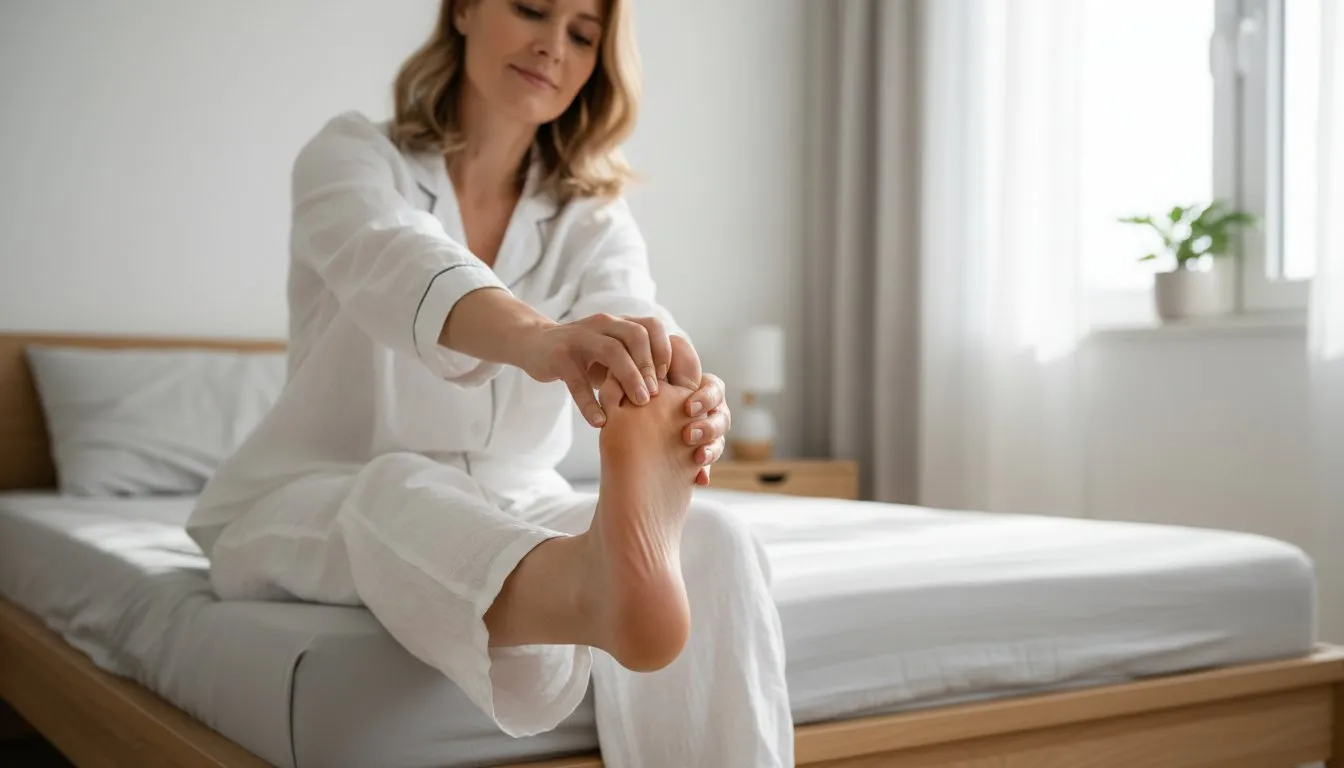
Morning Routine: Before you get out of bed, perform the Towel Stretch. This helps to gently lengthen the fascia before you put weight on it, reducing the sharp pain often felt with the first steps of the day.
Evening Routine: At the end of the day, perform the Standing Calf Stretch and Toe Curls. This helps to relieve tension built up during the day and strengthens the muscles that support your foot arch, aiding overnight recovery.
Choosing the Right Footwear, Insoles, and Supports
The shoes you wear have a direct impact on your foot health. Improper footwear is a leading cause of, and aggravating factor for, heel pain. Making informed choices about your shoes and using appropriate supports can significantly reduce stress on your feet and aid in the recovery from plantar fasciitis.
It is also vital to know when to replace your footwear. Worn-out shoes lose their cushioning and structural support over time. As a general rule, replace athletic shoes every 300-500 miles of use, or when you notice uneven wear on the soles or the cushioning feels compressed.
What to Look for in a Supportive Shoe
A supportive shoe provides structure and stability, reducing the strain on the plantar fascia ligament. When choosing new footwear, look for these key features:
- Good arch support: This helps to distribute pressure evenly across your foot, rather than concentrating it on the heel.
- A cushioned midsole: Effective cushioning absorbs the shock of walking on hard surfaces, protecting your feet with every step.
- A firm heel counter: The back of the shoe should be rigid to prevent your heel from rolling inwards or outwards.
- A slight heel lift: Shoes that are completely flat can increase strain. A small lift of 1-2cm can reduce tension on the Achilles tendon and plantar fascia.
Avoid flimsy shoes like flip-flops, backless slippers, and high heels. These offer little to no support and can worsen your symptoms.
Insoles, Orthotics, and Night Splints
For additional support, you can use inserts and other devices. There are several options available depending on the severity of your condition.
Off-the-shelf insoles, or arch supports, can provide immediate cushioning and general support. They are widely available in pharmacies and shoe shops and can be a good first step for managing mild pain.
Custom orthotics are prescribed and fitted by a podiatrist. These devices are moulded specifically to the contours of your feet to correct underlying biomechanical issues, such as flat feet or an abnormal walking pattern. Consider seeing a podiatrist if your pain persists despite using supportive shoes and shop-bought insoles.
Night splints are recommended for those who experience severe stabbing pain with their first steps in the morning. A splint holds the foot with the toes pointing up, keeping the plantar fascia and calf muscles in a lengthened position overnight. This gentle, prolonged stretch helps to reduce morning stiffness and pain.
When to Seek Professional Help for Plantar Fasciitis
Most cases of plantar fasciitis improve with simple home treatments like rest, ice, and stretching. However, if your heel pain does not get better, it is important to seek professional medical advice. A clear diagnosis and structured treatment plan can prevent the condition from becoming a chronic problem that impacts your daily life.
Signs You Should See a Doctor
Consult your GP if self-care measures have not reduced your pain. Certain symptoms require a professional assessment to rule out other conditions and ensure you receive the correct treatment. Look for these signs:
- Your heel pain continues for more than two to three weeks despite consistent home care.
- The pain is severe, disrupts your sleep, or stops you from performing daily activities like walking.
- You notice swelling, redness, numbness, or a tingling sensation in your foot, which could indicate a different issue.
- You are not certain about the diagnosis and want professional confirmation.
Who Can Help: GP, Physiotherapist, and Podiatrist
The UK healthcare system provides a clear pathway for treating foot pain. Your journey will typically start with your GP, who can refer you to a specialist if needed. Different professionals play specific roles in your recovery.
- Your GP (General Practitioner): This is your first point of contact. A GP can diagnose the condition, rule out other causes of heel pain like a stress fracture, and suggest effective pain relief.
- A Physiotherapist: A physiotherapist can design a specific programme of exercises and stretches. These are designed to strengthen your foot muscles, improve flexibility, and relieve tension in the plantar fascia.
- A Podiatrist: As a specialist in foot health, a podiatrist can perform a biomechanical assessment of how you walk. They may recommend custom orthotic insoles to support your foot arch and correct your gait.
If severe foot pain and mobility issues are impacting your ability to manage daily tasks, you may need additional support. Find local care services to help you maintain your independence at home.
Advanced Treatment Options
If conservative treatments do not provide relief after several months, a specialist may discuss other options. These can include steroid injections to reduce inflammation, extracorporeal shockwave therapy (ESWT), or, in very rare cases, surgery. These treatments are typically reserved for persistent and severe cases of plantar fasciitis and are only considered after simpler methods have failed.
Taking the Next Step to Heel Pain Relief
Understanding the source of your heel pain is the first step toward effective management. This guide has shown that a consistent routine combining targeted stretches, appropriate footwear, and simple at-home remedies provides significant relief for most cases of plantar fasciitis. Remember that healing takes time and persistence is key. It is also vital to recognise when symptoms do not improve and require professional medical advice to ensure a correct diagnosis and prevent long-term issues.
At Guide2Care, we are dedicated to helping you understand common health concerns with clear, straightforward information. As a trusted resource for care information in the UK, all our guides are reviewed for clarity and practical use. Empower yourself with knowledge and take confident steps toward recovery. Explore more health guides to help you stay active and informed.
Frequently Asked Questions
How long does it take for plantar fasciitis to heal?
Healing time varies, but most people find relief within 6 to 12 months with consistent conservative treatment. Factors such as the condition's severity, adherence to treatment plans, and activity levels influence recovery. Early intervention, including rest, targeted stretching, and wearing supportive footwear, can significantly shorten this period. Consult a GP or physiotherapist for a personalised plan to aid your recovery.
Are heel spurs the same thing as plantar fasciitis?
Heel spurs and plantar fasciitis are not the same, though they are often related. A heel spur is a calcium deposit forming a bony protrusion on the heel bone. Plantar fasciitis is the inflammation of the plantar fascia ligament itself. While many people with this condition also have heel spurs, the spur is rarely the direct source of pain. The inflammation of the fascia is the primary cause of discomfort.
Can the wrong type of exercise make plantar fasciitis worse?
Yes, certain exercises can aggravate plantar fasciitis. High-impact activities like running, jumping, or sports played on hard surfaces increase stress on the plantar fascia, leading to more pain and inflammation. It is best to avoid these activities during recovery. Instead, focus on low-impact exercises such as swimming, cycling, or specific stretching routines recommended by a physiotherapist to maintain fitness without worsening the condition.
Is it okay to walk with plantar fasciitis?
Walking is generally permissible but should be done with caution. Short walks on soft surfaces with supportive footwear may be manageable. However, prolonged walking, especially on hard surfaces like concrete, can aggravate the condition and increase pain. Listen to your body; if walking causes significant discomfort, reduce the duration and frequency. Rest is a key component of the healing process and should not be overlooked.
Should I use heat or ice for plantar fasciitis pain?
Use ice to manage acute pain and inflammation, particularly after activity or at the end of the day. Apply an ice pack wrapped in a towel to your heel for 15-20 minutes. Heat can be beneficial for relieving chronic stiffness, especially in the morning before you get out of bed. Using a warm compress or taking a warm foot bath before stretching can help to relax the fascia. Avoid heat if the area is visibly swollen.
What are the best shoes to wear for plantar fasciitis?
The best shoes provide excellent arch support, a firm heel counter, and substantial cushioning to absorb shock. Look for footwear with a slightly raised heel to reduce strain on the plantar fascia. Avoid completely flat shoes like flip-flops or walking barefoot on hard surfaces. Many running shoe brands offer models designed for stability and support that are suitable. Consider orthotic inserts for customised support in your existing shoes.