When Is It Time for a Care Home? A Practical UK Guide
Deciding to explore care options is a significant step. You may be facing increasing concerns about a loved one’s safety at home, or experiencing the personal strain of carer burnout. The question of when is it time for a care home is one of the most complex and emotionally charged decisions a family can make. It is common to feel uncertain if the signs you are seeing are serious enough to warrant such a change, or to feel a sense of guilt about considering it.
This practical UK guide is designed to bring clarity to your situation. It provides a structured framework of key indicators across physical health, mental wellbeing, personal care, and home safety. By using this guide, you can objectively assess your loved one’s needs and your own capacity as a carer. Our goal is to provide you with the information needed to make a confident, timely decision and understand the next steps to take. Find the care you need with a clear path forward.
Recognising the Signs: A Framework for Assessment
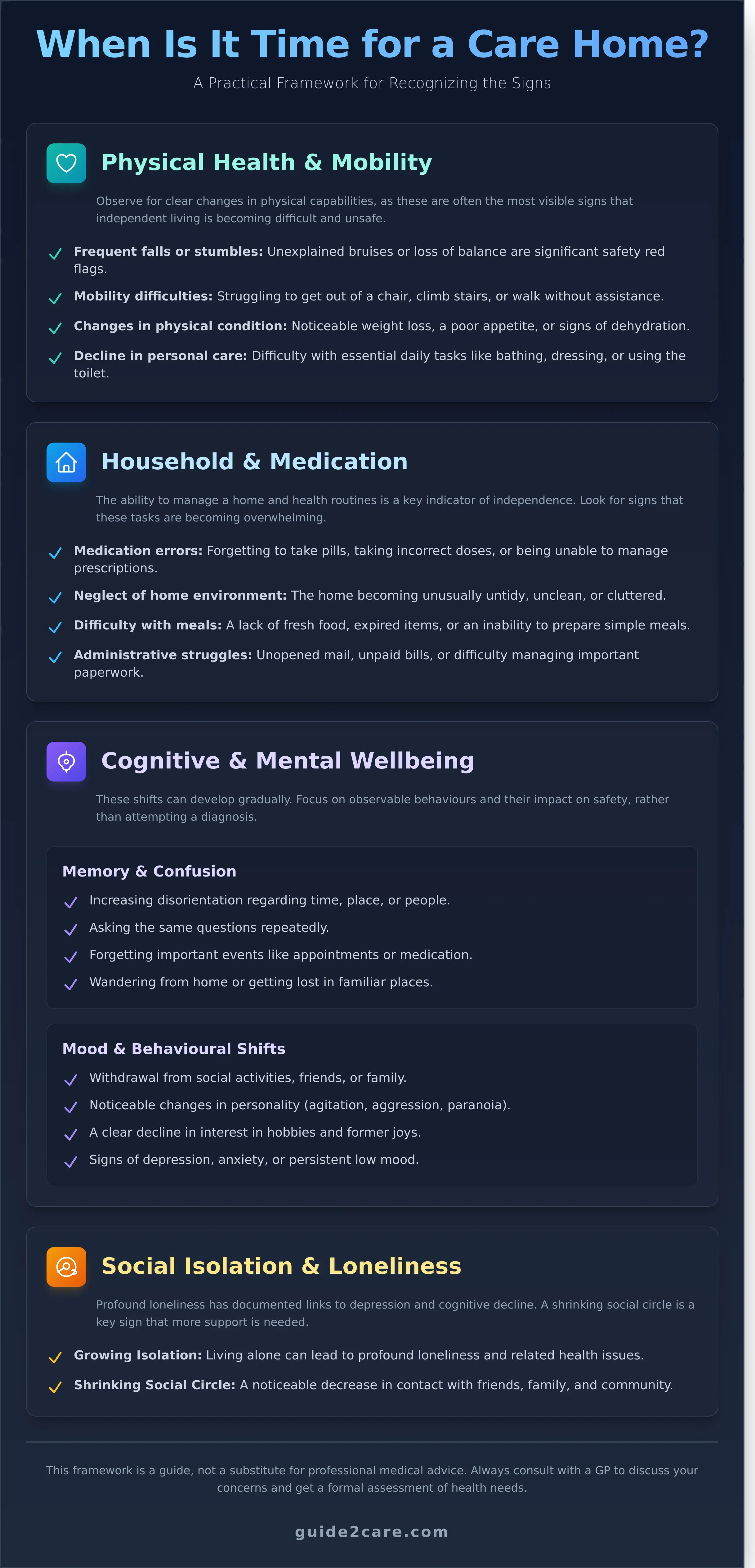
Understanding when is it time for a care home is rarely the result of a single incident. Instead, it is a gradual accumulation of signs that indicate a need for more consistent support. This guide provides a structured framework for assessment, focusing on key areas: health, safety, personal wellbeing, and the strain on current carers. Using this objective checklist can help remove emotion from the decision-making process, allowing for a clearer view of the situation.
This short video offers further insight into key indicators, particularly in cases involving dementia.
While this framework offers a practical starting point, it is not a substitute for professional medical advice. It is essential to consult with a GP to discuss your concerns. A doctor can provide a formal assessment of health needs and help you navigate the options available within the UK care home system. This professional input is a critical step in making an informed choice about the right level of care.
Physical Health and Mobility Challenges
Observe for clear changes in physical capabilities. These are often the most visible signs that independent living is becoming difficult and unsafe.
- Frequent falls or stumbles: Unexplained bruises or a loss of balance are significant safety red flags.
- Mobility difficulties: Struggling to get out of a chair, climb stairs, or walk without assistance.
- Changes in physical condition: Noticeable weight loss, a poor appetite, or other signs of dehydration or malnutrition.
- Decline in personal care: Difficulty with essential daily tasks like bathing, dressing, or using the toilet.
Household and Medication Management
The ability to manage a household and personal health routines is a key indicator of independence. Look for signs that these tasks are becoming overwhelming.
- Medication errors: Forgetting to take medication, taking incorrect doses, or being unable to manage prescriptions.
- Neglect of the home environment: The home becoming unusually untidy, unclean, or cluttered.
- Difficulty with meals and shopping: A lack of fresh food, expired items in the fridge, or an inability to prepare simple meals.
- Financial or administrative struggles: Unopened mail, unpaid bills, or difficulty managing important paperwork.
Assessing Changes in Cognitive and Mental Wellbeing
Changes in cognitive function and mental state are often the most compelling reasons to evaluate care options. These shifts can develop gradually, making them easy to miss on a day-to-day basis. It is important to focus on observable behaviours and their impact on safety, rather than attempting a diagnosis. When these changes compromise a person's ability to live safely and independently, it is a key signal when answering the question of when is it time for a care home.
Memory and Confusion
Significant memory loss and persistent confusion can create dangerous situations within the home. These behaviours are clear indicators that an individual may require a more supervised and secure environment to ensure their wellbeing. Observe for specific patterns such as:
- Increasing disorientation regarding time, place, or the identity of familiar people.
- Asking the same questions repeatedly, even after receiving an answer.
- Forgetting important events, such as medical appointments or medication schedules, which can have serious health consequences.
- Wandering from home or getting lost in familiar neighbourhoods, posing a direct safety risk.
These actions directly impact personal safety and suggest that the constant supervision and structure of a residential home may be necessary.
Mood and Behavioural Shifts
An individual's emotional wellbeing is as critical as their physical health when assessing their needs. Uncharacteristic changes in mood or personality can be a sign that they are struggling to cope in their current environment and may feel isolated or overwhelmed. Key behavioural shifts to monitor include:
- Withdrawal from social activities and reluctance to see friends or family.
- Noticeable changes in personality, such as new or increased agitation, aggression, or paranoia.
- A clear decline in interest in hobbies and activities that once brought them joy.
- Signs of depression or anxiety, including persistent low mood, tearfulness, or baseless fears about their safety.
When these cognitive and behavioural signs appear together, they often indicate that a person's needs have become too complex for their current living situation. A decline in mental wellbeing can make it difficult to manage daily tasks and maintain a safe home environment. As detailed in the NHS guidance on care homes, a move should be considered when a person's safety or health is at risk. This assessment is central to understanding when is it time for a care home that can provide the necessary support and security.
The Impact of Social Isolation and Loneliness
Beyond physical health, social wellbeing is a critical factor to assess when asking, "when is it time for a care home?". Living alone can lead to profound loneliness, a condition with documented links to depression, cognitive decline, and other serious health issues. According to official resources like the NHS guidance on care homes, struggling to cope with daily life, which includes maintaining social connections, is a key consideration. If a person's social circle is shrinking, it may be a sign that they need more support.
Signs of Growing Isolation
A person's ability to maintain social connections can decline gradually, often before physical needs become acute. It is important to look for practical signs that loneliness is becoming a persistent problem, as these indicators suggest that an individual is struggling to engage with their community and may benefit from a more supportive environment.
- A lack of regular visitors or phone calls from friends and family.
- Difficulty driving or using public transport, which effectively cuts them off from seeing people.
- Losing contact with established social networks like clubs, religious groups, or local community centres.
- Frequently expressing feelings of being lonely, bored, or having nothing to do.
How a Communal Setting Can Help
One of the primary benefits of a residential care home is the built-in community it provides. This environment is specifically designed to combat isolation and provide daily social stimulation. For many, the prospect of renewed companionship is a positive factor when deciding it is time for a care home. A communal setting offers consistent and accessible opportunities for engagement.
- Daily Social Interaction: Residents have constant, natural opportunities to interact with peers and staff, fostering new friendships and reducing feelings of isolation.
- Organised Activities: A structured schedule of activities, from light exercise classes and gardening clubs to games and outings, ensures there is always something to do.
- Shared Dining Experiences: Mealtimes become a social event rather than a solitary task, encouraging conversation and a sense of community in a relaxed, friendly setting.
- Improved Mental Wellbeing: Regular access to companionship and mental stimulation can significantly reduce feelings of loneliness, anxiety, and depression, leading to better overall health.
When to Consider Carer Strain and Your Own Wellbeing
Providing care for a loved one is a significant responsibility, and your own health is a critical factor in your ability to offer that support. Effective caregiving depends on your physical and mental resilience. Ignoring your own needs can lead to burnout, which compromises the quality and safety of the care you provide. The question of when is it time for a care home must therefore include an honest assessment of your own wellbeing.
It is not selfish to admit you are overwhelmed; it is a realistic evaluation of the situation. Recognising your limits is a key part of responsible caregiving that protects both you and the person you are supporting.
Signs of Physical and Emotional Exhaustion
Carer strain often develops gradually. It is important to identify the signs before you reach a crisis point. Look for these indicators in your own life:
- Constant Fatigue: You feel persistently tired or unwell and find that sleep no longer leaves you feeling rested.
- Neglecting Personal Health: You are postponing your own medical appointments, neglecting your diet, or have no time for exercise.
- Emotional Distress: You experience increased irritability, anxiety, or feelings of depression and isolation more often than not.
- Wider Life Impact: Your role as a caregiver is negatively affecting your performance at work, your relationships with other family members, or your ability to maintain a social life.
When Care Needs Exceed Your Abilities
As a loved one's condition progresses, their needs can evolve beyond what one person can safely manage at home. This is a practical turning point for many families and a clear signal that professional support is necessary.
- Physical Limitations: You are physically unable to provide necessary help, such as safe lifting and transferring, without risking injury to yourself or your loved one.
- Complex Medical Tasks: The person’s care needs, such as complex medication schedules or specialised dementia support, have become too demanding for you to handle without formal training.
- Lack of Support: You feel you are the sole person responsible for their care, with no regular respite or support network to share the duties.
- Constant Worry: You are in a state of continuous anxiety about their safety, particularly regarding falls or emergencies when you are not with them.
Acknowledging these challenges is a crucial part of deciding when it is time for a care home. This decision ensures that your loved one receives the expert, 24-hour supervision they require, while allowing you to focus on your relationship with them, rather than the logistics of their care. To learn more, you can explore the care options available near you.
How to Approach the Conversation and Plan Next Steps
Discussing when is it time for a care home is often the most challenging part of the process. A sensitive, well-planned conversation can make a significant difference. The goal is to ensure your loved one feels heard and supported, not that a decision is being made for them. Timing, tone, and presenting a united front with other family members are crucial for a productive discussion.
Frame the potential move as a positive step towards greater safety, consistent care, and an improved social life, rather than a loss of independence.
Tips for Talking with Your Loved One
Approach the subject with care and empathy. Choose a time when you are both calm and have plenty of time to talk in a comfortable, private place. Rushing the conversation will only create stress and resistance.
- Use 'I' statements to express your concerns without sounding accusatory. For example, say "I am worried about you being alone at night," instead of "You can't be alone at night anymore."
- Listen to their fears and acknowledge their feelings. They may be worried about losing their home, their independence, or their connections. Validate these concerns.
- Focus on the benefits. Explain how a care home provides 24/7 support, eliminates the burdens of housekeeping, and offers companionship with people of a similar age.
Involving Family and Seeking Professional Advice
Deciding when it is time for a care home should be a collaborative process. Involving professionals provides an objective perspective and ensures your loved one's needs are properly assessed. It is important that the family agrees on a path forward before speaking to your loved one.
- Hold a family meeting to discuss everyone's concerns and agree on a unified plan. This prevents confusion and shows your loved one that the family is united in their support.
- Contact their GP to arrange a health review. A doctor can offer a professional opinion on their care needs and physical and mental health.
- Request a care needs assessment from their local council. This free assessment determines the exact level of care required and is a formal step in accessing support in the UK.
Once you have a clear understanding of their needs and you all agree on the next steps, you can begin exploring suitable options. The final stage is to find and compare care homes in your area.
Making an Informed Decision About Care
Recognising the signs-from changes in cognitive wellbeing to the impact of social isolation and carer strain-is the foundation for your decision. Answering the question of when is it time for a care home is not about a single moment, but a practical assessment of safety, wellbeing, and support needs. Having a structured conversation and a clear plan are the essential next steps.
When you are ready to explore your options, Guide2Care provides the tools you need. Our comprehensive UK-wide directory of care providers allows you to find and compare services efficiently. We also provide free guides to help you understand the process of choosing and funding care.
Find the care you need. Use our directory to find and compare care homes near you. Filter your search by care type, location, and official CQC rating to create a shortlist of suitable providers.
With the right information, you can move forward with confidence.
Frequently Asked Questions
What is the difference between a care home and a nursing home?
A care home, also known as a residential home, provides personal care and support. This includes assistance with washing, dressing, meals, and medication. A nursing home provides this same level of personal care but also has qualified nurses on-site 24 hours a day. Nursing homes are equipped to support individuals with more complex medical conditions that require regular nursing intervention. The key difference is the provision of skilled medical care.
Can someone be forced to move into a care home against their will?
An individual with the mental capacity to make their own decisions cannot be forced into a care home. The Mental Capacity Act 2005 protects their right to choose where they live. If a person is assessed as lacking mental capacity, a decision can be made in their 'best interests' by healthcare professionals and social workers, with input from family. This is a formal legal process designed to protect the vulnerable individual's welfare and safety.
How do you cope when a loved one refuses to consider a care home?
Start by understanding their specific fears and objections. It is important to have open conversations, focusing on their safety and well-being rather than just the move itself. Suggest exploring alternatives together, such as a trial stay (respite care) or increasing at-home support first. Involving a neutral third party, like a GP or a social worker from the local authority, can also help facilitate a more productive discussion by providing an objective assessment of their needs.
What are the main alternatives to moving into a care home?
Several alternatives exist for those who need support but wish to remain at home. Domiciliary care involves carers visiting for set hours to help with daily tasks. Live-in care provides 24/7 support from a carer who resides in the home. Other options include sheltered housing or supported living schemes, which offer independence with an on-site manager or emergency assistance. These options should be explored when considering if it is time for a care home.
How much does a care home cost in the UK and who pays for it?
The cost of a care home varies significantly by location and the level of care required. On average, a residential care home can cost between £700 and £1,000 per week, while a nursing home may cost £900 to £1,400 per week. An individual will be expected to self-fund their care if their capital and assets are above £23,250 in England. If their assets are below this threshold, the local authority may provide financial support following a means test.
What does a local authority 'care needs assessment' involve?
A care needs assessment is a free evaluation conducted by your local council to determine your care and support requirements. A trained professional, usually a social worker or occupational therapist, will discuss how you manage daily tasks like cooking, washing, and mobility. The assessment identifies your specific needs and establishes your eligibility for council support. It is a critical first step in the formal process of arranging care and helps determine when it is time for a care home.
Is it better to choose a care home close to family?
Proximity to family is a significant factor, as it makes regular visits easier. This can greatly support a resident's emotional well-being and allows relatives to monitor the quality of care more effectively. However, the most important consideration must be the home's ability to meet the individual's specific needs. You must balance location with factors like CQC ratings, staff expertise in areas like dementia care, and the overall environment of the home.