A Complete Guide to the Types of Elderly Care Services in the UK

Navigating the world of elderly care can feel complex and overwhelming. With unfamiliar terms like 'domiciliary care' and the critical distinction between a care home and a nursing home, the pressure to make the right decision for a loved one is significant. This uncertainty makes it difficult to know where to begin. That is why having a clear understanding of the different types of elderly care services uk providers offer is the essential first step toward making a confident choice.
Throughout this process, you'll be contacting various service providers, councils, and financial institutions. Having quick access to the right contact details is essential to keep things moving smoothly. For any general inquiries with other companies, an online directory like KlantenserviceGids can be a useful resource for finding customer service numbers efficiently.
This complete guide is designed to provide that clarity. We will break down every available option, explaining the specific support offered by each service-from in-home assistance and supported living to residential and specialist nursing care. You will gain a practical understanding of what each type of care entails, enabling you to accurately assess your family member's needs and match them to the correct level of support. Read on to build the knowledge you need to find the care you need with certainty.
Key Takeaways
- Understand how care at home services support independence, ranging from simple companionship to complex nursing care.
- Define the key differences between residential and nursing homes to identify the correct level of community-based support.
- Compare the main types of elderly care services uk, including flexible options like respite and live-in care for specific needs.
- Learn a practical framework for assessing personal needs and financial circumstances to make a confident care decision.
Understanding Care at Home: Supporting Independence
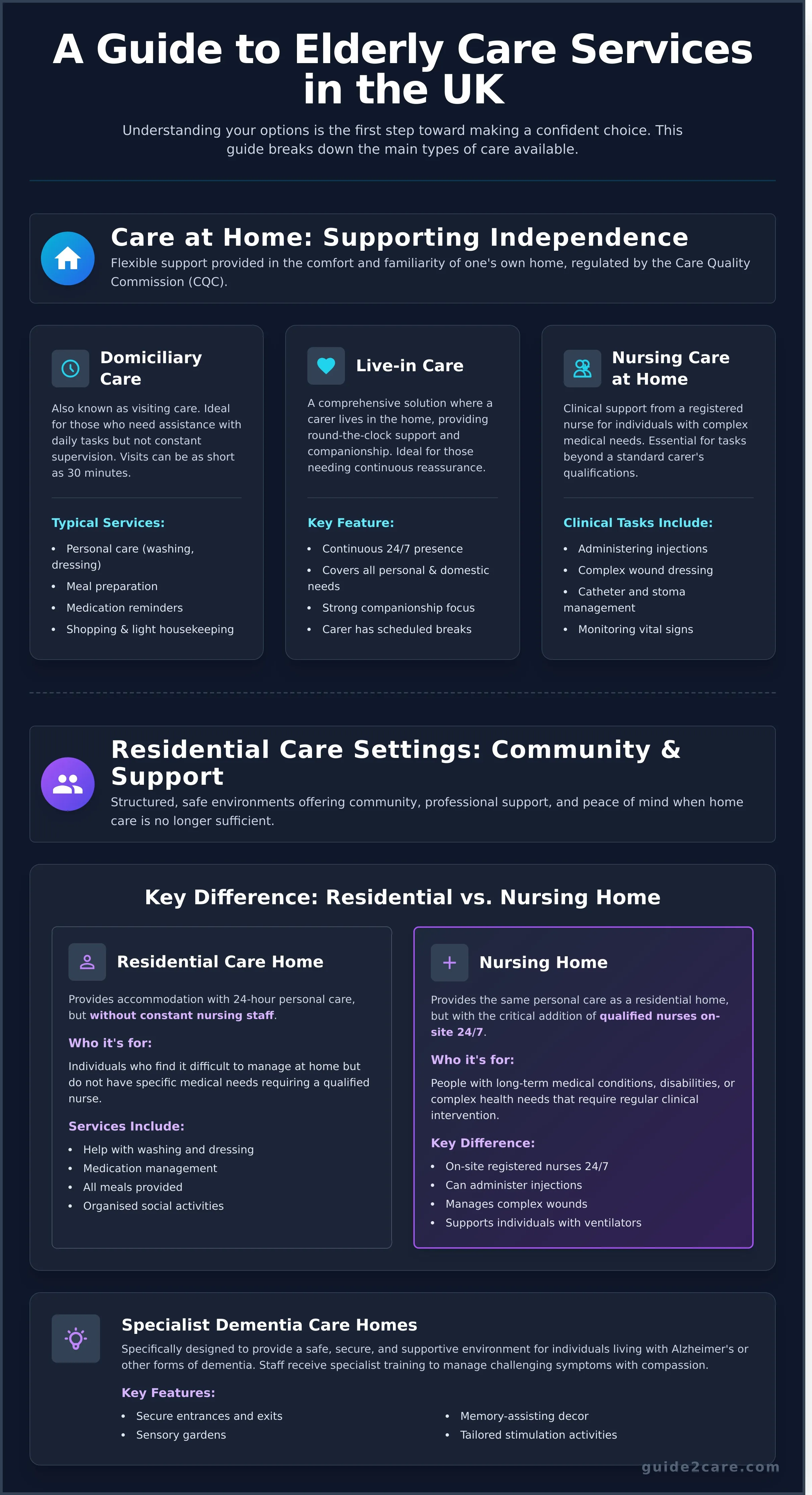
For many individuals, remaining in the comfort and familiarity of their own home is the preferred choice. Care at home, also known as domiciliary care, is a flexible solution designed to support this independence. The level of support is tailored to individual needs, ranging from simple companionship and help with household tasks to complex medical care. This is one of the most adaptable elderly care options, with visits scheduled from as little as 30 minutes a day up to 24/7 live-in support.
Technology also plays an increasingly vital role in supporting this independence. For those considering assistive devices, communication tools, or safety systems, online publications like SuggestMeTech provide helpful reviews and comparisons to aid in making informed choices.
To understand how in-home care works in practice, watch this short video:
In the UK, home care agencies are regulated by the Care Quality Commission (CQC). The CQC inspects services to ensure they are safe, effective, and high-quality, giving you peace of mind when choosing a provider. Exploring the different types of elderly care services UK providers offer for at-home support is the first step to finding the right fit.
Domiciliary Care (Visiting Care)
Domiciliary care involves professional carers visiting an individual's home at set times throughout the day. This service is ideal for those who need assistance with daily tasks but do not require constant supervision. It helps maintain routine and independence in a familiar setting. Typical services include:
- Personal care (washing and dressing)
- Meal preparation
- Medication reminders
- Shopping and light housekeeping
Live-in Care
Live-in care provides a comprehensive solution where a carer lives in the person's home. This option is for individuals who need the reassurance of round-the-clock support and companionship. It differs from 24-hour nursing, as the live-in carer has scheduled breaks and rest periods. The service covers everything from personal care and housekeeping to social engagement, ensuring continuous support is always on hand.
Nursing Care at Home
When an individual has complex medical needs, nursing care at home delivers clinical support from a registered nurse. This service is essential for those requiring professional medical skills that a standard carer is not qualified to provide. It can prevent hospital admissions or support recovery after a hospital stay. Examples of nursing tasks include:
- Administering injections
- Complex wound dressing
- Catheter and stoma management
- Monitoring vital signs
Exploring Residential Care Settings: Community and Support
When daily support at home is no longer sufficient, residential care offers a structured and safe environment. This category involves moving to a purpose-built facility, providing community engagement, professional support, and peace of mind. All residential care homes in the UK are regulated by the Care Quality Commission (CQC) to ensure they meet fundamental standards of quality and safety.
Understanding the different types of elderly care services UK residential settings offer is crucial. The primary distinction lies in the level of medical and nursing support provided. For a complete overview of your options, the official NHS Social care and support guide provides extensive information.
Residential Care Homes
A residential care home provides accommodation combined with 24-hour personal care. It is designed for individuals who find it difficult to manage at home but do not require round-the-clock nursing from a qualified nurse.
- Services include: Help with daily tasks like washing and dressing, medication management, meals, and organised social activities.
Find Residential Care Homes in Your Area.
Nursing Homes
A nursing home provides the same personal care and accommodation as a residential home but with qualified nurses on-site 24/7. This setting is for people with long-term medical conditions, disabilities, or complex health needs that require regular nursing interventions.
The key difference: The ability to deliver clinical care, such as administering injections, managing complex wounds, or supporting individuals with ventilators.
Specialist Dementia Care Homes
These homes are specifically designed to provide a safe, secure, and supportive environment for individuals living with Alzheimer's or other forms of dementia. Staff receive specialist training to provide compassionate and effective care that manages challenging symptoms.
- Key features: Secure entrances and exits, memory-assisting decor, sensory gardens, and activities tailored to stimulate and calm residents.
The focus is on maintaining dignity, safety, and a high quality of life through a person-centred approach.
Flexible and Specialised Care Services
Beyond daily home visits or a permanent move to a care home, there are several flexible and specialised types of elderly care services uk residents can access. These options are designed to meet specific, temporary, or evolving needs. They can function as standalone solutions or be combined with other forms of support, providing a crucial bridge between full independence and residential care. Their primary role is often to aid recovery after a hospital stay or provide essential relief for family carers.
Assisted Living (Sheltered Housing)
Assisted living, also known as sheltered or retirement housing, offers a unique balance of independence and support. It is designed for older adults who are still active and capable of living independently but want the security of on-site assistance if needed. Residents live in their own private apartment or bungalow within a dedicated complex that includes communal areas, social activities, and 24-hour emergency call systems. Optional care packages can be added as needs change, promoting a strong sense of community while preserving personal freedom.
Respite Care
Respite care provides short-term, temporary accommodation in a care home. This service is a vital lifeline for family carers who need a break, or for an older person recovering from an illness or hospital stay. Stays can be planned in advance for a holiday or scheduled break, or arranged at short notice in an emergency. During their stay, the individual receives the same level of personal care, meals, and support as permanent residents, ensuring a safe and comfortable environment.
Palliative and End-of-Life Care
This specialised care focuses on providing comfort, dignity, and the best possible quality of life for individuals with a life-limiting illness. The goal is not to cure but to manage pain and other distressing symptoms. This holistic support also extends to the emotional, social, and spiritual needs of the individual and their family. For further information on arranging this type of Care and support, organisations like Age UK provide comprehensive guidance. This care can be delivered in a person's own home, a care home, or a hospice.
How to Choose the Right Type of Elderly Care
Selecting the right support requires a clear, structured approach. The decision should always involve the person needing care as much as possible, respecting their wishes and independence. Remember that needs can evolve, so any care plan should be reviewed regularly to ensure it remains suitable. This framework will help you navigate the main considerations when exploring the different types of elderly care services uk providers offer.
Step 1: Assess the Level of Need
Start by creating a detailed picture of the support required. A professional 'Needs Assessment' from your local council is the official first step and is free of charge. This assessment provides an expert view on eligibility for support. To prepare, list daily tasks and challenges across key areas:
- Personal Care: Help with washing, dressing, or eating.
- Medical Needs: Managing medication, wound care, or complex conditions. This is distinct from personal care and may require a registered nurse.
- Mobility: Assistance moving around the home or getting out.
- Social Interaction: Companionship to combat loneliness or support to attend activities.
Step 2: Consider Personal Preferences and Location
The right environment is crucial for well-being. Discuss whether the preference is to remain at home with support (domiciliary care) or to move into a care home community. Consider the location carefully. Proximity to family and friends is often a priority. For some, the organised activities and companionship of a residential setting are ideal, while others value the familiarity of their own home above all else.
Step 3: Understand the Financial Implications
Funding is a significant factor in choosing between the types of elderly care services uk has available. You must establish how care will be paid for. Key funding routes include:
- Self-funding: Paying for care privately from income, pensions, or savings.
- Council funding: Your local authority may contribute towards costs following a financial assessment (means test).
- NHS Continuing Healthcare (CHC): If the primary need is for healthcare, the NHS may fund the full cost of care.
- Benefits: Check eligibility for non-means-tested benefits like Attendance Allowance.
Long-term care costs can be substantial, making it crucial to plan effectively. It is highly recommended to seek independent financial advice from a specialist care fees adviser to understand all your options.
For those with a significant investment portfolio, this planning may involve exploring avenues for wealth growth. Specialist introducers like BGS Capital connect qualified investors with pre-IPO opportunities that can form part of a long-term financial strategy designed to cover these costs.
Your Next Step: Finding the Right Elderly Care
Navigating the options for elderly care can feel complex, but understanding the fundamentals is the key to making a confident decision. This guide has outlined the primary choices, from domiciliary care that fosters independence in a familiar setting to the structured support and community of residential homes. Assessing which of the many types of elderly care services uk offers is the most suitable depends entirely on personal needs, medical requirements, and desired lifestyle. This initial knowledge empowers you to look for care that truly fits.
The next practical step is to locate and evaluate providers in your area. Guide2Care is your direct route to this information. Our comprehensive UK-wide directory is built to provide clear, unbiased details to guide your choice. You can easily search for and compare CQC-rated care providers, ensuring you connect with services that meet national quality standards. Use our directory to find care services near you to begin your focused search today.
With the right resources at your disposal, you are well-equipped to find the support needed for yourself or a loved one.
Frequently Asked Questions
What is the main difference between a residential home and a nursing home?
The primary difference is the provision of nursing care. A nursing home has qualified, registered nurses on duty 24 hours a day to provide medical care for complex conditions. A residential home provides personal care and support, such as help with washing, dressing, and taking medication, but does not have registered nurses on-site. The choice depends entirely on the individual's medical needs and the level of support required.
How is elderly care regulated in the UK?
Care services in the UK are regulated by independent bodies specific to each country. In England, the Care Quality Commission (CQC) inspects and rates all providers. In Scotland, this is done by the Care Inspectorate. Wales has the Care Inspectorate Wales (CIW), and Northern Ireland has the Regulation and Quality Improvement Authority (RQIA). These bodies ensure services meet fundamental standards of quality and safety.
What is a 'needs assessment' and how do I arrange one with my local council?
A needs assessment is a free evaluation carried out by your local council to determine what help and support you require. It identifies your care needs and your eligibility for council support. To arrange one, you must contact the adult social services department of your local council. You can typically find their contact details on the council's official website or by calling their main switchboard.
Can I get financial help from the council to pay for care services?
Yes, financial help may be available, but it is means-tested. After a needs assessment, the council will conduct a financial assessment to review your income, savings, and assets. In England, for example, if your capital is above £23,250, you will likely have to fund your own care. If your capital is below this threshold, the council may contribute towards or fully cover the costs of your care.
What does domiciliary care mean?
Domiciliary care, also known as home care, is a service that allows an individual to receive support in their own home. It is one of the most flexible types of elderly care services UK residents can access. Carers visit at scheduled times to assist with tasks such as personal care, meal preparation, medication reminders, and household chores. This service helps people maintain their independence at home for longer.
Is respite care only available in a care home?
No, respite care is not limited to a care home setting. While a temporary stay in a residential or nursing home is a common option, respite support can also be provided in a person's own home. A live-in carer can provide round-the-clock support, or visiting carers can take over for a few hours or days. Some local day centres also offer respite services, providing another alternative for temporary relief.
Can someone receive nursing care while still living in their own home?
Yes, it is possible to receive nursing care at home. This is often delivered by community nurses or district nurses from the NHS, who can visit to administer medication, dress wounds, or manage other complex medical needs. You can also arrange for private nurses to provide care at home. This allows individuals with significant health issues to remain in a familiar environment while receiving necessary medical attention.