Signs My Mother Needs Care: A Practical UK Checklist

It is often difficult to distinguish between the normal effects of ageing and indicators of a more significant issue. You may feel worried about her safety or overwhelmed by where to start. Identifying the signs my mother needs care is the first, crucial step. Subtle shifts in her routine, home environment, or personal well-being can signal that additional support is required for her to continue living safely and comfortably.
This guide is designed to provide clarity and remove uncertainty. We have created a practical, comprehensive UK checklist to help you objectively assess the situation. It breaks down the key areas to observe, from mobility and personal hygiene to household management and social engagement. This structured approach helps you build a complete picture of her current needs and move forward with confidence.
By using this checklist, you will gain a clear understanding of when and how to act. We also outline the practical next steps to take, helping you explore the different types of care available in the UK. Find the information you need to make an informed decision and secure the right support for your mother.
Key Takeaways
- Identify key physical changes in health and mobility. These are often the first indicators that daily life is becoming a challenge.
- Look beyond the obvious. Changes in mental well-being and the home environment are subtle but important signs your mother needs care.
- Use our practical UK checklist to assess the situation objectively and determine the level of support required.
- Understand the next steps. Our guide provides a clear action plan for approaching the conversation and finding the right support.
Observing Changes: Key Physical and Health-Related Signs
Physical changes are often the most visible indicators that an individual requires more support. If you are looking for signs my mother needs care, begin by observing her physical health, mobility, and daily routines. A single instance of a stumble may not be a cause for alarm, but a consistent pattern of these events suggests that daily life is becoming a challenge. It is helpful to document specific instances to build a clear picture over time. Understanding these changes is the first step in determining what level of support is required. For a foundational understanding of this role, you can explore What is a caregiver?
This video provides further insight into identifying key signs that more support may be necessary:
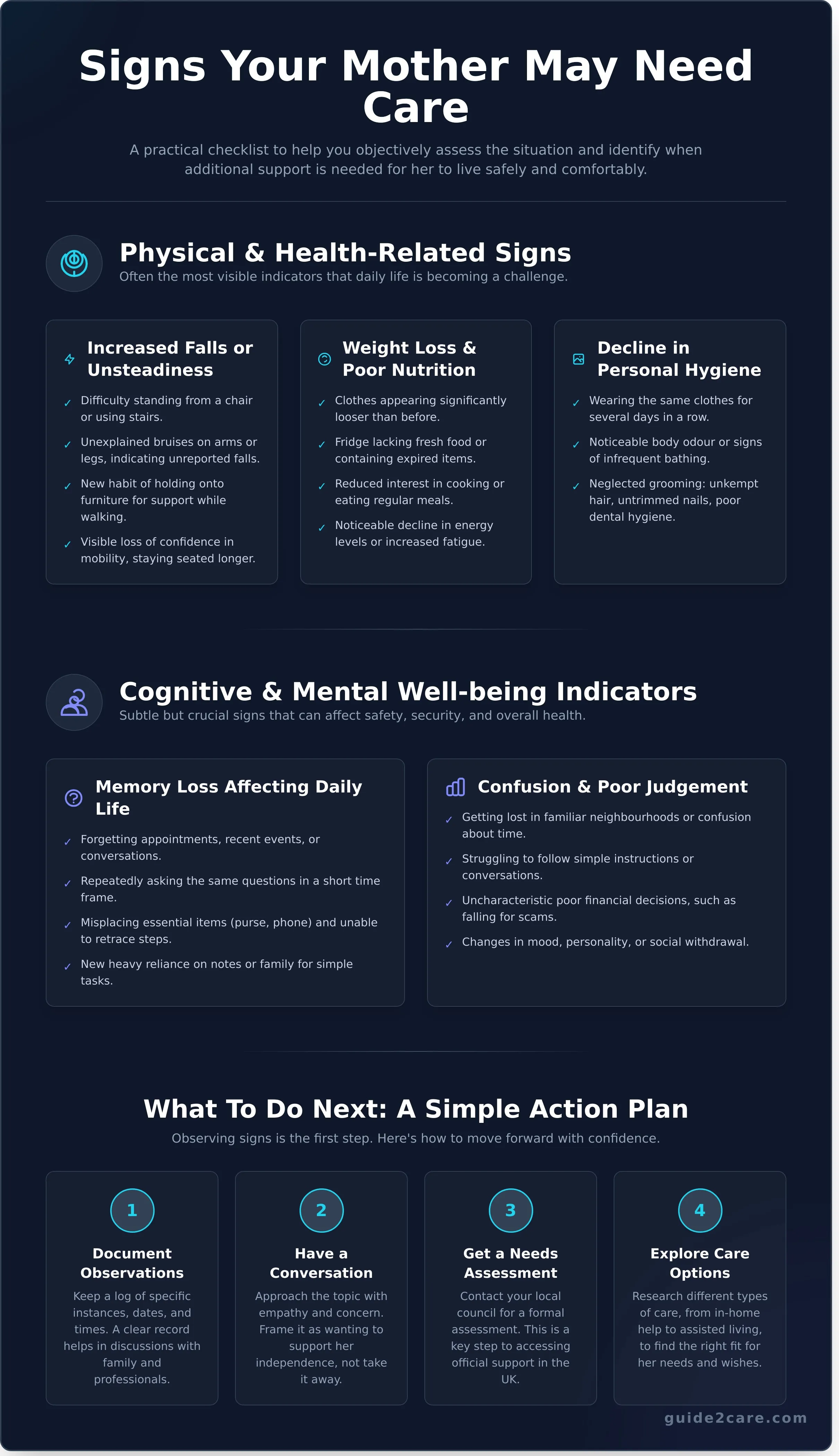
Increased Falls or Unsteadiness
A decline in mobility is a significant concern. Look for clear indicators that your mother is less steady on her feet than she used to be. Pay attention to new behaviours that suggest a fear of falling or actual instability.
- Noticeable difficulty standing up from a seated position or using stairs.
- Unexplained bruises on her arms or legs, which could indicate unreported falls.
- A new habit of holding onto furniture or walls for support while walking.
- A visible loss of confidence in mobility, causing her to remain seated for long periods.
Significant Weight Loss or Poor Nutrition
Nutrition is directly linked to energy and overall health. Changes in eating habits or weight can be a clear sign that help is needed with meals and shopping. This can happen gradually, so look for consistent changes over several weeks or months.
- Clothes that appear significantly looser than before.
- A fridge lacking fresh food or containing multiple expired items.
- A reduced interest in cooking or eating regular, balanced meals.
- A visible decline in energy levels, often a direct result of poor nutrition.
Decline in Personal Hygiene and Grooming
Maintaining personal hygiene can become difficult due to physical limitations or cognitive changes. While a sensitive topic, observing a decline in this area is one of the crucial signs my mother needs care, as it can impact health and well-being.
- Wearing the same clothes for several days consecutively.
- Noticeable body odour or other signs of infrequent bathing or showering.
- Neglected personal grooming, such as unkempt hair, untrimmed nails, or poor dental hygiene.
- This decline can be due to physical difficulty, low mood, or cognitive impairment.
Cognitive and Mental Well-being Indicators
Cognitive changes are often subtle and can be mistaken for normal ageing. However, it is crucial to distinguish between occasional forgetfulness and persistent issues that impact daily life. These patterns are significant signs my mother needs care because they can affect her safety, financial security, and overall health. Look for consistent behaviour that is out of character or causes concern.
Memory Loss Affecting Daily Life
Significant memory loss goes beyond misplacing keys; it involves challenges that disrupt daily routines. Look for consistent patterns such as:
- Forgetting appointments, recent conversations, or important family events.
- Repeatedly asking the same questions within a short period.
- Misplacing essential items like a purse or phone and being unable to retrace steps to find them.
- A new, heavy reliance on notes or family members for tasks they used to manage independently.
Confusion, Disorientation, and Poor Judgement
A decline in executive function can lead to confusion and poor decision-making. This may manifest as getting lost while driving in a familiar neighbourhood or confusion about the time of day. Your mother might struggle to follow simple instructions or participate in conversations. A particularly worrying sign is uncharacteristically poor judgement with finances, such as giving away large sums of money or falling for scams. If you observe these issues, it may be time to consider getting a needs assessment from your local council to formally evaluate her support requirements.
Changes in Mood and Personality
Noticeable shifts in your mother's personality or mood can be another indicator that she requires more support. While everyone has good and bad days, persistent changes are a cause for concern. These are some of the key emotional signs my mother needs care:
- A previously social and active person becoming withdrawn or isolated.
- Unusual agitation, suspicion of others, or paranoia.
- A general apathy or loss of interest in hobbies and activities she once enjoyed.
- Sudden and unexplained mood swings, or a notable increase in anxiety or depression.
When these emotional signs are present, exploring dedicated mental health support can be a vital step. To understand the types of therapies available for managing mood and personality changes, you can check out Safe Harbor Behavioral Health.
Household and Environmental Warning Signs
The state of a person’s home often provides a clear reflection of their overall well-being. When routine tasks become too difficult to manage, the environment can decline, presenting significant safety risks. These changes can point to both physical limitations and cognitive challenges. For families evaluating the signs my mother needs care, a noticeable shift in her living conditions is a critical indicator. If you are concerned that cognitive decline may be a factor, specialist organisations like Dementia UK offer valuable resources and information.
Neglected Home and Yard Maintenance
A previously tidy home that has become disorganised can signal that your mother is struggling with the physical demands or motivation required for upkeep. These are practical signs that are often easy to spot during a visit. Look for specific changes that are out of character.
- An unusual amount of clutter, unopened mail, or piles of laundry.
- Spills, expired food in the fridge, or messes that have not been cleaned.
- An overgrown garden or signs of disrepair like a broken step or fence panel.
- Unpleasant odours in the home that may indicate poor hygiene or sanitation.
Difficulty with Financial Management
Managing finances requires sharp cognitive skills. A sudden difficulty with bills and budgeting is a serious warning sign. Financial neglect can lead to significant problems, including loss of essential services, and is one of the more urgent signs my mother needs care.
- Stacks of unopened bills, final demands, or letters from creditors.
- Evidence of unusual purchases or large, unexplained cash withdrawals.
- Bouncing cheques or receiving disconnection notices for utilities like gas or electricity.
- Confusion when trying to manage a budget or understand financial documents.
Medication Mismanagement
Proper medication management is essential for health and safety. Errors in taking prescribed medication can have severe consequences and clearly indicate a need for support, such as domiciliary care, to ensure medicines are taken correctly.
- Forgetting to take medication or being unable to recall when the last dose was taken.
- Taking incorrect dosages, either too much or too little.
- Expired prescriptions that have not been refilled.
- Multiple pill bottles for the same medication, suggesting confusion and repeat orders.
What to Do Next: A Step-by-Step Action Plan
Recognising the signs is the essential first step; taking structured action is what comes next. If you have identified several signs my mother needs care, it is time to create a plan. Approach this process with patience and empathy. The goal is to introduce support that enhances her quality of life while respecting her dignity and independence. Focus on collaboration and finding solutions together, rather than making decisions for her.
Step 1: Start the Conversation
Choose a calm, comfortable time to talk, not during a moment of crisis or stress. Frame your concerns using 'I' statements to avoid sounding accusatory. For example, say "I'm worried about you managing the stairs alone," rather than "You can't manage the stairs anymore." Listen carefully to her perspective, acknowledging her fears about losing independence. A neutral starting point is to suggest a joint visit to her GP to discuss her overall health.
Step 2: Arrange a Professional Assessment
A GP can perform a health check to rule out or identify underlying medical issues that may be causing the symptoms you have observed. Following this, the next crucial step is to request a free care needs assessment from her local council. This formal assessment, typically carried out by a social worker, provides an objective and professional overview of her situation. It will determine her specific needs, confirm the signs my mother needs care that you have noticed, and establish her eligibility for council-funded support.
Step 3: Explore Care Options
The results of the care needs assessment will provide a clear foundation for researching the most appropriate support. There is a wide spectrum of care options available in the UK. Consider all possibilities:
- Assistive Technology and Home Adaptations: Simple solutions like personal alarms, grab rails, or walk-in showers can make a significant immediate difference.
- Domiciliary Care: Carers visit your mother's home to help with tasks like personal care, medication, or meal preparation. This can range from one visit a week to several visits a day.
- Residential Care: If 24-hour support is required, a care home provides a safe, managed environment with constant access to professional help.
Understanding these options is key to making an informed choice. Use our directory to find and compare local care services.
Your Next Step: Finding the Right Care for Your Mother
Identifying the need for support is the crucial first step in your family's care journey. By using this checklist, you have learned to observe the key physical, cognitive, and environmental indicators. Understanding these signs my mother needs care empowers you to move from a position of uncertainty to one of informed action. You now have a clear foundation for what comes next.
The next stage is finding the right professional support. Guide2Care simplifies this complex process. Our directory features comprehensive listings of UK care homes and home care agencies, giving you a full view of your options. We provide practical guidance on funding care and allow you to filter and choose providers based on their official CQC ratings, ensuring you can make a choice based on quality and suitability.
Take the next logical step. Find the care you need. Search our UK directory of providers today. You have the information to make a confident, well-informed decision for your mother's well-being.
Frequently Asked Questions
What's the difference between normal ageing and a sign I should be worried about?
Normal ageing may involve occasional forgetfulness, while a worrying sign involves a pattern that impacts daily life. For instance, misplacing keys is normal; forgetting how to use the cooker is not. Persistent confusion, significant weight loss, poor personal hygiene, or unexplained injuries are not typical parts of ageing. These consistent changes are key signs my mother needs care and warrant a discussion with a GP or a formal needs assessment.
How do I talk to my mother about needing care without her getting defensive?
Frame the conversation around her safety and independence, not her limitations. Use "I" statements, such as "I worry about you managing the stairs," instead of accusatory "you" statements. Suggest starting with less intrusive help, like a weekly cleaner or a meal delivery service, to ease her into the idea of receiving support. Presenting care as a tool to help her remain in her own home for longer can also make the concept more acceptable.
What can I do if my mother completely refuses any form of help?
If your mother has the mental capacity to make her own decisions, you cannot force care on her. You can, however, express your concerns clearly and calmly. Inform her GP of your observations, as they can offer a professional opinion. In an emergency, such as after a fall, hospital social workers can conduct an assessment. Often, a professional's recommendation or a crisis event can be the catalyst for accepting help.
What is the first official step to getting care for a parent in the UK?
The first step is to contact the adult social services department of your mother's local council to request a free Care Needs Assessment. This formal assessment determines her eligibility for support and identifies the specific type of care she requires. It will result in a care plan outlining her needs. You can request this on her behalf, or she can contact the council directly to begin the process.
Who pays for care? An overview of funding in the UK.
Care funding in the UK is means-tested. If your mother has savings or assets over £23,250 (in England), she will be expected to pay for her own care and is known as a 'self-funder'. If her capital is below this threshold, the local council may pay for some or all of the cost. Certain individuals with primary health needs may also qualify for non-means-tested NHS Continuing Healthcare funding, which is free.
Should I consider getting Power of Attorney for my mother?
Yes, it is advisable to arrange a Lasting Power of Attorney (LPA) while your mother still has the mental capacity to make her own decisions. An LPA is a legal document that lets you (the 'attorney') make decisions for her if she is no longer able. There are two types: one for health and welfare, and another for property and financial affairs. Having an LPA in place ensures her affairs can be managed smoothly if needed.