How to Talk to a Parent About Moving into Care: A Practical Guide

Approaching the topic of residential care with a parent is one of the most challenging conversations a family can have. You likely feel a mix of guilt and concern, worried about upsetting them or damaging your relationship. The uncertainty of how to talk to a parent about moving into care - what to say, when to say it, and how to handle potential anger or denial - can feel overwhelming and often delays this vital discussion.
This practical guide is designed to remove that uncertainty. It provides a clear, step-by-step approach to help you prepare for and navigate this sensitive conversation with confidence. You will learn how to structure the discussion, present your concerns constructively, and listen to their perspective. The goal is to facilitate a productive dialogue that makes your parent feel heard and involved, leading to a decision that ensures their long-term safety and well-being without causing family conflict.
Key Takeaways
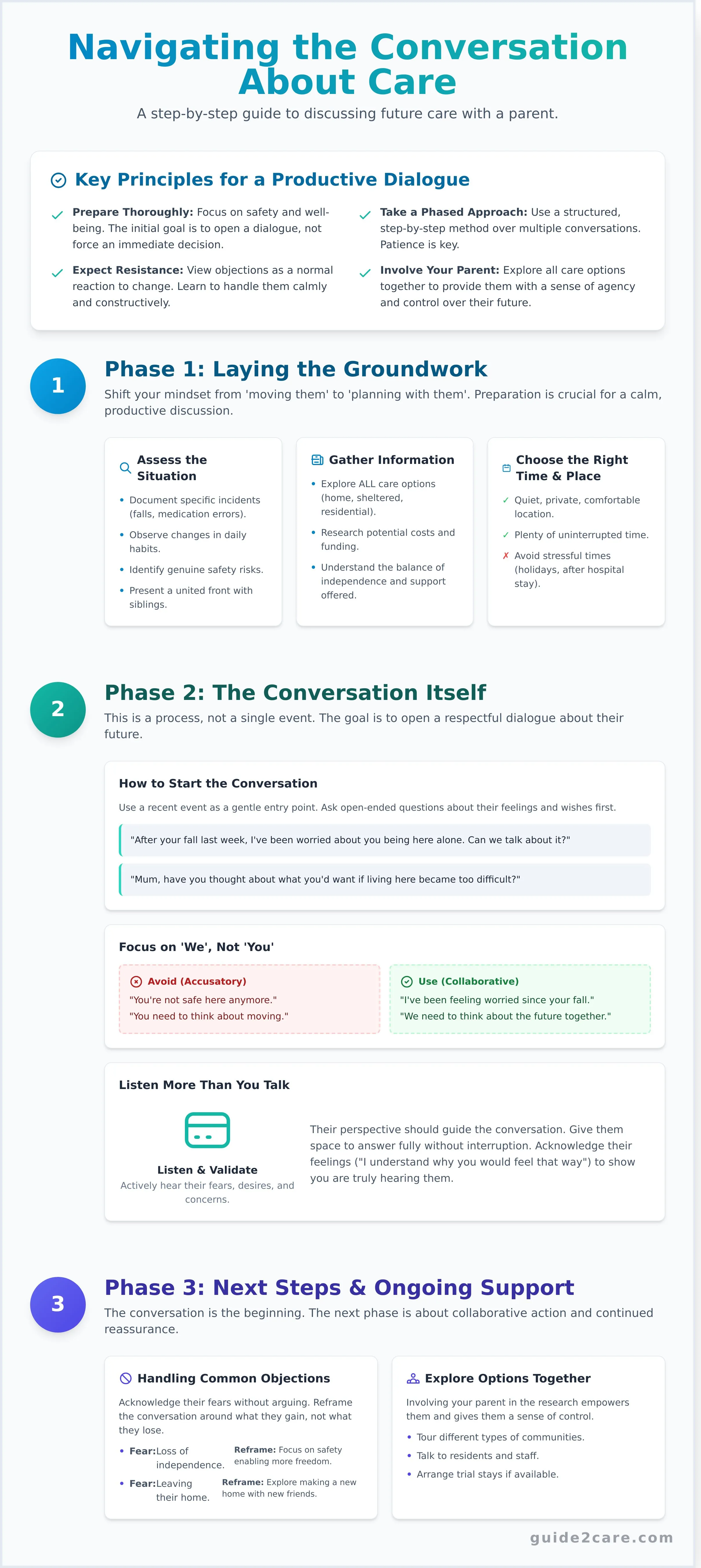
- Prepare for the conversation by focusing on safety and well-being. The initial goal is to open a dialogue, not to force a decision.
- Learn how to talk to a parent about moving into care by using a structured, step-by-step approach over multiple conversations.
- Anticipate resistance as a normal reaction to change. Discover techniques to handle objections calmly and without argument.
- Involve your parent in the process by exploring a range of care options together, providing them with a sense of control.
Preparing for the Conversation: Laying the Groundwork
Approaching the topic of future care is a significant step. This conversation is often difficult but necessary to ensure your parent's long-term safety and well-being. The goal is not to force a decision, but to begin a collaborative dialogue. To succeed, shift your mindset from 'moving them' to 'planning with them'. This preparation phase is crucial for a calm and productive discussion about their future needs.
For practical tips on starting this dialogue, consider the following video:
Assess the Situation Objectively
Before you speak, gather clear, objective facts. This provides a solid foundation for the conversation, moving it away from opinion and towards practical problem-solving. A united front with siblings is also vital.
- Document specific incidents: Note recent falls, medication errors, or missed appointments.
- Observe daily life: Are there changes in home upkeep, personal hygiene, or eating habits?
- Identify genuine risks: Distinguish between minor forgetfulness and serious safety concerns, such as leaving the cooker on.
- Consult with family: Speak with siblings beforehand to agree on the core concerns and present a supportive, united message.
Gather Information and Do Your Research
Entering the conversation with information demonstrates care and preparation. It shows you have invested time in finding positive solutions. Explore all potential care options, not just a residential home. Investigate domiciliary (home) care, sheltered housing, and residential care. A key part of understanding assisted living options is seeing how they can offer a balance of independence and support. Research potential costs and funding routes, such as local authority funding or self-funding. Having this initial information ready helps frame the discussion around viable choices.
Choose the Right Time and Place
The setting can significantly influence the outcome of your conversation. The right environment fosters trust and reduces defensiveness. Choose a quiet, private location where your parent feels comfortable, such as their own home. Ensure you have set aside plenty of time so no one feels rushed or interrupted. Avoid bringing up the topic during stressful periods like holidays, family gatherings, or immediately after a hospital stay when they may feel vulnerable. Knowing how to talk to a parent about moving into care starts with choosing the right moment.
Structuring the Conversation: A Step-by-Step Approach
Discussing future care needs is a process, not a single event. Be prepared for several conversations over time. The goal is to open a dialogue, not to reach a final decision in one sitting. Frame the discussion around your parent’s future happiness, safety, and independence. The way you begin sets the tone for all subsequent talks.
Knowing how to talk to a parent about moving into care successfully involves careful planning. Use 'I' statements to express your concerns without sounding accusatory. For example, say 'I've been feeling worried since your fall,' rather than 'You're not safe here anymore.'
How to Start the Conversation
Begin with gentle, open-ended questions about their future plans. Avoid starting the conversation with solutions like 'We've found a great care home for you.' Instead, explore their feelings and wishes first. A recent event can provide a natural entry point.
- Use a trigger event: 'After your fall last week, I've been worried about you being here alone. Can we talk about it?'
- Ask about the future: 'Mum, have you thought about what you'd want if living here became too difficult?'
- Explore their feelings: 'How have you been finding things at home recently?'
Focus on 'We', Not 'You'
Use collaborative language to position yourself as a supportive partner, not an authority figure. This approach helps to reduce defensiveness and fosters a sense of teamwork. Emphasise your desire to find the best solution together, one that respects their wishes and provides peace of mind for everyone involved.
Instead of saying, 'You need to think about moving,' try, 'We need to think about the future and what support might look like.' This simple change in wording reinforces that you are on their side, working towards a shared goal.
Listen More Than You Talk
The most important part of this process is understanding your parent's perspective. Ask questions and then give them the time and space to answer fully without interruption. Their fears, desires, and concerns should guide the conversation. Validate their feelings, even if you do not agree with their conclusions.
Simple phrases like 'I understand why you feel that way' or 'That's a valid concern' show that you are listening. Once you have a clear picture of their wishes, you can begin the process of Exploring Care Options Together to find a solution that aligns with their preferences. This makes the entire challenge of how to talk to a parent about moving into care a more collaborative and respectful journey.
Handling Common Objections and Difficult Reactions
When you talk to a parent about moving into care, expect some resistance. This is a normal reaction to a major life change and should not be seen as a personal rejection. The objective is to remain calm, avoid arguments, and listen carefully. Often, an objection is masking an underlying fear, such as a loss of control, a fear of abandonment, or anxiety about the unknown.
A key part of learning how to talk to a parent about moving into care is preparing for these moments. By anticipating common objections, you can formulate constructive, empathetic responses in advance. This helps to keep the conversation productive and focused on finding a solution together.
Responding to 'I'm fine at home'
This is one of the most frequent responses. First, acknowledge their feelings and validate their desire to stay in a familiar environment. Start with a phrase like, "I know how much you love this house and want to stay here." Then, gently steer the conversation back to your specific, documented concerns. Use concrete examples, such as, "But I worry when I think about you on those steep stairs every day." You can also suggest a trial period for a less disruptive option, like a weekly visitor from a domiciliary care service, to introduce the idea of support.
Addressing Fears of Losing Independence
Many older people view a move into care as the end of their independence. It is vital to reframe this perception. Explain that the goal of care is to support their independence, not take it away. By receiving help with challenging daily tasks like cooking or personal care, they will have more energy for the activities they enjoy. Focus on what they will gain:
- Safety: Professional support reduces the risk of falls and ensures help is always available.
- Companionship: Residential homes offer structured activities and a community of peers.
- Freedom: Less time spent on difficult chores means more time for hobbies, friends, and family.
Discussing Financial Concerns
The cost of care is a significant and valid worry. Acknowledge this directly and treat it as a practical problem to be solved as a family. Explain that you have started to research funding options, including potential support from the local authority or other benefits. Suggest that you explore these together and seek independent financial advice to get a clear picture of the costs in British Pounds (£) and the best way to manage them. Framing it as a shared challenge makes the issue less intimidating.
Beyond official channels, some families find creative ways to fundraise to help cover costs. Community events and sponsored challenges are popular, with some people even undertaking thrilling activities like a charity jump through companies like UK Skydiving to support their loved ones or relevant charities.
Another common concern is the future of a beloved pet, which can be a significant barrier to moving. Planning for their continued care—whether in a pet-friendly facility or with another family member—is essential. Ensuring the pet's health and happiness is maintained during this transition is crucial. For families looking to simplify this process by finding reliable online resources for pet care essentials, you can learn more about FIRSTPETCENTRAL for a range of pet needs.
Exploring Care Options Together
After the initial conversation, the next step is to look at practical solutions. Presenting a range of options gives your parent a sense of control over their future. The goal is to find the right kind of support, not to force a single solution. Involving them in the research process can significantly increase their acceptance and is a constructive part of how to talk to a parent about moving into care.
This stage transitions the conversation from an emotional discussion to a practical planning exercise. By working together, you shift the focus from a loss of independence to a collaborative search for the best way to maintain their quality of life.
Introducing Home Care as a First Step
Domiciliary care, or home care, is often the most acceptable starting point. It allows your parent to remain in their familiar environment while receiving extra help. You can suggest starting with just a few hours a week for specific tasks like cleaning, shopping, or meal preparation. This less disruptive approach can serve as a stepping stone, helping them become comfortable with the idea of receiving support before their needs become more significant.
Comparing Assisted Living and Residential Care
When more support is needed, it is important to understand the different types of care homes. Matching the level of care to the needs you have discussed makes the decision clearer.
- Assisted Living: This option offers a high degree of independence. Your parent would have their own private flat or room, with access to on-site staff and shared facilities. It is designed for individuals who need some support but can manage many aspects of their daily life.
- Residential Care: This provides 24/7 personal care and support for daily tasks like washing, dressing, and taking medication. It is for those who can no longer live safely on their own and require more comprehensive assistance.
Using Online Resources for Research
Making the options feel tangible can reduce anxiety. Sit with your parent and use a laptop or tablet to browse care providers in their area. Look at photos, read resident reviews, and check the latest Care Quality Commission (CQC) ratings to assess the quality of each service. This collaborative research makes the possibilities feel real and gives your parent a direct role in the decision-making process. You can find and compare local care services to see what's available near you.
After the Talk: Next Steps and Ongoing Support
The initial conversation is a significant milestone, but it is the beginning of a process, not the end. Your role now shifts to maintaining momentum and providing consistent, practical support. After the initial discussion, the focus moves from how to talk to a parent about moving into care to the specific actions you will take together. Reassure them that your love and support are unconditional, whatever the final decision may be.
To move forward effectively, it is essential to establish a clear plan. This provides structure, demonstrates your commitment, and helps prevent the process from stalling. Ensure all key family members, such as siblings, are kept informed of discussions and plans to maintain a united front and prevent misunderstandings.
Agree on a Follow-Up Plan
End the first conversation by summarising what you discussed and agreeing on a concrete next step. This transforms an abstract discussion into a manageable plan and shows you are serious about finding a solution together. Vague promises to "talk again soon" can lead to procrastination. Instead, define a specific action or time to reconnect.
- Set a date: "Let's review the brochures I've gathered and talk again next Tuesday evening."
- Assign a task: "I will book an appointment with the GP for us to discuss a needs assessment."
- Agree on research: "Why don't we both look online this week and see what types of local support are available?"
Plan Visits to Potential Places
Visiting a residential or nursing home can be a powerful way to dispel outdated stereotypes. Frame these outings as informal and exploratory, with no pressure to make a decision. Suggest visiting for a coffee or joining a community lunch event at a local care home. This provides a low-stakes opportunity for your parent to experience the environment firsthand.
A visit allows them to see that modern care homes are often vibrant communities. They can observe the staff, meet other residents, and get a genuine feel for the atmosphere. This direct experience is often more persuasive than any conversation and can help make the concept of moving feel less daunting and more like a positive choice.
As you explore options, use our comprehensive directory to find and compare care homes in your area. Find the care you need with clear, reliable information.
Moving Forward: From Conversation to Care
This conversation is a significant milestone, not an endpoint. The key to a productive outcome lies in thorough preparation, structuring the talk with empathy, and handling objections with patience. Mastering how to talk to a parent about moving into care is about turning a difficult discussion into a collaborative plan for their future safety and well-being. It is the first step towards finding a supportive solution together.
Once you are ready to explore options, Guide2Care simplifies the next phase. Our platform is a practical tool designed to bring clarity to your search. Use our comprehensive UK-wide directory of care providers, which contains verified information to help you make an informed choice. You will also find clear, straightforward guides on funding care and understanding the different types of support available, from domiciliary care to residential homes.
Take the next practical step today. Use our directory to find and compare care options near you. With the right information and resources, you can navigate this journey with confidence and find the care you need.
Frequently Asked Questions
What are the clear signs it's time for a parent to move into care?
Observe practical changes in your parent's daily life. Key signs include a decline in personal hygiene, an unkempt home, or unopened post. Look for mobility issues such as frequent falls, unexplained bruises, or difficulty getting up. Other indicators are significant weight loss, poor diet, missed medication, social withdrawal, or confusion. These signs suggest their current living situation may no longer be safe or sustainable, indicating a need for additional support.
What if my parent has dementia and lacks the capacity to decide?
If a parent lacks mental capacity due to dementia, decisions must be made in their "best interests" under the Mental Capacity Act 2005. If a Lasting Power of Attorney (LPA) for Health and Welfare is in place, the appointed attorney can make the decision. Without an LPA, you may need to consult with their GP and social services to reach a collective best interests decision. In complex cases, the Court of Protection may need to appoint a deputy.
How do I handle disagreements with my siblings about our parent's care?
Arrange a family meeting to discuss concerns openly and without blame. Focus the conversation on factual observations about your parent's health, safety, and needs, rather than on emotions. Try to create a unified plan by agreeing on the primary issues. If you cannot reach a consensus, consider involving a neutral third party, such as a social worker, a GP, or a professional mediator, to help facilitate a productive discussion and decision.
Should I involve a third party like a GP or social worker in the conversation?
Yes, involving a professional is highly recommended. A GP can provide a medical perspective on your parent's health and care needs, which adds authority to the conversation. A social worker can conduct a formal Care Needs Assessment to identify the specific type of support required. Their objective, expert opinions can help your parent understand the situation's seriousness and accept the need for change. For example, a comprehensive facility like Sage Creek Medical Center can offer the kind of primary care that is invaluable during this process, even if you're looking for similar support in your own community.
How can I cope with my own feelings of guilt during this process?
Acknowledge that feeling guilt is a normal part of this difficult process. Reframe the decision as a necessary step to ensure your parent's safety and wellbeing, not as an abandonment. Focus on the positive outcomes, such as professional medical support, increased socialisation, and a secure environment. Seek support for yourself from organisations like Carers UK, or talk to friends and family who have been through a similar experience. Prioritise your own mental health.
What legal steps, like Power of Attorney, should be in place before this conversation?
Before you determine how to talk to a parent about moving into care, it is vital to have the correct legal frameworks established. A Lasting Power of Attorney (LPA) is essential. There are two types: one for Health and Welfare, and another for Property and Financial Affairs. These documents allow a nominated person to make decisions if your parent loses capacity. An LPA can only be created while your parent still has the mental capacity to do so.
While discussing care, some families find it a natural time to gently broach the topic of end-of-life wishes, including funeral or cremation preferences. Planning ahead can relieve future emotional and financial burdens. Services like Funera offer compassionate guidance that can make these arrangements feel more manageable and ensure a parent's wishes are respected.
What about other future planning, like funeral arrangements?