Feeling Guilty About Putting a Parent in a Care Home: A Practical Guide

The decision to move a parent into a residential home is rarely straightforward. It is a process often filled with complex emotions, and feeling guilty about putting a parent in a care home is a common, powerful response. You may feel you have broken a promise, worry about their quality of care, or face criticism from others, all while dealing with your own exhaustion from caregiving. These feelings are a normal part of a challenging journey, but they do not have to be overwhelming.
This practical guide provides the information you need to navigate this difficult period. We will outline the reasons why these feelings of guilt are valid and help you understand them. You will learn actionable coping strategies to manage the emotional impact and receive reassurance that choosing professional care is often the most responsible decision. Our goal is to equip you with the tools to manage your feelings and help make this transition a positive experience for your parent.
Key Takeaways
- Understand the common sources of guilt, such as duty and societal expectations, and why it is a normal response to this difficult decision.
- Learn to reframe the decision as a responsible action that prioritises your parent's safety and need for a higher level of professional care.
- Find actionable coping strategies to manage the experience of feeling guilty about putting parent in care home, helping you process the emotion constructively.
- Explore proactive ways to support your parent's adjustment to their new environment and maintain a strong, positive relationship after the move.
Understanding Why You Feel Guilty: The Common Sources of This Emotion
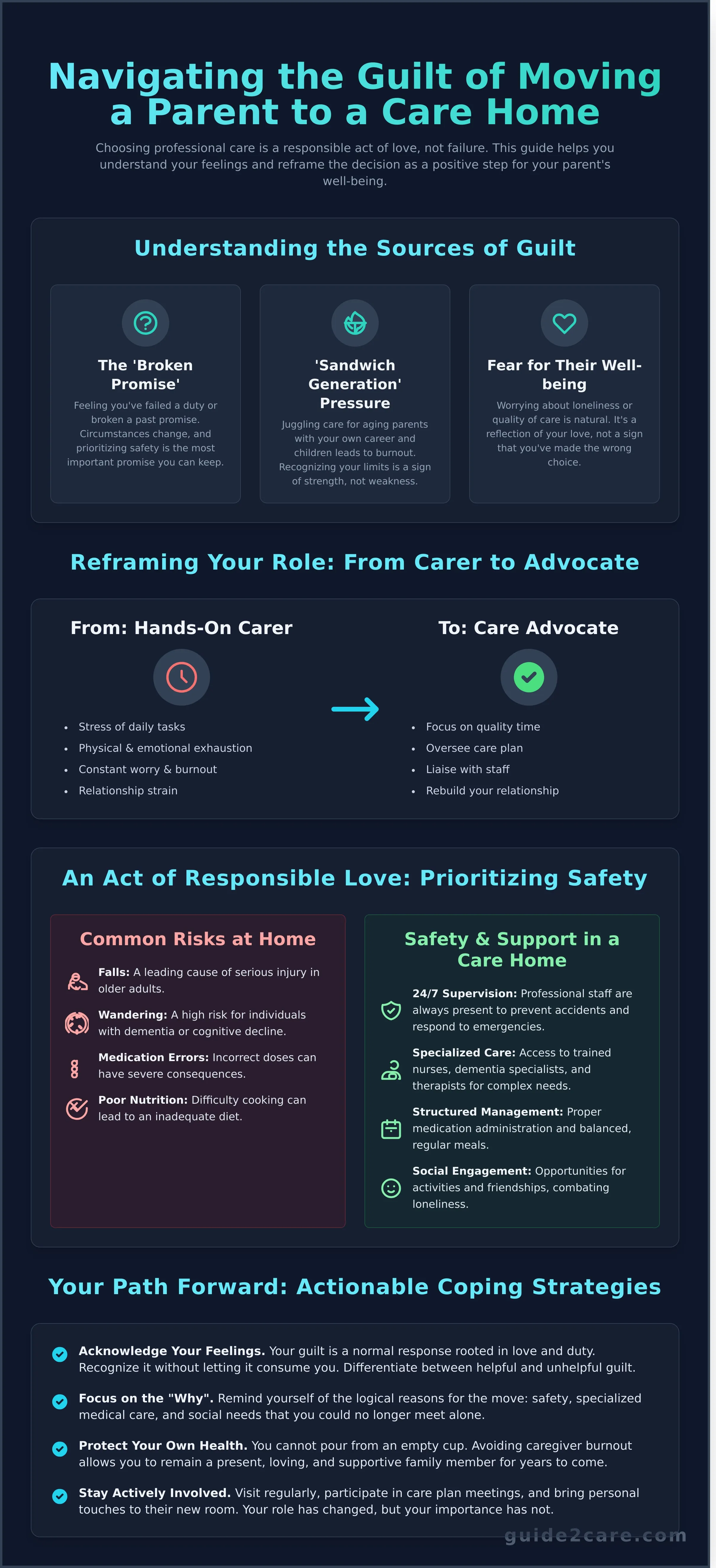
Feeling guilty about putting parent in care home is a common and understandable reaction. This emotion is not a sign of failure. It is a complex response rooted in love, a sense of duty, and societal expectations. It can also be linked to anticipatory grief, which is the process of mourning the change in your role and relationship with your parent before it fully happens.
This video offers further perspective on managing these feelings:
To manage this, it is useful to differentiate between two types of guilt. Healthy guilt, or remorse, can prompt positive action. Unhelpful guilt involves persistent self-blame that serves no productive purpose. Understanding the psychology of guilt can provide a framework for identifying which type you are experiencing and how to address it effectively.
The 'Broken Promise' and Sense of Duty
Many adults feel they are breaking a promise made years ago. This sense of failing a duty is often compounded by cultural or personal pressure to be the sole caregiver. However, circumstances change. A parent's declining health or complex medical needs can make home care unsafe or impractical. Acknowledging that the situation has evolved is a critical step; the priority must be your parent's safety and quality of life.
The 'Sandwich Generation' Pressure
Many people today are part of the 'sandwich generation', simultaneously caring for ageing parents while raising their own children or managing demanding careers. This dual responsibility often leads to significant physical and emotional burnout. The pressure can make it impossible to provide the consistent, specialised care a parent requires. It is important to recognise that your capacity is finite and seeking professional help is a responsible choice.
Fear for Your Parent's Wellbeing
Worrying about your parent's happiness, adjustment, and quality of care in a residential home is natural. Concerns about potential loneliness or whether their needs will be fully met are common. These fears are a direct reflection of your deep care and concern for them. They are not an indication that you have made the wrong decision, but rather a sign of your love and commitment to their welfare.
Reframing Your Decision: Moving from Guilt to Responsible Action
The experience of feeling guilty about putting parent in care home often stems from viewing the decision as a failure. It is essential to reframe this narrative. You are not giving up; you are facilitating a higher and more appropriate level of care. This decision is an act of responsible love, prioritising your parent's complex needs over your own emotional comfort.
Your role evolves from that of a hands-on, day-to-day carer to a care advocate. You become the person who oversees their care plan, liaises with staff, and ensures their quality of life is maintained. This shift allows you to focus on your relationship, replacing the stress of care tasks with quality time.
Prioritising Your Parent's Safety and Medical Needs
A home environment can present significant risks as a person's needs change. A key part of moving past guilt is to logically assess these dangers. Common safety concerns at home include:
- Falls: A leading cause of serious injury in older adults.
- Medication Errors: Incorrect dosages or missed medications can have severe health consequences.
- Wandering: A risk for individuals with dementia or cognitive decline.
- Poor Nutrition: Difficulty with cooking or shopping can lead to inadequate diet.
Residential care homes are purpose-built to mitigate these risks. They offer 24/7 supervision, trained staff, accessible environments, and structured medication management to ensure your parent is safe and supported at all times.
Accessing Specialised Care You Cannot Provide
Many conditions, such as advanced dementia, Parkinson's disease, or complex nursing needs following a stroke, require specialised knowledge and equipment. A care home provides access to trained nurses, dementia care specialists, and physiotherapists. This professional support can manage symptoms more effectively and significantly improve your parent's comfort and quality of life in ways that are simply not possible at home.
Protecting Your Own Health to Remain a Loving Family Member
Constant caregiving can lead to severe burnout, characterised by physical, mental, and emotional exhaustion. Ignoring your own wellbeing is not sustainable and can damage your relationship with your parent. Extensive research on caregiver guilt shows the immense pressure family members face, often at a significant cost to their own health. Acknowledging that you cannot do it all is a sign of strength. By entrusting their daily care to professionals, you preserve your own health, enabling you to continue being a present and loving family member.
Practical Coping Strategies: How to Manage Guilt Day-to-Day
The experience of feeling guilty about putting parent in care home is a common and persistent emotion. Managing it requires proactive, practical steps, not a single solution. This is an ongoing process of adjustment. The goal is to develop new routines and mental frameworks that support you and your parent in this new chapter. These strategies provide a toolkit for navigating difficult moments and reframing your perspective.
Focus on the Quality of Your Time Together
Shift the purpose of your visits from care tasks to connection. Let the professional staff handle the daily care responsibilities. This frees you to simply be their son or daughter again. Plan activities you both enjoy, such as looking at photo albums, listening to music, or sitting in the garden. Concentrate on creating new, positive memories within their new environment. This redefines your role and strengthens your relationship.
The quality of these shared spaces, especially gardens, can significantly impact residents' well-being. A comfortable, shaded outdoor area encourages social interaction and provides a peaceful retreat for families. For those interested in how these spaces can be enhanced, resources like pergola2go.com showcase modern solutions like aluminium pergolas that are often used to improve communal gardens at residential facilities.
Build a Partnership with the Care Home Staff
View the care home team as your allies. Establish open and regular communication with key staff members. Share important details about your parent’s personality, their history, and their specific likes and dislikes. This information helps them provide more personalised care. Working together as partners ensures your parent receives the best support possible, reinforcing that you made a decision for their wellbeing.
Find Your Support System
You do not have to manage these feelings alone. A strong support network is essential for processing complex emotions and gaining perspective. It is important to find healthy outlets to express what you are feeling. Consider these options:
- Talk to trusted individuals: Share your feelings with a partner, friends, or other family members who understand the situation.
- Join a support group: Connect with others who have similar experiences. Organisations like Carers UK and Age UK offer resources for finding local or online groups.
- Seek professional help: A therapist or counsellor can provide tools for processing guilt. Professional services, such as those available from jonathancullentherapy.com, can offer a dedicated space to work through these feelings, while expert articles on How to Cope With Guilt offer structured advice.
Making the Transition Positive: Actions to Help You and Your Parent Adjust
While feeling guilty about putting parent in care home is a common emotional response, you can channel that energy into positive action. Your involvement is crucial for helping your parent settle into their new environment. By taking proactive steps, you can transform this difficult period into a new, supportive chapter for your relationship and ensure they receive the best possible care.
Personalise Their New Living Space
A sterile room can feel alienating. Making it feel like home is a powerful first step in easing the transition. Focus on simple, meaningful additions that provide comfort and a sense of identity.
- Bring familiar items: Pack cherished photographs, a favourite comfortable chair, a familiar blanket or quilt, and important keepsakes.
- Organise for comfort: Arrange the room so that personal items are easily visible and accessible from their bed or chair.
- Set up technology: A digital photo frame with family pictures or a tablet for video calls can help them feel connected to loved ones.
Choosing a thoughtful gift can also help personalize their space and show your continued love and support. For inspiration on finding the perfect item, a dedicated guide like Bra Presenter can offer some helpful ideas.
Establish New Routines for Connection
Consistency helps build security. Your parent's move does not end your relationship; it changes its dynamic. Establishing new, reliable routines for contact maintains and strengthens your bond.
Set a predictable schedule for your visits and phone calls so your parent knows when to expect you. Get a copy of the home’s activity schedule and plan to visit during events they might enjoy, such as music sessions or garden club. If the care home’s policy permits, plan regular outings, even if it is just a short trip to a local café or park.
Address Challenges Constructively
There will likely be an adjustment period with some initial complaints. It is vital to listen with empathy, but also to separate emotional distress from factual concerns about care. If you have legitimate concerns, raise them calmly and clearly with the care home management. Document specific examples to support your points. Remember, initial unhappiness is normal, and it is easy to start feeling guilty about putting parent in care home again. Patience is essential. Being a constructive advocate for your parent is one of the most important roles you can now play. Use our directory to research and understand your care options.
Taking the Next Step with Confidence
The feeling guilty about putting parent in care home is a common and understandable response to a complex decision. Remember that choosing professional care is often an act of responsibility, ensuring your parent receives the safety and specialised support they require. By reframing your perspective and using practical strategies, you can manage these emotions and focus on making the transition a positive one for everyone involved.
Making an informed choice is the most effective way to build confidence in your decision. Guide2Care provides the impartial, practical information you need to move forward. Our comprehensive UK-wide directory, combined with clear guides on care types and funding, empowers you to find the best possible solution.
Explore our resources to help you find and choose the right care. Equipped with the right information, you can ensure your parent’s needs are met, allowing you to focus on your role as a supportive family member.
Frequently Asked Questions
What if I promised I would never put my parent in a care home?
Circumstances change, and a promise made in the past may not be practical or safe in the present. The decision to move a parent into care is often based on new realities, such as complex medical needs or safety concerns. The core intention of your promise was to ensure your parent's well-being. A professional care setting may now be the most effective way to fulfil that commitment by providing the specialist support and safe environment they require.
How do I respond when my parent says they are unhappy or want to come home?
Listen to your parent’s concerns to understand their specific feelings. Acknowledge their emotions without making promises you cannot keep. Communicate directly with the care home manager and staff. They can provide context on how your parent is settling in and work with you to address any issues. An adjustment period is normal, and establishing a routine of regular contact and visits can provide reassurance. Focus on finding practical solutions to improve their comfort.
Is it selfish to feel relieved after my parent has moved into care?
Feeling relief is a common response and does not diminish the love you have for your parent. Caregiver burnout is a significant issue, and this feeling often signals an end to a period of intense stress. Many people find that this sense of relief is a key part of processing the experience and is not a reason for feeling guilty about putting parent in care home. It allows you to shift your focus from being a caregiver back to being a son or daughter.
How can I be sure I chose the right care home for them?
Trust the research you conducted. You likely visited several homes, checked their Care Quality Commission (CQC) ratings, and spoke with staff. Your decision was based on the best available information at the time, matched to your parent’s specific needs. Continue to monitor their care, communicate regularly with the staff, and attend care plan reviews. If you have concerns, address them directly with the home's management. A good home will work with you to resolve issues.
How often should I visit my parent in their new care home?
There is no set rule for visit frequency. The priority should be the quality of your visits, not the quantity. Establish a consistent and sustainable routine that works for both you and your parent. A predictable schedule can be more comforting than frequent but erratic visits. Coordinate with the care home staff to find the best times to visit, ensuring you do not interrupt meals, medication rounds, or preferred activities. This ensures your time together is positive and relaxed.
What is the best way to handle criticism from other family members about the decision?
Respond to criticism with factual information rather than emotion. Calmly explain the specific reasons and professional advice that led to the decision, such as a formal needs assessment or safety incidents at home. Share the research you did to select the care home. If family members were not involved in the day-to-day care, they may not grasp the full situation. Invite them to visit the home with you to see the environment and the level of care provided firsthand.