Caregiver Burnout Symptoms in the UK: A Complete Recognition and Recovery Guide

Caring for another person is a demanding role. If you feel constantly exhausted, overwhelmed, or that you are losing your own identity, you may be experiencing burnout. Recognising the specific caregiver burnout symptoms UK carers face is the critical first step towards recovery. It is a common experience, but one that requires clear, practical action to resolve.
This guide is designed to provide that clarity. We identify the key emotional, physical, and behavioural signs of burnout. You will find actionable steps to help you feel better and discover the support services and resources available specifically within the UK. Our goal is to equip you with the information you need to continue caring for your loved one without sacrificing your own health and wellbeing. Find the support you need to move forward.
Key Takeaways
- Recognise the key emotional, physical, and behavioural caregiver burnout symptoms UK carers experience to assess your wellbeing.
- Discover practical, small steps you can take every day to manage stress and prevent burnout before it takes hold.
- Find a directory of UK-specific charities, support groups, and organisations that provide direct assistance to family caregivers.
- Understand when and how to use respite care as a tool to recharge, ensuring you can continue in your caring role sustainably.
What is Caregiver Burnout? (And How It Differs from Stress)
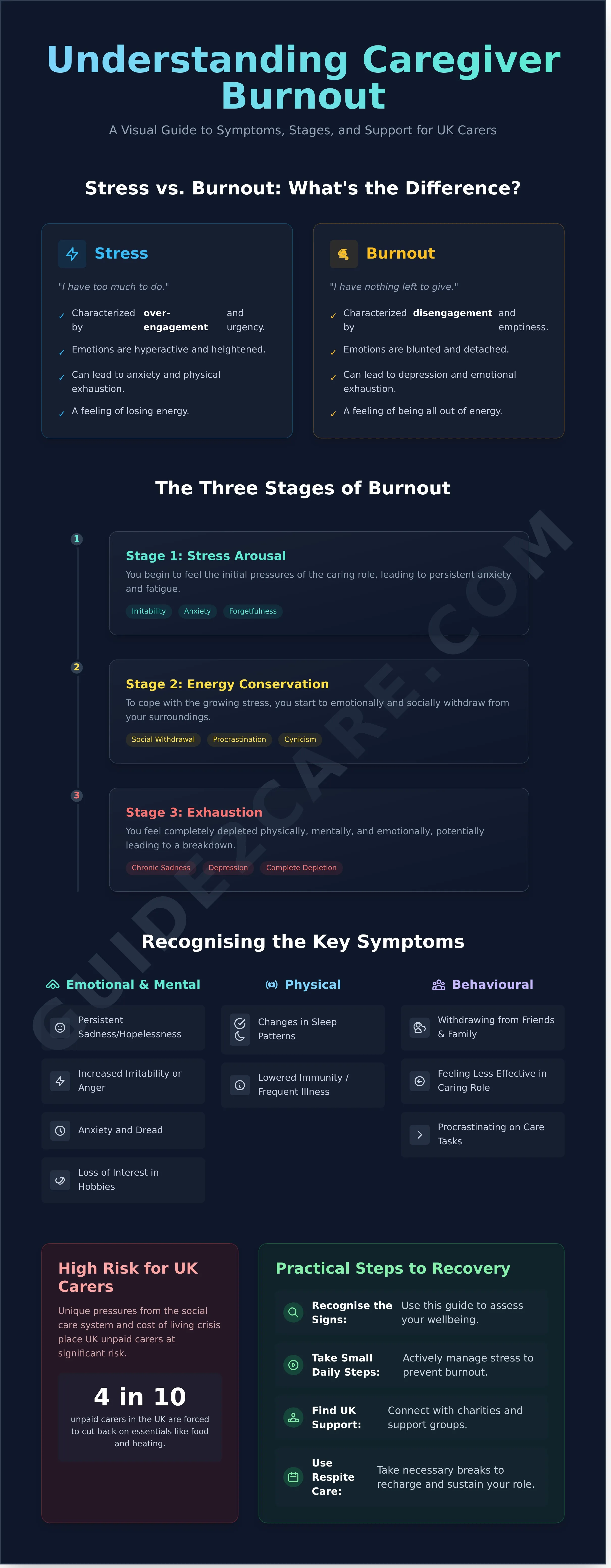
Caregiver burnout is a state of prolonged physical, mental, and emotional exhaustion. It occurs when you feel overwhelmed by the long-term stress of caring for another person. Unlike daily stress, which involves a sense of urgency and over-engagement, burnout is defined by disengagement and a feeling of emptiness. Understanding this distinction is the first step in identifying the specific caregiver burnout symptoms UK families face. It is a common response to a demanding situation, not a personal failure.
To better understand this concept, watch this helpful video from Psych Hub:
The core difference between the two is simple: stress is feeling like you have too much to do, while burnout is feeling like you have nothing left to give. This state, also known clinically as 'caregiver burden', can be triggered by several factors. Key contributors often include role confusion (struggling to separate your role as a carer from your identity as a spouse, child, or friend), unrealistic expectations of yourself, and a lack of control over finances or the care recipient's condition. For a clinical overview, you can explore What is Caregiver Burnout? in more detail.
The Three Stages of Burnout
Burnout typically develops over time through distinct phases. Recognising these stages can help you take action sooner.
- Stage 1: Stress Arousal. You may experience persistent anxiety, physical fatigue, irritability, and issues with concentration or forgetfulness.
- Stage 2: Energy Conservation. To cope, you begin to pull away. This stage is marked by social withdrawal, procrastination, and a growing cynicism about your role.
- Stage 3: Exhaustion. The final stage where you feel completely depleted. It can manifest as chronic sadness or depression, leading to a physical or mental breakdown.
Why UK Caregivers Are Particularly at Risk
Unpaid carers in the United Kingdom face a unique set of pressures. The strain on the NHS and social care systems often means more responsibility falls on families. Financial pressures are a significant factor; according to Carers UK, four in ten unpaid carers are forced to cut back on essentials like food and heating due to the cost of living crisis. This financial strain, combined with the profound isolation many family carers experience, creates a high-risk environment for developing caregiver burnout symptoms in the UK.
Recognising the Key Symptoms of Caregiver Burnout
Use this section as a self-assessment tool to identify the warning signs of burnout. These symptoms often develop gradually and can be easy to overlook at first. Recognising them is the first step towards taking effective action. As you review the following categories, note which points resonate with your personal experience.
Quick Checklist: Key Burnout Signs
- Constant exhaustion or fatigue
- Feeling irritable or resentful
- Withdrawing from friends and hobbies
- Getting ill more often than usual
- Feeling less effective in your caring role
Emotional and Mental Symptoms
Emotional and mental changes are often the first indicators. These feelings can impact your overall outlook and ability to cope. It is important to acknowledge them without judgement.
- Persistent sadness or hopelessness: A constant low mood or feeling that things will not improve. Charities like Carers UK provide dedicated support for caregiver burnout in the UK, with resources for managing stress and depression.
- Increased irritability or anger: Feeling easily annoyed or resentful, sometimes towards the person you care for.
- Anxiety and dread: A constant state of worry, particularly about the future or daily caring tasks.
- Loss of interest: No longer finding pleasure in hobbies, social activities, or interests you once enjoyed.
Physical Symptoms
The sustained stress of caring can have a direct impact on your physical health. Pay attention to these bodily signals, as they are often a clear sign that you are over-extended.
- Chronic fatigue: Feeling tired most of the time, even after sleeping.
- Changes in sleep patterns: Difficulty falling asleep (insomnia), waking frequently, or sleeping much more than usual.
- Lowered immunity: Experiencing more frequent colds, infections, or other common illnesses.
- Physical pain: Unexplained headaches, back pain, or muscle aches that become persistent.
Behavioural Symptoms
Burnout can alter how you act and interact with others. These behavioural shifts are some of the most visible caregiver burnout symptoms uk carers report and can affect your relationships and personal wellbeing.
- Social withdrawal: Pulling away from friends, family, and social gatherings you used to attend.
- Neglecting your own needs: Skipping meals, avoiding exercise, or missing your own medical appointments.
- Impatience: Becoming short-tempered or overly critical of the person you are caring for.
- Reduced sense of accomplishment: Feeling that your efforts make no difference or that you are not an effective caregiver.
Practical Steps to Prevent and Manage Burnout
Recognising the signs of burnout is the first step. The next is to take proactive measures for self-preservation. Preventing and managing caregiver burnout symptoms uk does not require grand gestures. Instead, small, consistent actions can make a significant difference. These strategies are designed to be realistic and achievable, even for caregivers with very limited time. Start by choosing one or two that feel most manageable for you.
Prioritise Your Own Health
You cannot provide effective care if your own health is compromised. Make your wellbeing a non-negotiable part of your routine. This includes both physical and mental health.
- Book your appointments: Schedule and protect time for your own GP and dental check-ups. Do not postpone them.
- Focus on nutrition: Aim for a balanced diet and stay hydrated throughout the day to maintain your energy levels.
- Incorporate movement: Add short bursts of activity, such as a 10-minute walk or simple stretches, into your daily schedule.
Set Realistic Boundaries
Being a caregiver does not mean you must do everything. Establishing clear boundaries is essential to protect your energy and prevent resentment, which are common triggers for burnout.
- Learn to say 'no': Politely decline additional requests from family or friends that overstretch your capacity.
- Communicate your limits: Be direct about what you can and cannot do. This helps others understand your situation and manage their expectations.
- Delegate tasks: Identify responsibilities that others can help with, such as shopping, cooking, or administrative duties.
Delegating household chores, for example, can free up significant time and mental energy. If finding reliable help feels like another chore, using an online directory like Cleaner Connect can simplify the process of finding trusted local cleaners.
Seek Social and Emotional Support
Isolation can significantly worsen feelings of stress and exhaustion. Connecting with others provides an essential outlet and reminds you that you are not alone in your experience.
- Connect with friends: A short phone call, text message, or a quick coffee can provide a vital social connection.
- Find a support group: Look for local or online groups for caregivers. Organisations like Carers UK provide resources and forums.
- Talk openly: Share your feelings, frustrations, and successes with a partner, friend, or professional you trust.
- Plan for the future: Giving yourself something to look forward to can be a powerful mental escape. Even just browsing travel inspiration, like the guides on The Nordic Travel, can provide a moment of respite and remind you of your own interests and dreams.
Finding Support for Caregiver Burnout in the UK
Recognising the signs of burnout is the critical first step. The next is to take action. If you are experiencing caregiver burnout symptoms, UK-based services are available to provide direct assistance. Support systems exist specifically for carers, and accessing them can provide the practical and emotional relief you need.
Start with Your GP and the NHS
Your GP is a primary resource for your own health. Book an appointment to discuss the physical and mental impact your caring role is having. A doctor can diagnose conditions like stress, anxiety, or depression and recommend treatment. They can also refer you to specialised services, such as counselling. In many areas, you can self-refer to NHS talking therapies (IAPT) for free, confidential help with common mental health problems.
Request a Carer's Assessment from Your Local Council
As an unpaid carer, you have a legal right to a Carer's Assessment from your local authority. This assessment is about your needs and how your caring role affects your wellbeing, work, and personal life. The goal is to identify what support could make your role more manageable. Outcomes can include:
- Access to respite care to give you a break.
- Funding for taxis or driving lessons.
- Help with housework or gardening.
- A direct payment to spend on support you choose.
Find your local council to request an assessment on the gov.uk website.
Connect with UK Charities and Helplines
National charities offer dedicated support, information, and a community for carers. They provide a vital source of specialist advice and understanding that can help you manage the challenges that lead to caregiver burnout.
- Carers UK: Provides expert advice on financial and practical matters, campaigns for carers' rights, and runs an online forum and a telephone helpline for immediate support.
- The Carers Trust: Operates a UK-wide network of local carer centres, offering practical support such as respite services, support groups, and information tailored to your area.
- Age UK: Offers specialist advice and support for those caring for an older person. Their free advice line can help with benefits, care options, and legal issues.
These organisations offer a direct route to people who understand your situation. To find local services and care providers, you can also explore the resources on Guide2Care.
When to Consider Professional Care Support (Respite Care)
Recognising you need support is a crucial step in managing your role. Professional care is not a replacement for the vital support you provide; it is a tool to help you sustain it. Engaging with professional services allows you to take necessary breaks, which is essential for preventing burnout. By prioritising your own well-being, you ensure you can continue to provide the best possible care for your loved one. This is a practical strategy for managing the common caregiver burnout symptoms uk families often encounter.
Understanding Respite Care Options
Respite care offers short-term relief for primary caregivers. It is designed to give you a planned break, from a few hours to several weeks, allowing you time to rest, attend to personal matters, or simply recharge. Options typically include a professional carer visiting the home (domiciliary care) or a short-term stay in a residential care home. This temporary support ensures your loved one continues to receive safe and professional care while you recover.
Finding a Home Care Agency
Home care agencies provide professional carers who can assist with a wide range of daily tasks in the home. Even scheduling support for a few hours each week can significantly reduce your workload and stress levels. This type of flexible support can be tailored to your specific needs. Common services include:
When looking for an agency, you will find various options, from local services to specialist recruitment agencies that place highly qualified household staff. For instance, agencies like Superstar Nannies focus on sourcing vetted, elite professionals, which can provide valuable peace of mind. The key is to find a service that matches your family's specific needs.
- Personal care (washing and dressing)
- Companionship and social interaction
- Meal preparation and light housekeeping
- Support with medication
How to Find and Choose the Right Support
To find the right support, first assess your specific needs. Consider what tasks are most demanding and what type of break would be most beneficial. Using a comprehensive directory allows you to compare local providers, read reviews, and understand the services they offer. This helps you make an informed decision that fits your family's requirements. Find trusted local care providers to get the support you need.
Your Next Steps: From Recognition to Recovery
Recognising the signs of burnout is the critical first step toward recovery. This guide has detailed the key emotional, physical, and behavioural indicators to watch for. By understanding the specific caregiver burnout symptoms uk residents face, you can take decisive and practical action. Remember, addressing your own well-being is not optional-it is essential for providing consistent and effective care for your loved one.
When you need additional support, professional care is a practical solution. Respite care provides the essential break required to recharge and prevent further exhaustion. Finding the right help should be a straightforward process. Use our directory to find local respite care and home care support. Our simple search tool allows you to explore comprehensive listings of CQC-rated care providers, helping you find vetted care homes and home care agencies across the UK.
Take control of the situation today. Finding the right support is a positive and necessary step for both you and the person you care for.
Frequently Asked Questions
Is it selfish to take a break from my caregiving duties?
Taking a break from caregiving is not selfish; it is a necessary part of providing sustainable care. Continuous care without rest can lead to burnout, which diminishes your ability to provide effective support. Regular breaks, known as respite, allow you to recharge physically and mentally. This ensures you can continue in your role and maintain the quality of care for your loved one. Prioritising your own well-being is essential for long-term caregiving.
What is a Carer's Assessment and how do I get one in the UK?
A Carer's Assessment is an evaluation conducted by your local council to determine your needs as a caregiver. It assesses the impact your caring role has on your health, work, and personal life, and identifies what support could make your role more manageable. To request an assessment, contact the adult social services department of your local council. You have a legal right to this assessment, regardless of your financial situation or the amount of care you provide.
How can I afford respite care? Is there any financial help available?
Funding for respite care may be available from several UK sources. Your local council can provide financial support following a Carer's Assessment, often through a direct payment or a personal budget. Charities such as Carers UK and the Carers Trust may also offer grants. You could also be eligible for benefits like Carer's Allowance. The cost of respite care varies, so it is important to explore all funding options available to you through your council and relevant charitable organisations.
How do I talk to my family about needing more help with caregiving?
To discuss needing more help, schedule a specific time to talk with your family when you will not be interrupted. Prepare a clear list of all caregiving tasks and identify which ones you need assistance with. Be specific about the type of help required, such as help with shopping, attending appointments, or providing companionship. A structured approach facilitates a productive conversation focused on finding practical solutions and sharing responsibilities more effectively.
What's the difference between caregiver stress and caregiver burnout?
Caregiver stress is characterised by over-engagement, anxiety, and a sense of urgency. You may feel overwhelmed but still believe you can manage if you work harder. In contrast, caregiver burnout is a state of disengagement, emotional exhaustion, and detachment. It involves feeling empty, helpless, and beyond caring. Recognising these distinct caregiver burnout symptoms UK residents face is the first step toward seeking the right support for your situation.
Can caregiver burnout be treated or reversed?
Yes, caregiver burnout can be treated and its effects reversed with proactive steps. The primary solution is to seek support and reduce your workload. This involves arranging regular respite care, asking for help from family or professionals, and connecting with support groups. Prioritising your own health through proper nutrition, exercise, and sleep is also critical. Addressing the root causes of exhaustion and seeking external help are key to recovery and preventing recurrence.