How to Find a Good Care Home in the UK: A Step-by-Step Guide

Choosing a care home for a loved one is a significant responsibility. The process can feel complex and emotionally demanding, leaving many families feeling overwhelmed by the sheer number of options. If you are asking yourself how to find a good care home uk, you are not alone. This guide is designed to remove the uncertainty from your search. It provides a structured, practical approach to help you make this important decision with clarity and confidence.
Follow our step-by-step process to effectively research, visit, and select the right home. We will explain how to define your loved one's specific care needs, understand the differences between residential and nursing homes, and use official inspection reports to create a shortlist. You will learn what key questions to ask during a visit and how to assess the environment, staff, and overall quality of care. Our aim is to equip you with the tools to find a safe, welcoming, and suitable home where your loved one will be well looked after.
Key Takeaways
- Define your specific care needs first. This initial step creates a focused and effective search from the start.
- Learn how to find a good care home UK by using official inspection reports and online directories to build a reliable shortlist.
- A personal visit is essential. Discover the key questions to ask staff and what to observe to assess the home's true atmosphere.
- Compare your options methodically. Use a structured approach to review your notes and make a confident final decision.
Step 1: Define Your Needs - The Foundation of a Good Choice
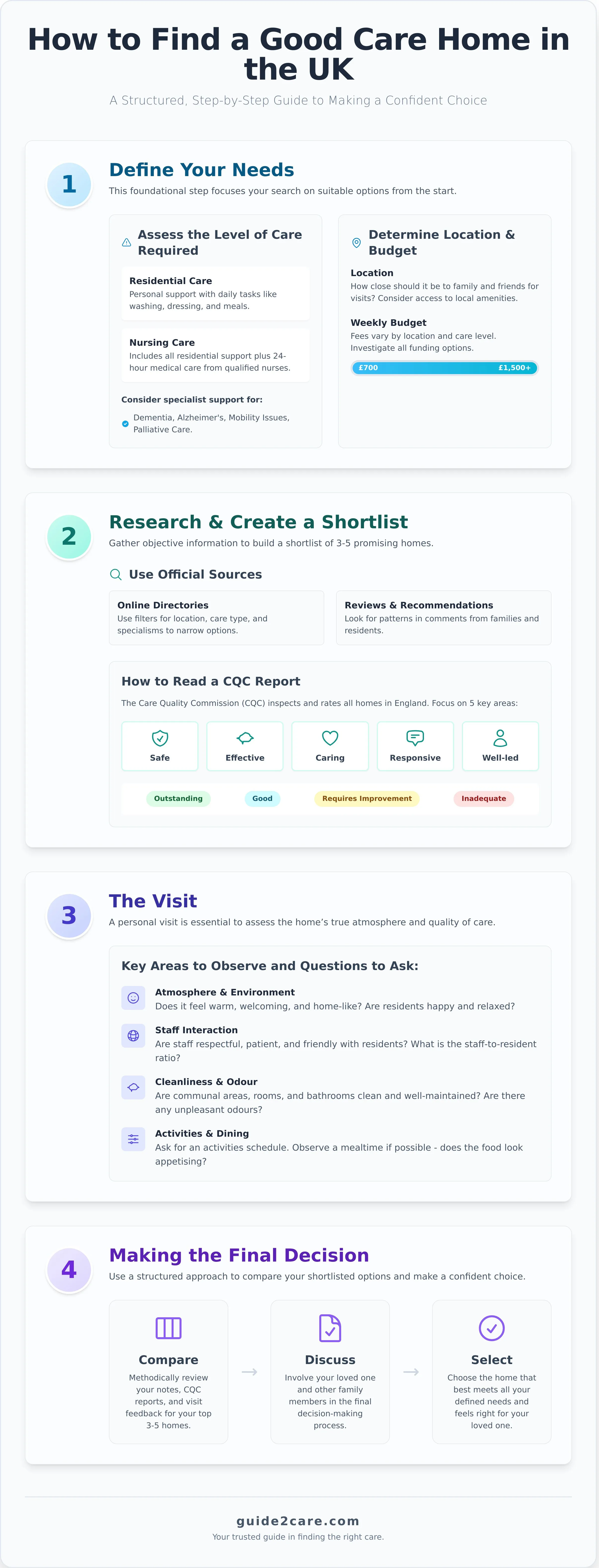
Before you begin your search, it is essential to create a clear picture of what you and your loved one need. This foundational step is the most effective way to approach how to find a good care home uk, as it prevents overwhelm and focuses your search on suitable options from the start. Consider both current and potential future health requirements to ensure the home can provide long-term support. Involve your loved one in these discussions as much as possible to respect their wishes and preferences.
To better understand the process, watch this short video from the UK Care Guide:
Using these defined needs as a checklist will allow you to filter your options efficiently later in the process.
Assess the Level of Care Required
First, determine the specific level of support needed. Care homes in the UK typically offer two main types of care. Residential care provides personal support with daily tasks like washing and dressing. Nursing care includes this support plus 24-hour medical care from qualified nurses. Understanding the basics of what is a care home and its different functions is critical. Your local council can provide a free 'Care Needs Assessment' to formally identify these requirements and help determine eligibility for funding.
Consider specific conditions that require specialist support, such as:
- Dementia or Alzheimer’s care
- Significant mobility issues
- Palliative or end-of-life care
- Complex medical conditions
Determine Location and Budget
Next, establish your practical requirements. Location is a key factor; decide how important it is for the home to be close to family and friends for regular visits. Also, consider access to local amenities like parks, shops, or places of worship. Finally, you must establish a realistic weekly budget. Care home fees can range from £700 to over £1,500 per week depending on location and care level. Investigate all potential funding avenues, including self-funding, local authority contributions, or NHS Continuing Healthcare (CHC) if eligible.
Step 2: Research and Create a Shortlist of Care Homes
With a clear understanding of your care requirements, you can begin your search. This step focuses on gathering objective information to build a shortlist of 3-5 promising care homes. The goal is to compare providers based on official reports and user feedback before you invest time in visits. This methodical approach is central to how to find a good care home uk that truly meets your specific needs.
Using Online Directories and Tools
Comprehensive online directories are the most efficient starting point. Use filters to narrow down options by location, type of care (e.g., residential, nursing, dementia), and specific specialisms required. As you browse, save potential homes to a list for easy comparison. Review photos, watch virtual tours if available, and read the home's mission statement to get an initial feel for its environment and values. This initial screening saves significant time. Start your search with the Guide2Care directory.
How to Read a CQC Report
In England, the Care Quality Commission (CQC) is the independent regulator of all health and social care services. Every care home receives a detailed inspection report and an official rating. When reviewing a report, focus on the findings for five key areas:
- Safe: Are residents protected from abuse and avoidable harm?
- Effective: Does the care help to maintain a good quality of life?
- Caring: Do staff treat residents with compassion, kindness, and respect?
- Responsive: Is the service organised to meet residents' needs?
- Well-led: Does the leadership promote high-quality, person-centred care?
The overall rating will be one of four grades: Outstanding, Good, Requires Improvement, or Inadequate. While a 'Good' or 'Outstanding' rating is preferable, always read the summary section of the report. It provides crucial context and explains the inspector's specific findings.
Gathering Reviews and Recommendations
Official reports provide facts, but personal experiences offer valuable insight. Read reviews on directories and independent websites to see what current residents and their families say. Look for consistent patterns in comments-positive or negative-about staff attitude, food quality, cleanliness, and the range of activities. Seeking advice from trusted professionals is also a key part of learning how to find a good care home uk. For a detailed overview, the charity Age UK provides an excellent factsheet on how to choose a care home. Finally, ask your GP, a social worker, or friends for any personal recommendations they may have.
Step 3: The Visit - What to Look For and Key Questions to Ask
Research provides a shortlist, but a visit reveals the reality. This is the most important step in how to find a good care home in the UK. Pay attention to the 'feel' of the environment. Trust your instincts - does it seem warm, respectful, and welcoming? If possible, arrange to visit more than once and at different times, such as during a meal or an activity. Always prepare a list of questions and take notes to compare homes accurately later.
First Impressions and the Environment
Your initial observations are critical. A well-managed home should feel pleasant and safe from the moment you enter. Look for clear signs of quality and care in the physical space and in the interactions you witness.
- Cleanliness: Is the home clean, tidy, and free from unpleasant odours? Check communal areas, bathrooms, and the outside space.
- Staff Interaction: Observe how staff speak to residents. Do they appear patient, respectful, and friendly?
- Resident Wellbeing: Do residents seem happy, comfortable, and engaged? Look for social interaction and signs of person-centred care.
- Accessibility: Check that the layout is suitable for mobility needs, with clear access to all areas.
Staffing, Activities, and Daily Life
The daily routine and the people who support it are central to a resident's quality of life. Inquire about the structure of the day and how the home supports individual needs and preferences. A key part of how to find a good care home in the UK is understanding its daily operations.
- Staffing: Ask about staff-to-resident ratios for both day and night. High staff turnover can be a red flag.
- Activities: Request a weekly activity schedule. Is there a good variety of social, physical, and creative options?
- Meals: Ask to see a sample menu. How does the home cater to dietary requirements and personal preferences?
Essential Questions for the Care Home Manager
The manager is responsible for the home's standards. This is your opportunity to ask direct questions about policies, procedures, and costs. Prepare your questions in advance; the official NHS guide to choosing a care home offers a comprehensive checklist. Key areas to cover include:
- Care Planning: How is an individual care plan created and reviewed?
- Communication: What is the policy for keeping families updated?
- Concerns: How are complaints or concerns handled?
- Contracts and Fees: Request a copy of the contract and a clear breakdown of all fees, including potential future increases.
Step 4: Making the Final Decision and Planning the Move
After visiting potential homes, the final step is to analyse your findings and select the best option. This decision should be a balanced assessment of factual information and your personal impression of each home's atmosphere. A methodical approach ensures you make a confident choice. The last part of how to find a good care home uk involves careful review and planning for the move itself.
Comparing Your Shortlisted Homes
Organise the information you gathered during your visits. Create a simple comparison table or list to weigh the pros and cons of each home against your initial needs assessment. Discuss your findings with family members and, most importantly, with the person who will be moving. Consider which environment felt most welcoming and which provider best demonstrated an understanding of their specific care requirements.
Reviewing the Contract and Fees
Before making a commitment, you must thoroughly review the care home contract. This legal document outlines the terms of residency, the care provided, and the full cost structure. Do not sign anything until you are clear on every point.
- Check Inclusions: Confirm exactly what is covered by the standard fees. Ask about extra costs for services like hairdressing, chiropody, or personal newspapers.
- Fee Increases: Understand the policy on annual fee increases. The contract should state how and when fees will be reviewed and the notice period you will be given.
- Notice Period: Clarify the terms for ending the contract, both for you and the care provider.
Request a copy of the contract to review at home and seek legal advice if any clause is unclear.
Preparing for a Smooth Transition
Once you have chosen a home and signed the contract, work with the management to plan the move. A successful transition helps the new resident settle in comfortably. Discuss practical steps with the care home manager, such as how to personalise the room with familiar furniture, photographs, and belongings to make it feel like home. Coordinate the moving day logistics to ensure staff are prepared to welcome the new resident and provide immediate support. For more tools and provider information, explore the resources at guide2care.com.
The logistics of the move can become more complex if family members live overseas and need to ship furniture or sentimental items to or from the UK. In these situations, understanding the options for larger-scale transport is key. For those facing this challenge, it can be helpful to explore Ocean Freight Forwarding to see how professional logistics services can manage international moves.
A key part of making the new space feel welcoming is ensuring it is comfortable. Bringing personal items, especially high-quality bedding and towels, can make a significant difference. For those looking to provide an extra touch of comfort, specialist linen suppliers like King of Cotton can be a great resource for making the new room feel more like home.
Your Next Step to Finding the Right Care
Choosing a care home is a significant decision, but it is manageable when broken down into clear steps. As this guide has shown, the process begins with defining the specific care, location, and budget requirements. This foundation makes your research targeted and effective. Ultimately, the key to how to find a good care home uk is diligent preparation, from creating a shortlist to asking the right questions during your visits. This ensures the final choice truly meets the needs of the individual.
Now, you can put this knowledge into action. The Guide2Care directory is designed to streamline your research. Use our comprehensive, UK-wide listings to find local options. You can filter by specific care types, such as dementia or nursing care, and directly access the latest CQC inspection reports for every provider. This gives you the clarity and objective information you need to compare homes effectively and build your shortlist with confidence.
Find and compare CQC-rated care homes in your area now.
Frequently Asked Questions
What is the difference between a residential home and a nursing home?
A residential home provides personal care and support, including help with washing, dressing, and taking medication. The staff are trained care assistants. This option is for individuals who can no longer live independently but do not have complex medical needs.
A nursing home offers the same personal care but also has qualified nurses on-site 24 hours a day. It is designed for residents with specific medical conditions, significant disabilities, or long-term illnesses that require regular nursing intervention.
How important is a care home's CQC rating?
A CQC (Care Quality Commission) rating is a critical indicator of a care home's quality and safety in England. The ratings-Outstanding, Good, Requires Improvement, or Inadequate-are based on expert inspections. Understanding these reports is a fundamental step in how to find a good care home uk. A 'Good' or 'Outstanding' rating provides confidence that the home meets required standards and is a reliable starting point for your search.
Can I visit a care home unannounced for a tour?
It is recommended to schedule your initial tour. An appointment ensures the home manager is available to show you all the facilities and answer your questions thoroughly. This guarantees you receive their undivided attention and the specific information you need.
However, making a second, unannounced visit at a different time, such as a weekend afternoon, can be useful. This allows you to observe the home's typical atmosphere and daily routines when they are not expecting formal visitors.
What happens if my loved one is unhappy after moving into a care home?
The first action should be to speak directly with the care home manager. Most issues can be resolved quickly through clear communication. If the problem persists, use the home's official complaints procedure, which they must provide to you. Following this formal process ensures your concerns are documented and addressed. If you remain unsatisfied, you can escalate the complaint to the Local Government and Social Care Ombudsman.
How are care home fees typically paid in the UK?
Care home fees are paid through self-funding, local authority funding, or NHS funding. If you have assets above the upper threshold (currently £23,250 in England), you will likely be expected to self-fund your care. Your local council can conduct a financial assessment to determine if you qualify for support. In some cases, the NHS provides funding through NHS Continuing Healthcare if the primary need for care is health-related.
While care homes are a common choice, they are not the only option. Home care, where professional caregivers provide support within a person's own home, is a popular alternative. This can range from daily visits to live-in care. For those exploring the home care model, resources from established providers like AVIAN Care can provide a comprehensive guide on how home nursing and support can be structured, offering valuable insights even for those outside their service area.
What are the alternatives to a residential care home?
Many care homes now recognise the therapeutic benefits of pets and have policies that allow residents to bring their furry companions with them. It is an important question to ask during your visit, as policies vary. For those moving with a dog or cat, ensuring they have all their essentials can make the transition smoother for them too. If you are looking for supplies to prepare, you can learn more about FIRSTPETCENTRAL, an online retailer for pet care items.
Can pets live in a care home?
What questions should I ask current residents during my visit?
Speaking to residents gives you an authentic view of daily life. Ask open-ended questions to encourage detailed answers. Good examples include: "What do you like most about living here?", "How do you find the food?", "Are the staff friendly and helpful?", and "What activities do you enjoy?". Their honest feedback is one of the most reliable ways to learn how to find a good care home uk and understand its true character.