Helping a Loved One Adjust to Nursing Home Life: A Practical Guide
The move into a residential care home presents practical and emotional challenges. You may be managing feelings of guilt, while your relative experiences loneliness or finds the new environment impersonal. Ensuring visits are productive and that communication with staff is clear can also be difficult. This process requires a structured approach. This guide provides the necessary tools and information for helping a loved one adjust to nursing home life.
Explore actionable steps to make their new room feel personal and welcoming. Learn effective methods for building a strong, positive relationship with the care team. Discover how to make your visits a source of comfort and connection for both of you. Our objective is to provide the clarity you need to manage this transition effectively, ensuring your loved one feels safe, settled, and socially engaged, and that you feel confident in the decision you have made for their wellbeing.
Key Takeaways
- Involve your loved one in planning the move and personalising their new room to reduce anxiety and create a sense of familiarity.
- Establish a predictable visiting schedule and daily routine early on to provide stability during the critical initial adjustment period.
- Build a collaborative relationship with care home staff; they are essential partners in ensuring your loved one's wellbeing.
- Helping a loved one adjust to nursing home life also requires managing your own emotions; learn to recognise and cope with common feelings of guilt or grief.
Preparing for the Move: Setting the Stage for a Positive Transition
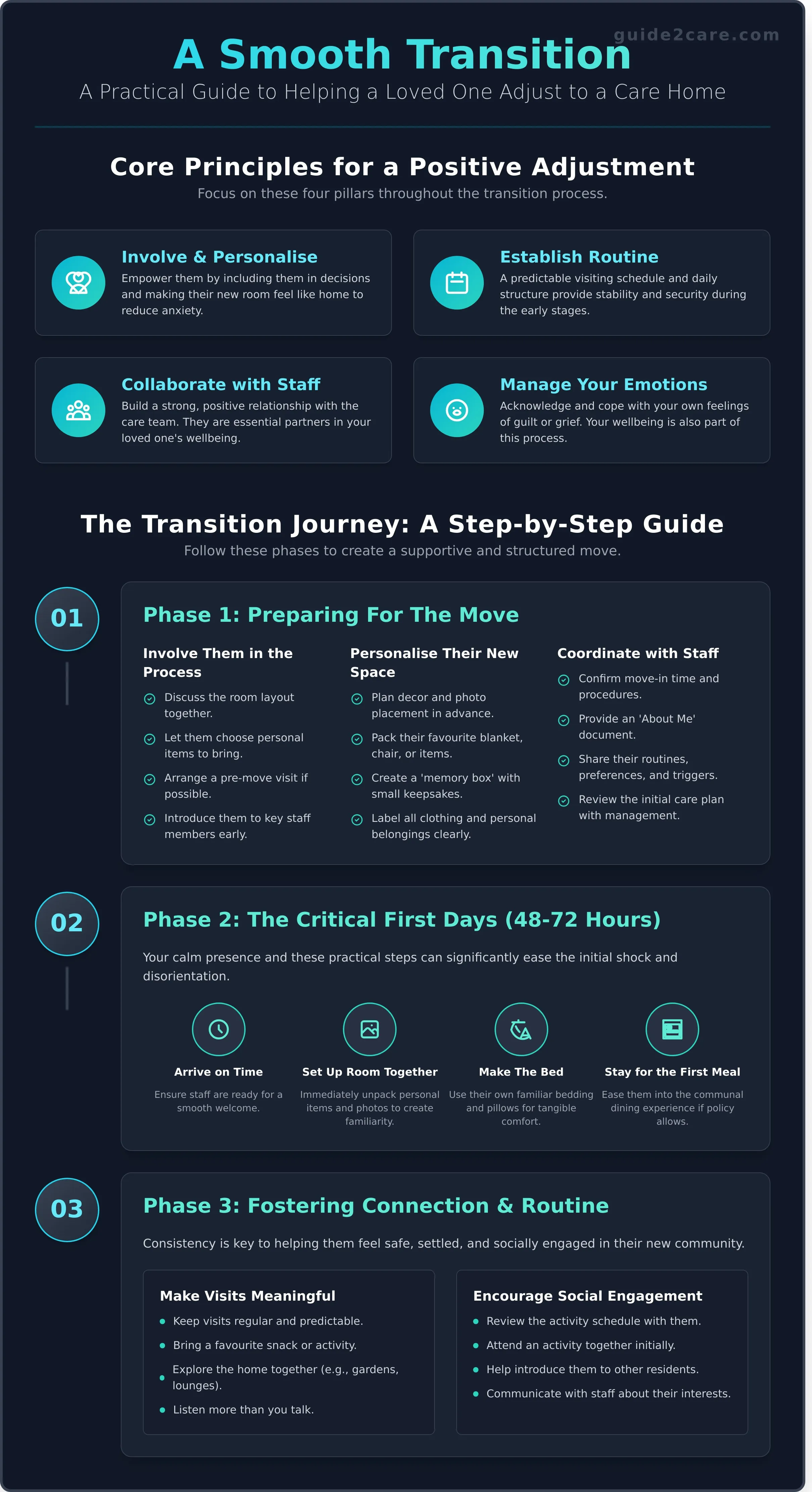
The move to a care home begins long before the actual day. Proactive preparation is a critical first step in helping a loved one adjust to nursing home life, as it can significantly reduce anxiety for everyone involved. The focus should be on clear communication, practical planning, and personal touches that honour your loved one's identity and preferences.
This video offers practical advice on identifying when a move to a care home may be necessary.
Involving your loved one in decisions helps restore their sense of control during a period of significant change. By planning ahead, you can create a supportive foundation for their new chapter.
Involve Them in the Process
Giving your loved one a sense of control is crucial. Involve them in as many decisions as their capacity allows. This collaborative approach transforms the experience from something that is happening to them into a plan they are part of.
- Discuss the room: Look at the floor plan together and decide where furniture could go.
- Choose personal items: Let them select the most meaningful belongings to take, such as photographs, books, and favourite ornaments.
- Arrange a visit: If possible, visit the care home together before the move to familiarise them with the new environment.
- Meet the staff: An introduction to one or two key staff members can make the first day feel less intimidating.
Personalise Their New Space in Advance
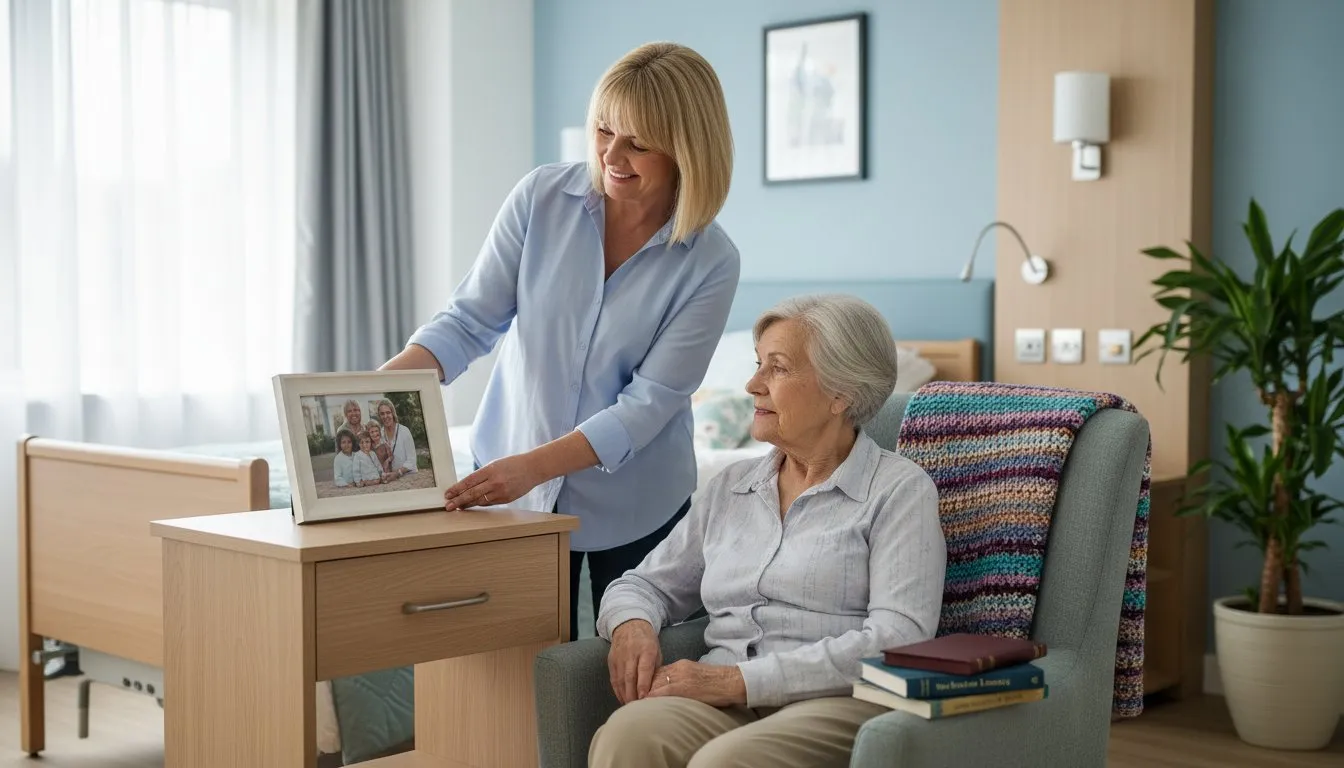
A familiar environment provides comfort and security. Plan to make their new room feel like home from the moment they arrive. A key part of understanding nursing home care is recognising that a resident's room is their personal sanctuary.
- Plan the decor: Decide where to hang family photos or familiar artwork to create a comforting visual space.
- Consider the windows: New blinds or shutters can make a room feel more personal and comfortable by controlling light and ensuring privacy. A provider like Universal Blinds UK offers made-to-measure options to suit the space.
- Pack sentimental objects: Include their favourite blanket, a comfortable chair, or other cherished items.
- Create a 'memory box': Fill a small box with keepsakes that can be easily accessed to spark positive memories.
- Label everything: Clearly label all clothing and personal items with their name to prevent loss.
Coordinate with the Nursing Home Staff
Effective coordination with the care home team ensures a smooth transition. Provide them with the information they need to deliver person-centred care from day one. This is a vital step in helping your loved one feel understood and safe.
- Confirm move-in details: Clarify the exact time, procedure, and any required paperwork in advance.
- Provide an 'About Me' document: Write a short biography that includes their life story, hobbies, and achievements.
- Share preferences: Inform staff about their daily routines, food likes and dislikes, and any known triggers for anxiety.
- Review the care plan: Discuss the initial care plan with the management to ensure it aligns with your loved one's needs.
The First Few Days: Navigating the Initial Adjustment Period
The first 48 to 72 hours in a care home are often the most challenging. For your loved one, this period can feel disorienting and overwhelming. Your calm presence and practical support are crucial during this time. The primary goal is to establish a sense of familiarity and security in their new environment from the moment they arrive.
Making Move-In Day as Smooth as Possible
A well-managed move-in day sets a positive tone for the entire transition. Focus on practical tasks that create an immediate sense of home. This structured approach can reduce anxiety for both you and your loved one.
- Arrive on time: Stick to the time agreed with the home to ensure staff are ready to welcome you.
- Set up the room together: Immediately unpack personal items, photos, and decorations. This makes the space feel personal and owned.
- Make the bed: Use their own familiar bedding, pillows, and blankets to provide a tangible comfort.
- Stay for the first meal: If the care home's policy allows, sharing their first meal can ease the transition into the communal dining experience.
Managing Emotions (Theirs and Yours)
This transition is an emotional process. It is vital to acknowledge your loved one’s feelings of sadness, anger, or fear without making false promises. Avoid statements like, "You can come home soon if you don't like it." Instead, validate their emotions by saying, "I understand this is difficult." Your role in helping a loved one adjust to nursing home life is to be an anchor. While it is natural for you to feel emotional, try to project a calm and reassuring demeanour. Point out positive details, such as a nice view from the window or a friendly staff member.
Facilitating Initial Introductions
Making early connections can significantly ease feelings of isolation. However, it is important not to overwhelm your loved one. Aim for brief, positive interactions to build a foundation for future friendships.
- Meet the key staff: Introduce yourselves to the carers who will be providing direct support. Note their names.
- Ask for a peer introduction: Request that staff introduce your loved one to a resident with similar interests or a welcoming personality.
- Locate key areas: Take a short, guided walk together to find the dining room, lounge, and their bathroom.
- Keep it simple: Limit the number of new faces on the first day to prevent social exhaustion.
Fostering Connection and Routine: The First Few Weeks and Beyond
Once your loved one is settled, the focus shifts from the logistics of the move to the process of building a new life. The initial weeks are a critical period for establishing comfort and security. Consistency is the most effective tool in helping a loved one adjust to nursing home life. Your role will naturally evolve from providing hands-on care to being a supportive advocate and a consistent, reassuring presence. The goal is to create a predictable rhythm that helps them feel grounded in their new environment.
Establish a Predictable Visiting Schedule
A reliable visiting pattern provides an anchor in a new routine. It gives your loved one something to look forward to and reduces feelings of abandonment. Consider these practical steps:
- Aim for frequent, shorter visits over long, infrequent ones. This can be less tiring for them and easier to fit into your schedule.
- Create a routine, such as visiting every Tuesday afternoon and Saturday morning.
- Coordinate with other family members to stagger visits and ensure consistent contact throughout the week.
- Always state when you will return as you leave. This provides concrete reassurance.
Encourage Participation in Activities
Engagement with the care home community is essential for combating loneliness and building new connections. Introduce this gently, without pressure.
- Request a copy of the weekly activity schedule from the staff.
- Identify one or two low-key activities they might enjoy, such as a film screening or a gardening club.
- Offer to attend the first session with them to ease any initial anxiety.
- Ask staff to introduce them to other residents who share similar interests or backgrounds.
Bring the Outside World In
Maintaining connections to their life outside the care home is vital for their sense of identity and well-being. Your visits are a key opportunity to facilitate this link.
- Bring familiar comforts like their favourite newspaper, a magazine subscription, or updates from the local community.
- Set up a digital photo frame that family members can update remotely with new pictures.
- Facilitate video calls with relatives or friends using a simple tablet or smartphone.
- In addition to social calls, technology can also facilitate healthcare access. Telemedicine services, such as the model offered by AskMyDoc.ca, allow for virtual doctor consultations, which can be a convenient way to manage health concerns without leaving the care home.
- For help choosing user-friendly devices like tablets or digital photo frames, online resources such as SuggestMeTech provide detailed product reviews and comparisons.
- Talk about everyday life: family news, current events, and your own activities.
By focusing on these structured, practical steps, you provide the support and stability necessary for a smoother transition. This consistent effort is a fundamental part of helping a loved one adjust to nursing home life, transforming a new place into a true home.
Working with Care Staff: Building a Partnership for Their Wellbeing
Once your loved one has moved into a care home, the staff become your most important allies. Building a strong, collaborative partnership with them is not just beneficial; it is essential for their wellbeing. Effective communication ensures they receive consistent, person-centred care. This partnership is a key part of helping a loved one adjust to nursing home life by creating a supportive and informed environment.
Establishing Clear Lines of Communication
A structured approach to communication prevents misunderstandings and ensures you receive timely updates. Your goal is to work with the home’s system, not against it. To build an effective relationship:
- Identify the key contact: Ask who the primary person for updates is, such as a named key worker or a unit manager.
- Respect procedures: Find out the best times to call and the preferred method of communication. Staff are often busiest during morning and mealtime routines.
- Attend care plan reviews: These meetings are vital for discussing your loved one's health, social needs, and any changes. Participate actively.
- Offer feedback: Acknowledge good care and express appreciation. When raising concerns, a balanced approach is more constructive.
Being an Effective Advocate
You are an advocate for your loved one, representing their needs and preferences. To do this effectively, it is important to be organised and clear. Raise issues constructively to find solutions with the care team.
- Keep a record: Use a notebook to jot down observations, questions for staff, or changes you notice during visits.
- Be specific: When raising a concern, state it calmly and provide clear, factual examples. For instance, instead of saying "they seem unhappy," try "I noticed they haven't participated in activities for the last three days."
- Listen to the response: Allow staff to explain their perspective or propose a solution. A partnership involves mutual respect.
- Know the escalation process: If you are not satisfied with the response, understand the home’s formal complaints procedure.
Sharing Information and Insights
Care staff can provide the best support when they understand the whole person. You hold invaluable knowledge about your loved one’s history, personality, and preferences. Sharing this information helps staff connect with them and interpret their behaviour correctly.
Inform the team about their past career, hobbies, and significant life achievements. Explain past experiences that might trigger certain reactions or anxieties. This context is fundamental to providing dignified and empathetic care. If you are currently looking for a facility where this partnership is valued, you can use our directory to find rated homes near you.
Managing Your Own Emotions: Coping with Guilt and Grief
Supporting a relative's transition into a care home is an emotionally demanding process. It is common to experience a complex mixture of feelings, including guilt about the decision, sadness for the changes, and sometimes relief that your loved one is in a safe environment. Managing your own wellbeing is not secondary; it is essential for providing effective, long-term support.
Acknowledging and Processing Your Feelings
Recognise that feelings of guilt are a normal, though often misplaced, part of this transition. To manage these emotions, it is important to focus on practical realities and allow yourself space to adapt.
- Review the reasons: Remind yourself why the move was necessary. Focus on the benefits to their safety, health, and quality of life that professional, 24-hour care provides.
- Grieve the change: Acknowledge the loss of your previous role as a primary caregiver and the lifestyle that accompanied it. Allowing yourself to grieve is a healthy part of the adjustment.
- Find peer support: Consider joining a local or online caregiver support group. Discussing your experience with others who understand the situation can provide validation and coping strategies.
Redefining Your Role as a Loved One
The move to a care home presents an opportunity to shift your focus from practical caregiving to relational support. This redefinition is a positive step in helping a loved one adjust to nursing home life. You can step back from the physical demands of care and reconnect as a family member.
Concentrate on the quality of the time you now spend together. Your role can become one of companionship and advocacy.
- Focus on connection, not tasks: Let the care staff manage medication, meals, and personal care. Use your visits to share stories, listen, read a book together, or simply offer a comforting presence.
- Enjoy being family again: This change allows you to be their son, daughter, or spouse again, free from the pressures of being their primary carer. This can strengthen your relationship and make visits more meaningful.
- Plan for your own future: With the day-to-day care responsibilities lessened, you can start planning for your own needs and dreams again. This might be the time to finally explore Dive Trip or another long-held personal goal.
Caring for your own emotional health is a vital part of helping your loved one settle. By processing your own feelings and embracing a new type of relationship, you create a sustainable and positive way forward for everyone involved. For further guidance on care options and support services, find the information you need at guide2care.com.
Supporting Your Loved One: A Path Forward
The process of helping a loved one adjust to nursing home life requires patience and practical support. Remember the key principles from this guide: prepare thoroughly before the move, establish consistent routines early on, and build a strong partnership with the care staff. These actions create a stable foundation for your loved one's wellbeing and your own peace of mind.
Finding the right care home is the first, most crucial step. Guide2Care is your practical tool for this search. Use our comprehensive UK-wide directory to find CQC rated services and get guidance from care experts. Find the information you need to make a confident choice for your family.
Find The Care You Need. Explore our directory of UK care homes.
Frequently Asked Questions
What should I do if my loved one refuses to leave their room?
This is a common reaction during the initial adjustment period. Encourage them with small, achievable goals, such as a short walk to a communal lounge or garden. Work with the care home staff to identify activities or social groups that align with your loved one's interests. Staff can extend a personal invitation, which can be more effective. Patience and gentle encouragement are key to helping a loved one adjust to nursing home life.
How often should I visit in the first month?
Establish a consistent and predictable visiting schedule. Frequent, shorter visits are often more beneficial than infrequent, long ones, as they can be less tiring and provide regular reassurance. Coordinate with the care home to find the best times that do not clash with meals or activities your loved one might otherwise join. This helps them integrate into the home's routine. The ideal frequency depends on the individual's needs and your availability.
What are the best things to bring with me on a visit?
Bring items that create a sense of familiarity and comfort. Photo albums, a favourite blanket, or familiar music can help make their new room feel more personal. Consider bringing items for a shared activity, such as a simple card game, a magazine, or a favourite snack if the home's policy permits. These items can stimulate conversation and create positive new memories in their environment, aiding the adjustment process.
How do I handle complaints my loved one has about the food or staff?
Listen to your loved one’s concerns and validate their feelings. Document specific examples of the issues they raise. For any serious or persistent complaints, you should schedule a meeting with the care home manager. Present the information clearly and calmly to find a resolution. This ensures you are advocating for them effectively while following the home's formal procedure for addressing grievances. A clear line of communication is essential.
What if my loved one has dementia? How does that change the adjustment process?
Adjustment for a person with dementia often takes longer and requires a different approach. Focus on creating a calm and familiar environment with personal belongings. Routine is critical, so consistent visit times are important. Communication should be simple and reassuring. Work closely with the staff, as they are trained in dementia care strategies and can provide specialised support to ease the transition and manage confusion or distress effectively.
Is it a bad sign if my loved one cries every time I leave?
Crying upon departure is a normal part of the adjustment and often reflects the strong bond you share, not a problem with the care home. Keep your goodbyes brief, positive, and reassuring. Always state when you will return. Inform the staff that this is happening, as they can provide immediate comfort and distraction after you leave. This behaviour typically lessens as your loved one becomes more settled in their new routine.