Dementia Care Homes in Kent: A Complete Guide to Finding the Right Care
Choosing a care home for a loved one with dementia is one of the most important decisions a family can make. The process of finding suitable dementia care homes in Kent can feel overwhelming, filled with complex terminology, financial questions, and the pressure to find a safe and supportive environment. It is common to feel unsure about what to look for in a specialist home or how to begin comparing your options.
This guide is designed to bring clarity and order to your search. We provide a practical, step-by-step framework to help you make an informed decision with confidence. You will learn about the different types of dementia care, get a clear breakdown of costs and funding, and receive a vital checklist of questions to ask during your visits. Use this resource to build your shortlist and find the right, caring environment for your loved one.
Key Takeaways
- Learn to identify what makes a care home truly 'specialist' in dementia care, from staff training to the physical environment.
- Follow a clear process to find suitable dementia care homes in Kent, starting with a comprehensive needs assessment for your loved one.
- Understand the key differences between residential and nursing dementia care to ensure the home can support evolving health needs.
- Get a realistic overview of care home fees in Kent and learn what services are typically included in the weekly cost.
- Prepare for your visits with a checklist of essential questions to ask and important details to observe in the home.
What is Specialist Dementia Care? Key Differences to Look For
When a loved one requires more support than a standard residential home can offer, specialist dementia care becomes necessary. This type of care is specifically designed to support individuals with cognitive decline. To understand specialist care, it helps to first understand What is dementia? and its progressive nature. Specialist dementia care homes in kent provide a purpose-built environment, specially trained staff, and tailored activities to manage symptoms and improve quality of life.
To see this approach in practice, watch the video below.
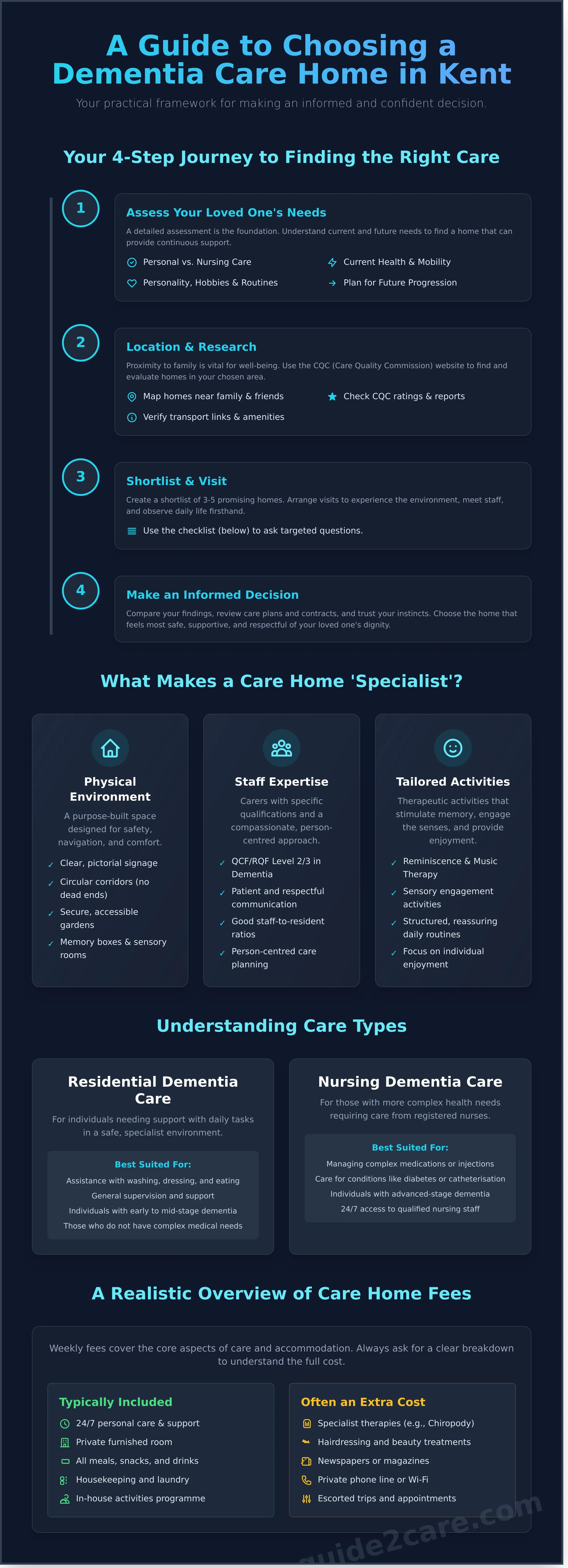
The key differences in specialist care focus on three main areas: the physical environment, staff expertise, and the structure of daily life. These elements work together to create a supportive setting that prioritises safety, dignity, and well-being.
The Physical Environment: Safety and Navigation
A purpose-built environment is crucial for safety and reducing anxiety. Look for features like clear, pictorial signage and circular corridors that prevent dead ends, which can cause distress. Secure, accessible gardens offer safe outdoor space. Inside, memory boxes outside rooms help with recognition, while sensory rooms provide calm stimulation. Check for non-slip flooring and consistent, good lighting to minimise confusion and the risk of falls.
Staff Training and Approach
The quality of care depends on the staff. Carers should have specific qualifications in dementia care, such as a QCF or RQF Level 2 or 3 in Dementia Care. When you visit, observe how staff interact with residents. Look for patience, respect, and clear, calm communication. It is also important to ask about staff-to-resident ratios, particularly during busy periods like mornings and mealtimes, to ensure consistent support.
Activities and Therapies
Activities in a specialist home are therapeutic. They are designed to stimulate memory, engage the senses, and provide enjoyment. Common examples include:
- Reminiscence therapy: Using old photos or objects to spark conversation.
- Music therapy: Playing familiar songs to evoke positive emotions.
- Sensory activities: Engaging with different textures, scents, and sounds.
A structured daily routine provides predictability, which is reassuring for residents and helps to reduce agitation. All these elements should be part of a person-centred care plan, meaning the care is tailored to the individual’s life history, personality, and preferences. The best dementia care homes in kent will work with you to create a plan that respects your loved one's identity.
A Step-by-Step Guide to Choosing a Care Home in Kent
Finding the right care home requires a structured approach. A logical process simplifies this important decision and ensures all key factors are considered. Follow these steps to methodically search for and select a suitable home for your loved one.
Assessing Your Loved One's Needs
Begin with a detailed assessment. Define the level of support required: is it personal care (assistance with daily tasks) or specialised nursing care? Consider their mobility and any other health conditions. It is also vital to think about the person's character-their hobbies, social preferences, and daily routines. Dementia is a progressive condition, so planning for future needs is essential. Understanding the stages of dementia, as detailed in the UK government dementia guidance, will help you select a home that can adapt as your loved one's requirements change.
Location: Staying Connected in Kent
Proximity to family and friends is a critical factor when searching for dementia care homes in Kent. A convenient location makes regular visits easier, which is vital for your loved one's well-being and your peace of mind.
- Map potential homes: Check their distance from key family members across the county.
- Assess transport links: Consider access to major roads and public transport, especially in hubs like Maidstone, Canterbury, or Tunbridge Wells.
- Check local services: Ensure the home is close to a GP surgery, pharmacy, and other local amenities.
For family members travelling from further afield, ensuring reliable transport from London airports like Gatwick or Heathrow is an important consideration. For group travel, a service like EC Minibus can simplify the journey for the whole family.
If you need a dedicated car service for these journeys, you can explore Airport Transfers to ensure a smooth and comfortable trip.
Understanding CQC Ratings
The Care Quality Commission (CQC) is the independent regulator for health and social care in England. Every care home is inspected and rated. You can find the latest report for any home on the CQC website. Look beyond the overall rating (Outstanding, Good, Requires Improvement, or Inadequate) and examine the five key areas:
- Safe: Are residents protected from abuse and harm?
- Effective: Does the care and support achieve good outcomes?
- Caring: Do staff treat residents with compassion and respect?
- Responsive: Are services organised to meet residents' individual needs?
- Well-led: Does the leadership promote high-quality, person-centred care?
Use this information to create a shortlist of potential homes. The final step is to visit your preferred options, armed with a checklist of questions about their approach to dementia care, staff training, and daily life.
Types of Dementia Care Homes in Kent
Selecting the right care home depends entirely on the specific needs of the individual. The level of support required will determine whether a residential or nursing environment is more appropriate. Understanding this distinction is the first step in your search for suitable dementia care homes in Kent. The NHS guide to dementia care and support offers detailed information on assessing care needs and navigating the available services.
Most homes also offer short-term or respite options, providing flexibility for families and caregivers. Below, we define the primary types of long-term dementia care available.
Residential Dementia Care
Residential care is for individuals who can no longer live safely at home but do not have complex medical needs requiring a qualified nurse. The focus is on providing a secure, supportive environment with assistance for daily living. This is the most common type of dementia care home.
- Personal Care: Support with washing, dressing, and mobility.
- Medication Management: Trained staff ensure medication is taken correctly and on time.
- Daily Living: All meals are provided, along with social activities and housekeeping.
Nursing Dementia Care
A dementia nursing home is for individuals who have significant healthcare needs in addition to their dementia. These homes are equipped to manage complex medical conditions and have a qualified nurse on-site 24 hours a day, seven days a week. This higher level of care is essential for residents who require regular medical intervention.
- 24/7 Nursing Staff: A registered nurse is always available to manage medical care.
- Clinical Tasks: Includes wound dressing, administering injections, and catheter or stoma care.
- Complex Conditions: Suited for individuals with conditions like advanced diabetes, Parkinson's disease, or post-stroke needs.
Respite and Short-Term Care
Respite care provides a planned, temporary stay in a care home. It is designed to give primary caregivers a much-needed break or to provide extra support after a hospital stay. A short-term stay can also serve as a trial period, allowing a potential resident to experience the home's environment before making a long-term commitment. To arrange this, contact local homes directly to check for respite availability.
Many homes in Kent are dual-registered to provide both residential and nursing care. This offers a valuable 'continuum of care', allowing residents to remain in a familiar setting even if their health needs change over time.
Navigating the Costs of Dementia Care in Kent
Understanding the financial commitment is a vital part of choosing between the different dementia care homes in Kent. Fees can vary significantly, so it is essential to have a clear picture of the costs involved and how they will be funded before making a decision.
Average Costs in Kent
In Kent, the average weekly cost for residential dementia care typically ranges from £1,000 to £1,500. For dementia nursing care, which involves registered nurses and more complex medical support, fees are higher, often between £1,200 and £1,800 per week. These costs are influenced by the home's location, the quality of its facilities, and the precise level of care an individual needs. Be aware that fees are usually reviewed annually and are likely to increase over time.
What's Included in the Fee?
Always request a detailed breakdown of costs from any potential care home to understand exactly what is covered. This helps avoid unexpected expenses later on.
Standard inclusions typically cover:
- Accommodation (a private or shared room)
- All meals, drinks, and snacks
- 24-hour personal care and support from trained staff
- Utility bills such as heating, lighting, and water
- Basic laundry services
Potential extra costs often include:
- Hairdressing and beauty treatments
- Chiropody
- Newspapers and magazines
- Private phone lines or premium TV packages
- Escorted appointments or social outings
Funding Your Care
There are three primary routes for funding care. If your capital and assets are above the government threshold (£23,250 in England), you will be expected to pay for your own care (self-funding). If your assets fall below this threshold, Kent County Council will conduct a needs assessment and a financial assessment to determine if you are eligible for local authority funding. In cases where an individual has a "primary health need," they may be eligible for NHS Continuing Healthcare (CHC), which is fully funded by the NHS. For more detailed information on care funding options, explore the resources at guide2care.com.
Your Checklist for Visiting Dementia Care Homes
A brochure or website provides a useful overview, but an in-person visit is essential to make an informed decision. The atmosphere, staff interactions, and overall environment can only be assessed by being there. This checklist will help you evaluate potential dementia care homes in Kent thoroughly and consistently.
Pay close attention to your initial impressions. A welcoming, calm, and respectful environment is a positive indicator. Trust your instincts; if a home does not feel right, it is important to acknowledge that feeling.
Questions for the Care Home Manager
Prepare a list of specific questions to ensure you cover all essential points. A professional manager will welcome your diligence and provide clear answers. Key areas to discuss include:
- Care Planning: How do you assess a new resident's needs and create a personalised care plan? How often is it reviewed?
- Staffing: What is your staff-to-resident ratio? What is the staff turnover rate, and what dementia-specific training do they receive?
- Behaviour Management: How do you support residents who may exhibit challenging behaviours associated with their dementia?
- Communication: What is your policy on family visits? How do you keep families informed about their loved one's well-being?
When discussing the home's strategies for well-being, you might also want to ask about their policies on complementary wellness supplements. Some families explore options to help manage agitation or support sleep, and resources like the CBD Health Collection can provide insight into products being used in this area. Knowing the home's stance on these matters is an important part of holistic care planning.
What to Observe During Your Visit
Look beyond the conversation with the manager and observe the daily life of the home. Your observations provide unfiltered insight into the quality of care provided.
- Residents: Do residents appear clean, comfortable, and well-cared-for? Are they engaged in activities or interacting with others? Observe if staff treat them with dignity and respect.
- Environment: Does the home smell clean and fresh? Is it tidy, well-maintained, and safe? Check the condition of communal areas, individual rooms, and outdoor spaces or gardens.
- Mealtimes: If possible, observe a mealtime. Does the food look and smell appetising? Is the dining area a pleasant social space? Note if residents who need assistance with eating receive it patiently.
Next Steps: Making Your Decision
After visiting several homes, take time to process your findings. Discuss your observations with family members to get a balanced perspective. Create a list of pros and cons for each of your shortlisted options to compare them directly. If you are still undecided about a preferred home, consider a second, unannounced visit at a different time of day to see a more typical routine. When you are ready, you can move forward with confidence.
Start your search for dementia care homes in Kent today.
Your Next Step: Finding the Right Dementia Care in Kent
Choosing the right care home is a significant undertaking, but you are now equipped with the necessary information to make a confident decision. This guide has outlined what specialist dementia care entails, how to assess homes with a detailed checklist, and the key steps for navigating funding and costs. The priority is finding a secure, person-centred environment that truly supports your loved one.
With this knowledge, you can begin your search effectively. The next step is to explore the available dementia care homes in Kent and identify a shortlist that meets your criteria. Our comprehensive directory is designed to make this process straightforward and efficient.
We provide a simple, clear way to find the care you need, with complete listings across Kent and free access to the latest CQC inspection reports. Take control of your search with a reliable and practical tool.
Use our directory to find and compare CQC-rated dementia care homes in Kent.
Frequently Asked Questions
What is the difference between a care home that is 'dementia-friendly' and a specialist dementia care home?
A 'dementia-friendly' care home has made adaptations to support residents with dementia. This includes clear signage, dementia-aware staff, and safe environments. A specialist dementia care home provides a higher level of dedicated care. Staff have advanced, specific training in dementia care, and the entire facility, including sensory gardens and reminiscence rooms, is purpose-built to manage complex symptoms and behaviours associated with the condition. The choice depends on the individual's specific needs.
How do care homes in Kent support families and keep them involved in their loved one's care?
Care homes actively involve families through regular communication and collaborative care planning. Most homes schedule frequent care plan reviews with family input and maintain an open-door policy for visits. Many also use digital platforms or regular newsletters to share updates on activities and resident well-being. Appointed key workers often act as a direct point of contact for families, ensuring they remain an integral part of their loved one's life and care journey.
Can a resident bring their own furniture and personal belongings to a care home?
Yes, most care homes encourage residents to bring personal belongings to make their room feel familiar and comfortable. This can include small items of furniture like an armchair or a chest of drawers, as well as photographs, ornaments, and other keepsakes. It is always best to confirm with the care home manager beforehand to check their specific policy and to ensure the items will fit safely within the room's dimensions and meet fire safety regulations.
What happens if my loved one's dementia progresses and they need a higher level of care?
If a resident's needs change, the care home will conduct a formal reassessment. Many dementia care homes in Kent are equipped to handle progressive needs, including providing nursing care, and will update the care plan accordingly. If the home can no longer meet the required level of specialist care, the staff will work with you and social services to manage a smooth transition to a more suitable home, such as one with dedicated nursing dementia facilities.
Are there specific care homes in Kent that specialise in early-onset or specific types of dementia?
Yes. While many homes offer excellent general dementia support, some providers have developed specialised services for less common or specific conditions. When searching for dementia care homes in Kent, it is important to ask directly if they have experience with early-onset dementia, Lewy body dementia, or frontotemporal dementia. Enquire about their specific staff training, care pathways, and environmental adaptations for these conditions to ensure they can provide the right support.
How do I arrange a financial assessment with Kent County Council?
To arrange a financial assessment (or means test), you must first contact the Adult Social Care team at Kent County Council. This can typically be done online through their website or by telephone. The assessment determines if the individual is eligible for local authority funding towards their care home fees. You will need to provide comprehensive details of their income, savings, pensions, and any property or other assets they own. The council will then calculate their contribution.