How to Find Respite Care Services Near You: A UK Guide

Providing care for a loved one is a demanding role, and taking a break is essential for your well-being. Yet, the search for trusted respite care services near me can often feel like another overwhelming task. Concerns about the quality of temporary care, the potential costs, and simply not knowing where to start can prevent many carers from getting the support they need. This guide is built to simplify that process and provide clear, actionable information.
This resource will walk you through the essential steps to find, choose, and fund respite care in the UK. You will learn to identify the different types of services available, from in-home support to short stays in a residential home. We will also explain how to vet local providers and explore potential funding options to manage the cost. Our purpose is to equip you with the knowledge to confidently arrange a break, secure in the knowledge that your loved one is in safe hands.
Key Takeaways
- Understand the different types of respite care available, from in-home support to short stays in a care home, to choose the best option for your needs.
- Discover a clear process for using trusted directories and local authorities to find vetted respite care services near me.
- Explore the typical costs of respite care in the UK and learn about potential funding options available through your local council.
- Use our practical checklist to prepare all necessary information, ensuring a smooth and stress-free first respite experience.
What is Respite Care and Why is it Essential for Carers?
Respite care provides a short-term, temporary break for primary caregivers. It is a planned or emergency support service designed to help you, the carer, rest and recharge. The core definition of respite care centres on sustaining the health and wellbeing of the caregiver, which in turn supports the person receiving care. This support is crucial for preventing caregiver burnout, a state of physical, emotional, and mental exhaustion.
To understand how this service works in practice, watch this short video:
The benefits are twofold. For the caregiver, respite offers a vital opportunity to manage personal affairs, attend appointments, or simply rest, which reduces stress and improves overall wellbeing. For the person receiving care, it can be a positive experience that offers new social interactions and a change of routine. When you search for respite care services near me, you are investing in the health of both yourself and the person you support.
Recognising the Signs You Need a Break
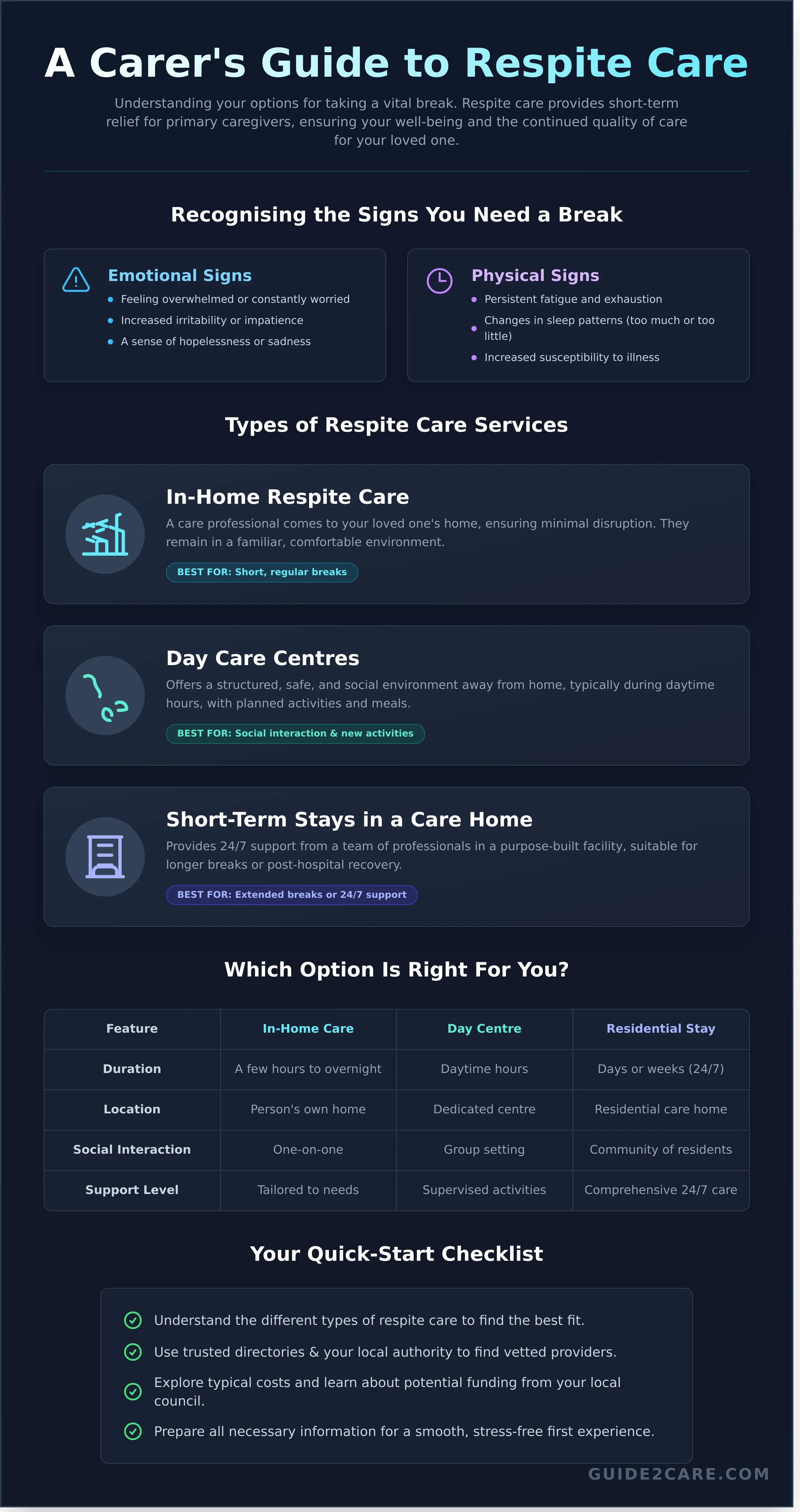
Acknowledging the need for a break is the first step. Caregiver stress can manifest in several ways. Look for these common indicators:
- Emotional signs: Feeling overwhelmed, constant worry, irritability, or a sense of hopelessness.
- Physical signs: Persistent fatigue, changes in sleep patterns, and increased susceptibility to illness.
Seeking respite is a sign of responsible caregiving, not a failure to cope.
The Positive Impact on the Person You Care For
Respite care is not just for the carer. The person you care for can also benefit significantly. A temporary new environment or interaction with a different professional can provide valuable social stimulation and new experiences. Crucially, when you return from a break feeling refreshed and recharged, you are better equipped to provide patient, attentive, and high-quality care.
Types of Respite Care Services Available in the UK
Understanding the different models of respite care is the first step to finding the right support. The best option depends on the specific needs of the person receiving care and the length of the break you require. Whether you need a few hours to run errands or a two-week holiday, there are vetted respite care services near me to match your situation. Many providers also offer specialised support for conditions such as dementia or complex physical disabilities.
In-Home Respite Care
Also known as domiciliary care, this service provides a care professional who comes directly to the person's home. This can be for a few hours, a full day, or for overnight stays. The primary benefit is minimal disruption; the individual remains in a familiar and comfortable environment, maintaining their daily routine. Domiciliary care agencies manage and vet these carers, ensuring they are qualified to provide personal care, companionship, and household help.
Day Care Centres or Day Services
Day care centres offer a structured, safe, and social environment away from home. These services typically operate during standard daytime hours, providing a valuable break for carers who work or have other commitments. Attendees can take part in a range of planned activities, from arts and crafts to light exercise, and are usually provided with meals and refreshments. It is an excellent option for promoting social interaction.
Short-Term Stays in a Care Home
For longer breaks, such as a holiday or during a period of carer illness, a short-term stay in a residential care home is a common solution. This option provides 24-hour support from a team of trained professionals in a purpose-built facility. It is also a suitable choice for individuals who require a period of convalescence after a hospital stay before they are ready to return home. The person receiving care has access to all the home's facilities and social activities.
To help you decide which service is most suitable, consider the primary need:
- For short, regular breaks: In-home care or day centres are ideal.
- For social interaction and new activities: Day centres provide a community setting.
- For extended breaks or 24/7 support: A residential stay is the most appropriate option.
Recognising the importance of taking a break, as highlighted by Carers UK, helps clarify which type of support will be most effective for you and the person you care for. Choose the service that best aligns with your goals for the respite period.
How to Find Vetted Respite Care Providers Near You
Finding the right care provider is the most critical step in arranging respite. This section provides a practical, action-oriented process for locating and thoroughly vetting potential services. Using trusted, official sources is essential to ensure you connect with reliable and safe care professionals. Follow these clear steps to simplify your search for respite care services near me and make a confident, informed decision for your family.
Step 1: Using an Online Directory
A specialised online directory is the most efficient starting point for your search. A comprehensive platform like Guide2Care compiles detailed profiles of vetted providers, saving you significant time and effort. Our directory is designed to help you find exactly what you need. You can filter your search by postcode or town and the specific type of respite care required, whether it's in-home domiciliary care, a short stay in a residential home, or support for complex needs like dementia. This targeted approach quickly narrows your options to the most relevant local services.
Start your search for local respite care services now.
Step 2: Contacting Your Local Council
Your local council is a key authoritative source for information on approved care providers in your area. Contact the adult social services department (or children's services for those under 18) to request a list of registered and contracted respite care agencies. They can also conduct a carer's assessment, which is a formal evaluation of your needs as a caregiver. This assessment determines your eligibility for local authority funding or other support. For carers of disabled children, the government provides official guidance on how to Apply for a short break through your council's services.
Step 3: Checking CQC Ratings and Reviews
In England, all health and social care services are independently regulated by the Care Quality Commission (CQC). Before engaging any provider, you must check their official CQC rating. The CQC inspects services against key standards of safety and quality, rating them as Outstanding, Good, Requires Improvement, or Inadequate. You should only consider providers rated 'Good' or 'Outstanding'. Beyond these official ratings, read recent, independent reviews from other families. Do not hesitate to ask a potential provider directly for testimonials or to speak with a current client. This combination of official inspection and real-world feedback provides a complete picture of the quality of care.
Understanding Costs and Funding for Respite Care in the UK
The cost of respite care is a primary consideration for many families. Understanding the typical pricing and available financial support is the first step towards arranging a break. Costs vary based on the type of care, location, and the level of support required.
Respite care is typically priced in one of three ways:
- Per Hour: For domiciliary care at home, expect to pay between £20 and £30 per hour.
- Per Day: For attendance at a day care centre, costs often range from £50 to £100.
- Per Week: For a short stay in a residential care home, prices typically fall between £800 and £1,500 per week.
When searching for respite care services near me, it is essential to request a clear breakdown of costs from potential providers. Several avenues for financial assistance can help manage these expenses.
Local Authority Funding
Your local council can provide financial support. To access this, you must request a Carer's Assessment. This assessment evaluates your needs as a carer and determines if you are eligible for support, which can include funding for respite breaks. The person you care for can also have a separate needs assessment to determine their eligibility for council-funded care services.
Direct Payments and Personal Budgets
If the council agrees to fund your respite care, they may offer you Direct Payments. These are funds paid directly to you to arrange and pay for your own care. This gives you greater control and flexibility to choose a provider that meets your specific requirements. Many carers use Direct Payments to fund the exact type of break they need.
Other Financial Support
If you are not eligible for council funding, there are other options. Charitable organisations like Carers Trust or Turn2us may offer grants for carers who need a break. The alternative is to self-fund your care. Additionally, ensure you are receiving all eligible benefits, such as Carer's Allowance, which provides a regular income if you care for someone for at least 35 hours a week.
Preparing for Your First Respite Care Experience
Effective preparation is the key to a successful respite period. It ensures a smooth transition for your loved one and allows you to take a genuine, restorative break. When you arrange for professional respite care services near me, clear communication from the start helps build a foundation of trust and high-quality support. Use this practical framework to prepare for a positive experience for everyone involved.
Information to Share with the Provider
Provide your chosen respite carer with comprehensive information to enable them to deliver safe, personalised care. Create a simple document or a dedicated "care folder" that contains essential details. No piece of information is too small.
- Daily Routines: Clearly outline meal times, bathing schedules, naptimes, and any regular activities like a daily walk or watching a specific TV programme.
- Medical Details: Provide a complete list of medications with dosages and administration times. Include the GP's name and surgery contact number, along with details of any other involved healthcare professionals.
- Dietary Needs: Specify any food allergies, intolerances, or preferences. Note what they enjoy eating and drinking, and any foods they dislike or that cause issues.
- Emergency Contacts: List at least two contacts, including their relationship to the person and their current phone numbers, in order of priority.
- Personal Preferences: Help the carer build rapport by sharing information about your loved one's personality, hobbies, favourite conversation topics, and anything that might cause them distress.
This level of detailed coordination also highlights the administrative pressures on healthcare professionals. To manage patient communication and appointments efficiently, many practices rely on support from specialised services like ClicFone Télésecrétariat.
Preparing Your Loved One
Discuss the respite arrangement in a positive and reassuring way. You might frame the carer as a "helper" or "a friend coming to visit" to reduce anxiety. If possible, arrange a brief meeting with the in-home carer or a visit to the day centre beforehand. For stays in a residential home, pack familiar items like a favourite blanket, photographs, or a familiar mug to create a comforting and recognisable environment.
Making the Most of Your Break
This break is essential for your own well-being. Plan to do things you enjoy, whether that is meeting friends, pursuing a hobby, or simply resting. It is common to feel guilt, but remember that recharging enables you to be a better caregiver. For peace of mind, agree on a communication plan with the provider, such as a single daily text update. This provides reassurance without constant interruption, allowing you to relax fully.
If a truly restorative holiday is what you need, you can discover Crestwell Travel Services to help plan a stress-free cruise or all-inclusive package.
For a more exclusive, all-inclusive escape, luxury concierge services like GAAM Ibiza can arrange a completely bespoke holiday, ensuring a truly restorative experience.
Whether you're planning a full holiday or just dreaming of one, travel blogs like tripaholics.co.uk offer photos and inspiration for your well-deserved time off.
Find The Care You Need. Explore Guide2Care to find and compare providers.
Find The Care You Need: Your Next Step
Securing the right respite care is a vital step for maintaining your wellbeing as a carer. As we have covered, there are various options available across the UK, from domiciliary support in your own home to short stays in a residential setting. Understanding these types, exploring funding avenues, and knowing how to vet providers are the key components of making an informed choice. The process of finding vetted respite care services near me can feel complex, but the right tools make it straightforward.
To begin your search, use our free directory to find trusted respite care services near you. Our comprehensive, UK-wide listings allow you to check official CQC ratings and access helpful resources, empowering you to choose the right care with confidence.
A well-deserved break is within reach. Start your search today to find the support you and your loved one need.
Frequently Asked Questions
How much does respite care typically cost per day in the UK?
The cost of respite care varies depending on the type of care and location. Residential respite in a care home typically costs between £100 and £200 per day. This fee usually includes accommodation, meals, and personal care. For respite care at home (domiciliary care), costs are calculated hourly, often ranging from £20 to £30 per hour. Always request a clear breakdown of costs from the provider to understand what is included before booking.
Can I get emergency respite care at short notice?
Yes, many providers offer emergency or short-notice respite care, sometimes called crisis care. This service is designed for situations where the primary carer suddenly becomes unavailable. Availability depends on the provider's capacity at that moment. It is advisable to contact local agencies directly to check for immediate openings. Using a directory can help you quickly find providers in your area who may be able to assist with an urgent request for care.
How long can a respite care break last?
Respite care breaks are flexible and can be arranged for various durations to suit your needs. A break can be as short as a few hours, a full day, or an overnight stay. It can also extend to a week, a fortnight, or even several weeks. While privately funded care offers maximum flexibility, the duration may be subject to specific limits if the break is funded by your local authority following a carer's assessment.
Is respite care available for people with advanced dementia?
Yes, respite care is available for individuals with advanced dementia. It is essential to choose a provider with specialist experience in dementia care. These services have staff trained to manage complex needs, including memory loss, communication difficulties, and changes in behaviour. Look for care homes with dedicated dementia units or home care agencies whose carers hold specific qualifications in dementia support to ensure the person receives safe and appropriate care.
What should I look for when choosing a respite care agency?
When you look for respite care services near me, prioritise providers with a strong regulatory record. Check their latest Care Quality Commission (CQC) rating in England, or the equivalent regulator in Scotland, Wales, or Northern Ireland. Confirm that their staff are trained to handle the specific health needs of the person requiring care. Also, review their policies, read testimonials from other families, and ensure you receive a clear contract outlining all costs and services.
Does the NHS provide funding for respite care?
The NHS may provide funding in specific circumstances through NHS Continuing Healthcare (CHC). This is for individuals whose primary need is a health need, as determined by a detailed assessment. For most, funding is accessed via a social services carer's assessment from their local authority, which is means-tested. This assessment determines the carer's eligibility for support, which can include funding for respite breaks to help them continue in their caring role.