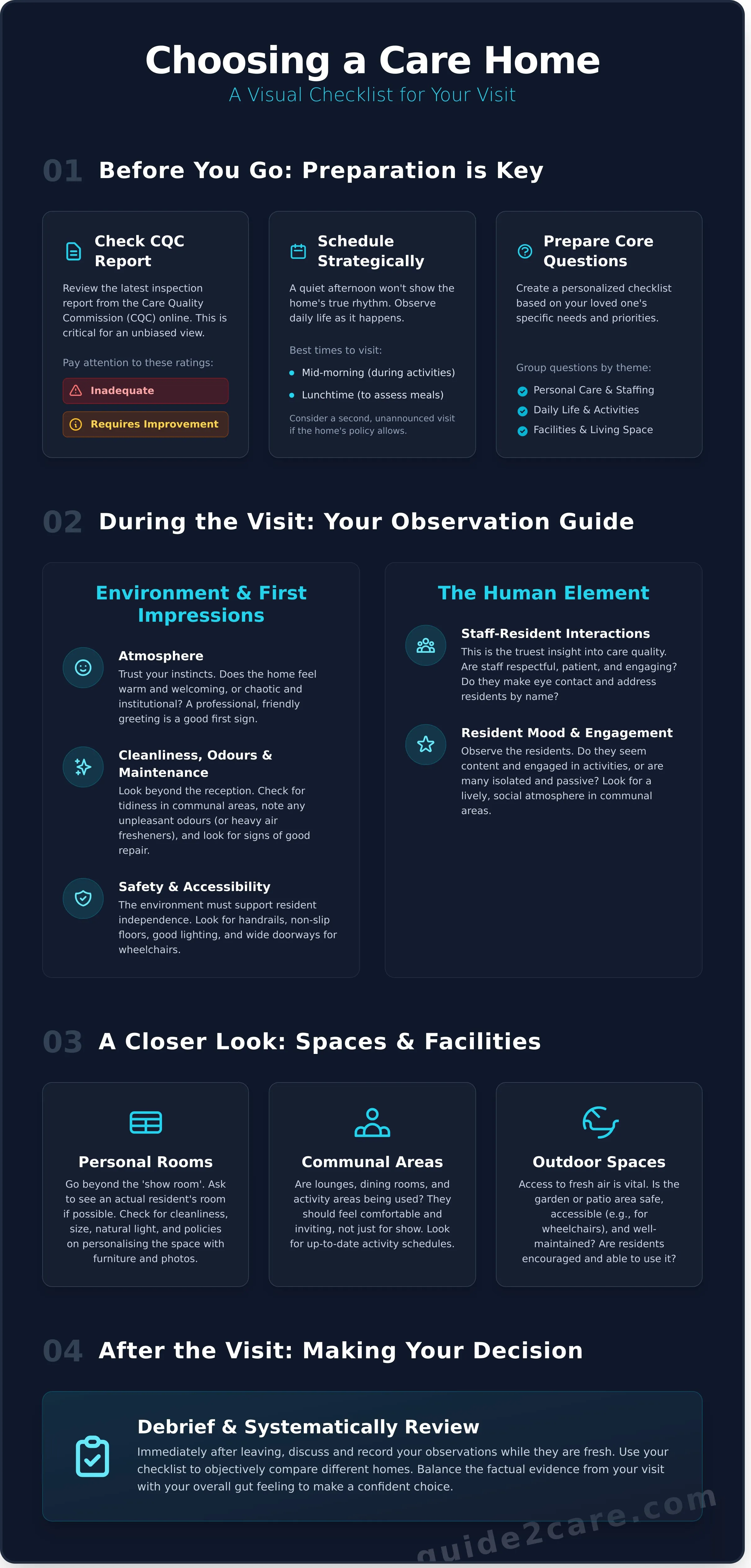
What to Look For When Visiting a Care Home: A Comprehensive Checklist
Visiting a potential care home for a loved one is a significant step. The process can feel complex, making it difficult to know precisely what to look for when visiting a care home. Beyond the initial tour and the polished brochure, how can you be certain you are assessing the factors that truly matter for daily life and long-term wellbeing? It is easy to miss critical details or feel unsure how to objectively compare one home against another.
This guide provides the structure you need. We have developed a comprehensive checklist to help you observe key areas, ask targeted questions, and confidently evaluate each facility. It is designed to move you beyond the first impression and focus on the details that define quality care. Use this tool on every visit to build a clear picture, identify potential red flags, and make an informed choice with peace of mind. Find the care you need.
Key Takeaways
- Effective assessment starts before you arrive. Prepare specific questions and observation points for a structured visit.
- Observe staff-resident interactions closely, as this provides the truest insight into the home's atmosphere and quality of care.
- Go beyond the designated 'show room'. Our guide details what to look for when visiting a care home to assess its day-to-day reality.
- Systematically review your observations after the visit to process your findings and make a confident, objective choice.
Before You Go: Preparing for Your Care Home Visit
An effective visit requires careful preparation. A care home’s brochure presents an idealised version; your goal is to understand the daily reality for its residents. Proper planning ensures you know exactly what to look for when visiting a care home. For a foundational comprehensive overview of nursing homes and their services, established resources are useful, but nothing replaces direct observation. Always take a notebook or use a digital checklist to record your findings accurately.
For specific guidance on interacting with a loved one who may have dementia during this process, watch this video:
Schedule Your Visit Strategically
Arrange your visit for a time when the home is active, such as mid-morning or during lunch. This allows you to observe resident activities, meal quality, and the nature of staff interactions. A quiet afternoon may not provide a complete picture. Ask the manager if a follow-up visit at a different time, like a weekend or evening, is possible. While a scheduled tour is essential, some families also find an unannounced visit helpful to see the home in a less prepared state, though you should check the home's visiting policy first.
Visiting several care homes means spending time on the road and often leaving your car in unfamiliar car parks. Ensuring your vehicle is protected can remove one source of stress from this important process. For those wanting to upgrade their car's security, you can discover Safe & Sound Mobile.
Do Your Homework: Check the CQC Report
Before any visit, review the home’s latest inspection report from the Care Quality Commission (CQC). The CQC is the independent regulator of health and social care in England. You can find reports for free on the CQC website. Note any areas rated as 'Requires Improvement' or 'Inadequate'. Use these findings to form specific, evidence-based questions for the home manager. For example, if the report raised concerns about staffing levels, you can ask what changes have been implemented since the inspection.
Prepare Your Core Questions and Priorities
Create a shortlist of essential requirements for your loved one. This list becomes your personal guide to what to look for when visiting a care home, tailored to specific needs. If possible, involve your loved one in creating this list. Group your questions into logical themes:
- Personal Care: Staffing ratios, experience with specific conditions.
- Daily Life: Activities schedule, meal options, social environment.
- Facilities: Room personalisation, accessibility, outdoor space.
If you are visiting with family, decide beforehand who will ask which questions to ensure all points are covered efficiently.
Organizing these visits and compiling the necessary research can be a full-time job in itself. For families needing dedicated support to manage this complex process, premium providers like Elvit Concierge offer lifestyle management services that can handle the logistical burden, from shortlisting homes to scheduling tours, allowing you to focus on the personal aspect of the choice.
First Impressions: Assessing the Environment and Atmosphere
When you first enter a care home, your immediate impression is a valuable indicator of the quality of life within. The overall 'feel' of a place can reveal a great deal about resident well-being and staff morale. It is crucial to use all your senses to build a complete picture. Pay attention to how you are greeted upon arrival; a warm, professional welcome from reception staff sets a positive tone for the entire visit.
This initial assessment is a key part of what to look for when visiting a care home. Trust your instincts and note whether the overall mood feels calm and homely, or chaotic and institutional.
Cleanliness, Odours, and Maintenance
A well-cared-for environment suggests a high level of attention to detail in all aspects of care. Look beyond the reception area to assess the entire building.
- General Tidiness: Check that communal areas, lounges, and corridors are clean, tidy, and free from clutter.
- Odours: Note any persistent or unpleasant smells. While some clinical odours may be present, strong smells of urine or stale air are a concern. Equally, an overpowering use of air fresheners can be used to mask underlying issues.
- State of Repair: Look at the condition of the building. Are walls free from scuffs, carpets clean and unworn, and furnishings in good condition? A well-maintained building shows pride and investment in the residents' home.
High standards of cleanliness are often maintained through partnerships with specialised commercial cleaning firms. For example, professional services like That's Cleaning are equipped to handle the specific hygiene requirements of care environments, contributing to the overall quality and safety of the facility.
Similarly, ensuring the home is well-stocked with everything from quality furnishings to daily supplies requires sophisticated logistics. The best care homes run like clockwork behind the scenes, with reliable supply chains ensuring that residents' needs are always met without interruption. For those interested in the complexities of business operations, you can learn more about Gateway Cargo, a company that provides these essential freight forwarding solutions.
Safety and Accessibility Features
The physical safety and accessibility of the home are fundamental. The design should support residents' independence and mobility while minimising risks.
- Mobility Aids: Look for handrails in corridors and bathrooms, non-slip flooring in wet areas, and good, even lighting throughout the building.
- Accessibility: Are doorways and hallways wide enough for wheelchairs or walking frames? Check if bathrooms are equipped with features like walk-in showers and grab rails.
- Safety Measures: Note the location of call bells in bedrooms and bathrooms to ensure they are within easy reach. Fire escape routes should be clearly marked and unobstructed.
- Outdoor Space: If there is a garden or patio, check that it is secure, well-maintained, and safely accessible for residents to enjoy.
These visible safety measures are just one component of a comprehensive health and safety management system. Behind the scenes, reputable care homes invest in ongoing staff training, risk assessments, and compliance audits to ensure a safe environment. This professional oversight, often guided by expert firms like Safehouse Health and Safety Consultants Ltd, is crucial for meeting CQC standards and providing genuine peace of mind.
The General Atmosphere and Welcome
The atmosphere is created by the people who live and work there. A positive environment is one of the most important things what to look for when visiting a care home. Observe the daily life around you.
Creating a truly positive atmosphere is about more than just facilities; it's about fostering a sense of well-being and contentment, a philosophy deeply embedded in cultures known for their high quality of life. For a glimpse into the serene and beautiful environments that inspire this approach, you can discover The Nordic Travel.
- The 'Feel': Does the home feel warm, bright, and inviting, or does it feel cold and clinical?
- The Sounds: Listen to the background noise. Can you hear conversation, laughter, or music? Or is it unnervingly quiet or filled with loud, distressing sounds?
- Community Information: Look at notice boards. Are they up-to-date with information about activities, events, and meal menus? This shows an engaged community.
- Other People: Observe other visitors and residents. Do they appear relaxed, happy, and comfortable in their surroundings?
The Human Element: Observing Staff and Residents
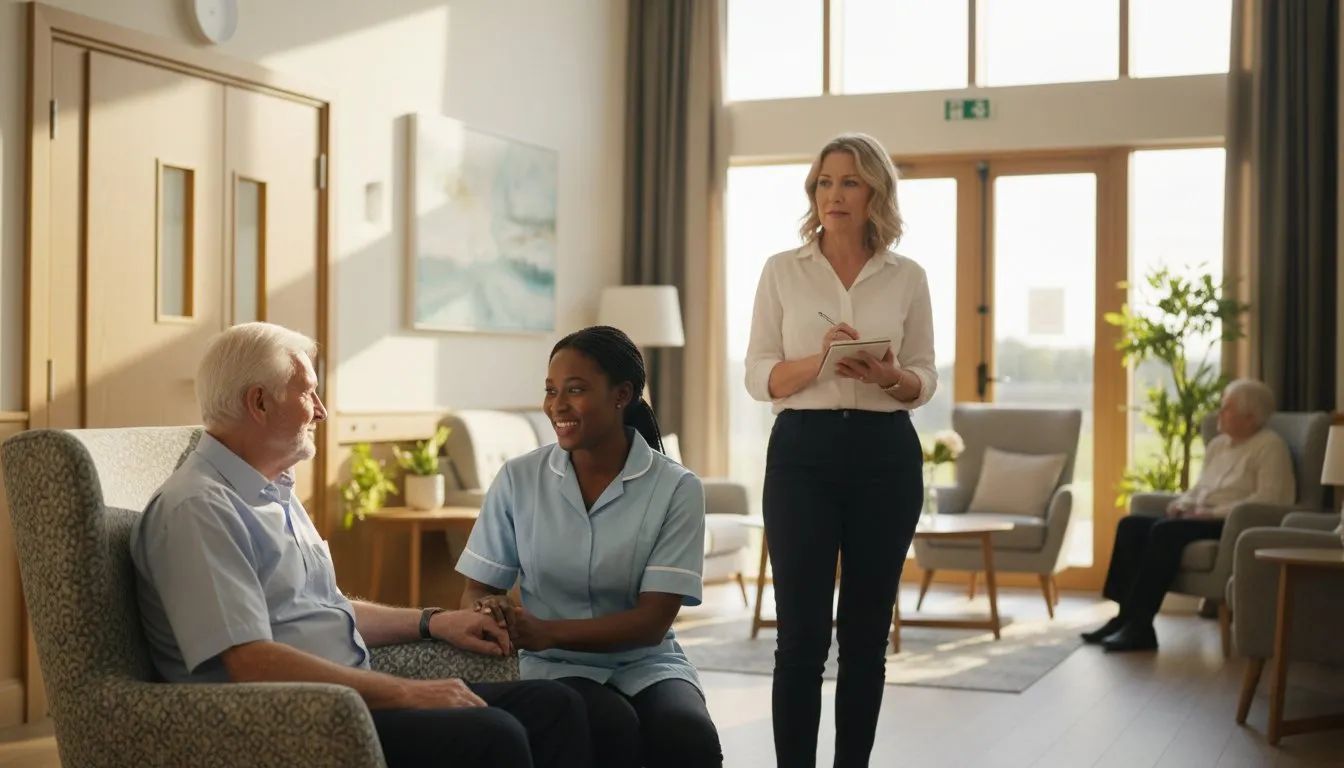
A care home’s facilities are important, but the people within it define the quality of daily life. This is the most critical part of your assessment. Pay close attention to the atmosphere and the interactions between staff and residents. A happy, engaged, and respectful community is a strong positive signal. The human element is the most important aspect of what to look for when visiting a care home.
Look beyond the guided tour. Spend time in a communal area, such as a lounge, to observe the day-to-day reality of the home when staff do not think they are being watched.
Staff Interactions and Attitude
The attitude of the care team directly impacts resident well-being. Observe their communication style and general demeanour. A positive and professional team is essential for high-quality care.
- Respectful Communication: Do staff make eye contact, smile, and speak to residents in a patient and friendly manner? Do they address residents by their preferred name?
- Genuine Engagement: Look for staff stopping to have real conversations with residents, not just performing tasks.
- Handling Requests: How do staff react when a resident asks for help or assistance? Note their tone and responsiveness.
Resident Well-being and Appearance
The general state of the residents provides a clear insight into the standard of personal care provided. Look for signs that residents are comfortable, content, and treated with dignity.
- Personal Care: Do residents appear clean, with well-kept hair and nails? Are they dressed appropriately for the time of day and the temperature?
- Engagement Levels: Are residents active and socialising with each other, or are most sitting alone and disengaged? Look for participation in activities.
- Overall Mood: Assess the general atmosphere. Do residents seem calm and content, or do you notice signs of distress or boredom?
Staffing Levels and Responsiveness
Adequate staffing is crucial for safety and responsive care. Assessing this is a vital part of what to look for when visiting a care home. While you can observe, you should also ask direct questions.
- Visible Presence: Does there appear to be enough staff on duty in communal areas and corridors to meet the residents' needs?
- Staff Demeanour: Do team members seem rushed, stressed, or overworked? Constant rushing can be a sign of understaffing.
- Ask for Ratios: Enquire with the home manager about their staff-to-resident ratios for both daytime and night shifts.
A Closer Look: Inspecting Living Spaces and Facilities
Beyond the initial welcome, the physical environment is a critical part of what to look for when visiting a care home. This is your chance to assess the practical, day-to-day reality of life inside. Request to see a typical resident's room, not just a designated show room, for an authentic view. As you walk through the building, picture your loved one living there. Consider how the layout, facilities, and overall atmosphere match their specific needs.
Resident Rooms and Personalisation
A resident's room is their private sanctuary. It should be comfortable, safe, and adaptable. Check that the space supports both independence and personal identity.
- Size and Storage: Is the room large enough, with adequate wardrobe and storage space? Is there good natural light?
- En-suite Bathroom: Inspect the bathroom for cleanliness, safety features like grab rails, and accessibility for mobility aids.
- Personal Touches: Ask if residents can bring personal furniture and decorations. Look for evidence of this personalisation in other rooms.
The quality of the bed itself is paramount, as it directly impacts comfort, sleep quality, and health. While inspecting the room, pay close attention to the mattress and bed frame. High-quality care homes often partner with specialist suppliers to provide residents with comfortable and supportive beds. For an idea of the standards to look for, specialist suppliers like Bennetts Bedrooms demonstrate the type of quality furnishings that contribute to resident well-being.
For many, personal touches include photos of family and beloved pets. If a resident has had to leave a dog behind, bringing a familiar item can be a source of great comfort. A special handmade tweed dog collar UK, for example, can serve as a beautiful and tangible connection to a cherished companion.
Communal Areas: Lounges and Dining Rooms
Shared spaces are central to social life in the home. These areas should be welcoming, comfortable, and designed to accommodate everyone's needs.
- Lounge Options: Are there multiple lounges? A choice between a quiet area for reading and a more social space is ideal.
- Furniture and Layout: Is the furniture clean, comfortable, and arranged to encourage conversation? Ensure there are clear, wide pathways for walkers or wheelchairs.
- Dining Experience: Observe the dining room. Is it a pleasant, sociable space where residents can enjoy their meals together?
Activities, Outdoor Space, and Other Amenities
A good care home provides more than just accommodation; it supports a fulfilling and active lifestyle. Examine the facilities available for hobbies and well-being.
- Activities Programme: Ask for the weekly activities schedule. Check if it offers a variety of options suitable for different interests and abilities.
- Outdoor Access: Is there a pleasant and safely accessible garden or patio? Access to fresh air is vital.
- Other Facilities: Look for amenities that improve quality of life, such as a hair salon, a small library, or a private room for family visits.
A well-designed garden significantly enhances the quality of life for residents, providing a peaceful retreat and a space for gentle activity. The best care homes often invest in professional services to create and maintain these areas; for instance, expert landscapers west london are frequently contracted to ensure gardens are both beautiful and safe for residents.
A particularly thoughtful amenity is a designated play corner for young visitors. Creating a welcoming space for grandchildren can make family visits more frequent and enjoyable for everyone. For an idea of the types of safe, engaging equipment used in these spaces, specialist suppliers like SoftplayToys4kids offer a wide selection.
For older grandchildren, a comfortable chair for gaming or using a tablet can make the environment feel more like home. The detailed buying guides used to select high-quality ergonomic seating are surprisingly complex, but if you want to see examples of what to look for in a supportive chair, you can [visit TopGamingChair.com].
A well-furnished patio with comfortable seating can significantly enhance residents' enjoyment of these outdoor spaces. For an idea of the high-quality, durable sets that make a garden welcoming, you can visit Rengard.
Key Questions to Ask the Care Home Manager
Your conversation with the care home manager is a critical part of your visit. A professional manager will welcome your questions and provide transparent answers. This is your opportunity to understand the home’s care philosophy, clarify policies, and gauge the manager's approach to resident well-being. Knowing what to look for when visiting a care home involves asking direct questions about costs, contracts, and potential 'what if' scenarios.
Use this discussion to build a clear picture of how the home operates. Prepare your questions in advance to ensure you cover all essential areas.
Care and Healthcare
Clarify how the home manages the health of its residents. Key questions include:
- How are individual care plans created, and how often are they reviewed with the resident and their family?
- What is the procedure for managing and administering medication safely?
- How are GP visits arranged? Can a new resident keep their existing GP if they are local?
- What experience do your staff have in managing specific conditions like dementia, diabetes, or mobility challenges?
Daily Life and Routines
Understand the structure and flexibility of a typical day for residents.
- What are the mealtime arrangements and can you provide a sample menu?
- How do you cater for specific dietary requirements, allergies, and personal preferences?
- What is your policy on visiting hours? Are families encouraged to be actively involved in the home’s community?
- How flexible are daily routines, such as waking up and going to bed?
- What are the policies on personal electronic devices? Items like tablets or headphones can be important for a resident's entertainment and connection to family. If you need help choosing such technology, you can check out SuggestMeTech for helpful information.
Staff and Policies
The quality of care is directly linked to the staff and the home's operational standards.
- What qualifications and ongoing training do your care staff receive?
- What is the home's staff turnover rate? A low rate often indicates a happy and stable team.
- How does the home communicate updates or concerns about a resident's health to their family?
- Can we see a copy of the contract and a full breakdown of all fees, including potential extra costs?
End-of-Life Care
It is important to ask about the home's approach to palliative care, even if it is not an immediate need.
- Does the home provide palliative and end-of-life care, or would a resident need to move?
- What is your approach to advanced care planning and respecting residents' wishes?
- How do you support both the resident and their family during this difficult time?
Taking the time to ask these questions provides the detailed information you need to make a confident decision. Find and compare care homes in your area.
After the Visit: Debriefing and Making Your Decision
The evaluation process does not end when you leave the care home. Making the right decision requires careful reflection. It is vital to process your observations while they are fresh in your mind and compare them against your initial list of priorities. Avoid making a snap judgement; allow yourself time to think clearly and objectively about all you have seen.
Review Your Notes and Compare Homes
Immediately after each visit, write down your thoughts and feelings. If you attended with family or friends, discuss your impressions to see if they align. A practical way to organise your feedback is to create a pros and cons list for each home. For a more structured comparison, use a simple scoring system. Rate each facility on the key criteria from your checklist, helping you to objectively compare the different aspects of what to look for when visiting a care home.
Trust Your Instincts
Beyond the facts and figures, consider how the home made you feel. Could you genuinely picture your loved one living there happily? A welcoming atmosphere and positive interactions between staff and residents are crucial. If you have any nagging doubts or an uneasy feeling, do not ignore them. A gut feeling is often your subconscious processing subtle cues you observed, such as the mood of the residents or the tone of staff conversations.
Plan Your Next Steps
Once you have a shortlist, the final stage of your research begins. A structured approach ensures you make a fully informed choice. Your next steps should include:
- A second visit: Consider an unannounced visit at a different time of day, such as a weekend or during a mealtime, to get a more authentic view of daily life.
- Family discussion: Talk through your findings with your loved one, if possible, and other key family members to ensure everyone is comfortable with the potential choice.
- Contract review: Request a copy of the contract and care agreement. Review it carefully for details on fees, notice periods, and what is included in the cost.
- Funding arrangements: Begin firm discussions about funding. Confirm how the care will be paid for and ensure all financial arrangements are in place.
A methodical debrief is just as important as the visit itself. Taking these steps will give you the confidence that you have explored all the critical factors of what to look for when visiting a care home and can now make the best possible decision for your loved one. For more information on funding care, explore the resources at guide2care.com.
Final Steps to Choosing the Right Care Home
Choosing a care home is a significant decision, and a structured visit is essential for making an informed choice. By preparing beforehand, you can focus on the most important factors: the overall atmosphere, the quality of staff interactions, and the condition of the facilities. This systematic approach to what to look for when visiting a care home ensures you gather all the necessary information to compare your options objectively and find a place that feels right.
Now you are ready to put this knowledge into practice. The next step is to identify and assess potential homes in your desired area. Use our directory to find and compare CQC-rated care homes near you. Our platform provides comprehensive listings across the UK, giving you direct access to the latest CQC inspection reports and clear guidance to simplify your search process.
Armed with this checklist and our resources, you can move forward with confidence, knowing you are making a well-considered decision for your loved one.
Frequently Asked Questions
Should I take my loved one with me on the first visit to a care home?
Consider visiting alone for the first time. This allows you to assess the environment objectively and ask direct questions to staff without causing potential distress. You can then shortlist the most suitable homes. A second visit with your loved one allows them to experience the atmosphere and meet staff and residents, making them part of the final decision. This two-step process is often more efficient and less overwhelming for all involved.
Is it a good idea to visit a care home unannounced?
An unannounced visit can provide a realistic view of daily life and staff interactions. However, the home manager may not be available to answer your specific questions. A good approach is to schedule an official tour first to speak with key staff. You can then follow up with a brief, unannounced visit at a different time of day, such as a weekend or mealtime, to observe the home in a typical state and confirm your initial impressions.
How many care homes should I visit before making a decision?
Aim to visit a shortlist of three to five care homes. This number is manageable and allows for a thorough comparison without becoming overwhelming. Visiting more can lead to confusion. Use online research and CQC reports to create your initial shortlist. Focus your visits on the homes that best match your loved one’s specific care needs, location preferences, and budget. This structured approach ensures an efficient selection process.
What is the most important 'red flag' to watch out for during a visit?
A significant red flag, and a key point on what to look for when visiting a care home, is poor interaction between staff and residents. Observe if staff are respectful and patient, or if they seem rushed and dismissive. Unpleasant odours, a lack of cleanliness, and residents who appear consistently bored or distressed are also serious warning signs. If the atmosphere feels unwelcoming or tense, it is crucial to investigate further or remove the home from your list.
How can I tell if the residents are genuinely happy and well-cared for?
Observe resident engagement and demeanour. Look for signs of social interaction in communal areas. Are residents participating in activities or conversing with each other? Check their personal appearance; do they look clean and well-dressed? Speak to residents if possible and ask about their experiences. A positive, active, and social environment is a strong indicator of good care and resident satisfaction. A quiet or listless atmosphere may be a cause for concern.
What does a CQC rating of 'Requires Improvement' really mean?
A CQC (Care Quality Commission) rating of 'Requires Improvement' means the service is not performing as well as it should. The CQC has identified concerns in one or more key areas, such as safety or leadership. The home is legally required to create an action plan for improvement and will be re-inspected. While not a reason to immediately dismiss a home, you must read the full report to understand the specific issues and ask the manager for their plan.