How to Complain About a Care Home in the UK: A Step-by-Step Guide

When you have concerns about a care home, knowing the correct procedure is essential. The complaints process can seem complex, and it is common to feel unsure of who to contact or whether your issue will be addressed effectively. This guide clarifies the process of how to complain about a care home in the UK. It provides a direct, chronological action plan to ensure your concerns are handled correctly and efficiently. You will learn the specific steps to take, starting with the initial conversation with the care home manager and progressing through to formal bodies like the Care Quality Commission (CQC) and the Ombudsman.
Our objective is to provide you with the information needed to navigate the system with confidence. By following this guide, you can ensure the well-being of the resident is prioritised and that your complaint receives the attention it requires. This article will equip you with the knowledge to seek a resolution effectively and understand your rights throughout the process.
Key Takeaways
- Prepare for your complaint by clearly identifying the specific issues and gathering relevant evidence first.
- Always start by making a formal complaint directly to the care home; this is a required first step in the process.
- Understand the correct process for how to complain about a care home uk by escalating if you are not satisfied with the initial response.
- Learn the different roles of the CQC and the Ombudsman to ensure your complaint is sent to the correct body for resolution.
Before You Complain: Key Preparation Steps
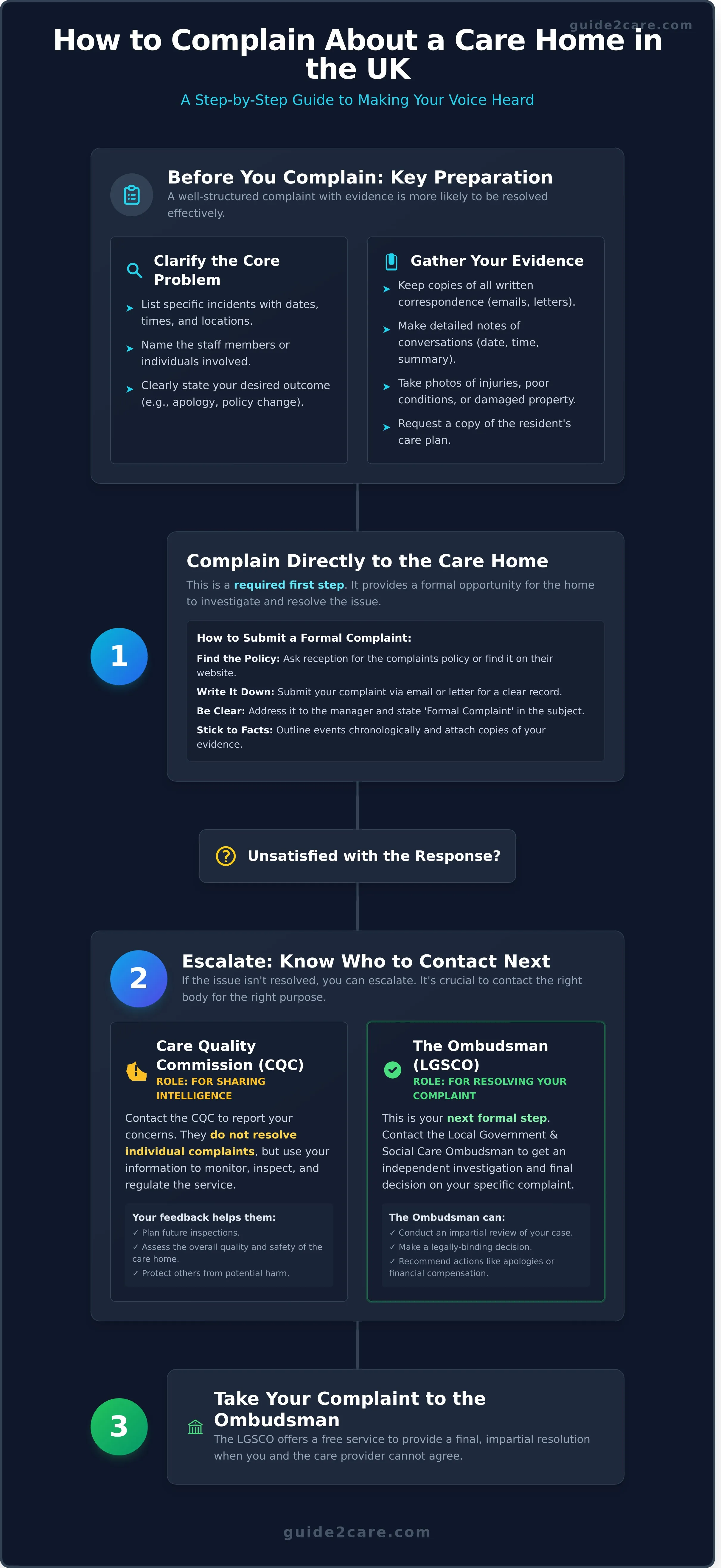
Before you make a formal complaint, it is essential to prepare thoroughly. A well-structured complaint supported by clear evidence is more likely to be resolved effectively. First, understand the difference between a concern, which can often be resolved with a simple conversation, and a formal complaint, which requires a structured process. This guide provides the necessary steps for how to complain about a care home uk to achieve a satisfactory outcome.
To better understand the initial steps, watch this helpful overview:
Knowing your rights is a critical part of the process. Every care home in the UK is required by law to have a clear and accessible complaints procedure. You should request a copy of this document from the care home manager. It will outline the steps they will take, the expected timelines for a response, and who to contact. Understanding this procedure from the start helps you manage your expectations and ensures you follow the correct protocol. This process ultimately provides a pathway to escalate an unresolved issue to the Local Government and Social Care Ombudsman if necessary.
Clarify the Core Problem
To build a strong case, you must be specific about the issues. Vague statements are difficult to investigate. Before you write your complaint, create a detailed record of your concerns. Focus on facts rather than emotions in your notes to present a clear and objective account.
- List all specific incidents, including dates, times, and locations.
- Name the staff members or other individuals involved.
- Clearly state what you believe the desired outcome should be. This could be a formal apology, a change in a specific care practice, or reimbursement for costs incurred.
Gather Your Evidence
Evidence is crucial for substantiating your complaint. Collect any documentation that relates to the issues you are raising. The more factual support you have, the stronger your position will be. Organise this information chronologically to create a clear timeline of events.
- Keep copies of all written correspondence, such as emails and letters.
- Make detailed notes of any phone calls or face-to-face conversations, including the date, time, and a summary of what was discussed.
- Take clear photographs if your complaint relates to the physical environment, injuries, or damaged property.
- Request a copy of the resident’s care plan. This document outlines the agreed level of care and can be used to show where services have fallen short.
Step 1: Complain Directly to the Care Home
The first and most effective step is to raise your concern directly with the care home. This provides the management with a fair opportunity to investigate and resolve the issue promptly. Most problems, from minor oversights to communication issues, can be solved quickly at this stage. Learning how to complain about a care home in the UK starts with this direct approach. Importantly, documenting this initial step is crucial, as it creates a formal record you will need if the issue is not resolved to your satisfaction and you decide to escalate your complaint.
How to Find the Complaints Policy
All UK care providers are legally required to have a clear and accessible complaints procedure. This is a standard monitored by regulatory bodies such as the Care Quality Commission in England. You can request a physical copy of this policy from the care home's reception, or you may find it published on the provider's official website. This document is essential as it will outline the specific steps to follow and the official timescales for their acknowledgement and full response.
Structuring Your Formal Complaint
To ensure your concerns are understood and addressed properly, submit a formal complaint in writing via email or a posted letter. This creates a clear, dated record for both you and the provider. A well-structured complaint is easier to investigate.
- Address your complaint: Direct your correspondence to the registered care home manager by name.
- State your purpose: Begin by clearly stating that this is a 'Formal Complaint' in the subject line or first sentence.
- Present the facts: Outline the events chronologically. Be specific with dates, times, locations, and the names of any staff involved. Stick to the facts and avoid emotional language.
- Provide evidence: Attach copies (not originals) of any supporting evidence, such as photographs, diary entries, or relevant correspondence.
What to Expect After You Complain
Once your formal complaint is submitted, the care home must adhere to the process outlined in its policy. You should expect to receive a prompt acknowledgement, typically within three to five working days, confirming they have received your complaint. The home will then begin an investigation. Following this, you must receive a full written response. This final letter should detail their investigation findings, explain the conclusions they reached, and clearly state what action, if any, they will take to rectify the situation.
Step 2: When and How to Escalate Your Complaint
If you have completed the care home's internal complaints procedure and are not satisfied with the final outcome, it is time to escalate. You should also take this next step if the provider fails to respond to your complaint within the timeframe stated in their official policy. Do not let the matter rest if you feel it is unresolved.
Escalating means taking your complaint to an independent, external organisation for review. This moves the issue beyond the provider and brings in a third party to investigate. The correct body to contact depends on how the resident's care is funded. This is a critical distinction in the process of how to complain about a care home uk and determines your next course of action.
For Council-Funded Residents
When a resident's care is fully or partially funded by their local council, the complaint should be escalated to that same council. Every local authority has a formal process for handling complaints about the services it commissions, including placements in independent care homes.
You will need to contact their Adult Social Services (or Adult Social Care) complaints department. You can find their contact details on the council's website. When you submit your complaint, be sure to include:
- A clear summary of your original complaint.
- All correspondence between you and the care home.
- The care home's final response letter.
- A brief explanation of why you are not satisfied with their response.
The council has a legal duty to investigate and will assess whether the care provided met the required standards.
For Self-Funded Residents
If the resident pays for their care privately, without financial assistance from the council, the escalation path is different. In this situation, you should take your complaint to the Local Government and Social Care Ombudsman (LGSCO).
The LGSCO is an independent and impartial service that investigates complaints about all registered adult social care providers in England. It acts as the final arbiter for unresolved issues. It is important to note that the LGSCO will usually only consider a complaint after you have given the care home a chance to resolve it first. Ensure you have the care home's final written response before you contact them.
Understanding the Role of the Care Quality Commission (CQC)
The Care Quality Commission (CQC) is the independent regulator of all health and social care services in England. Its primary role is to inspect and rate care homes to ensure they meet fundamental standards of quality and safety. It is important to understand that the CQC does not resolve individual complaints. However, sharing your experience with them is a vital part of the overall process.
Your feedback provides crucial intelligence. It helps the CQC monitor services, plan inspections, and protect others from poor care. While not a direct step for personal resolution in the process of how to complain about a care home uk, informing the CQC contributes to a safer care system for everyone.
Why You Should Inform the CQC
Sharing your concerns with the CQC, whether positive or negative, helps them build a comprehensive picture of the care being provided. This information is valuable and can directly influence their regulatory actions.
- Trigger Inspections: A significant concern or a pattern of smaller issues can trigger an unannounced inspection of the care home.
- Provide Evidence: Your feedback can be used as evidence during an existing inspection, helping inspectors focus on specific areas of concern.
- Protect Others: By reporting poor standards, you help prevent others from having the same negative experience, improving the quality of care for all residents.
How to Give Feedback to the CQC
Providing your feedback is a straightforward process and is separate from making a formal complaint to the care home or the Ombudsman. Always remain factual and provide clear, specific examples of the issues you have witnessed.
You can contact the CQC in the following ways:
- Online Form: Use the 'Give feedback on care' form available on the official CQC website. This is the most direct method.
- By Phone: You can call their contact centre to share your experience verbally. Find the current number on their website.
- By Email or Post: These options are also available for those who prefer them.
Remember, this step supports the wider system of regulation. Continue with your formal complaint to the provider and, if necessary, the Ombudsman for a resolution to your specific issue.
Step 3: Taking Your Complaint to the Ombudsman
If you have completed the care home's internal complaints procedure and are still not satisfied with the outcome, you can escalate your issue. The final stage in the process of how to complain about a care home in the UK is to contact the relevant Ombudsman. Their service is free, independent, and impartial. They investigate if a provider has acted incorrectly, given poor service, or failed to follow its own procedures.
You must complete the provider's complaints process before the Ombudsman will consider your case. If your care is funded or arranged by the local council, you may also need to complete their complaints process first.
Which Ombudsman to Contact?
The correct body depends on your location within the UK. Each nation has its own independent service for handling complaints about public and adult social care services.
- England: The Local Government and Social Care Ombudsman (LGSCO).
- Scotland: The Scottish Public Services Ombudsman (SPSO).
- Wales: The Public Services Ombudsman for Wales (PSOW).
- Northern Ireland: The Northern Ireland Public Services Ombudsman (NIPSO).
The Ombudsman's Process
The Ombudsman will first assess if they can and should investigate your complaint. If they accept your case, they will review evidence from you, the care provider, and any other relevant parties. They aim to resolve issues fairly. If they find fault, they may recommend remedies such as a formal apology, changes to policies to prevent future issues, or financial compensation for injustice or hardship caused.
What if the Issue is a Safeguarding Concern?
A safeguarding concern is different from a complaint. If you believe a resident is at immediate risk of abuse or neglect, you must act right away. Do not wait for a complaints process to finish. Contact the adult safeguarding team at the local council immediately. If you believe someone is in urgent danger, call 999. You can and should raise a safeguarding concern at any point, regardless of where you are in the complaints process.
Your Next Steps: Resolving Concerns and Finding Quality Care
Navigating the complaints process requires a structured approach. Remember the key takeaways: document everything thoroughly, complain directly to the care home first, and do not hesitate to escalate to the Ombudsman if your concerns are not resolved. Following this process is the most effective way to address issues. This guide has provided a clear, step-by-step framework for how to complain about a care home uk, ensuring your voice is heard and that care standards are maintained.
Whether resolving a complaint or seeking a new placement, your goal is to secure safe, high-quality care. Making an informed choice is essential. Guide2Care offers a comprehensive UK-wide directory to help you find the right provider. We provide clear, straightforward information on different care types and funding options. Use our practical tools to compare homes and make a decision with confidence. Find the care you need.
Start your search today. Find trusted, CQC-rated care homes in your area and secure the peace of mind you deserve.
Frequently Asked Questions
Can I make a complaint about a care home anonymously?
Yes, you can complain anonymously to the care home, the local council, or the Care Quality Commission (CQC). However, this may limit the investigation. The investigator cannot ask you for more details, and you will not receive a direct response about the outcome. If you have serious safeguarding concerns, the CQC or local authority will still assess the information you provide and take appropriate action based on the evidence available to them.
What if I am worried the care home will treat my relative badly if I complain?
It is illegal for a care home to treat a resident unfavourably because a complaint was made. This is known as victimisation, and it is taken very seriously. You should raise this specific concern with the care home manager when you complain. You can also report this fear to an external body, such as the Care Quality Commission (CQC) or the Local Government and Social Care Ombudsman (LGSCO), for advice and independent support. For those who find the stress of this situation overwhelming, speaking with a therapist for anxiety Hendon or a similar professional in your local area can be a valuable source of support.
How long does the care home complaints process usually take?
Timelines vary depending on the stage of the process. A care home’s own complaints procedure should state a timeframe, often around 28 days for a full response. If you are not satisfied and escalate your complaint to the Local Government and Social Care Ombudsman (LGSCO), the process can take several months to complete. Always check the home’s policy first to understand their stated commitment and the steps involved in their process.
What kind of outcomes can I expect from making a complaint?
When learning how to complain about a care home in the UK, understanding potential outcomes is key. A successful complaint can result in a formal apology, changes to a resident’s care plan, or updated policies for the home. Other outcomes include staff retraining to prevent future issues or a partial refund of care fees if a service was not properly delivered. The goal is to resolve your specific issue and improve the quality of care.
Can I complain on behalf of someone else?
Yes, you can make a complaint on behalf of a relative or friend, especially if they are unable to do so themselves. It is best practice to get their consent before you proceed, if they are able to give it. If the resident lacks the mental capacity to consent, you can still make a complaint in their best interests. The care home's complaints procedure should provide clear guidance on how to act as a representative.
Is there a time limit for making a complaint about a care home?
Yes, it is best to complain as soon as possible. The standard time limit for making a complaint to the care home or the Local Government and Social Care Ombudsman (LGSCO) is 12 months from the date you became aware of the problem. While there can be discretion to investigate older complaints, this is not guaranteed. Acting promptly ensures that all necessary evidence is still available and that the events are clear to everyone involved.