Red Flags to Watch For in a Care Home: A UK Checklist
Choosing a care home for a loved one is a significant responsibility. The process can feel complex, and making the correct choice is vital. To assess a provider effectively, you must understand the key red flags to watch for in a care home. Identifying these warning signs is the first step towards ensuring the safety and wellbeing of your family member.
This guide provides a comprehensive checklist designed for assessing UK care homes. It offers a structured framework to use during your visits, helping you look beyond the surface impressions. We cover critical areas including staff behaviour, resident engagement, cleanliness, and administrative transparency.
Use this practical tool to bring clarity and confidence to your evaluation. This checklist will equip you to systematically compare your options and make an informed decision, helping you find a safe, supportive, and well-managed environment for your loved one.
Key Takeaways
- Assess the home's environment on your first visit; cleanliness, odours, and overall atmosphere provide immediate clues to the quality of management.
- Observe how staff members interact with residents and each other. A stressed or dismissive team is a significant warning sign.
- Evaluate the wellbeing of current residents. Their appearance and level of engagement offer the most authentic evidence of daily life and care quality.
- Understand the management's policies and communication style, as a lack of transparency is one of the key red flags to watch for in a care home.
The First Impression: Environmental and Atmosphere Red Flags
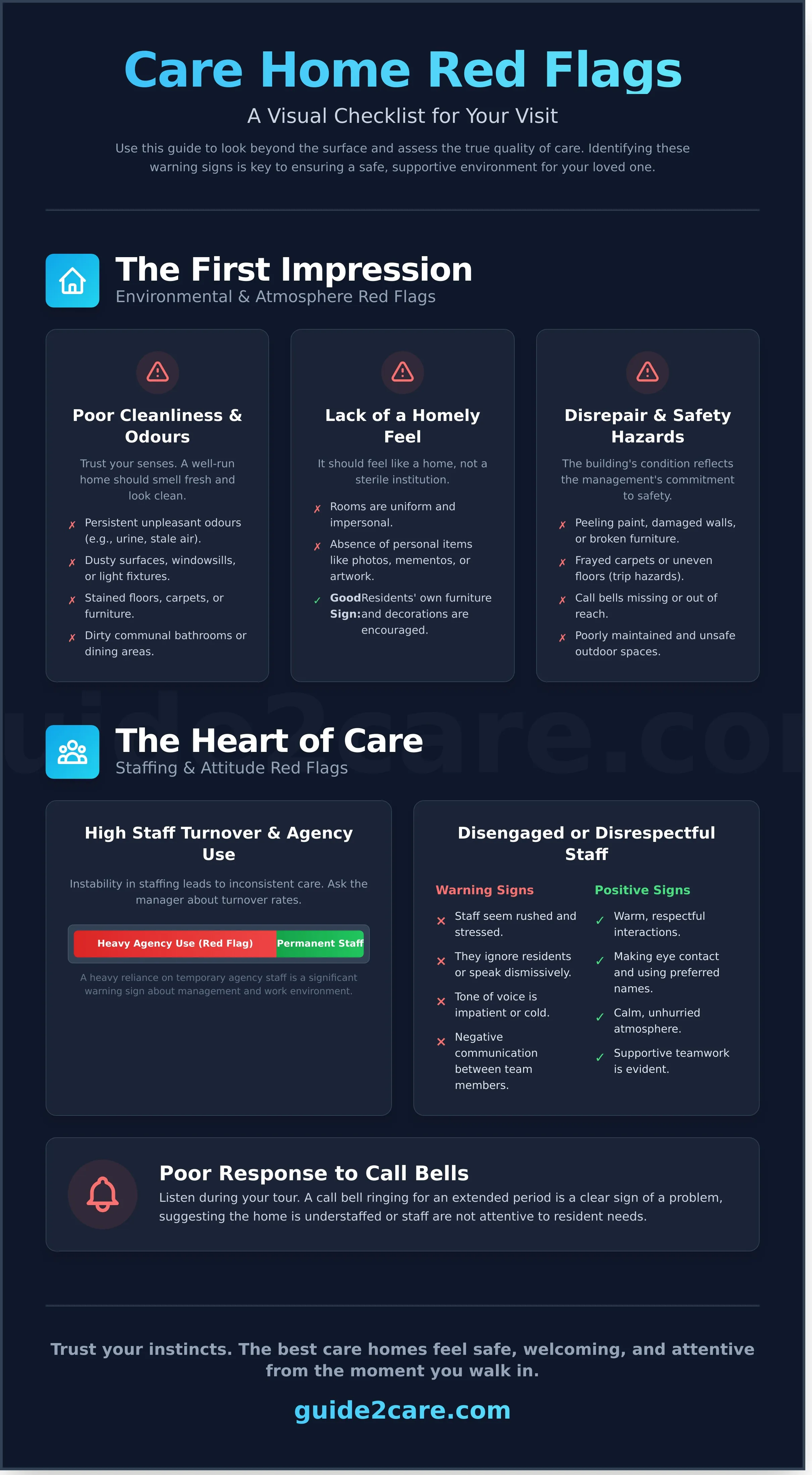
When you first visit a residential home, your initial observations are critical. The things you see, smell, and hear provide immediate clues about the quality of care and the attentiveness of the management. A well-maintained, welcoming environment suggests an organised facility, while a neglected one is among the most immediate red flags to watch for in a care home. These physical clues are often the easiest to spot on an initial tour.
The process of visiting multiple homes means you'll likely be doing a lot of driving. While your main concern is the safety of your loved one, ensuring your vehicle is secure during these visits can provide extra peace of mind. If you'd like to explore this topic, you can read more.
To better understand these initial warning signs, this video provides a helpful overview:
Poor Cleanliness and Unpleasant Odours
Trust your senses upon entering. A persistent, unpleasant odour, such as stale air or urine, is a significant warning sign. While occasional accidents happen, a constant smell may indicate inadequate cleaning schedules, poor ventilation, or staffing issues. Look closely at the details. Are floors clean and free of stains? Are surfaces, windowsills, and light fixtures free of dust? Pay special attention to communal areas like lounges, dining rooms, and bathrooms, as their condition reflects the home’s overall standards. A well-run home should smell fresh and appear visibly clean.
Maintaining such high standards of hygiene often requires dedicated, professional support. If you want to see the level of detail involved in top-tier commercial cleaning, you can check out That's Cleaning for an example of the services that quality facilities invest in.
Beyond general grime, poor hygiene can heighten the risk of healthcare-associated infections, such as MRSA. If this is a particular concern, it's worth asking management about their specific infection control protocols. For families wanting extra peace of mind, mrsatest.co.uk offers convenient at-home testing options.
Lack of Personalisation and a Homely Feel
A care home should feel like a home, not a clinical, sterile institution. Observe the residents' rooms and communal spaces for signs of individuality. A positive sign is the presence of personal touches like family photographs, mementos, artwork, or the resident's own furniture. An absence of these items, where every room appears uniform and impersonal, can suggest a restrictive environment that does not encourage residents to feel comfortable or maintain their identity. This lack of warmth can negatively impact a resident's mental well-being.
High-quality, comfortable bedding is another key element in creating a personal and dignified space. While homes provide standard items, bringing in familiar textures and superior materials can significantly improve a resident's comfort and sense of well-being. For those looking to provide this extra touch, it's helpful to explore Bed Linen from specialists in fine cottons.
The quality of essential furnishings, especially the bed, plays a significant role in a resident's comfort and health. Ensuring a supportive and comfortable bed is a key aspect of creating a truly homely feel. This principle is recognised by specialists with experience across Europe; for those with properties abroad, for instance, it is possible to buy premium beds Algarve to ensure the highest standards of comfort for family members.
Visible Disrepair and Safety Hazards
The physical condition of the building directly reflects the management's commitment to resident safety. Failure to maintain a safe environment is one of the most serious red flags to watch for in a care home and may indicate a breach of fundamental UK care home regulations. Use this checklist to assess potential hazards during your visit:
Proper building maintenance relies on a range of skilled trades. For those interested in learning these practical skills professionally, accredited courses are available through centres like ytatraining.com.
- General Maintenance: Look for peeling paint, damaged walls, stained ceilings, or broken furniture.
- Flooring: Check for frayed or ripped carpets and uneven flooring that could present a trip hazard.
- Safety Equipment: Ensure call bells are present and within easy reach of beds, chairs, and in bathrooms.
- Outdoor Spaces: Verify that gardens or patios are well-maintained, secure, with clear pathways and accessible seating.
A well-tended garden isn't just a cosmetic feature; it provides a safe, therapeutic space for residents to enjoy fresh air and nature. For care homes looking to improve their facilities, professional landscaping services like Agents Green can transform an outdoor area into a valuable asset for resident well-being.
The Heart of Care: Staffing and Attitude Red Flags
The quality of care a resident receives depends entirely on the staff. During your visit, pay close attention to the people providing the care. A stressed, overworked, or unhappy team cannot provide the compassionate support your loved one deserves. The attitude and behaviour of the staff are some of the most critical red flags to watch for in a care home.
Observe how caregivers speak to residents and each other. Listen for the tone of voice and note the language they use. This will give you a clear insight into the culture of the home.
High Staff Turnover and Agency Use
Ask the care home manager directly about staff turnover rates. A high rate suggests underlying problems with management or working conditions. Note if many of the carers are from temporary agencies. While agency staff are sometimes necessary, a heavy reliance on them can lead to instability and a lack of continuity in care. Consistent, permanent staff build meaningful relationships with residents, which is vital for wellbeing.
Many of these staffing issues stem from a lack of robust human resources support. For care home operators, partnering with an expert consultancy like Pioneer HR can be crucial for developing strategies to improve staff retention and create a positive working environment, which directly translates to better resident care.
Disengaged, Rushed, or Disrespectful Staff
Observe how staff members interact with residents as you walk through the home. Look for these specific positive and negative signs:
- Engagement: Do staff make eye contact and address residents by their preferred name? Or do they ignore residents' attempts to interact?
- Pace: Do they seem constantly rushed and unable to stop for a brief, friendly chat? A calm atmosphere is essential.
- Tone: Is their tone of voice warm and respectful, or is it dismissive and impatient?
- Teamwork: Listen for positive, friendly communication between staff members. A supportive team environment translates to better resident care.
Poor Response Times to Call Bells
During your tour, listen for call bells. A bell that rings for an extended period is a clear indicator of a problem. It may signal that the home is understaffed or that staff are not attentive to residents' immediate needs. A prompt response time is not a luxury; it is a fundamental aspect of safety and responsive care. Ask what the home's target response time is.
Evasive Answers from Management or Staff
Do not hesitate to ask direct questions. Inquire about staffing ratios for day and night shifts, staff training programmes, and daily routines. A good manager should provide clear and confident answers. Be wary of vague, defensive, or secretive responses. If staff seem unwilling or unable to answer basic questions about their roles, it may indicate poor communication or a lack of transparency.
The Ultimate Proof: Resident Wellbeing and Engagement Red Flags
The building, staff qualifications, and official reports are important, but the most reliable proof of a care home's quality is the condition of its current residents. During your visit, make a point to look beyond the curated tour and observe genuine daily life. A good care home should be a vibrant community, not just a building. Assessing the physical appearance and emotional state of the people living there provides crucial insight and reveals some of the most important red flags to watch for in a care home.
Residents Appear Unkempt or Poorly Dressed
A resident's personal appearance is a direct reflection of the standard of daily, individualised care. Poor personal hygiene is a clear indicator of neglect. When you walk through the home, take note of these details:
- Cleanliness: Do residents have clean clothes, hair, and nails?
- Appropriate Attire: Are they dressed suitably for the weather and time of day? For example, are they still in nightclothes in the afternoon?
Consistent signs of poor grooming across multiple residents suggest that staff may be overworked, undertrained, or that personal care is not a priority.
Lack of Social Interaction and Activities
A silent communal lounge where residents are sitting alone, staring at a television, or sleeping in chairs is a significant warning sign. A lack of mental and social stimulation can lead to a rapid decline in a resident's health and happiness. Look for evidence of an active and engaged community.
Check the activities board. Is it up-to-date and does it offer a varied programme of events? Observe the residents. Are they chatting with each other, reading, or participating in a group activity? If you have the opportunity, ask a resident what they did that day. Their answer, or lack thereof, can be very telling.
Residents Seem Over-Medicated, Listless, or Fearful
Assess the general mood of the home. Do residents seem happy, relaxed, and comfortable in their environment? While some residents will have health conditions that cause drowsiness, widespread lethargy can be a sign of over-medication being used to make residents easier to manage. This is a dangerous and unacceptable practice.
To support a loved one's comfort and calm, especially during the transition to a new home, many families explore complementary wellness options. For those researching natural supplements, the CBD Health Collection provides a range of quality-tested products that may aid in relaxation.
Crucially, observe how residents interact with staff. Note any signs of fear, anxiety, or withdrawal when a carer approaches. A resident flinching or appearing distressed around staff is one of the most serious red flags to watch for in a care home and requires immediate attention.
Behind the Scenes: Management and Procedural Red Flags
A care home's management style and internal processes are strong indicators of its overall quality. A professional, well-run home will be transparent with its policies, paperwork, and communication. These operational details are some of the most important red flags to watch for in a care home, as they reveal how the home functions day-to-day. Do not hesitate to ask for documents and specific details about their procedures.
A key part of this professional management is sound financial administration. A care home that maintains clear and compliant financial records is more likely to be stable and capable of investing in high-quality care. To get an idea of the type of professional support that underpins a well-run facility, you can discover CTC Tax & Accounting, a firm that exemplifies the comprehensive financial services that successful organizations rely on.
These operational issues are not only red flags for families but also for those involved in the senior care industry itself. Professional brokerage firms that handle the sale of these properties, such as the California-based Assisted Living Real Estate Group, have deep expertise in assessing the long-term viability and management quality of care facilities.
A care home's professionalism often extends to its public-facing materials, like its website and brochures. A poorly designed or outdated website can be a minor red flag in itself, suggesting a lack of attention to detail. Many well-regarded organisations work with professional agencies to ensure their communication is clear and trustworthy. For example, a digital marketing agency like AHS Digital can help businesses, including those in the care sector, create a professional and reassuring first impression online.
Underpinning this professional image is a solid business plan and clear operational documents. For leaders in the care sector aiming to build a transparent and well-managed facility, AI-powered platforms like GrowthGrid can be instrumental in generating the foundational plans that ensure a high-quality, trustworthy service from the ground up.
Restrictive Visiting Policies
A good care home should encourage family and friends to visit. An open and flexible visiting policy suggests confidence and transparency. Be wary of homes that impose strict, inconvenient visiting hours or require appointments far in advance. While some rules are necessary for security, excessive restrictions can be a way to hide poor conditions or understaffing. Ask the manager directly about their approach to visiting.
Poor or Inadequate Food Quality
Nutrition and hydration are fundamental to good health. The quality of food says a lot about a home's commitment to resident well-being. When you visit, assess the following:
- The Menu: Ask to see a weekly menu. Look for variety, choice, and meals that appear nutritionally balanced and appealing.
- The Dining Experience: If possible, visit during a mealtime. Observe the atmosphere. Is it a pleasant, social experience? Does the food look and smell appetising?
- Dignified Support: Note if residents who need help are assisted with patience and dignity.
- Hydration: Check that fresh water, juice, or other drinks are always readily available to residents throughout the home, not just at mealtimes.
A Poor CQC Report (The Ultimate UK Red Flag)
In England, the Care Quality Commission (CQC) is the independent regulator of all health and social care services. Every care home is inspected and given a rating: Outstanding, Good, Requires Improvement, or Inadequate. This report provides an expert, impartial assessment of the home’s quality and safety.
A rating of 'Requires Improvement' or 'Inadequate' is a serious concern. You should read the full report to understand the specific issues, paying close attention to sections on safety, effectiveness, and leadership. This is one of the most definitive red flags available to you.
To simplify your research, you can search for care homes and check their CQC ratings on Guide2Care.
Making an Informed Decision on Care
Choosing the right care home is a significant decision. This checklist equips you to make an objective assessment. Remember to trust your initial impressions of the environment and staff attitude, as these often reveal the underlying culture. Critically, observe the wellbeing of current residents-their engagement and contentment are the ultimate proof of quality care. By understanding these key red flags to watch for in a care home, alongside procedural transparency from management, you can build a complete picture of a potential provider.
This process can also be emotionally taxing for the person making the decision. Managing feelings of stress, guilt, or anxiety is essential for navigating this period effectively. If you are struggling with the emotional weight of this responsibility, it may be helpful to learn more about Female Focused Therapy and the professional support available.
Now, put this knowledge into practice. Guide2Care simplifies your search with a comprehensive UK-wide directory, direct access to the latest CQC inspection reports, and impartial guidance from care experts. We provide the facts you need to compare providers efficiently and make an informed choice. Use this checklist to find and compare high-quality care homes on Guide2Care.
With the right tools and information, you can navigate this process with clarity and confidence.
Frequently Asked Questions
What should I do if I spot a red flag during my visit?
Address your concerns directly with the care home manager. Document the date, time, and specific details of what you observed to create a clear record. A professional and transparent response is a good sign. If the issue is serious and relates to safety, abuse, or neglect, you should report it to the Care Quality Commission (CQC). How the management team handles your concerns can be very revealing.
How important is a care home's CQC rating?
A CQC rating is a crucial indicator of a care home's performance against national standards. The ratings-Outstanding, Good, Requires Improvement, or Inadequate-provide an expert assessment of safety and quality. While a 'Good' or 'Outstanding' rating is a strong starting point, it is a snapshot in time. Always use it in combination with your own in-person visits and observations to form a complete picture of the home's current environment.
Can I visit a care home unannounced?
Yes. A reputable care home should be transparent and welcome unannounced visits, within reasonable hours. While your first detailed tour should be scheduled, a follow-up, unscheduled visit provides a more authentic glimpse into daily life, staff interactions, and the general atmosphere. If a home is resistant to an unannounced visit, consider it a significant concern. This lack of transparency is one of the key red flags to watch for in a care home.
How can I tell the difference between a minor issue and a major red flag?
The difference often lies in pattern and impact. A minor issue might be a single untidy room or a disorganised noticeboard. A major red flag is a systemic problem that affects resident well-being, such as persistent unpleasant odours, residents appearing distressed or unkempt, or a high staff turnover. One-off issues can be explained, but patterns that suggest neglect or poor management are major warning signs that should not be ignored.
What are some 'green flags' or positive signs to look for in a care home?
Positive signs indicate a high-quality, caring environment. Look for residents who appear happy, engaged, and sociable. Observe warm, respectful interactions between staff and residents. Other 'green flags' include a clean and fresh-smelling building, a visible and varied activities schedule, and an 'Outstanding' or 'Good' CQC report. An open, welcoming attitude from the manager and staff is also an excellent indicator of a positive culture.
Should I talk to current residents and their families?
Absolutely. Speaking with current residents and their relatives provides an invaluable, unfiltered perspective on life inside the home. Ask them about the quality of care, the responsiveness of staff, the food, and the social activities. Their direct feedback can confirm your positive feelings or alert you to potential issues that are not obvious during a formal tour. This first-hand information is a vital part of your research process.