Live-in Care vs Care Home Pros and Cons: A Complete 2026 Comparison

Deciding on the best care setting for a loved one is a significant financial and emotional choice. The primary options are often live-in care, provided at home, or a move into a residential care facility. Understanding the complete live-in care vs care home pros and cons is the first step to making a confident decision that is right for your family.
Concerns about the cost of 24/7 support, a loved one’s independence, and navigating UK funding or CQC ratings are common. This guide is designed to provide clarity. We deliver a neutral, research-backed comparison for 2026 to help you evaluate both environments objectively.
Inside, you will find a clear financial breakdown, a checklist to assess risk and safety, and a reliable process for finding vetted providers. Our goal is to equip you with the information needed to choose the care that best supports your loved one’s needs and your budget. Find the care you need.
Key Takeaways
- Decide between the bespoke, one-to-one support of live-in care and the communal environment and 24/7 staff presence of a care home.
- Evaluate the live-in care vs care home pros and cons based on key factors like personalisation, social interaction, and safety to make an informed choice.
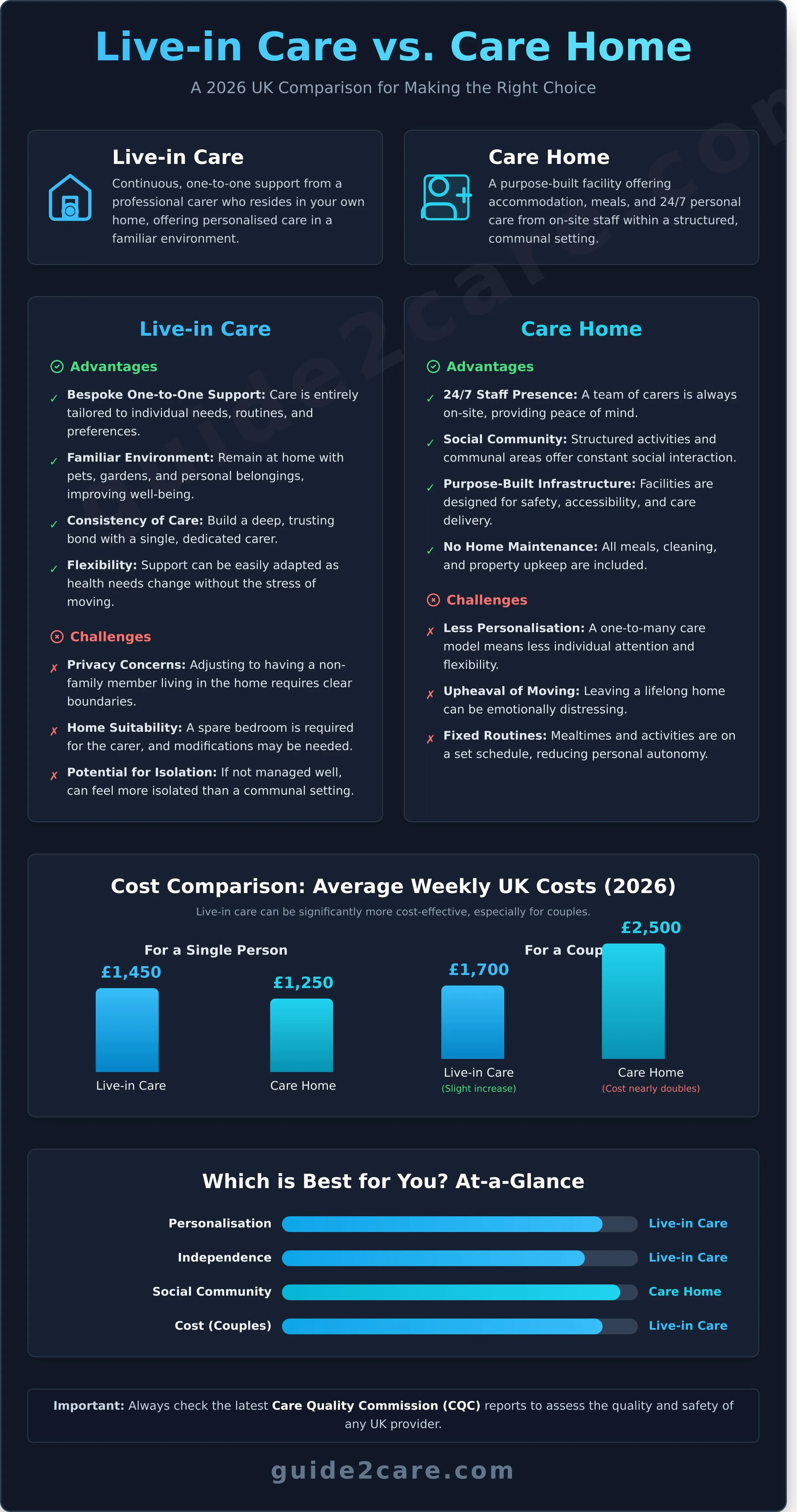
- Compare the average 2026 weekly costs in the UK and discover why live-in care can be the more cost-effective option, particularly for couples.
- Learn how to use official CQC reports to assess a provider's quality and safety, ensuring you choose a trusted and well-led service.
Defining the Options: Live-in Care and Care Homes Explained
Choosing the right care setting is a significant decision. The primary choice often involves weighing the live-in care vs care home pros and cons. This decision balances the desire to remain in a familiar environment with the need for consistent, professional support. Live-in care offers personalised support at home, while a care home provides a structured, communal setting. Increasingly, UK trends for 2026 show a preference for home-based solutions like domiciliary and live-in care.
To better understand the core differences, this short video provides a helpful overview:
What is Live-in Care?
Live-in care provides continuous, one-to-one support from a professional carer who resides in your home. This arrangement ensures help is always available for personal care, housekeeping, and companionship. The carer requires their own private room and an agreed-upon schedule of breaks. The concept of what is live-in care is rooted in providing a direct alternative to institutional residential care. It is a form of domiciliary care (care at home), with dedicated providers like Bloomfield Care, and can be arranged through:
- Managed Services: The care agency employs the carer and manages all aspects of care, including training and payroll.
- Introductory Agencies: The agency introduces you to a self-employed carer, and you manage the employment relationship directly.
This model also provides options for short-term respite care, giving family carers a temporary break.
For family carers, this time is a vital chance to recharge. Some might plan a complete change of scenery to de-stress, perhaps even an adventurous holiday. As an example of a truly refreshing escape, you can see what's on offer at cozumeldivehub.com.
What is a Residential Care Home?
A residential care home is a purpose-built facility offering accommodation, meals, and 24-hour personal care. It is important to distinguish this from a nursing home, which provides the same services plus round-the-clock medical care from qualified nurses. The environment is communal, with shared dining areas, lounges, and a schedule of social activities. All care facilities in the UK are regulated and inspected by the Care Quality Commission (CQC) to ensure they meet national standards of safety and quality.
The Pros and Cons of Live-in Care: Staying in a Familiar Environment
Live-in care enables an individual to receive full-time, one-to-one support in their own home. For many, the emotional value of "aging in place" is the primary driver for choosing this option. It allows for the continuation of local community ties, personal routines, and life in a familiar setting. A key aspect when weighing up the live-in care vs care home pros and cons is this high degree of personalisation.
With a dedicated professional, care is entirely bespoke. Routines, meal preferences, and social activities can be tailored to the individual's exact needs and wishes. This model also helps to address the myth of isolation; a live-in carer can facilitate social outings, visits with friends, and engagement in local hobbies, acting as a companion and a facilitator for an active life.
Advantages of Live-in Support
The benefits of receiving care at home are centered on continuity and control. Key advantages include:
- Consistency of Care: A deep, trusting bond can be built with a single, dedicated carer. This professional gains an in-depth understanding of your needs, preferences, and personality, leading to more intuitive and effective support.
- Environmental Continuity: Remaining at home means you can keep cherished pets, tend to your garden, and be surrounded by your personal belongings. The ability to easily source pet care essentials from online stores like FIRSTPETCENTRAL supports this benefit. This continuity is proven to improve mental health and overall well-being.
- Flexibility and Adaptability: As care needs change, the support plan can be adjusted immediately without the upheaval of moving. Care can be scaled up or down to manage evolving health conditions.
Disadvantages and Challenges
Practical and personal hurdles must be considered before arranging live-in care. It is important to assess the following challenges:
- Privacy Concerns: Adjusting to having a non-family member living in the household can be difficult. Establishing clear boundaries and personal space for both the client and the carer is essential for a successful arrangement.
- Home Suitability: The property must be suitable. This includes having a spare bedroom for the carer and may require modifications like stairlifts, walk-in showers, or even fitting easy-to-operate blinds from a specialist like Universal Blinds UK for better privacy and light control. Assessing your home is a key step, and official guidance on needs assessments can be found within the comprehensive guide to UK social care and support.
- Carer Management: A live-in carer requires adequate rest and time off. Families or agencies must manage the logistics of "handover" periods with a relief carer to prevent burnout and ensure continuous, high-quality support.
The Pros and Cons of Care Homes: Infrastructure and Community
Residential care homes offer a structured, community-based solution for long-term care needs. They provide purpose-built infrastructure and a social environment that can be a significant draw for many families. Understanding the specific advantages and disadvantages is a critical step when weighing the live-in care vs care home pros and cons.
A care home removes the burdens of running a household. All meals, utility bills, maintenance, and cleaning are typically handled by the provider and included in a single fee. This "all-inclusive" model simplifies finances and eliminates the stress of managing a property.
Why Families Choose Care Homes
For many, the primary benefit is peace of mind. Care homes in the UK are regulated environments with strict safety protocols, offering 24/7 staff presence for immediate emergency response. They also provide access to specialist equipment like hoists, hospital-style beds, and adapted bathrooms that may be difficult or expensive to install at home. The opportunity for peer socialisation with people of a similar age is another key factor.
Key advantages of a care home setting often include:
- Safety and Security: Constant staff supervision and secure premises reduce risks associated with living alone, such as falls or medical emergencies.
- Social Engagement: Communal dining rooms, organised group activities, and shared lounges provide daily opportunities to combat loneliness and build friendships.
- Specialist Facilities: On-site access to medical equipment and staff trained to manage complex health conditions.
The principle of creating a safe, stimulating, and purpose-built environment is universal across all high-quality care settings. While this article focuses on elder care, for a wider perspective on how specialized equipment shapes a positive atmosphere in other types of facilities, you can explore Kita-Möbel and see examples from the world of early childhood education.
Potential Drawbacks to Consider
The structured nature of a care home can also be a significant downside. Residents must adapt to the facility's schedule, with fixed times for meals, waking up, and activities. This can feel like a loss of independence and control. The emotional toll of downsizing and leaving a cherished family home should also not be underestimated. High staff turnover in some facilities can also mean interacting with many different carers, rather than building a relationship with a single individual.
The transition means adjusting to a communal living environment, which may feel impersonal or "institutional" compared to the familiarity of one's own home. To better understand what to expect, Age UK's guide to care homes provides valuable checklists for assessing a facility's atmosphere and suitability. When considering the live-in care vs care home pros and cons, this loss of personal space and routine is a crucial point of difference.
Cost Comparison and Funding: Live-in Care vs Care Home Pros and Cons
Understanding the financial implications is a critical step in deciding between care options. The discussion of live-in care vs care home pros and cons often comes down to cost, but the figures require careful analysis. While care homes have a clear weekly fee, live-in care costs are structured differently and can offer better value, particularly for couples.
On average, weekly costs for a care home in the UK can range from £800 to £1,500, with nursing homes costing significantly more. Live-in care typically starts from £1,500 per week. For a couple, however, live-in care can be more cost-effective. A single live-in carer can support two people at home for a marginal increase in cost, whereas a care home requires payment for two separate rooms, often doubling the expense.
Also consider the hidden costs. A care home may charge "top-up" fees for a better room or additional services not covered in the basic rate. Live-in care may require initial investment in home modifications, such as a stairlift or walk-in shower, to ensure safety and accessibility.
Breaking Down the Financials
To compare accurately, understand what each fee covers.
- Live-in care costs include: The carer's salary, agency management fees, and a contribution to household expenses like food and utilities.
- Care home costs include: The room rate, meals, and basic personal care. Nursing care, specialist dementia support, and personal services like hairdressing are often extra.
In England, the 2024/25 upper capital limit for local authority care funding is £23,250; individuals with assets above this are expected to self-fund their care.
Given the significant costs, some individuals also research alternative retirement plans, such as moving to a country with a lower cost of living. For those exploring this path, resources like the Expat Retirement Chronicles provide detailed guidance on retiring to destinations like Thailand.
The Decision Matrix: Which is Right for You?
Beyond the numbers, your decision must be based on individual circumstances. A financial breakdown is just one part of the live-in care vs care home pros and cons assessment. Use this simple matrix to guide your choice:
- Assess medical needs: Does the individual require 24/7 nursing supervision from registered nurses? If so, a specialist nursing home may be essential.
- Assess social needs: Consider personality. An individual who values privacy and routine may thrive with live-in care, while someone who craves social interaction might prefer the community of a care home.
- The "Home Safety Audit": Is the current property safe and adaptable? A home that is difficult to modify or located far from amenities may not be a viable long-term option for live-in care.
In addition to assessing the care environment, it's worth considering how proactive health management can support long-term independence. For example, addressing health factors like weight through a medically supervised program can ease the burden of care and improve quality of life. UK-based services such as foundry offer clinician-led support that can complement a wider care plan.
Several funding streams can help manage these costs. It is vital to check eligibility for Local Authority support, Attendance Allowance, and NHS Continuing Healthcare. Find The Care You Need and explore comprehensive funding guides at guide2care.com.
How to Find and Evaluate Care Providers in the UK
After weighing the live-in care vs care home pros and cons, the final step is performing due diligence. A structured approach ensures you find a high-quality, trustworthy provider. This process involves research, direct questions, and careful review of all terms.
The goal is to find a service that not only meets the practical needs but also aligns with your family's values. For a clear example of how a professional domiciliary care provider presents its services and ethos, you can visit Phebdan HealthCare Services Limited.
Steps to Finding the Right Match
Begin by creating a shortlist of potential providers. Leverage the Guide2Care directory to filter local care homes and live-in agencies by location, service type, and overall rating. Scrutinise the most recent Care Quality Commission (CQC) report for each option, focusing on ratings for Safety, Responsiveness, and Leadership. Check for specialist certifications, such as for dementia or palliative care, and read authentic user reviews to gain insight into daily service quality.
When researching agencies that provide care at home, it helps to see what a high-quality service looks like. For instance, providers such as Bloomfield Care often detail their person-centered approach and the range of support options available, giving you a good benchmark for your search.
This principle of using dedicated directories extends to finding specialized healthcare providers. For instance, if a loved one suffers from conditions related to spinal alignment, which can affect balance and comfort, a directory like Upper Cervical Care can be an essential tool for locating a qualified specialist.
Whether you visit a care home or interview a live-in care agency, ask direct questions. For care homes, inquire about staff-to-resident ratios and activity schedules. For live-in agencies, ask about their carer matching process and contingency plans if a carer is unwell. Always request a trial period, typically two weeks. This "test run" is essential for both care types, allowing your loved one to experience the environment or carer before you make a long-term decision.
When evaluating agencies, it's helpful to look at the standards set by premier recruitment firms in the wider domestic staffing sector. For example, top-tier agencies like Superstar Nannies have exceptionally rigorous vetting and matching processes for all types of private household staff. Understanding these best practices can provide a benchmark for what to expect from any quality live-in care provider.
Final Checklist Before Committing
Before signing any agreement, complete this final checklist to ensure all details are covered:
- Review the contract: Check for notice periods, hidden fees, and clauses on annual price increases. Ensure all agreed services are clearly listed.
- Involve your loved one: The individual receiving care must have a say in their future. Their comfort and consent are paramount to a successful arrangement.
- Confirm next steps: Understand the process for booking a tour, arranging an initial home assessment, or scheduling a definitive start date.
A methodical evaluation removes uncertainty and helps you find the right care solution. Explore providers on Guide2Care to begin your search today.
Making the Final Decision: Live-in Care vs Care Home
Choosing between live-in care and a care home is a significant decision that depends entirely on individual needs, preferences, and financial circumstances. The primary trade-off is between the one-to-one, personalised support of live-in care within a familiar environment, and the built-in social community and on-site facilities offered by a residential care home. Cost remains a crucial factor, with funding options varying significantly between the two.
Ultimately, a thorough review of the live-in care vs care home pros and cons is the essential first step. To move forward with confidence, you must compare vetted providers. Guide2Care offers a comprehensive directory of UK-wide care providers, complete with up-to-date CQC ratings for every listing. Our neutral, expert-led guidance is designed to help your family make a fully informed choice.
Find the care you need today with the Guide2Care directory. Take the next step in your search with clarity and control.
Frequently Asked Questions
Is live-in care cheaper than a care home in the UK?
Live-in care costs typically range from £1,200 to £1,800 per week. For an individual, this can be comparable to or slightly more expensive than a residential care home. However, for a couple, live-in care is almost always more cost-effective as you pay for one carer, not two separate care home places. The final cost depends on the level of care required, so it is essential to get detailed quotes from providers to make an accurate comparison.
Can a live-in carer provide nursing care?
A standard live-in carer provides personal and domestic support but not clinical nursing tasks. For needs like administering injections or managing complex medical equipment, you require a registered nurse. Some specialist live-in care agencies can provide carers with advanced training or arrange for qualified visiting nurses to work alongside the carer. Always verify the carer's qualifications and the agency's Care Quality Commission (CQC) registration to ensure they can meet specific medical needs.
What happens if a live-in carer gets sick or goes on holiday?
A regulated live-in care agency is responsible for arranging cover when your primary carer is unwell or takes a holiday. The agency will have a pool of trained and vetted respite carers to ensure a seamless transition and continuity of care. This is a key service managed by the provider, removing the stress of finding temporary cover yourself. Always confirm this process with a potential agency before signing a contract to understand their specific procedures for leave.
Are care homes safer than staying at home?
Safety depends on the individual's needs. Care homes provide a secure, regulated environment with staff available 24/7 and adapted equipment, which can reduce certain risks. However, live-in care offers dedicated one-to-one support in a familiar setting, which can minimise confusion and falls. Both options are regulated by the CQC in England to ensure they meet required safety standards. The safest choice is the one that best manages the specific risks the individual faces.
One specific risk to consider in any care setting is the potential for healthcare-associated infections like MRSA. For families wanting to take a proactive role in monitoring their loved one's health, it's now possible to get private screening tests. To see how this works, you can check out mrsatest.co.uk.
Can couples stay together in live-in care vs a care home?
Yes, both options allow couples to stay together, but the arrangements differ. Live-in care is an excellent choice for couples as it allows them to remain in their own home with their shared routines. In a care home, couples can request a shared room, but availability is not guaranteed and the cost is significantly higher as fees are charged per person. This is a critical factor when weighing the live-in care vs care home pros and cons.
How do I know if someone needs a care home instead of live-in care?
A care home may be more suitable if an individual has highly complex medical needs requiring a team of specialist nurses around the clock. It can also be a better option for someone who feels very isolated at home and would benefit from the social interaction a care home community provides. If the home environment is unsafe or cannot be easily adapted, a residential setting may be necessary. A comprehensive care needs assessment will help determine the most appropriate setting.
Does the council pay for live-in care?
A local council may contribute to or fully fund live-in care if the individual meets the eligibility criteria. This is determined by a care needs assessment and a financial assessment (means test). If eligible, the council provides a personal budget, which can be managed as a direct payment. This gives the individual control to choose and pay for their own care provider, including a live-in care agency, as long as it meets their assessed needs.