The Essential Benefits of Home Care for Elderly in the UK: A 2026 Guide
Choosing the right care path in the UK involves complex decisions. Many families explore the essential benefits of home care for elderly relatives as they face anxiety over a potential loss of independence and the significant costs of residential care. Navigating different care types, from domiciliary visits to live-in support, and understanding CQC ratings can add to the uncertainty. However, remaining in a familiar, comfortable home is a viable and increasingly preferred option for long-term support.
This 2026 guide provides a direct and practical overview of these advantages. We present a clear breakdown of how both domiciliary and live-in care can transform quality of life. Explore how professional care at home maintains crucial independence, delivers personalised one-to-one support, and often presents a more cost-effective solution than moving into a care facility. Use this information to validate your choices and present a clear list of benefits to family members.
Key Takeaways
- Understand how home care supports independence by allowing individuals to remain in their familiar surroundings and maintain personal routines.
- Discover the core benefits of home care for elderly people, including personalised one-to-one support that is tailored to specific needs.
- Compare the costs and flexibility of domiciliary care against residential homes to identify the most financially suitable option.
- Learn the steps for choosing a CQC-regulated provider, from assessing care requirements to checking for Local Authority funding.
What is Home Care? Understanding Domiciliary Support in the UK
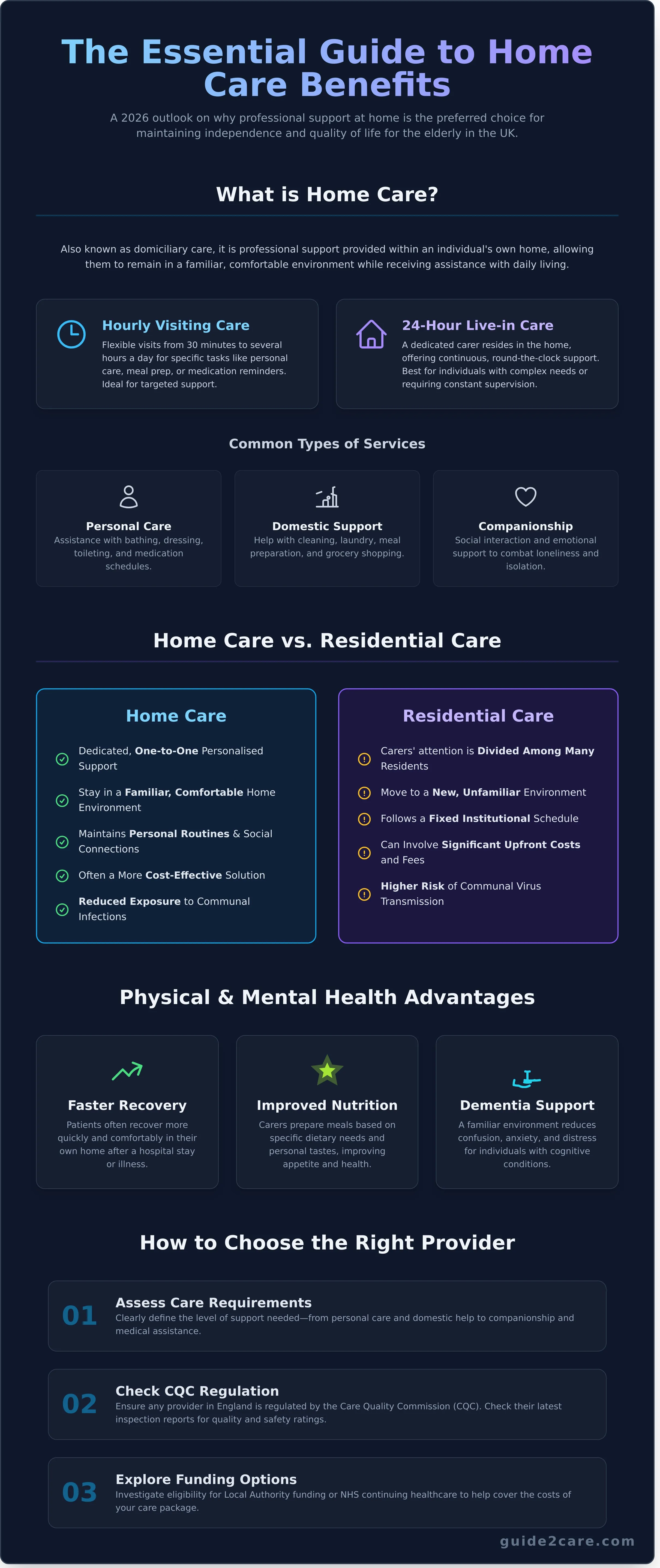
Home care, often referred to as domiciliary care, is professional support provided to an individual within their own home. It allows older adults to maintain independence and remain in a familiar environment. The core purpose of domiciliary care in the UK is to provide the necessary assistance for daily living, ensuring safety, comfort, and well-being. This flexible approach is central to the many benefits of home care for elderly people seeking to retain their quality of life.
To better understand this concept, watch this helpful video:
Care can be arranged in two primary ways. Hourly visiting care involves carers visiting for set periods, from 30 minutes to several hours a day, to assist with specific tasks. For those with more complex needs, 24-hour live-in care provides a dedicated carer who resides in the home, offering continuous support. All providers in England are regulated by the Care Quality Commission (CQC), which inspects services to ensure they meet fundamental standards of quality and safety.
This model is increasingly important. The UK healthcare system is shifting towards "aging in place" as the preferred model by 2026, recognising that most people wish to stay at home for as long as possible.
Types of Home Care Services Available
Home care services are tailored to individual needs and typically fall into three main categories:
- Personal Care: Direct assistance with tasks such as bathing, dressing, toileting, and managing medication schedules.
- Domestic Support: Practical help with household chores, including cleaning, laundry, meal preparation, and grocery shopping.
- Companionship: Social interaction and emotional support to combat loneliness and isolation, a key benefit for older adults living alone.
Medical vs. Social Care at Home
It is important to distinguish between healthcare and social care. Healthcare is typically provided by the NHS and managed by medical professionals like district nurses who handle clinical tasks such as changing dressings or administering injections. Social care, funded by the Local Authority or privately, is provided by home care assistants who focus on personal and domestic support. These two services often overlap to create "wraparound" support, ensuring all of an individual's needs-both medical and personal-are met seamlessly at home. This holistic approach can also involve addressing mobility issues with specialist providers; for example, GB Clinic offers treatments that help maintain independence.
The Core Benefits of Home Care for Elderly Individuals
Domiciliary care, or care at home, enables an individual to receive the support they need without leaving a familiar environment. The primary benefits of home care for elderly people centre on preserving independence, receiving tailored support, and maintaining a high quality of life. This model of care is structured around the individual’s existing routines, preferences, and social connections.
Unlike a residential setting where staff must divide their time among many, home care provides consistent, one-to-one attention. This allows for a care plan that is truly personalised to specific needs, from medication schedules to meal preferences. Furthermore, staying at home significantly reduces exposure to communal viruses and infections that can be prevalent in larger care facilities, offering a safer environment for those with compromised immune systems.
Physical and Mental Health Advantages
The continuity of living at home has a direct and measurable impact on health outcomes. It creates a stable foundation for both physical recovery and mental well-being.
- Faster Post-Hospital Recovery: Studies show that patients often recover more quickly and comfortably in their own homes following a hospital stay or illness.
- Improved Nutrition: A home carer can prepare meals based on an individual’s specific dietary requirements and personal tastes. To explore chef-prepared, healthy dishes that can supplement a care plan, you can visit Eat Better Meals.
- Dementia and Confusion Support: For individuals with cognitive conditions like dementia, a familiar environment helps to reduce confusion, anxiety, and the effects of "sundowning." Understanding these specific needs, as detailed in resources like the NHS social care and support guide, is the first step to creating an effective support plan.
The Emotional Impact of Staying at Home
The psychological advantages of remaining at home are a key component of its value. This stability is crucial for overall happiness and health.
- Maintaining Social Ties: An individual can continue relationships with neighbours and participate in local UK community groups, preventing the social isolation that can accompany a move to a care home.
- Ability to Keep Pets: For many seniors, the ability to keep a beloved pet is a top priority and a significant source of comfort and companionship.
Creating a comfortable and stimulating home environment is another key factor. This can involve anything from adapting the garden for accessibility to finding new interior design ideas that promote calm and well-being. For a wealth of ideas on home and garden topics from a European perspective, you can discover Hausblatt for inspiration on creating beautiful living spaces.
Personalising the home with cherished photographs of family and friends is another powerful way to support emotional well-being, reinforcing memories and a sense of identity. For those looking to display these moments, the First4Frames Gallery offers a range of bespoke framing services to help preserve precious memories.
Beyond photographs, incorporating tactile, handcrafted items can also provide a great sense of comfort and connection. For unique, personalised gifts made from traditional British fabrics, Created By The Ridleys offers a range of beautiful, handmade options.
Organising special outings can also be a wonderful way to foster these connections and create new memories. For those in or around London, services like Timescape Tours offer private, driver-guided trips that can be a comfortable and enjoyable way for seniors and their families to explore the UK's heritage.
Just as important is the pet's own well-being, as a calm and healthy companion brings greater peace of mind. For those exploring natural supplements for pets, CBD Health Collection provides a range of quality CBD products for both pets and people.
Ensuring these animal companions are happy and stimulated is also part of that care. For families looking for ways to keep a furry friend engaged, it's easy to explore Pet Toys online for a wide selection of items suitable for dogs and cats.
Proper grooming is another essential aspect of pet care, contributing to their health and comfort. For guidance on selecting gentle, organic products that are safe for both pets and their owners, you can check out Essencera.
Emotional well-being is a recognised clinical factor that contributes directly to an individual's resilience, health outcomes, and overall longevity.
Home Care vs. Care Homes: A Comparative Analysis
Choosing between domiciliary care and a residential care home is a significant decision. The optimal path depends on an individual's specific needs, financial situation, and personal preferences. A direct comparison of cost, flexibility, and personal impact can clarify the best option for you or your loved one.
The primary differences lie in the structure of care and daily life:
- Cost Structure: Home care is typically charged at an hourly rate, allowing you to pay only for the support you need. In contrast, care homes charge a fixed weekly or monthly fee that covers accommodation, meals, and all care services.
- Flexibility and Control: One of the main benefits of home care for elderly individuals is its adaptability. Care plans can be scaled up or down as needs change, from a few visits per week to full-time live-in support. A care home provides a more rigid, structured environment.
- Family and Independence: Staying at home removes visiting restrictions, allowing family and friends to visit freely. This preserves established routines and social connections. Furthermore, remaining in a familiar environment helps to prevent the sense of identity loss that can occur when moving to an institutional setting.
When is Home Care the Better Financial Choice?
For those who do not require 24-hour supervision, home care is often more cost-effective. For example, an individual needing 8 hours of support per week at an average rate of £25 per hour would spend £200. This is significantly less than a typical residential care fee of £800-£1200 per week. For couples, the savings are even greater, as they avoid paying for two separate places in a care home. Explore your options for financing support with our resources on Funding Care.
The Limitations of Home Care
Home care may not be suitable for individuals with advanced medical conditions that require constant nursing supervision or specialised equipment. There is also a risk of social isolation if the carer is the primary point of contact. These risks can be mitigated by using technology for video calls with family and accessing community transport services to attend local clubs or appointments, ensuring social needs are met alongside practical ones.
Ensuring Safety and Quality in a Home Setting
A primary concern for families is the safety of their loved one at home. Professional home care services are structured to manage and minimise risks. In the UK, all reputable home care agencies are regulated by the Care Quality Commission (CQC), which provides an independent assessment of their safety and quality.
The CQC inspects agencies on key standards and assigns ratings from 'Outstanding' to 'Inadequate', giving you a clear measure of their performance. This regulatory oversight, combined with mandatory training like the Care Certificate for all caregivers, establishes a baseline for professional, safe care. Good agencies build on this with specialised training for conditions such as dementia or stroke aftercare.
Beyond the training that professional carers receive, many families find peace of mind by equipping themselves with basic emergency skills. For those looking to be prepared for any situation, you can visit Aspire First Aid Guide Training Corp to learn about first aid and CPR certification, which provides invaluable knowledge for anyone supporting an elderly relative at home.
This sense of preparedness can also cover common, non-medical emergencies that can cause significant stress. For example, losing car keys can disrupt routines and create anxiety. Knowing about specialized mobile services that can resolve such issues quickly provides extra peace of mind for the whole family. For an idea of how these services operate, you can check out Key Solution.
Proactive risk management is central to the service. Before care begins, a manager conducts a home safety assessment to identify and address potential hazards, from trip risks to fire safety. They may recommend simple, effective adaptations like grab rails or improved lighting. This structured approach to safety is one of the most important benefits of home care for elderly individuals.
The Role of Technology in Modern Home Care
Modern telecare adds another layer of security. AI-powered systems can monitor daily patterns and alert care managers to changes before a crisis occurs. Digital care logs and video calling keep families informed in real-time, while integrated wearable health tech provides a constant, data-driven overview of a person's wellbeing.
Navigating the world of telecare, wearables, and smart home devices can be complex. Online publications that provide clear reviews and comparisons, such as SuggestMeTech, can be a valuable resource for families looking to make informed decisions about the best technology to support their loved ones at home.
Vetting and Choosing a Safe Provider
Choosing a safe provider is fundamental to realising the full benefits of home care for elderly loved ones. Always select a CQC-registered agency over an unregulated introductory service. During your research, ask direct questions about their safety protocols:
- Are all caregivers required to have an enhanced Disclosure and Barring Service (DBS) check?
- What ongoing and specialised training do your staff receive?
- How does the initial assessment inform the creation of a safe and personalised care plan?
The initial assessment is vital. It ensures the care plan is tailored not just to personal preferences but also to the specific safety requirements of the home. Use our directory to find CQC-rated home care providers near you.
How to Find and Choose the Right Home Care Provider
Choosing the right provider is the final, crucial step to securing the full benefits of home care for elderly loved ones. A methodical approach ensures you find a service that is safe, reliable, and a good personal fit. Follow this five-step process to make an informed decision.
- Step 1: Identify Specific Care Needs. First, define the level of support required. Is it personal care (assistance with washing and dressing), domestic help (cleaning and meal preparation), or more complex medical support from a qualified nurse? While carers can assist with light housekeeping, families often use a separate service for more thorough cleaning; directories like Cleaner Connect make it easy to find trusted local professionals for this. A clear list of needs will narrow your search.
- Step 2: Determine Your Budget and Funding. Establish what you can afford privately. It is also essential to contact your Local Authority for a care needs assessment, which determines eligibility for financial support to help cover costs.
- Step 3: Shortlist Local Providers. Use a comprehensive directory to find and compare services in your area. An effective search on a platform like Guide2Care allows you to create a shortlist of potential agencies quickly and efficiently.
- Step 4: Review CQC Reports and Testimonials. For your shortlisted providers, check their latest Care Quality Commission (CQC) inspection report. This provides an official rating on safety and quality. Supplement this with independent reviews and testimonials from other families.
- Step 5: Conduct Interviews and Request a Trial. Speak directly with the care manager and potential carers. A good personality match is vital for a successful relationship. Ask if they offer a trial period to ensure the arrangement works for everyone involved.
Navigating the Guide2Care Directory
Our directory is designed for a simple, efficient search. Use the filters to find providers with specific expertise, such as dementia or Parkinson’s care. The "Information and Guidance" section offers practical resources on funding and legal matters. You can search for providers by entering your postcode or browsing specific UK regions and counties to find the right local support.
Next Steps for Families
Starting the conversation about care with a parent can be difficult. Frame it around maintaining their independence and safety at home. Once you have a shortlist, book a free, no-obligation consultation to discuss your family’s specific needs. This is the best way to understand how a provider operates and if they are the right choice for you.
Find the care you need today with our UK-wide directory.
Making the Right Choice for Elderly Home Care
Choosing the right support is a significant decision. As this guide has shown, home care allows elderly individuals to retain their independence and receive tailored support in a familiar environment. Understanding the full benefits of home care for elderly people, from one-to-one attention to preserving community connections, is the first step towards making a confident choice for your family.
While this guide focuses on the UK system, the fundamental principles of organizing compassionate at-home support are universal. For those interested in a comprehensive guide from another European perspective, you can learn more about AVIAN Care and their approach in Hungary.
When you are ready to explore your options, the next step is finding a reputable provider. Guide2Care simplifies this search by offering impartial, neutral advice and practical resources. Our platform provides expert guides on care funding and selection, alongside a comprehensive directory of CQC-registered providers, giving you the clarity needed to move forward.
Take control of your care journey. Find The Care You Need: Explore Our UK Home Care Directory and find the right support today.
Frequently Asked Questions About Home Care
Is home care cheaper than a care home in the UK?
The cost depends on the level of need. Home care, or domiciliary care, is typically charged by the hour, often from £20 to £30. This can be more cost-effective if only a few hours of support are needed each week. For those requiring 24-hour supervision, the cost of live-in care can exceed that of a residential care home, which averages £700-£1,000 per week. A financial assessment can help determine the most suitable option.
How do I know if my elderly parent needs home care?
Look for signs that they are struggling with daily living activities. This can include difficulty with personal hygiene, forgetting to take medication, a decline in housekeeping standards, or unexplained weight loss. Other indicators are recent falls, increased confusion, or social withdrawal. If you notice these changes, it is practical to arrange a care needs assessment with their local council to determine the level of support required. This assessment will clarify the specific needs.
Does the NHS pay for home care for the elderly?
The NHS generally does not fund social home care, which includes personal care and domestic help. It may fund care if the primary need is health-related. This is known as NHS Continuing Healthcare (CHC). Eligibility for CHC is based on a complex medical need and is determined through a detailed assessment process. For most individuals, home care costs must be paid for privately or with support from the local authority, subject to a financial assessment.
What is the difference between home care and home health care?
Home care, often called domiciliary care in the UK, provides non-clinical support. This includes assistance with personal tasks like bathing and dressing, meal preparation, companionship, and light housekeeping. Home health care provides clinical medical services from qualified professionals like nurses or therapists. This can include wound care, injections, or physiotherapy. Some agencies provide both types of service, but they address different needs and are regulated accordingly.
Can I get home care if I live in a rural part of the UK?
Yes, home care is available in most rural areas, but provider options may be more limited than in urban centres. National care agencies often have broader coverage, but it is essential to check which local and independent providers operate in your specific postcode. Travel time for carers may also be factored into the cost, potentially making rural care more expensive. Use a care directory to search for providers by location and assess their availability.
What happens if my home carer is ill or can’t make it?
A professional home care agency is responsible for providing cover if a regular carer is unavailable due to illness or holiday. The agency will arrange for a suitable replacement carer to ensure there is no interruption in service. This is a key advantage of using a regulated agency over a private arrangement, where the responsibility for finding emergency cover falls to you or your family. Always confirm a provider’s contingency plans before signing a contract.
How does the CQC rate home care agencies?
The Care Quality Commission (CQC) is the independent regulator for health and social care in England. It inspects home care agencies on whether they are safe, effective, caring, responsive, and well-led. Based on these inspections, agencies receive one of four ratings: Outstanding, Good, Requires Improvement, or Inadequate. You can find the latest inspection reports for any registered provider on the official CQC website to help inform your decision.
Can home care providers help with dementia?
Yes, many home care agencies offer specialist dementia care services. Carers receive dedicated training to support individuals with dementia, helping to manage symptoms and maintain familiar routines in their own home. This is one of the significant benefits of home care for elderly people with cognitive conditions, as staying in a known environment can reduce confusion and distress. A specialised care plan will be created to meet their unique and evolving needs.