Care Home Vacancies Near Me Now: The 2026 Job Seeker’s Guide

Finding a stable role in the UK care sector is often complicated by fragmented job listings and unclear application requirements. If you are searching for care home vacancies near me now, you likely face the challenge of navigating multiple platforms while trying to verify an employer's reputation. This process should be straightforward. To secure a position in a residential home or nursing facility, you need a structured method to identify active openings and understand the specific qualifications required for success in 2026.
This guide provides a practical framework for your job search. You will learn how to locate the best local vacancies, evaluate potential employers using key industry benchmarks, and streamline your application to save time. We provide a clear list of hiring homes and a breakdown of the essential documentation needed to work in the UK care industry. Use this resource to simplify your path to employment and find the care home job you need today. Explore the steps below to move your career forward efficiently.
Key Takeaways
- Navigate the 2026 UK care sector landscape to understand why localized staffing needs are driving immediate demand for new recruits.
- Identify the different types of clinical, care-focused, and operational roles currently available for both entry-level and experienced professionals.
- Evaluate potential employers by using CQC ratings to look beyond salary and assess workplace culture and safety standards.
- Implement a step-by-step strategy to find care home vacancies near me now and optimize your CV for the specific requirements of the 2026 care market.
- Use the Guide2Care directory to research local employers and connect directly with home managers using verified contact details.
The State of UK Care Home Vacancies in 2026
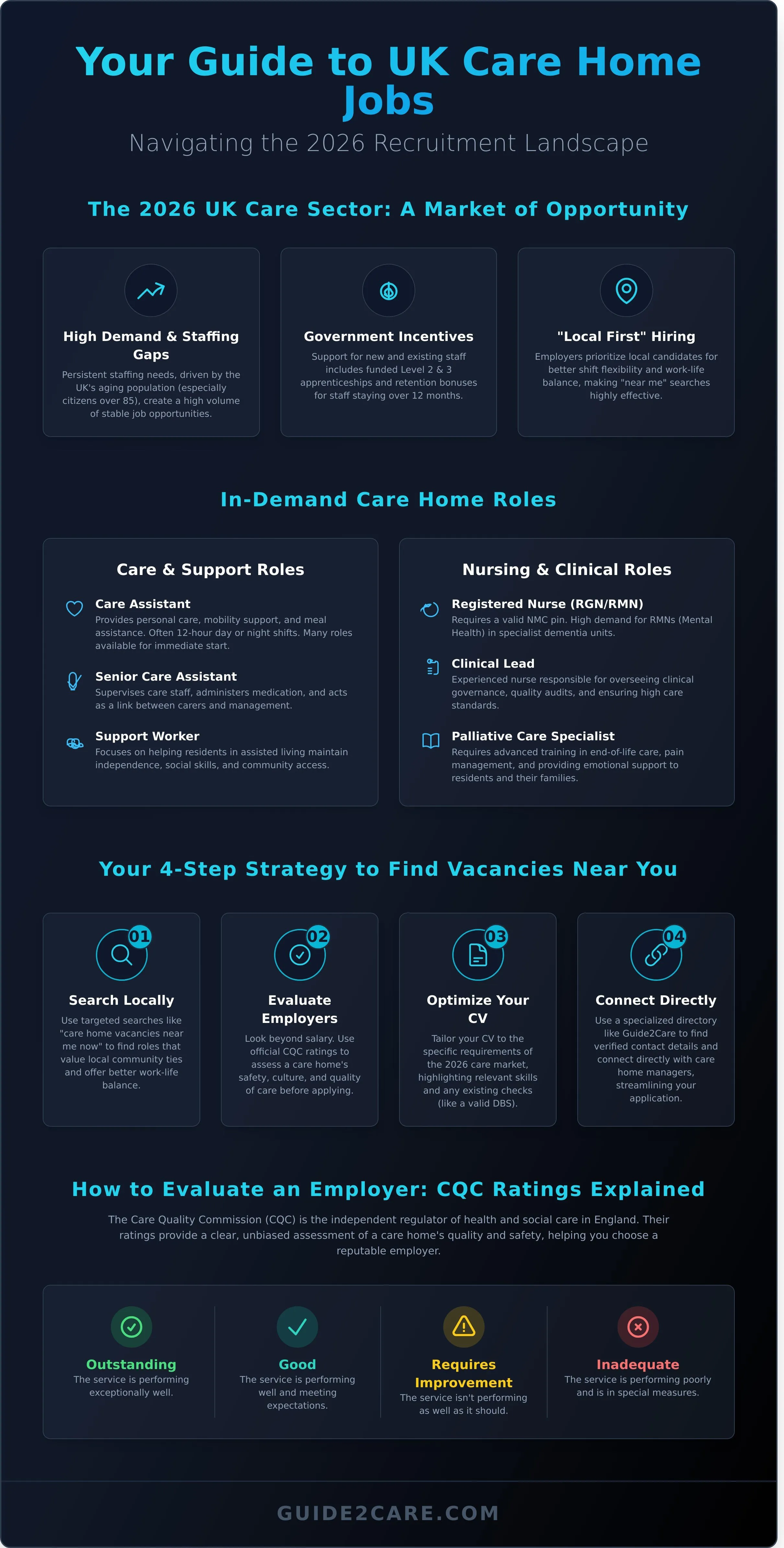
The UK care sector in 2026 is characterized by a high volume of opportunities for job seekers due to a persistent staffing gap. Recent reforms to Social care in the United Kingdom have restructured funding and professional standards, yet the demand for frontline staff remains at record levels. In this market, an "immediate vacancy" refers to a position where the provider has completed all regulatory risk assessments and is prepared to onboard a candidate as soon as mandatory Disclosure and Barring Service (DBS) and reference checks are finalized.
To better understand the requirements for these roles, watch this helpful video on healthcare interview techniques:
Why Demand is Rising for Care Professionals
The 2026 recruitment landscape is heavily influenced by the UK’s aging demographics. As the population of citizens over 85 continues to grow, there is a heightened need for specialized dementia and complex care roles. To support the sector, the government has introduced several incentives this year, including:
- Fully funded Level 2 and Level 3 Adult Care Worker apprenticeships.
- Retention bonuses for staff remaining in the sector for over 12 months.
- Streamlined pathways for those transitioning from other service industries.
The Urgency of Localized Recruitment
Searching for care home vacancies near me now is the most effective strategy for finding stable employment. Care home managers prefer local candidates because they offer greater shift flexibility and are less likely to experience travel-related burnout. This localized approach ensures that homes can maintain safe staffing levels even during short-notice absences.
Reliable transport is crucial for managing the varied shift patterns common in care work, especially for early starts or late finishes when public transport may be limited. For job seekers in areas like Bromley or Orpington, knowing there are dependable local taxi services like speedycars247.co.uk can be a key factor in accepting a role, ensuring you can always get to and from work safely.
For a more permanent solution that increases your flexibility, learning to drive is a valuable career investment. Gaining this skill not only makes commuting easier but can also open up roles that require travel. If you're looking for lessons, a professional school like Pass4you Driving School can provide the necessary training to get you on the road.
Community-based care plays a vital role in the 2026 economy, providing essential services while supporting local employment. The "local first" recruitment trend in 2026 prioritizes hiring candidates within a specific geographical radius to ensure operational reliability and better work-life balance for employees. By focusing your search on care home vacancies near me now, you can secure a role that offers both professional growth and daily convenience.
Types of Care Home Vacancies Available Right Now
The UK care sector offers a diverse range of roles categorized into clinical, care-focused, and operational departments. Whether you are seeking entry-level work or a specialized position, understanding these categories helps narrow your search for care home vacancies near me now. Current market trends show a rise in hybrid support roles and a high demand for "bank" staff to provide immediate cover. Review the latest care home vacancy statistics to understand the current scale of opportunities across England.
Care and Support Roles
Care-focused roles form the backbone of residential services. These positions are often available for immediate start, especially for those with a valid DBS check.
- Care Assistant: Responsible for personal care, mobility support, and meal assistance. Shift patterns typically include 12-hour day or night rotations.
- Senior Care Assistant: Acts as the bridge between care staff and management. Responsibilities include medication administration and supervising junior team members.
- Support Worker: These vacancies are common in assisted living settings, focusing on helping residents maintain independence and community access.
Nursing and Clinical Vacancies
Clinical roles require specific qualifications and professional registration. In 2026, providers are prioritizing candidates with specialized skills in complex care.
- Registered Nurse (RGN/RMN): Must hold a valid NMC pin. Registered Mental Health Nurses (RMNs) are currently in high demand for specialist dementia units.
- Clinical Lead: Providers look for experienced nurses to oversee clinical governance and audit standards within the home.
- Palliative Care Specialists: Roles focusing on end-of-life care require advanced training in pain management and emotional support for families.
Non-Care Operational Roles
Operational roles are essential for maintaining a "Good" or "Outstanding" CQC rating. These positions support the infrastructure of the facility.
- Kitchen and Domestic: Vacancies for chefs, kitchen assistants, and housekeepers ensure nutritional standards and hygiene protocols are met.
- Maintenance and Admin: Maintenance officers manage building safety, while administrators handle payroll and compliance documentation.
- Career Progression: Operational staff frequently transition into deputy manager or home manager roles through internal training and Level 5 diplomas.
The skills gained in these varied roles are highly valued across the entire care sector, not just in residential facilities. For those interested in applying their experience to private childcare or household management, specialist agencies can open doors to elite opportunities. If this path interests you, you can check out Superstar Nannies. Similarly, those with housekeeping skills might consider starting their own service; to understand how to price this work correctly, you can find out more.
Search for care home vacancies near me now to find local employers offering competitive hourly rates and flexible contracts in these essential sectors.
How to Evaluate a Care Home Employer (Beyond the Salary)
When searching for care home vacancies near me now, it is common to prioritise the highest hourly rate. However, salary is only one component of job satisfaction. High-paying roles in struggling facilities often lead to rapid burnout due to understaffing or poor management. To find a sustainable career, you must assess the employer's operational health and workplace culture.
Identify "hidden gems" by comparing independent providers with large corporate groups. Independent homes often offer a close-knit, family-like atmosphere with shorter lines of communication. Conversely, corporate providers usually offer more structured career progression and standardised training modules. Understanding how to evaluate a care home from an operational standpoint allows you to choose an employer that supports your long-term professional goals.
Interpreting CQC Ratings for Job Seekers
The Care Quality Commission (CQC) provides an objective look at a home’s performance. For a job seeker, a "Requires Improvement" rating is a warning sign of potential overwork or systemic safety issues. Use the Guide2Care directory to filter for "Good" or "Outstanding" providers. These ratings are closely linked to staff retention; a well-rated home is statistically more likely to have a stable team and higher morale. Always read the "Well-led" section of the CQC report to gauge the quality of the management you will be reporting to.
In addition to CQC reports, consider how a provider presents itself online. A professional, well-designed website often indicates a well-run organisation that values its reputation and, by extension, its staff. This level of professionalism is often achieved with the help of specialised creative agencies. For a look at how full-service firms approach this, check out Five Channels; you can also learn more about AHS Digital or click here for other examples.
Benefits and Workplace Culture
In 2026, leading employers offer comprehensive benefit packages that extend beyond the basic requirements. When reviewing care home vacancies near me now, look for these specific indicators of a supportive culture:
- Financial Incentives: Enhanced pension contributions, life assurance, and performance-related bonuses.
- Flexibility: Self-rostering systems or guaranteed hours that respect work-life balance.
- Health and Wellbeing: Access to private healthcare schemes, mental health first aiders, and employee assistance programmes.
- Development: Fully funded NVQs/QCFs and clear pathways into senior care or management roles.
A positive workplace culture also recognizes the demanding nature of care work and the importance of personal time to recharge. Many find that planning an exciting holiday or learning a new skill is a great way to manage stress and prevent burnout. For those dreaming of an adventurous getaway, travel resources like Cozumeldivehub can offer some fantastic scuba diving inspiration.
During the interview, ask about the staff-to-resident ratio and the frequency of team meetings. A management team that is transparent about challenges and celebrates staff achievements is a strong indicator of a healthy workplace culture.
Step-by-Step Strategy to Find Vacancies Near You
Securing a position in the social care sector requires a methodical approach. To find the most relevant care home vacancies near me now, you must move beyond generic job boards and utilize localized data and industry-specific tools. This strategy focuses on efficiency and compliance to ensure you are work-ready in the 2026 market.
This focus on professional strategy extends to other areas of life planning for 2026. For example, even personal events like hen parties now benefit from detailed guides and expert planning, as shown by resources from henfactory.com. Applying a similar structured approach to your career search can yield equally successful results.
The Digital Search Framework
Precision is essential when searching for local roles. Follow these steps to refine your digital search:
- Set Localized Alerts: Configure job alerts using specific postcodes rather than broad city names to capture hyper-local opportunities.
- Use Map-Based Tools: Utilize map views on recruitment platforms to calculate commute times, ensuring the role is practically sustainable.
- Filter by Care Type: Use the Guide2Care directory to filter providers by specialism, such as nursing, residential, or specialist dementia care, to find roles that match your specific skill set.
By using Guide2Care, you can access a comprehensive list of registered providers, allowing you to identify employers in your immediate area that may not be actively advertising on high-street job sites.
Application and Compliance
The UK care sector is highly regulated. Your application must demonstrate immediate compliance with current standards. Ensure your CV prominently features your Care Certificate and any relevant NVQs (Levels 2, 3, or 4) in Health and Social Care. In 2026, employers prioritize candidates who are already registered with the DBS Update Service, as this allows for instant verification and a faster start date.
Furthermore, with the increasing digitization of resident records, demonstrating an understanding of data security is becoming a key differentiator for candidates. Proactive employers are now including cybersecurity awareness as part of their core training to protect sensitive information and meet regulatory requirements. To get a sense of what this entails, you can learn more about AwareGO, a platform that specializes in this area.
For international applicants, the compliance process often includes securing the correct visa and meeting health insurance requirements. While this guide focuses on the UK, it's useful to understand that similar regulated systems exist across Europe. For example, those seeking work in Poland can find specialized support from services like Insurance VISA, which helps foreigners navigate insurance needs.
Beyond compliance, a major hurdle for anyone relocating for a new care role is finding suitable short-term housing. Having a stable, comfortable place to live from day one can make all the difference when settling into a demanding job. While this guide focuses on the UK, similar challenges exist for professionals worldwide. For instance, in the American Midwest, many people moving for work rely on services providing furnished apartments Detroit to ease their transition into a new city.
The typical timeline from submitting your initial application to completing your first induction shift is approximately two to four weeks, contingent on the speed of reference checks and DBS clearance.
Leveraging Directories for Unadvertised Roles
Many care homes maintain a "talent pool" and fill care home vacancies near me now through direct enquiries before listing them publicly. Use a structured directory to find contact details for local home managers. A professional, speculative email including your CV and a brief summary of your availability can often secure an interview for upcoming roles that have not yet been advertised.
How Guide2Care Simplifies Your Search for Local Care Vacancies
Guide2Care functions as a comprehensive research hub for the UK care sector. While generic job boards often list thousands of unrelated roles, our directory allows you to identify specific providers currently offering care home vacancies near me now. By using our database as your primary research tool, you gain access to a structured list of local employers, their direct contact details, and their specific service offerings.
Using a dedicated directory offers several advantages over traditional recruitment platforms:
- Direct Communication: Connect with home managers using listed contact details to ask about unadvertised roles.
- Industry Context: Access resources on funding and care types to better understand the operational environment of potential employers.
- Targeted Research: Focus exclusively on the social care sector rather than sifting through irrelevant search results.
Our platform is designed to empower job seekers with information. By understanding a provider’s CQC rating and specialisms before you apply, you can tailor your application to meet their specific needs, making you a more attractive candidate.
Finding Your Next Career Move
Filter your search by "Care Type" to find your specific niche. Whether you specialise in dementia care, nursing, or residential support, targeting the right environment is essential for long-term career satisfaction. Use the detailed provider profiles to prepare for interviews; knowing the home’s facilities and ethos allows you to answer questions with confidence. For further industry context, check our Finding a Care Home Guide for industry insights that can help you stand out during the recruitment process.
Next Steps: Taking Action Today
To begin your search, shortlist five to ten homes in your immediate area. Reach out to these providers directly, even if they have not explicitly listed care home vacancies near me now on external sites. Many care managers prefer proactive candidates and may keep your details on file for upcoming openings. This direct approach demonstrates initiative and helps you bypass the high volume of applicants on national job boards.
Securing Your Future in the UK Care Sector
The 2026 UK care market offers diverse opportunities for dedicated professionals. Success in your job search depends on a strategic approach that prioritizes high-quality employers and clear career goals. By evaluating providers through CQC rating insights and understanding the specific requirements of residential or domiciliary roles, you can ensure a stable and rewarding career path. Identifying the right care home vacancies near me now requires access to accurate, up-to-date information and a methodical search process.
Guide2Care serves as a practical resource to streamline this journey. The platform provides a comprehensive directory of UK-wide care providers, alongside expert guides on care sector navigation. These tools allow you to compare local options efficiently, ensuring you find an employer that values your skills. Use these functional resources to move from a broad search to a specific, informed career choice and build a professional future based on reliable data.
Find The Care You Need and Explore Local Vacancies on Guide2Care
Take the next step in your professional journey today and find a role that matches your expertise in your local community.
Frequently Asked Questions
What are the most common care home vacancies near me right now?
Most providers currently list roles for Care Assistants, Senior Care Workers, and Registered Nurses. You will also find support roles such as kitchen assistants, housekeepers, and activity coordinators. These care home vacancies near me now reflect a high demand for both frontline clinical staff and essential support personnel. Use local directories to identify specific openings in your immediate area.
Do I need experience to apply for a care assistant vacancy in 2026?
Many entry-level care assistant roles do not require prior experience. Providers often offer comprehensive induction training and support you in completing the Care Certificate. Employers prioritise candidates with strong communication skills and a compassionate nature. However, holding a Level 2 or 3 NVQ in Health and Social Care can significantly improve your application prospects and your starting salary.
How much do care home jobs pay in the UK this year?
In 2026, pay rates vary by role and region. Entry-level care assistants typically earn between £12.50 and £14.00 per hour, following National Living Wage adjustments. Senior care workers and registered nurses command higher salaries, often ranging from £16.00 to £26.00 per hour. Many providers also offer overtime premiums, referral bonuses, and enhanced rates for bank holiday shifts.
What is the difference between bank staff and permanent vacancies?
Permanent vacancies offer fixed hours, a consistent salary, and standard benefits like paid annual leave and pension contributions. Bank staff roles are flexible and operate on an "as-needed" basis. While bank work lacks guaranteed hours, it allows you to choose your shifts. This makes it an ideal option for those balancing other commitments or testing different care environments.
Can I find nursing home vacancies if I am a newly qualified nurse?
Many nursing homes actively recruit newly qualified nurses. Most reputable providers offer preceptorship programmes designed to support your transition from student to registered practitioner. These roles provide valuable experience in long-term condition management and clinical leadership. Searching for care home vacancies near me now will reveal specific "Newly Qualified" nursing opportunities that include structured mentorship and career progression.
How long does the DBS check take for new care home employees?
An Enhanced Disclosure and Barring Service (DBS) check typically takes between 48 hours and 14 days to process. However, some checks may take longer if there are administrative delays at the local police level. Most care homes use online tracking systems to monitor progress. You cannot usually start unsupervised work until a clear certificate is received and verified by the employer.
How can I tell if a care home is a good place to work?
Review the latest Care Quality Commission (CQC) report, focusing on the "Well-led" and "Caring" ratings. High staff retention rates and clear opportunities for professional development are also positive indicators of a healthy workplace. Use employee review platforms to read feedback from current staff regarding management style, culture, and work-life balance. A transparent interview process often reflects a professional environment.
Are there part-time care home vacancies available for students or parents?
Care homes operate 24/7, which creates significant opportunities for part-time and flexible working. You can find shifts that cover weekends, nights, or "twilight" hours. This flexibility makes care work highly accessible for students needing to fit work around lectures or parents requiring shifts that align with school hours. Many providers offer "set" part-time rotas to ensure a consistent work-life balance.