Emergency Respite Care for Elderly in the UK: A Practical Guide (2026)

A sudden health event or an unexpected carer absence can trigger an immediate care crisis. You need to find a safe place for an elderly relative now, but social services may be unresponsive and many care homes require a 48-hour assessment period you simply do not have. Securing fast and reliable emergency respite care for elderly uk residents under these conditions is a significant challenge, often accompanied by high costs and immense stress.
This 2026 guide provides a direct, step-by-step process to manage this situation effectively. We will show you how to navigate urgent assessments, understand the rules around funding for emergency placements, and identify care homes or home care agencies with immediate availability. Find the information you need to secure a safe care solution in hours, not days, and bring order to a difficult time.
Key Takeaways
- Understand the two primary routes for securing care: contacting your Local Authority's Emergency Duty Team or arranging it privately.
- Discover practical strategies for navigating care assessments and overcoming the 'weekend gap' when council services are limited.
- Follow a clear, step-by-step checklist to quickly arrange emergency respite care for elderly uk, from initial safety checks to budget decisions.
- Learn how to use care directories and CQC ratings to find and vet suitable respite care providers during a crisis.
What Qualifies as Emergency Respite Care for the Elderly?
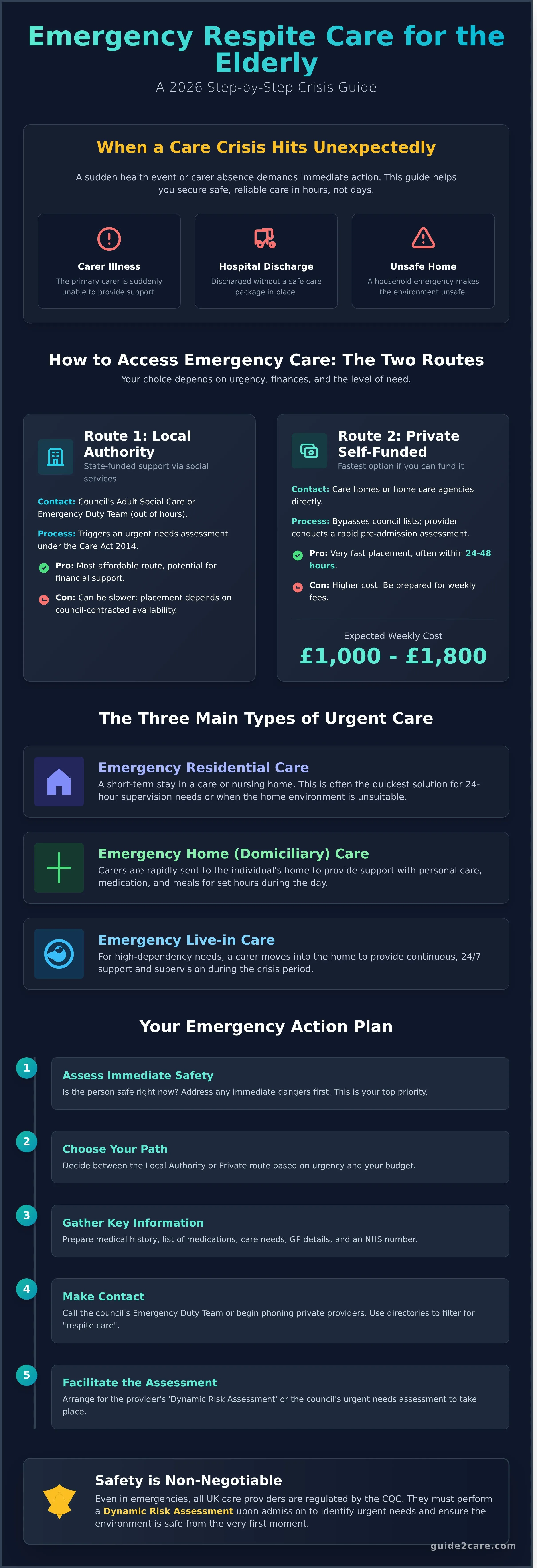
Emergency respite care is short-term, temporary care arranged at very short notice, typically within 24 to 48 hours. The need for this support often arises from a sudden crisis. Common triggers include the primary carer falling ill, an unexpected hospital discharge without a care package in place, or a household emergency that makes the home environment temporarily unsafe. While standard respite care is planned, an emergency situation removes the luxury of time. To understand the core purpose of this support, it is helpful to review What is Respite Care? in a broader context.
To better understand the options available, watch this helpful video overview:
When seeking support, it is important to distinguish between care at home and a residential stay. The "emergency" status is a critical factor; it can accelerate the needs assessment process with your local authority and may alter funding priority to ensure the immediate safety and well-being of the individual requiring care.
The Three Main Types of Urgent Care
When you need to arrange emergency respite care for elderly uk residents, support is typically delivered in one of three ways:
- Emergency Residential Care: This involves a short-term, temporary stay in a care home or nursing home. It is often the quickest solution when the home environment is not suitable or 24-hour supervision is required immediately.
- Emergency Home Care (Domiciliary): Carers are rapidly deployed to the individual's own home to provide support with personal care, medication, and meal preparation for set hours during the day.
- Live-in Care: For individuals with high-dependency needs, an emergency live-in carer can move into the home to provide continuous, 24/7 support and supervision during a crisis.
CQC Standards for Emergency Admissions
All care providers in the UK are regulated by the Care Quality Commission (CQC), and this includes emergency placements. Even in a time-critical situation, providers must adhere to fundamental standards of safety and care. They cannot bypass essential checks that ensure a person's dignity and well-being are protected.
To facilitate a safe and rapid admission, providers conduct a "Dynamic Risk Assessment" upon arrival or admission. This is an immediate evaluation to identify the most urgent care needs and any environmental risks, ensuring safety is managed from the first moment until a full, comprehensive care plan can be formalised.
How to Access Emergency Care: The Two Primary Routes
When a crisis occurs, you have two primary options for securing care: through your Local Authority (council) or by funding it privately. The best route depends on your urgency, financial situation, and the level of need. The council route may offer financial support but can be slower, while the private route offers speed at a higher cost.
Route 1: The Local Authority (Social Services)
For state-funded support, your first point of contact is your local council's Adult Social Care department. During office hours, you can call them directly to report a crisis and request an urgent Carer's Assessment or a needs assessment for the person you care for. Out of hours, you must contact the council's Emergency Duty Team (EDT). The process for Accessing Emergency Care via the NHS and social services begins with this official assessment.
To qualify for immediate help, the situation must meet the "urgent need" criteria under the Care Act 2014, typically involving a risk of harm or a complete breakdown of existing care arrangements. While this is the most affordable route for emergency respite care for elderly UK residents who are eligible, a major challenge can be availability. If the council has no contracted beds immediately available, they may have to arrange temporary domiciliary care instead.
Route 2: Private Self-Funded Respite
If you can fund the care yourself, the fastest method is to contact care homes or home care agencies directly. This route bypasses council waiting lists and assessments, allowing for admission often within 24 to 48 hours, provided a suitable place is available and a rapid pre-admission assessment can be completed by the provider.
While this guide focuses on the UK, the model of private home care is widespread. Services in other countries, such as AVIAN Care in Hungary, demonstrate how patient-focused home nursing and physiotherapy can be quickly arranged, offering an example of the type of support available through this route.
The primary consideration is cost. Expect to pay between £1,000 and £1,800 per week for a residential respite stay, with costs varying by location and the complexity of care required. To accelerate your search:
- Use the Guide2Care directory to find local providers.
- Filter your search for care homes that advertise "respite care" or "short-term stays".
- Contact providers directly to ask about immediate or "respite-ready" bed availability.
This approach gives you maximum control and speed, making it the most effective option for immediate placement when funds are available.
Navigating the Assessment Barrier and the Weekend Gap
Finding emergency respite care for elderly UK residents often involves two major hurdles: the assessment process and limited weekend services. Many families are told a full assessment is needed, which can take 48 hours or more, effectively blocking immediate help. This is particularly challenging when a crisis hits on a Friday afternoon, creating a "weekend gap" where council social services are unavailable. Some care homes may also insist on a pre-admission visit, which is impractical in an emergency. The key is to be prepared and know how to bypass these common delays.
The Weekend Survival Strategy
When you need help outside of standard 9-5 hours, you must act strategically. First, locate the "out-of-hours" or "emergency duty team" contact number for your local council; this is usually on their website. If council services are delayed, contact private care agencies that offer 24/7 on-call assessments. As a temporary measure, you can arrange for private domiciliary (home) care to provide immediate support while you secure a residential bed.
Speeding Up the Assessment Process
A care home or agency can only act quickly if you provide clear, comprehensive information. Prepare a one-page "Care Summary" sheet to accelerate the process. This document is vital for any provider assessing your loved one’s needs. Include the following essential details:
- Personal Details: Full name, date of birth, NHS number, and GP contact information.
- Medical History: A list of current conditions, medications, allergies, and mobility needs.
- Care Needs: Specifics on personal care, diet, continence, and cognitive state.
- Legal Status: Note any Do Not Resuscitate (DNR) orders and confirm if a Lasting Power of Attorney (LPA) for Health and Welfare is in place. An LPA allows a designated person to make decisions and sign contracts, which is critical for urgent admissions.
Having this information ready can significantly reduce delays. This preparation is a crucial step in arranging respite care quickly and efficiently. If the person is in hospital, the hospital discharge team can also be a powerful advocate. They have a duty to ensure a safe discharge and can liaise directly with care homes and social services to expedite an emergency placement.
A Step-by-Step Checklist for Securing Urgent Care
When a care crisis occurs, a structured approach is vital. Follow these steps to navigate the process efficiently and find a suitable placement without delay. This checklist simplifies the key actions you must take.
Step 1: Assess the immediate safety of the elderly person.
Is the individual at immediate risk of a fall, unable to manage personal hygiene, or confused about their medication? An honest assessment of their safety dictates the urgency of the situation and the level of care required.
This safety assessment should also extend to the security of the home itself. A broken lock, lost keys, or being locked out can become a genuine emergency, preventing carers from entering or leaving a vulnerable person unsecured. In these situations, a fast-response service is critical. For lock-related crises, a 24/7 provider like SaveMeLocksmith can resolve the issue quickly, ensuring the home remains safe and accessible.
Step 2: Determine your budget.
Understand if the care will be self-funded or if you need to apply for council funding. This is a critical step, as it determines who you contact first. Self-funders can approach care homes directly for faster placement, while council-funded care requires a needs and financial assessment via Adult Social Services.
Step 3: Gather essential documentation.
Having key information ready speeds up the admissions process. Prepare the following:
- A complete list of current medications and dosages.
- The individual's GP details and NHS number.
- Copies of any Lasting Power of Attorney (LPA) documents.
- Details of any existing care package or medical conditions.
Step 4: Contact the Emergency Duty Team or Private Providers.
For council support, contact your local authority’s Adult Social Care team or its out-of-hours Emergency Duty Team. If you are self-funding, start contacting private care homes. Many providers offer rapid-response emergency respite care for elderly UK residents and can often arrange assessments and admissions within 24 hours.
Step 5: Confirm the trial period and transition plan.
Before agreeing to a placement, clarify the terms. Ask about the trial period, the notice required to extend the stay, and the process for transitioning the person back home or into a long-term arrangement if needed.
The Essential "Grab Bag" for Emergency Respite
A pre-packed bag makes a sudden move less distressing. Ensure you have a 7-day supply of all medications in their original packaging, ideally with a MAR chart from the GP or pharmacy. To reduce "Transfer Trauma" for those with dementia, include familiar items like a favourite blanket, family photos, or a specific mug. Pack comfortable clothing, toiletries, and any essential aids like glasses or hearing aids.
Questions to Ask a Provider Before Saying Yes
In a crisis, it is still important to ask the right questions. A reputable provider will offer clear and direct answers. Use this list as a guide:
- "Can you perform a care needs assessment via video or phone right now?"
- "What is the all-inclusive weekly rate for emergency stays? Are there any extra costs?"
- "What is the notice period if we need to extend the stay beyond the initial agreement?"
You can find and compare local providers on directories like Guide2Care to streamline your search.
Finding the Right Emergency Care Provider with Guide2Care
In a crisis, you need clear information and fast solutions. Guide2Care is designed to simplify your search for urgent care, providing a structured directory of providers. Our platform helps you quickly identify and contact suitable care homes or home care agencies, ensuring you can make an informed decision under pressure. Use our tools to filter options, check quality standards, and understand the next steps.
Our directory simplifies the search for emergency respite care for elderly uk by consolidating essential information in one place. You can focus on what matters: finding a safe and appropriate placement without delay.
Why Use a Directory During a Crisis?
When time is critical, a comprehensive directory is an invaluable tool. It removes the need to search multiple websites or make speculative calls. Instead, you get direct access to the information required to make a swift, confident choice. Key benefits include:
- Saving Time: View all local providers in a single, structured list. Filter by care type, location, and availability to narrow your options immediately.
- Verified Details: Access up-to-date contact information for care home managers and registered providers, ensuring you can speak to the right person quickly.
- Direct Comparison: Easily compare the services of residential care homes against those offering nursing care to match the specific needs of your loved one.
Every listing on Guide2Care includes the provider's latest Care Quality Commission (CQC) rating. This allows you to assess the quality and safety of a service at a glance, a crucial step when arranging emergency respite care for elderly uk.
Alongside provider details, our platform offers clear guides on care funding. Explore our resources to understand how respite care is paid for, whether through self-funding, Local Authority support, or NHS continuing healthcare.
Next Steps: From Emergency to Stability
Emergency respite provides immediate safety and support, but it is also an opportunity to plan for the future. Once the immediate crisis has passed, use the respite period to establish a sustainable, long-term care plan. This involves reviewing the care provided to see if it meets long-term needs and beginning the formal financial assessment process with your Local Authority to secure ongoing funding if required.
Part of this long-term planning should also focus on the carer's own well-being to prevent future crises caused by burnout. Scheduling regular, planned respite is essential for recovery. For those looking to arrange a truly restorative holiday, agencies such as Crestwell Travel Services can help organise stress-free cruise and all-inclusive packages.
When you need to act fast, use a tool built for clarity and efficiency. Find the care you need today on Guide2Care.
Your Next Steps for Securing Urgent Care
Navigating a care crisis requires clear information and swift action. This guide has shown that accessing emergency respite care for elderly uk is achievable through two main routes: your local council or private providers. Understanding the assessment process and preparing key information in advance are critical steps to overcoming common delays, particularly outside of standard working hours. The objective is to act decisively with the right knowledge.
When speed is essential, finding a trusted provider is the priority. Guide2Care simplifies this process. Our comprehensive database contains CQC-registered providers across the UK, giving you direct access to vetted options. We also provide neutral, practical advice and detailed guides on funding to support your decisions. You have the information needed to find the right solution.
Take control of your search. Use our directory to find available care now.
Find The Care You Need: Search Our UK Directory
Frequently Asked Questions
How much does emergency respite care cost in the UK?
The cost of emergency respite care varies by location and the type of care required. A residential respite stay typically costs between £800 and £1,500 per week. Emergency home care is usually charged at an hourly rate, from £20 to £35 per hour. Be aware that some providers may apply a surcharge for arrangements made at very short notice. Always request a clear breakdown of all costs before committing to a service.
Can I get emergency respite care on a weekend?
Yes, you can arrange emergency respite care on a weekend or bank holiday. Many private care agencies and residential homes have 24/7 phone lines to manage urgent requests. Additionally, every local council has an out-of-hours Emergency Duty Team for Adult Social Services. This ensures that you can access professional support and arrange care whenever a crisis occurs, providing peace of mind for families and carers.
Will the council pay for emergency respite care?
A local council may fund or contribute to the cost of emergency respite care, but this is subject to assessment. An urgent needs assessment will determine if the person meets the national eligibility criteria for care. A financial assessment, or means test, will then establish how much, if anything, the individual must contribute. In a crisis, contact your local Adult Social Services department to request an urgent assessment for support.
What happens if an elderly person refuses emergency care?
If an elderly person has the mental capacity to make their own decisions, they have the legal right to refuse care, even if that decision seems unwise. If there are serious concerns that the person lacks the capacity to understand the risks, a formal mental capacity assessment may be needed. In a genuine emergency, social services or healthcare professionals may have to make a 'best interests' decision to ensure the person's immediate safety.
What other types of health events are considered emergencies for the elderly?
While this guide focuses on respite care, any sudden health decline can be an emergency. This includes issues like severe infections, dehydration, or acute pain from conditions like a severe toothache, which can impact nutrition and overall health. A dental emergency, in particular, requires prompt, specialised care. For those in London seeking such services, clinics like Bespoke Dental Fulham offer specialist treatments that can alleviate acute dental crises.
What other types of health events are considered emergencies for the elderly?
While this guide focuses on respite care, any sudden health decline can be an emergency. This includes issues like severe infections, dehydration, or acute pain from conditions like a severe toothache, which can impact nutrition and overall health. A dental emergency, in particular, requires prompt, specialised care. For those in London seeking such services, clinics like Bespoke Dental Fulham offer specialist treatments that can alleviate acute dental crises.
How long can emergency respite care last?
Emergency respite care is a short-term solution designed to manage an immediate crisis. It typically lasts from a few days up to several weeks, with one or two weeks being a common duration. The primary purpose is to provide a safe, temporary arrangement while a more sustainable, long-term care plan is put in place. The length of the stay will be determined by the individual's specific circumstances and needs.
Do I need a Power of Attorney to arrange emergency care?
A Power of Attorney (LPA) is helpful but not always essential for arranging emergency care. If the individual has mental capacity, they can consent to the care themselves. If they lack capacity, a registered Health and Welfare LPA allows the appointed attorney to make decisions on their behalf. Without an LPA, social services and healthcare professionals will make a 'best interests' decision, in consultation with the family.
What is the difference between emergency respite and intermediate care?
Emergency respite care is a reactive service to manage a crisis, providing a safe environment when a carer is unavailable or the person's needs suddenly escalate. Intermediate care, also known as reablement, is a proactive, short-term programme of support, usually following a hospital stay. It is focused on helping an individual regain skills and independence and is often provided free of charge by the NHS or local authority for up to six weeks.
What if family members need to travel long distances for a care emergency?
A care crisis often requires family members to travel urgently, sometimes across countries. When commercial flights are too slow or unavailable, specialist travel services can be a solution. For urgent long-distance or international travel, a private charter service like FlyEliteJets can arrange rapid transport, ensuring you can reach your loved one as quickly as possible during a critical time.
Can I get emergency home care instead of a care home stay?
Yes, emergency home care is a common alternative to a residential stay. Many domiciliary care agencies specialise in providing carers at short notice to support a person in their own home. This is often a suitable solution if the individual's needs can be met safely with visiting support rather than 24-hour supervision. This form of emergency respite care for elderly UK families provides flexibility and allows the person to remain in familiar surroundings.