How to Arrange Care for Elderly Parents From Abroad: The Complete UK Guide

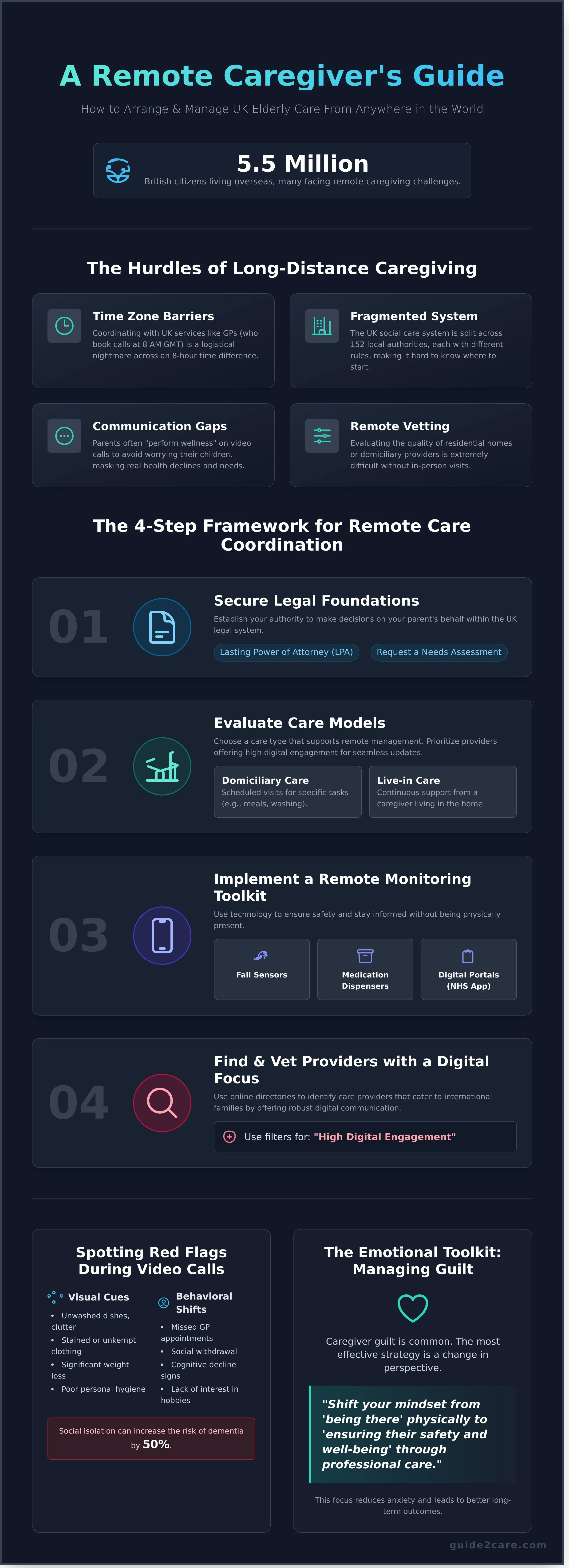
What if you could manage a parent’s entire UK care plan from a different time zone without missing a single medical update? With 5.5 million British citizens living overseas according to ONS data, remote caregiving is a logistical challenge for many families. You likely feel the strain of time zone barriers when calling social workers or the fear that a health decline will go unnoticed while you're thousands of miles away. It's difficult to vet residential homes or domiciliary providers when you can't visit them in person.
Learning how to arrange care for elderly parent from abroad requires a structured, functional approach to bridge this physical gap. This guide provides a step-by-step framework to master the logistics of the UK care system from anywhere in the world. You'll learn how to establish legal authority through a Lasting Power of Attorney, build a reliable local support network, and use digital-first tools to monitor care quality. Follow these practical steps to find the care you need and ensure your parent remains safe and supported.
Key Takeaways
- Establish a Lasting Power of Attorney (LPA) to manage health and financial decisions within the UK legal framework from any location.
- Discover how to arrange care for elderly parent from abroad by navigating the UK’s social care system and overcoming time zone communication barriers.
- Evaluate domiciliary and live-in care models based on their ability to provide digital reporting and real-time updates for remote coordinators.
- Implement a digital monitoring toolkit featuring fall sensors and medication dispensers to ensure safety without being physically present.
- Use Guide2Care’s directory filters to identify and vet UK providers that prioritize high digital engagement for international families.
The Challenges of Long-Distance Caregiving in the UK
Remote caregiving involves managing the health and safety of a relative while living in a different country or time zone. In the United Kingdom, this task is complicated by a decentralized system. Social care in England is managed by 152 different local authorities, each with its own eligibility criteria and funding thresholds. This fragmentation often leaves families unsure of how to start the process.
Understanding how to arrange care for elderly parent from abroad requires a shift in perspective. You aren't just a family member; you are a project manager. You must coordinate between GPs, local councils, and private domiciliary agencies. According to 2021 census data, over 5 million people in England and Wales provide unpaid care, but those doing so from overseas face unique digital and logistical barriers.
This project management role can feel overwhelming. In many countries, specialized advisory services have emerged to help families navigate the system and coordinate care. As an example of this support model, you can discover Het Zorgkabinet, a service offering guidance to families in the Netherlands.
To better understand this concept, watch this helpful video:
The communication gap is a primary obstacle. Time zone differences, such as the 8 hour gap between London and San Francisco, make it difficult to speak with GP surgeries that only take bookings at 8:00 AM GMT. Additionally, the UK healthcare system relies heavily on digital portals like the NHS App. If a parent isn't tech-literate, the caregiver must manage these credentials from thousands of miles away.
Parents often minimize their struggles during international calls. They may "perform" wellness for the duration of a 20 minute FaceTime session to avoid worrying their children. This masking makes it hard to determine how to arrange care for elderly parent from abroad before a crisis occurs. You must adopt the role of a Remote Coordinator. This means tracking medication schedules, vetting local care providers, and maintaining a directory of emergency contacts in the UK.
Identifying Red Flags from a Distance
Visual cues are vital during video calls. Look for unwashed dishes in the background, stained clothing, or significant weight loss. Behavioral shifts are equally telling. If a parent misses multiple dental or GP appointments, it often indicates cognitive decline or mobility issues. Social isolation is a clinical risk factor for elderly expats' parents that increases the risk of dementia by 50% according to 2020 longitudinal studies. Watch for signs of social withdrawal, such as a parent no longer mentioning friends or local community groups.
A proactive way to combat this isolation is by helping your parent engage in a fulfilling hobby, or even turn a craft into a small home-based business. For those with a creative streak, selling items online can provide a sense of purpose and community connection. Platforms focused on supporting small UK sellers, such as Anglia Market, can be an accessible starting point for this type of venture.
The Emotional Toll: Managing Guilt and Anxiety
Caregiver guilt is a common experience for those living abroad. Many feel intense pressure to move back to the UK, even when it isn't financially or professionally viable. You must set firm boundaries with siblings or relatives living locally to prevent resentment. Focus on the quality of care rather than your physical presence. Your goal is to ensure they are cared for by professionals, which is often more effective than providing the care yourself. Shifting your mindset from "being there" to "ensuring safety" reduces anxiety and leads to better long-term care outcomes.
The stress of managing care from afar can be immense, and it's crucial for caregivers to look after their own mental health as well. For those seeking professional support to navigate these complex emotions, you can learn more about Safe Harbor Behavioral Health, which offers services to help individuals manage stress and emotional challenges.
Finding outlets to de-stress is equally important. Many caregivers find that planning a future trip or engaging in an immersive hobby can provide a much-needed mental break. For those who find solace in nature and adventure, planning an escape with a provider like Cozumeldivehub can offer a rejuvenating experience to help recharge from the pressures of remote caregiving.
For those considering a return to the UK to provide direct support, the process can be complicated if a non-British spouse is part of the move. Understanding the necessary immigration steps is crucial; to get a clearer picture of what's involved, you can discover 1 Absolute Advisor.
The physical logistics of an international move are also a major consideration. For those needing to ship furniture and personal effects, specialist freight forwarding services like those offered via gateway-cargo.com can simplify the process.
Alongside arranging professional services, many find that sending thoughtful gifts that support wellbeing can help bridge the emotional distance. For those based in Asia, traditional health foods are a popular choice; specialists like royalnest.com.sg offer premium, ready-to-eat options.
These emotional challenges are a common part of the expatriate experience, where personal and professional lives are built in one country while deep family ties remain in another. For more human-centered stories on this topic, you can visit Gulf–ASEAN Exchange.
Similarly, ensuring your own life abroad is stable is key to being an effective remote caregiver. This includes managing logistical hurdles in your country of residence, such as securing proper health coverage. For expats in the Schengen Area, you can discover Insurance VISA for health insurance solutions tailored to foreigners.
For many expatriates, managing professional interests is as complex as handling family matters. Entrepreneurs building a life abroad often face a steep learning curve with local business regulations. For those looking to establish a company in the Gulf, for example, it's often wise to seek specialized guidance; you can check out Sarsan Corporate Services which helps with business setup in the UAE.
This complex balancing act often extends to other family members, such as children planning to attend university in the UK. Navigating the admissions process from abroad presents its own set of challenges, and many families seek expert help from consultancies like SBUB Group Ltd to manage applications and ensure a smooth transition into higher education.
Navigating the UK Legal and Regulatory Framework Remotely
Managing a parent's care from a different time zone requires a firm grasp of the UK legal system. You cannot rely on informal arrangements when professional caregivers or local authorities are involved. The Mental Capacity Act 2005 serves as the primary framework in England and Wales. It protects individuals who may lack the mental capacity to make their own decisions. If you are learning how to arrange care for elderly parent from abroad, you must ensure all actions comply with this Act to avoid legal delays or disputes with medical professionals.
Your first practical step is to request a Needs Assessment from the Adult Social Services department of your parent's local council. Under the Care Act 2014, local authorities must carry out this assessment for anyone who appears to need care, regardless of their financial situation. This assessment is free. It identifies exactly what support your parent requires, such as help with washing, dressing, or household tasks. You can often start this process online through the council's portal or via a telephone appointment. If your parent is planning to move back to Britain after living away, review the Official government guidance for returning to the UK to see how residency status affects their immediate access to these services.
Following the Needs Assessment, the council will conduct a Financial Assessment, also known as a means test. In England, if your parent has assets above £23,250, they'll likely have to pay for their care in full. This threshold includes savings and, in some cases, the value of their home. Understanding these figures early helps you plan the long-term budget without surprises.
Securing Legal Authority (LPA)
A Lasting Power of Attorney (LPA) is the most critical document for remote care management. It's a legal tool that allows your parent to appoint you to make decisions on their behalf. There are two distinct types. The Property and Financial Affairs LPA lets you manage bank accounts, pay bills, and sell property. The Health and Welfare LPA covers decisions about medical treatment and daily care routines. You must register these with the Office of the Public Guardian (OPG) before use. The registration fee is currently £82 per LPA. It's essential to act while your parent still has the mental capacity to understand and sign the documents. If they lose capacity before an LPA is registered, you'll have to apply to the Court of Protection for a Deputyship, which can take over six months and cost significantly more in legal fees.
Using CQC Ratings as Your 'Eyes and Ears'
The Care Quality Commission (CQC) is the independent regulator of all health and social care services in England. They inspect providers and publish reports that serve as your primary vetting tool from afar. Providers are given one of four ratings: Outstanding, Good, Requires Improvement, or Inadequate. When you search for care providers, always check the date of their last inspection. A "Good" rating from 2023 is more reliable than an "Outstanding" rating from 2018.
Don't just look at the overall grade. Open the full PDF report and look for the "Well-led" and "Responsive" sections. These chapters often contain feedback from families about communication. If a report mentions that the manager is "easily contactable" or "provides regular updates to relatives," it's a strong indicator that they can handle the demands of a long-distance relationship. You can also read our CQC Ratings Guide to learn how to spot red flags in an inspection summary before you sign a contract.
Evaluating Care Models: Which is Best for Remote Management?
Choosing the right care model is the most critical decision when learning how to arrange care for elderly parent from abroad. You must balance the level of medical need with your parent's desire for independence. In the UK, three primary models exist: domiciliary care, live-in care, and residential care homes. Each offers different levels of visibility for families living in different time zones.
Digital reporting is now a standard feature in the UK care sector. Most professional agencies use electronic care planning software; you can see examples of domiciliary support by visiting websites such as bloomfield-care.com. These platforms provide families with real-time access to care logs, medication records, and daily notes via a secure app. This transparency is vital for remote management. It allows you to see exactly when a carer arrived and what tasks they completed without waiting for a weekly phone call.
Costs for 2026 reflect consistent annual increases in staff wages and operational overheads. Expect to pay between £32 and £38 per hour for domiciliary care. Residential care costs in 2026 average between £980 and £1,550 per week, depending on the region and the level of nursing required. To understand your eligibility for financial help, consult the NHS social care and support guide. State funding remains strictly means-tested in England. If your parent has assets, including property, worth more than £23,250, they'll likely be responsible for the full cost of their care.
Home Care vs. Residential Care
Home care allows parents to stay in familiar surroundings. You can supplement this with remote monitoring technology like motion sensors or smart dispensers. Residential homes become the safer option when cognitive decline or physical frailty makes 24-hour professional supervision essential. Supported living, often called "Extra Care" in the UK, serves as a middle ground. It provides a private flat within a complex that offers on-site staff and communal activities, maintaining independence while ensuring help is available.
The Benefits of Live-in Care for Expats
Live-in care provides a dedicated carer who resides in the home. This person acts as your primary liaison, offering a level of 24/7 oversight that hourly visits can't match. For those learning how to arrange care for elderly parent from abroad, this model reduces the stress of coordinating multiple staff members. Most modern live-in providers use digital logging apps like Birdie or Nourish. These platforms let you view health metrics and daily activities from any country. Live-in care costs approximately £1,250 to £1,800 per week. This is often more cost-effective than premium nursing homes, especially for couples who wish to stay together.
When searching for such professionals, it can be beneficial to look at specialist agencies. For example, you can discover Superstar Nannies, an international recruitment firm that places elite private household staff, ensuring a high standard of care.
Respite care acts as a vital trial period for any long-distance arrangement. Don't commit to a permanent contract immediately. Use your next visit to the UK to book a two-week respite stay in a residential home or hire a temporary live-in carer. This allows you to observe how your parent adapts to the support while you're physically present to manage the transition. It also gives you a chance to meet the management team and verify the quality of their digital reporting systems. Use these trial periods to test the following:
- The responsiveness of the care manager to your emails and calls.
- The accuracy and detail of the digital care logs.
- How well the carer interacts with your parent's existing routine.
- The ease of managing invoices and payments from an international bank account.
By testing these elements during a respite period, you can build a sustainable long-term plan that works for both your parent in the UK and your family abroad.
The Remote Coordinator’s Toolkit: Digital Monitoring and Tech
Managing care from a distance requires a robust technological framework. You must bridge the physical gap using real-time data and reliable communication channels. Learning how to arrange care for elderly parent from abroad involves more than just hiring help; it requires setting up a "Digital Care Circle." This involves using specialized apps, such as Jointly by Carers UK, to synchronize schedules between family members, domiciliary care workers, and GPs. These platforms ensure everyone sees the same medication logs, appointment reminders, and daily care notes, reducing the risk of communication breakdowns.
Efficiency depends on consistent data flow. Establish a weekly status call protocol with professional care managers or lead carers. Schedule these for a fixed time, such as Tuesday at 10:00 AM GMT, to ensure attendance. Use a standardized checklist to cover health changes, social engagement, and home maintenance. This structured approach prevents vital details from being missed during emotional conversations. According to the 2023 State of Caring report, clear communication is the primary factor in reducing stress for long-distance caregivers.
Financial logistics are a common hurdle when you aren't physically present to sign checks or pay cash. Use UK-based third-party payment services or specialized "carer cards" that allow for controlled spending on groceries and essentials. These platforms provide digital receipts and spending limits, which protect your parent's assets while ensuring carers have necessary funds. Ensure you have a Lasting Power of Attorney (LPA) registered with the Office of the Public Guardian to manage these affairs legally. This legal standing is vital for discussing billing issues with UK utility companies or local authorities.
Essential Tech for Long-Distance Safety
Privacy is a priority. Choose passive monitoring systems over invasive cameras. Motion sensors in the kitchen or bathroom can alert you to unusual inactivity without compromising dignity. Smart pill dispensers, such as those from PivoTell, provide a physical barrier to over-medication and send an alert to your smartphone if a dose is missed. For active parents, personal alarms with roaming SIM cards are essential. These devices use the strongest available mobile network, whether it's O2, EE, or Vodafone, to ensure a signal is always available. Modern telecare systems now support over 1.7 million people in the UK, providing 24/7 monitoring for a typical weekly fee of £5 to £10.
Building a Local 'Emergency Response' Team
Technology cannot replace physical presence during a crisis. Identify a local "First Responder" who lives within a 15-minute radius. This could be a trusted neighbor or a professional keyholding service. Ensure the local GP surgery has your international phone number and email on file as the primary contact. Encourage your parent to use the "Message in a Bottle" scheme. This is a free initiative by Lions Clubs International where a small green bottle kept in the fridge contains vital medical information for emergency services. This simple tool has helped millions of UK residents by providing paramedics with instant access to medical histories and allergy lists. When you are figuring out how to arrange care for elderly parent from abroad, these local safety nets provide the final layer of security.
Explore our directory to find the care you need and compare local providers today.
Using Guide2Care to Arrange Support from Anywhere
Managing the UK care system from thousands of miles away is a significant logistical challenge. Guide2Care simplifies this by providing a centralized directory of over 15,000 registered care providers across England, Scotland, Wales, and Northern Ireland. Understanding how to arrange care for elderly parent from abroad requires a focus on digital transparency and local reliability. You can bridge the distance gap by using the 'High Digital Engagement' filter. This identifies providers who utilize electronic care planning systems. These systems often include dedicated family portals where you can view daily logs, medication records, and activity notes in real-time from any time zone.
Vetting providers is straightforward with our searchable database. You can access the latest inspection reports from the Care Quality Commission (CQC) or its regional equivalents directly through the platform. Don't rely solely on official ratings. Read localized reviews from other families in similar situations. These testimonials offer insights into how a home handles communication with relatives who aren't local. Look for specific mentions of video call reliability, the frequency of photo updates, and response times to international emails. A provider that maintained high communication standards during the 2020 to 2022 period is likely to have robust systems for remote family engagement today.
Filtering for Quality and Location
Start your search by entering the postcode of a trusted local contact, such as a family friend, a solicitor, or a neighbor. This ensures the care is located near someone who can visit in an emergency or attend physical meetings. Use the 'Types of Care' filters to narrow results based on medical requirements. If your parent is among the 900,000 people currently living with dementia in the UK, select 'Dementia' or 'Parkinson’s' to find facilities with specialized staff and adapted environments. Find Care Homes in UK using these specific criteria to ensure the facility matches your parent's clinical needs.
Finalizing the Care Plan
Before signing a contract, ask providers about their specific 'Overseas Family Communication Policy'. Confirm if they offer scheduled monthly Zoom updates or if they use social engagement apps like StoriiCare to share daily highlights. Understanding the financial commitment is equally vital. In England, the upper capital limit for local authority funding is currently £23,250. If your parent's assets exceed this, you'll need to manage private funding or top-up fees. Use Guide2Care resources to understand the legalities of third-party payments and how to calculate total weekly costs. Once you have a shortlist of 3 to 5 providers, book virtual tours. Most modern facilities now offer 360-degree video walkthroughs and live video tours via tablets to accommodate international families. Explore our directory to find the care you need today.
When you finally decide how to arrange care for elderly parent from abroad, your next step is to request a formal assessment. UK providers must conduct a pre-admission assessment to ensure they can meet the individual's needs. Request that this assessment is recorded or that you are patched in via a video link. This ensures you remain an active participant in the care planning process despite the physical distance.
Take the Next Step in Remote Care Management
Managing a care plan from thousands of miles away is a practical challenge that requires the right tools. You've identified how to navigate CQC regulations and integrate digital monitoring to stay connected. Knowing how to arrange care for elderly parent from abroad means balancing legal requirements with reliable local support. Guide2Care provides a structured path through this complexity. Our database features over 15,000 CQC-rated providers, ensuring you choose services that meet national quality standards. We offer detailed guides on UK care funding to help you manage the financial aspects of care. You'll also find a complete glossary of sector terminology to help you communicate effectively with professionals. Don't let the distance create a barrier to quality support. Use our resources to build a secure and transparent care structure for your family today.
Find The Care You Need in our comprehensive UK directory
Frequently Asked Questions
Can I apply for UK Attendance Allowance if I live abroad?
You can manage an application for UK Attendance Allowance from abroad if your parent lives in the UK. The claimant must be physically present in Great Britain and have reached State Pension age. You'll need to act as their appointee if they lack the mental capacity to sign the forms. Use the official GOV.UK portal to download form AA1 and submit it via post to the DWP.
How do I find a solicitor in the UK to handle LPA remotely?
Use the Law Society’s "Find a Solicitor" website to locate a practitioner specializing in Wills and Equity. Most UK firms now offer identity verification through apps like ID.me and conduct consultations via Zoom or Microsoft Teams. This allows you to coordinate a Lasting Power of Attorney (LPA) without visiting a physical office. Ensure the solicitor is regulated by the Solicitors Regulation Authority (SRA).
What happens if my parent has a fall and I am in a different time zone?
Install a 24 hour monitored personal alarm system that connects to a UK based response center. These services, such as those provided by PPP Taking Care, contact local emergency services or a designated UK keyholder immediately. You should also hire a local care manager to act as your representative. This ensures someone responds to incidents while you're asleep in a different time zone.
Is it possible to get a virtual tour of a UK care home?
Yes, 85% of UK care homes now offer virtual tours via WhatsApp, FaceTime, or 3D Matterport software. Request a live video walk-through rather than a pre-recorded video. This allows you to ask the manager to show specific areas like the kitchens or garden. Seeing the daily environment helps you understand how to arrange care for elderly parent from abroad with more confidence.
How often should I fly back to the UK to check on care quality?
Aim to visit the UK at least once every six months to conduct a physical review of care quality. While digital reports provide data, in-person visits allow you to check for subtle changes in your parent's wellbeing or home maintenance. Supplement these visits by hiring an independent advocate to perform monthly spot checks. This creates a consistent oversight loop between your scheduled flights. For urgent travel needs or to make these trips more efficient, you can explore On-Demand Private Jet Charter to bypass commercial flight schedules.
These visits can be emotionally taxing, so it's important to look after your own wellbeing. If time allows, consider taking a short break to recharge during your trip. Travel blogs can be a great source of inspiration for this; for example, Tripaholics offers ideas for unique UK getaways. For a fully guided experience to help you de-stress, you can visit McPhail Scottish Tours. For those traveling through Europe, you can also visit Fun in Reykjavik for ideas on how to unwind. For those who need a complete escape to recover from caregiver stress, dedicated travel services like crestwellgetaways.com can arrange relaxing cruise or resort packages.
Can the Local Authority refuse to speak to me because I live abroad?
The Local Authority cannot refuse to communicate with you based on your location. Under the Care Act 2014, councils have a legal duty to involve the person’s representative in assessment and care planning. Provide the Social Services department with a written copy of your Power of Attorney to ensure you're included in all meetings. They're required to make reasonable adjustments, such as scheduling phone calls during your working hours.
What is the average cost of live-in care in the UK in 2026?
The average cost of live-in care in the UK is projected to reach £1,750 per week by 2026. This figure accounts for annual increases in the National Living Wage and rising operational costs for providers. Basic companionship services may start at £1,300, while complex nursing needs can exceed £2,200 weekly. Always request a detailed quote that includes any additional bank holiday premiums or mileage charges for the carer.
How do I manage my parent's UK bank account from overseas for care fees?
Register your Lasting Power of Attorney (LPA) with your parent's bank to gain full online access to their accounts. Most major banks like HSBC and Lloyds have dedicated third-party access teams to handle international applications. Once registered, you can set up standing orders for care fees and monitor transactions from your smartphone. Knowing how to arrange care for elderly parent from abroad includes securing these financial links early.