How to Choose the Right Care Home for Dementia: A Complete 2026 UK Guide

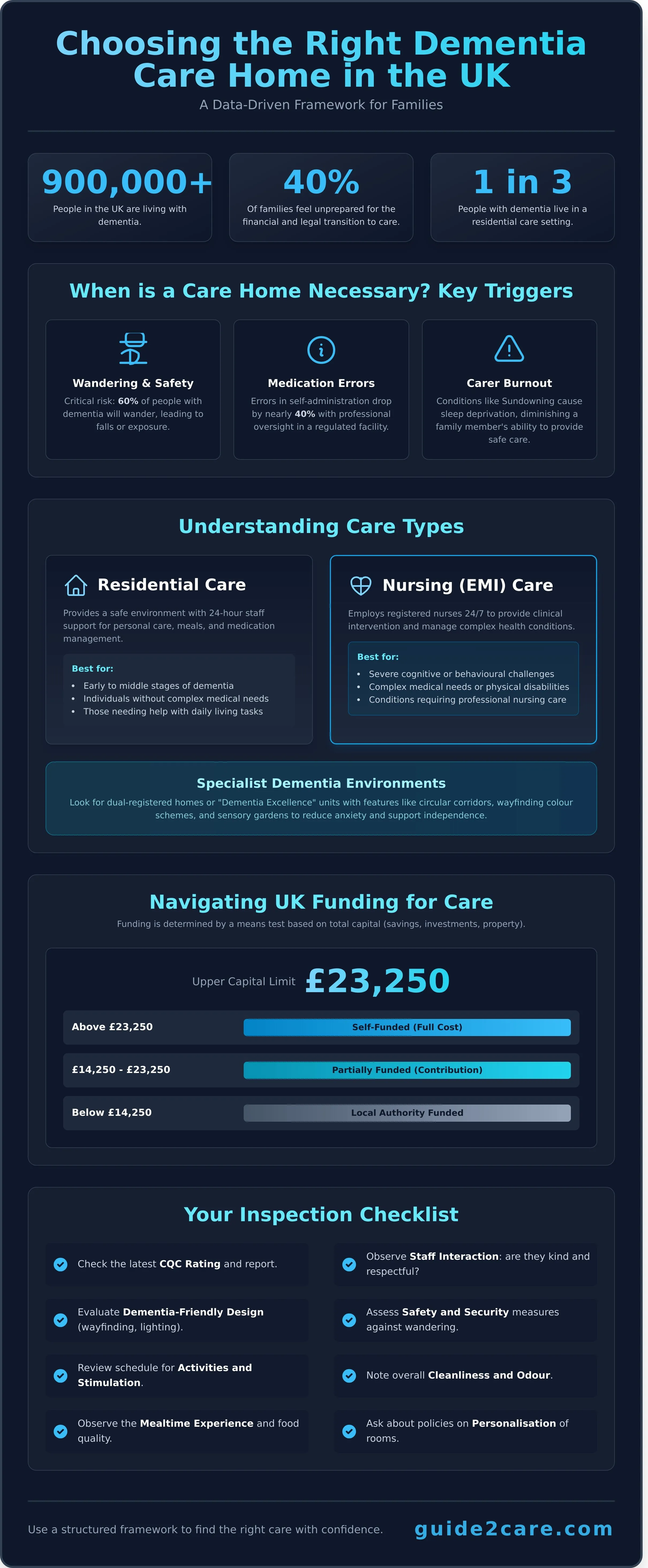
In 2024, more than 900,000 people in the UK live with dementia, yet 40% of families report they feel completely unprepared for the financial and legal transition into residential care. You likely find the current system difficult to navigate, especially when you're balancing the emotional weight of a move with the technicalities of a local authority means test. Learning how to choose the right care home for dementia requires a methodical approach to ensure your relative receives specialist support that maintains their dignity and safety.
We've designed this guide to simplify your search. You'll gain a clear understanding of the £23,250 capital threshold for UK funding and learn how to interpret Care Quality Commission (CQC) reports with precision. This 2026 framework provides a 10 point checklist for your site visits and explains the critical differences between residential and nursing dementia care. Use these steps to find the care you need and move forward with the confidence that your choice is based on facts rather than uncertainty.
Key Takeaways
- Identify critical safety triggers, such as wandering or medication errors, to determine when residential dementia care becomes necessary.
- Navigate the 2026 UK funding landscape by understanding means tests, capital limits, and the specific requirements for EMI nursing care.
- Learn how to choose the right care home for dementia by using a structured inspection framework and comparing providers via the Guide2Care directory.
- Evaluate physical environments for dementia-friendly features, including sensory lighting and wayfinding aids that support resident independence.
- Plan a successful transition for those with memory loss by filtering results by CQC rating and following practical steps for a calm moving day.
Recognising the Right Time: When is a Dementia Care Home Necessary?
Determining the transition point from home care to residential support is a data-driven process. It involves assessing the balance between safety and independence. Most families begin investigating how to choose the right care home for dementia when daily living tasks become unmanageable or unsafe. According to the Alzheimer's Society, there are approximately 900,000 people living with dementia in the UK, and one third of them live in residential care settings. This transition often follows a specific trigger or a decline in the primary carer's health.
Safety triggers are the most common reason for immediate admission. Wandering is a critical risk; data suggests 60% of people with dementia will wander at least once. This behaviour frequently leads to falls or exposure to the elements. Physical health complications, such as urinary tract infections (UTIs) or chest infections, occur frequently in people with advanced dementia. These conditions often lead to hospitalisation. Care homes in the UK offer a structured environment that monitors these health risks 24 hours a day, reducing the likelihood of emergency room visits.
Specialist environments improve quality of life by providing targeted stimulation. In a home setting, a person with dementia might spend 80% of their day in sedentary activities. Specialist homes use layout designs, such as circular corridors and sensory gardens, to encourage safe movement. They also ensure medication is administered correctly. Errors in medication management drop by nearly 40% when moving from self-administration to professional oversight in a regulated facility.
Clinical and Safety Indicators
Progressive cognitive decline eventually requires 24/7 supervision. In 2023, clinical assessments often focus on the person's ability to respond to emergencies, such as fire alarms or kitchen accidents. Physical health issues like mobility loss or dysphagia (difficulty swallowing) require professional intervention that home carers cannot always provide. Social isolation is another clinical factor. Research indicates that 1.4 million older people in the UK suffer from chronic loneliness, which accelerates cognitive decline by up to 20%.
The Carer Perspective: Assessing Your Capacity
Carer burnout is a functional barrier to high-quality care. Sundowning, a state of confusion and agitation occurring between 4:00 PM and 11:00 PM, often makes overnight care impossible for family members. When a carer experiences chronic sleep deprivation, their ability to provide safe care diminishes. Recognising these limits is a practical step. Transitioning the person to a professional facility allows the family to revert to their original roles. It's often more effective to be a visiting family member than an exhausted, untrained medical provider. Understanding how to choose the right care home for dementia ensures the person receives professional support while the family maintains their own well-being.
Understanding the UK Care Framework: Types, Funding, and Legalities
The UK care system is complex and highly regulated. You must understand the specific categories of support available to make an informed decision for your family. Finding the best environment depends on the level of medical supervision required and the financial resources available. This framework ensures that individuals receive care appropriate to their cognitive and physical health while protecting their legal rights.
Residential vs. Nursing Dementia Care
Residential dementia homes provide a safe environment with 24-hour staff support. They assist with personal care like bathing, dressing, and medication management. These settings suit individuals in the early to middle stages of dementia who don't have complex medical needs. In contrast, EMI (Elderly Mentally Infirm) nursing homes employ registered nurses 24/7. You'll need this level of care if your loved one has physical disabilities, severe behavioral challenges, or medical conditions requiring clinical intervention. Understanding these distinctions is vital when learning how to choose the right care home for dementia for your specific situation.
- Dual-registered homes: These facilities provide both residential and nursing care. They allow residents to stay in the same environment as their needs increase, preventing the trauma of a later move.
- Specialist Dementia Units: These "Dementia Excellence" wards feature specific architectural designs. They use non-reflective glass, "wayfinding" color schemes, and circular corridors to reduce anxiety and wandering.
Navigating Assessments and Funding
The NHS guidance on dementia care homes states that the process begins with a Social Services Needs Assessment. You trigger this by contacting the local authority where the person with dementia lives. Following this, a Financial Assessment (Means Test) determines who pays. The 2026 UK funding landscape introduces a £86,000 cap on personal care costs. Under these rules, the upper capital limit for state support is set at £100,000. If assets are below £20,000, the local authority usually pays for care. If assets fall between £20,000 and £100,000, the council provides partial funding based on a sliding scale.
NHS Continuing Healthcare (CHC) is a separate funding stream. It covers 100% of care costs for individuals with a "primary health need." This is difficult to secure for dementia alone but applies if the condition creates high-intensity medical requirements or unstable health. You can search for providers that accept local authority rates to ensure long-term financial sustainability and avoid top-up fee surprises.
These official funding streams are often supplemented by the tireless work of charities, whose awareness campaigns are vital for research and influencing policy. Such campaigns often gain significant reach through celebrity endorsements, a field where agencies like The Celebrity Group specialise in creating impactful partnerships.
Legal Protections and Quality Monitoring
A Lasting Power of Attorney (LPA) is a critical legal tool. Without a Health and Welfare LPA, family members don't always have the final say in care home placement or medical treatments. It's best to register this while the individual still has the mental capacity to do so. It provides a clear legal pathway for decision-making as the condition progresses and ensures the person's previous wishes are respected.
The Care Quality Commission (CQC) regulates all UK care providers. They inspect homes and issue one of four ratings: Outstanding, Good, Requires Improvement, or Inadequate. When researching how to choose the right care home for dementia, always check the latest CQC report for specific "Safe" and "Effective" markers. Inspectors look for evidence that staff receive specific dementia training and that the home manages risks without restricting personal freedom. A report dated within the last 18 months provides the most accurate reflection of current standards. Don't rely on brochures alone; the CQC data offers an impartial view of daily operations.
Evaluating the Environment: Dementia-Friendly Design and Culture
The physical environment of a care facility directly influences a resident's stress levels and daily function. It isn't just about the aesthetic appeal of the building. Design choices impact cognitive load, safety, and independence. Research indicates that dementia-friendly environments can reduce falls by up to 30% and significantly lower levels of clinical anxiety. When you research how to choose the right care home for dementia, look for facilities that prioritize sensory balance. High-glare floors can look like water or holes to someone with visual processing issues; similarly, loud, echoing dining rooms often trigger distress. A well-designed home uses lighting and acoustics to create a calm, predictable atmosphere.
Environmental Wayfinding and Safety
Effective wayfinding uses visual prompts to guide residents without causing confusion. Look for circular corridors during your visit. These allow residents to walk continuously without hitting a "dead end," which frequently causes frustration or pacing behaviors. Check for high-contrast colors in bathrooms. A dark toilet seat against a light background helps residents identify the fixture easily, promoting independence. Memory boxes containing personal photos or familiar objects outside bedroom doors also assist with recognition and a sense of belonging.
Practical cues to look for include:
- Signage that combines large text with clear, recognizable icons.
- Distinctive colors or themes for different floor levels or wings.
- Non-reflective flooring to prevent illusions of wetness or depth.
Secure outdoor access is a vital feature for physical health. Sensory gardens provide safe stimulation through non-toxic plants, tactile surfaces, and level paths. These spaces allow residents to experience the outdoors and natural light without the risk of wandering into unsafe areas or becoming lost.
Staff Expertise and Interaction
Staff quality defines the culture of a care home. Ask the manager if the team has completed Tier 2 Dementia Training as defined by the Health Education England framework. This level of training ensures staff can recognize and respond to the complex needs of residents beyond basic care. You should also inquire about the "Butterfly Model" or similar person-centred approaches. These frameworks prioritize emotional needs and "being with" the resident rather than just focusing on institutional tasks.
Check the staff-to-resident ratios during your tour. In specialist dementia units, a ratio of 1:4 or 1:5 is often necessary during peak morning and evening hours to ensure safety and engagement. Observe the atmosphere in communal areas. Are residents actively participating in meaningful activities, or are they sitting passively in front of a television? Finding dementia care requires looking beyond the brochure to see how staff handle moments of distress. If a resident becomes agitated, staff should use de-escalation techniques and distraction rather than restrictive practices or isolation.
Meaningful activity should be tailored to the individual's specific history and interests. A resident who was a gardener should have access to potting plants, while a former office worker might enjoy sorting papers or organizing a desk. This level of detail is a hallmark of a high-quality home. Use these observations to decide how to choose the right care home for dementia that fits your family member's unique personality and cognitive needs.
The Selection Process: How to Inspect and Compare Homes
Begin your search by using the Guide2Care directory to filter providers by "Dementia Care" and your specific postcode. This creates a manageable shortlist of five to six local options. You need to understand how to choose the right care home for dementia by looking beyond the marketing brochures. Download the most recent Care Quality Commission (CQC) report for every home on your list. Focus on the "Effective" and "Caring" ratings. If a report from 2023 or 2024 highlights issues with "person-centred care," it's a red flag for dementia support.
Visit each home twice. The first should be a scheduled tour to speak with the manager. The second should be unannounced, preferably during a weekend or at 5:00 PM on a weekday. This is when staffing levels are often tested. Observing how staff interact with residents during these busy periods provides a realistic view of daily life. Statistics from the Alzheimer's Society show that 70% of care home residents have dementia, so the home's ability to manage "sundowning" or evening agitation is a critical performance indicator.
Your Inspection Checklist
Trust your senses during the tour. A strong smell of urine or heavy air freshener often indicates poor hygiene or inadequate continence care. Ask to see the 28-day meal plan. You should see evidence of high-calorie "finger foods" for residents who pace and forget to sit for meals. Check the bedrooms. Regulation 15 of the Health and Social Care Act requires homes to provide a clean and suitable environment. Ask if residents can bring their own bed or a familiar armchair. Only 10% of UK homes are fully pet-friendly, so clarify this policy early if it's a priority for your loved one.
Bringing a familiar bed can ease the transition, and the quality of the mattress and frame is critical for comfort and health in long-term care. A specialist bed can prevent pressure sores and improve sleep quality, which directly impacts a resident's well-being. For those researching the best options, it can be helpful to see what experts recommend; you can discover Bennetts Bedrooms to learn more about specialist designs from a company with experience in both the UK and Portugal.
This low availability of pet-friendly homes can be a significant emotional barrier, as the thought of rehoming a beloved pet adds to an already stressful situation. For families facing this challenge, it's worth considering alternative arrangements for the pet's well-being. If you need to ensure a cherished cat can remain in the familiar surroundings of the family home, you can discover Mission Cats In-Home Care for professional support.
Questions for the Manager
Direct questions get the best results. Ask for the specific staff turnover rate; the UK social care average was 28.3% in 2023. High turnover disrupts the consistency of care dementia patients require. Query their policy on "as-needed" (PRN) antipsychotic medication. You want to hear that they use non-drug interventions, like music therapy or sensory rooms, first. Ask how they involve families. A good home schedules formal care reviews every six months and provides an open-door policy for relatives. Learning how to choose the right care home for dementia involves verifying these operational standards before signing a contract.
The best homes often invest in robust management systems to streamline these processes, from staff training records to care plan updates. For a deeper look into the digital tools that help providers maintain high standards and regulatory compliance, you can read more.
Compare your notes against the CQC's five key questions: Is the service safe, effective, caring, responsive, and well-led? A home that excels in "Well-led" often has a stable management team and better outcomes for residents with complex needs.
Taking the Next Step: Finding and Securing the Right Placement
Understanding how to choose the right care home for dementia requires a transition from general research to specific action. Once you've identified potential facilities, you must verify their performance and prepare for the logistical shift. This final phase clarifies how to choose the right care home for dementia by focusing on contractual details and the emotional practicalities of the move.
Using Digital Directories Effectively
Digital tools provide the data necessary for an objective decision. Use Guide2Care to filter results specifically for "Dementia" as a specialist service. This ensures the providers listed have the specific environmental modifications and staff training required for cognitive support. You can filter by Care Quality Commission (CQC) ratings; as of 2024, approximately 83% of adult social care providers in England are rated "Good" or "Outstanding." Compare multiple providers side-by-side to evaluate staff-to-resident ratios and facility age. Save your search results to a shortlist. This allows you to share specific profiles with family members via email or messaging apps, ensuring everyone reviews the same data.
Contractual clarity is vital before signing any agreement. In the UK, average weekly fees for dementia-specific residential care currently range from £900 to £1,300. You must account for future changes in legislation. The UK government has scheduled significant social care funding reforms for October 2025 and into 2026, which may alter how self-funding thresholds are calculated. Check your contract for fee increase clauses. Most providers increase rates annually every April, often by the Consumer Price Index (CPI) plus an additional 2% to 5%. Ensure the document specifies what happens if the resident's care needs increase, as "nursing care" tiers are more expensive than "residential care" tiers.
Transitioning with Compassion
Moving day is a high-risk period for "transfer trauma," a term used to describe the stress and confusion caused by a change in environment. Schedule the move for late morning, around 11:00 AM. This avoids the early morning rush and allows the resident to arrive in time for a calm lunch. Bring familiar items like a favourite chair or family photos to provide immediate visual cues of home. Work with the care team to complete a detailed "Life Story" document. This 5-page to 10-page summary should include the resident’s former career, hobbies, and specific triggers or comforts. It allows staff to engage in meaningful conversation from day one, rather than treating the resident as a stranger. Find the care home you need on Guide2Care.
The first 30 days serve as a monitoring period. Most UK care home contracts include a 28-day trial period where either party can terminate the agreement with shortened notice. Use this time to observe the "unseen" elements of care. Visit at different times of the day, including meal times and evenings. Check if the care plan is being followed accurately. For example, if the resident requires hydration encouragement every two hours, ask to see the fluid charts. By day 30, a formal review meeting should take place between the family and the care home manager. This is the time to address any settling-in issues and confirm that the environment is meeting the resident's specific cognitive and physical needs.
Secure Your Care Placement With Confidence
Navigating the 2026 UK care landscape requires a methodical approach to funding and quality standards. You've identified that timing a move depends on safety assessments and that CQC ratings remain the primary benchmark for clinical excellence. Understanding how to choose the right care home for dementia involves comparing these registered providers against your specific budget and location requirements. It's vital to review the latest inspection reports to ensure the environment supports specialist cognitive needs through purposeful design.
Guide2Care provides a comprehensive UK-wide database of registered care providers to streamline your search. Our platform allows you to filter results by CQC rating and specialist dementia services, offering independent and neutral guidance for every family. We remove the complexity from the selection process by presenting verified data in a clear, accessible format. You'll find the information needed to make a stable, long-term decision without the stress of manual searching.
Find The Care You Need: Search Our UK Care Home Directory
Taking this next step ensures your loved one receives the expert support they deserve. You're ready to find a home that offers both safety and high-quality specialist care.
Frequently Asked Questions
What is the average cost of a dementia care home in the UK in 2026?
In 2026, the average cost for a dementia care home in the UK is projected to range between £1,100 and £1,650 per week. These costs vary significantly by region, with facilities in London and the South East often charging 25% more than those in the North of England. You'll find that specialized dementia nursing care typically costs £200 to £300 more per week than standard residential dementia care due to the higher staffing levels required.
Can a care home refuse to take someone with advanced dementia?
A care home can refuse admission if their pre-admission assessment concludes they can't safely meet the individual's specific medical or behavioral needs. Under the Health and Social Care Act 2008, managers must ensure they've the correct staff expertise and equipment for every resident. If a person's condition requires 24-hour nursing intervention that a residential home isn't registered to provide, the provider must decline the placement to remain compliant with safety regulations.
What is the difference between a residential home and a dementia nursing home?
The main difference is that dementia nursing homes have registered nurses on-site 24 hours a day to provide medical clinical support. Residential homes focus on personal care such as washing, dressing, and medication supervision for those in the earlier stages of the condition. Understanding these service levels is a vital part of learning how to choose the right care home for dementia to ensure the setting matches the person's current health needs.
How do I know if a care home is actually "dementia-friendly"?
Check for specific environmental design features like high-contrast signage, non-reflective flooring, and clear lines of sight to bathrooms. A truly dementia-friendly home uses 60 LRV (Light Reflectance Value) points of contrast between floors and walls to help residents navigate safely. Ask if the staff have completed Tier 2 of the Dementia Training Standards Framework. Look for meaningful activity schedules that include reminiscence therapy or sensory gardens rather than just a television in a communal lounge.
What happens if the person with dementia refuses to move into a care home?
If the person has the mental capacity to make the decision, you can't force them to move against their will. When a person lacks capacity, a Best Interests Decision is made under the Mental Capacity Act 2005 involving family members, doctors, and social workers. This process often requires a Deprivation of Liberty Safeguard (DoLS) authorization to ensure the move is legal and necessary for the person's safety. Always consult a social worker to manage this transition legally.
Does the local authority pay for dementia care if we have no savings?
The local authority pays for care if the individual's total capital and savings are below the £23,250 threshold in England. If assets are below £14,250, the council pays the maximum standard rate, though the resident's pension is still used as a contribution. You must request a Financial Assessment and a Needs Assessment from your local council to trigger this funding. Be aware that many homes charge a "top-up fee" if the council's standard rate doesn't cover the full cost of the room.
How often should I visit my loved one after they move into a care home?
Most experts suggest waiting 7 to 10 days before the first visit to allow the resident to establish a routine with the care team. After this initial adjustment period, visiting 2 or 3 times a week is often more beneficial than daily visits which can sometimes increase confusion. Short, frequent visits of 30 to 60 minutes are usually more effective than long stays. For family members who live further away, this can mean finding a comfortable local base for visits. For example, if your chosen care home is in the Taunton area, a welcoming place like The Corner House Hotel can make these important trips easier. Coordinate with the home's activity coordinator to visit during social events or mealtimes to help your loved one feel supported.
What are CQC ratings and which one is best for dementia care?
CQC ratings are independent scores from the Care Quality Commission ranging from "Inadequate" to "Outstanding." You should prioritize homes with a "Good" or "Outstanding" rating when researching how to choose the right care home for dementia. Read the full inspection report for the "Effective" and "Caring" categories specifically. These sections detail how well the staff manage cognitive decline and whether they treat residents with the required dignity and specialized support.