Making the Final Decision on a Care Home: A Practical Step-by-Step Guide

What if the home with the highest CQC rating isn't actually the best fit for your specific needs? With average UK residential care costs now exceeding £800 per week, making the final decision on a care home is a high-stakes financial and emotional commitment. You likely feel overwhelmed by complex fee structures and the pressure to avoid a costly second move. It's natural to feel that a single mistake could impact your family's long-term stability.
This guide provides a clear, functional path to move from a shortlist to a confident final choice. You'll learn how to balance Care Quality Commission (CQC) inspection data with your own physical observations to ensure a provider can handle future health changes. We offer a practical checklist to compare your final two options and achieve total financial clarity. This structured approach replaces uncertainty with a logical process, ensuring you find the care you need with confidence.
Key Takeaways
- Narrow your search to a shortlist of two or three providers to focus your final evaluation on the most suitable options.
- Balance official CQC ratings with first-hand observations to understand the true quality of care beyond the baseline report.
- Use unannounced second visits during peak times to gain the practical evidence needed when making the final decision on a care home.
- Review residency agreements and fee structures in detail to ensure complete financial and legal clarity before signing.
- Involve the future resident in final family discussions to respect their autonomy and ensure a more successful transition.
Evaluating Your Shortlist: The Final Decision Framework
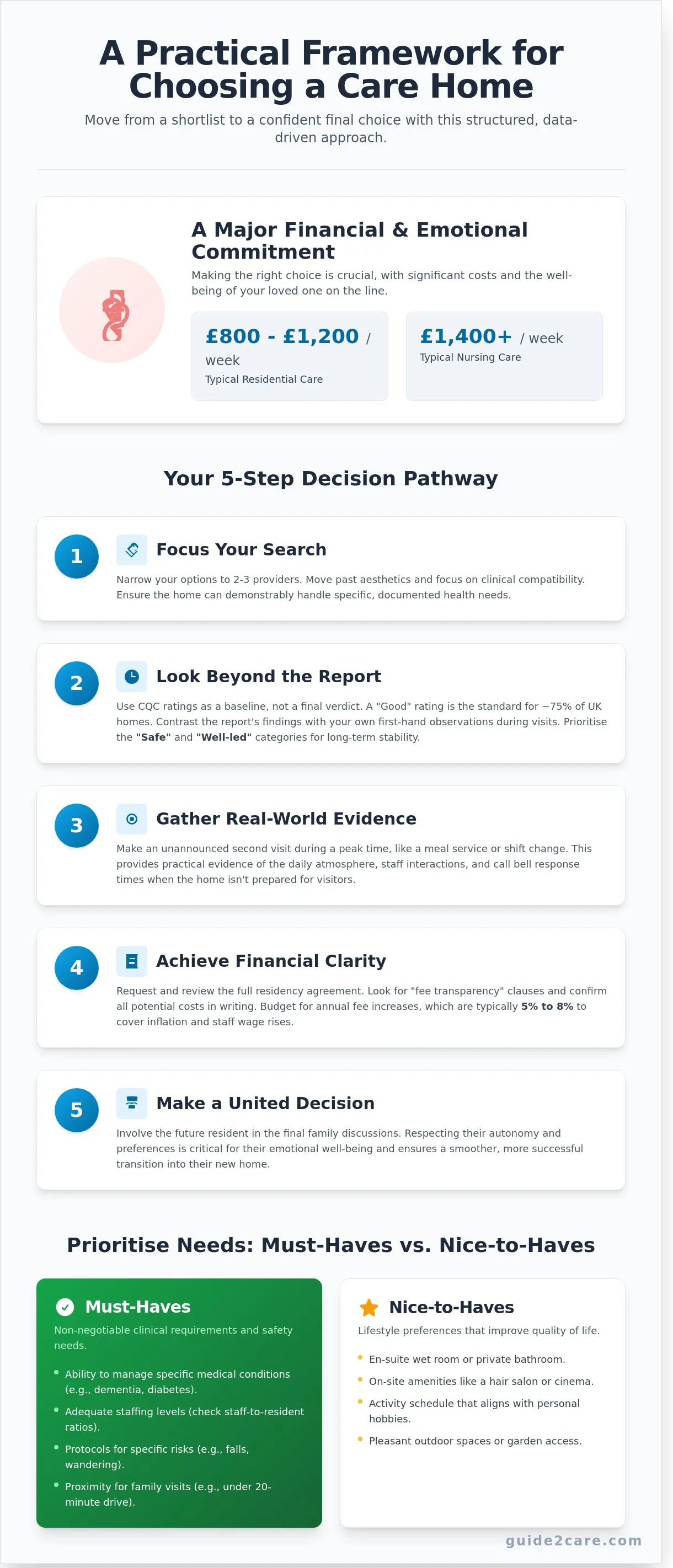
Transitioning from a broad search to a manageable shortlist of 2 or 3 providers marks the shift from exploration to selection. You've filtered dozens of options based on location and basic ratings. Now, making the final decision on a care home requires a practical, analytical mindset. You must move past the aesthetic appeal of a building and focus on clinical compatibility and long term sustainability. Different types of residential care offer varying levels of medical support; your shortlist must only include homes that demonstrated a clear ability to handle specific health conditions during your initial visits.
While this guide focuses on traditional care homes, the process of finding specialized residential treatment for issues like addiction follows a similar path of careful evaluation. For families seeking free, independent advice on this, Detox Rehab Clinics UK can help identify appropriate facilities and support options across the country.
To better understand the practical steps involved in this choice, watch this helpful video:
Organise your findings into a clear comparison to remove emotional bias. Use the table below to track the essential data for your final three candidates. UK residential care fees currently average between £800 and £1,200 per week, while nursing care often exceeds £1,400. Ensure these figures are confirmed in writing before making the final decision on a care home.
| Feature | Home A | Home B | Home C |
|---|---|---|---|
| Weekly Fee | £950 | £1,100 | £1,050 |
| CQC Rating | Good | Outstanding | Good |
| Staff-to-Resident Ratio | 1:5 | 1:4 | 1:6 |
Defining Your "Must-Haves" vs "Nice-to-Haves"
Distinguish between clinical requirements and lifestyle preferences. A "must-have" includes 24 hour nursing care or specific dementia specialisms. A "nice-to-have" might be an en-suite wet room or an on-site hair salon. Prioritise a location within a 20 minute drive for frequent family visits. Data from the 2023 Care Quality Commission reports suggests that regular social contact significantly improves wellbeing outcomes for residents. Confirm that the home’s activity schedule aligns with your loved one’s existing hobbies to maintain their social identity.
Reviewing the Care Needs Assessment
The Care Needs Assessment (CNA) is the most critical document in your decision framework. Ensure the home manager has a current copy of the local authority assessment. Don't rely on verbal promises; ask the manager to explain exactly how they will meet the specific needs identified in the report. For example, if the assessment highlights a high fall risk, ask about their specific sensor mat technology or hourly check-in policies. Verify if the home can adapt if care needs increase. Many residential homes can't provide complex nursing care; if a resident's health declines, they may be forced to move again within 12 months, which causes unnecessary distress.
Check the contract for "fee transparency" clauses. Ensure you understand how often fees are reviewed. Most providers increase costs annually in April by 5% to 8% to account for inflation and staff wage increases. Knowing these specific figures helps you calculate the long term affordability of the placement before signing any legal agreements.
Balancing CQC Ratings with Personal Observations
A "Good" rating from the Care Quality Commission (CQC) is the expected standard for roughly 75% of UK care homes. It represents compliance with legal requirements; it isn't a guarantee of excellence. When making the final decision on a care home, use the report as a baseline rather than a final verdict. Reports provide a snapshot in time. A home might be rated "Requires Improvement" because of a paperwork error in 2023. If that provider has since hired a new manager and updated its systems, it may offer better care than a "Good" home that hasn't been inspected since 2021. Always check the "Summary of Findings" to see if the issues were administrative or directly related to resident safety.
Validate the data by observing staff behaviour during your visits. CQC inspectors spend a limited amount of time on-site. Your own observations over several visits provide a more nuanced view of daily life. If a report mentions "Safe" care, but you see call bells ringing for more than five minutes without a response, the data is outdated. Contrast the official report with your findings to ensure the home maintains its standards every day, not just during inspection windows.
Decoding the CQC Inspection Categories
Prioritise the "Safe" and "Well-led" categories to judge long-term stability. A "Well-led" rating suggests the home has a strong management structure, which typically reduces staff turnover. High turnover rates often lead to inconsistent care for residents. Check the date of the last inspection. Data older than 18 months may not reflect the current environment. Look for "Outstanding" marks in specific areas like "Caring" or "Responsive" that align with your loved one’s personality. You can use a step-by-step guide to choosing a nursing home to help compare these technical findings with the practical needs of your family member.
If a home is currently rated "Requires Improvement", ask the manager for their "Quality Improvement Plan". This document shows how they're addressing CQC concerns. A transparent manager who shares their progress is often more trustworthy than one who hides behind an old "Good" rating. You can find the care you need by comparing these active improvement plans against older inspection data.
The "Gut Feeling" Metric
Watch how residents behave in communal areas. Are they engaged in activities, or are they sitting in silence in the lounge? In a high-quality home, at least 85% of residents should appear comfortable and attended to. Look for small signs of dignity. Are residents' clothes clean? Is their hair brushed? These details reflect the staff's pride in their work, and to see how providers build this culture, you can check out Im with you. A warm, welcoming atmosphere is often more important than a clinical, modern building that feels cold.
Trust your intuition regarding the "smell" and cleanliness of the centre. A faint scent of cleaning products is acceptable. A strong smell of urine or heavy perfumes used to mask odours is a red flag. Check the cleanliness of high-traffic areas like handrails and dining tables. If the home feels neglected during a scheduled tour, it's unlikely to improve when visitors aren't around. Making the final decision on a care home requires you to balance these sensory details with the official CQC data to form a complete picture of the environment.
The "Second Visit" Strategy: Breaking the Tie
A scheduled tour provides a curated view of a facility. To gather the data required for making the final decision on a care home, you must return unannounced. This second visit reveals the operational reality of the home when staff aren't prepared for visitors. Aim to arrive during peak activity periods. Mealtimes or the 08:00 shift handover are ideal windows. These moments test the home's systems and staff patience. Observe the environment objectively. A building's modern decor or expensive soft furnishings don't provide care; the people do. Focus your attention on the quality of staff-to-resident interactions rather than the aesthetic of the communal lounge.
What to Look for Behind the Scenes
Pay close attention to how staff communicate with residents. Dignity is a measurable metric. Note if staff use a resident's preferred name or if they use patronising terms like "dear" or "sweetie". During mealtimes, observe the food quality directly. Is it served at the correct temperature? Check if residents who need assistance are helped promptly or if their meals sit getting cold. Statistics from the Care Quality Commission (CQC) often highlight mealtime dignity as a key indicator of quality. Listen for call bells. In a well-managed home, bells should be silenced within three minutes. Constant ringing suggests a shortage of floor staff or poor management of response times.
While you evaluate the atmosphere, remember that the legal framework is just as vital. Before you commit, spend time making the final decision on a care home by understanding care home contracts and their specific terms. This ensures you aren't surprised by hidden fees or rigid notice periods later. A second visit allows you to cross-reference the physical reality with the written promises in the provider's brochure. It's a chance to see if the "vibe" matches the legal obligations you're about to sign.
Questions for the Registered Manager
The Registered Manager sets the home's culture. Request a private five-minute meeting during your second visit to ask specific, data-driven questions. Start with staff turnover. The average turnover rate for the UK social care sector was 28.3% in 2022/23. If the home's rate exceeds 35%, it may indicate low morale or inconsistent care for your loved one. Ask about medical access next. A reliable home should have a designated GP who visits at least once a week. Finally, clarify the visiting policy. Check if there are restricted hours or if family can participate in care planning. A transparent home won't have "protected mealtimes" that exclude relatives from the dining area.
- Staffing levels: Ask for the current ratio of carers to residents on the morning and night shifts.
- Healthcare access: Verify how many days it takes for a resident to be seen by a chiropodist or dentist.
- Family involvement: Determine if the home has a formal family forum that meets at least quarterly.
- Operational transparency: Request to see the most recent internal quality audit, not just the public CQC report.
Use these observations to compare your top two choices side-by-side. If one home has better decor but the other has staff who answer bells within two minutes, the latter is almost always the safer choice. Reliability and consistency are the foundations of good care. Once these practicalities are confirmed, you can move forward with confidence in your choice.
Finalising Logistics: Contracts, Fees, and Funding
Reviewing the residency agreement is a critical step when making the final decision on a care home. This document is a legally binding contract that dictates your rights, the provider's obligations, and the financial structure of the placement. You must read every clause before signing. Pay close attention to the fee review section. Most UK care homes increase their prices annually in April. These hikes often align with the Consumer Price Index (CPI) or a fixed percentage, such as 5%. Ensure the contract explicitly states how and when these increases occur to avoid unexpected financial pressure later.
Distinguishing between residential fees and nursing care contributions is essential for accurate budgeting. Residential fees cover accommodation, meals, and personal care. If the resident requires nursing care, the NHS provides a specific payment known as NHS Funded Nursing Care (FNC). For the 2024/25 financial year in England, the standard FNC rate is £235.88 per week. Confirm whether the quoted weekly fee includes this amount or if it's deducted from the total bill. Mistakes here can lead to overpaying by over £1,000 per month.
Identify potential hidden costs that sit outside the standard weekly rate. While basic care is covered, many "lifestyle" extras are billed separately. A 2023 analysis of care home contracts found that additional charges can increase monthly outgoings by £60 to £150. Common extras include:
- Professional hairdressing and barber services.
- Chiropody and private physiotherapy sessions.
- Escorted trips to medical appointments or social outings.
- Daily newspapers and personal toiletries.
- Dry cleaning for delicate garments.
Verify the notice period and termination terms. Standard contracts usually require 28 days' notice to end the residency. However, terms regarding fees after a resident passes away vary significantly. Some homes charge for up to three days after the room is cleared, while others may demand a full week's payment. Clarifying these details now ensures you aren't caught off guard during a difficult time.
Understanding Third-Party Top-Ups
A third-party top-up is a fee paid by a family member or friend when local authority funding doesn't cover the full cost of a chosen home. You cannot pay your own top-up using your own capital if the council is funding your care. Ask the manager for a written five-year projection of fee increases. You must have a robust plan for when private funds run out. If the resident becomes eligible for state support, the council may not pay the home's full private rate, potentially requiring a move if a top-up cannot be maintained.
The Trial Period: A Safety Net
Most reputable providers offer a 28-day trial period to ensure the environment suits the resident's needs. This period is vital when making the final decision on a care home as it allows for an exit with a shorter notice period, often just seven days. Use these four weeks to monitor the transition closely. Observe the staff's interaction with the resident and ensure the care plan is being followed accurately. If the fit isn't right, the trial period provides a low-risk opportunity to seek an alternative provider.
Understanding the financial commitments of care is the best way to ensure long-term stability for your loved ones.
Find The Care You NeedMaking the Choice and Planning the Move
Gather your family to review the final two shortlisted options objectively. Use a comparison based on Care Quality Commission (CQC) ratings and specific fee structures. The process of making the final decision on a care home involves balancing practical data with the personal comfort of the future resident. Autonomy reduces transition stress significantly. If the individual has mental capacity, they must lead the choice. For those with cognitive decline, involve them by discussing room views or menu options to maintain a sense of agency during the transition.
Use Guide2Care to verify the latest provider data before signing any contracts. Check for recent changes in management or ownership that occurred after your initial visit. Inspection reports from 2023 or early 2024 provide the most accurate picture of current safety standards. When making the final decision on a care home, ensure the daily standard of care matches your expectations by reading the most recent resident feedback. Once the choice is clear, set a move-in date. Coordinate this with any current domiciliary care providers or hospital discharge teams to avoid gaps in support. Most UK care homes require a signed contract and a deposit, often equivalent to one month's fees, before the room is officially reserved.
Communicating the Decision
Inform the chosen home immediately to begin the administrative process. You should also notify unsuccessful candidates via telephone or email. This is a professional courtesy that allows them to offer the room to individuals on their waiting list. Begin 'life story' work with the new care team. This involves sharing specific details like a 07:00 wake-up preference, a 40-year career history, or a dislike for certain foods. Sharing these details helps staff provide person-centred care from the first hour. Schedule a pre-move meeting to discuss room personalisation. Confirm if you can bring familiar furniture, such as a favourite armchair or a specific bookshelf, to help the resident settle quickly.
For transporting these cherished items, a reliable service like Courier Pro can help manage the logistics, ensuring everything arrives safely.
Final Checklist Before Move-In Day
The transition requires precise coordination of medical and personal logistics. GP record transfers between practices can take approximately 10 to 14 working days. Ensure the new home has a list of all current prescriptions and dosages at least 48 hours before arrival. This prevents delays in medication administration on the first evening. Label all clothing and personal items clearly. Use permanent markers or iron-on labels to ensure items aren't misplaced during communal laundry cycles, as a percentage of items can go missing in the first month without proper identification.
Arranging care for beloved pets that cannot move into the new residence is another critical step. The goal is to minimize distress for both the owner and the animal. For feline companions, professional in-home solutions can be a source of great comfort, allowing them to remain in a familiar environment. If this is part of your planning, services like Mission Cats In-Home Care specialize in this area, ensuring pets are well looked after during the transition and beyond.
- Medication: Secure a 7-day supply of all current tablets and liquids for the move-in period.
- GP Records: Confirm the new care home has registered the resident with their local GP surgery.
- Notifications: Update the Department for Work and Pensions (DWP) and any private pension providers of the address change.
- Personal Items: Pack a 'day one' bag with essential toiletries, a change of clothes, and familiar photographs.
Find the care you need by following our structured move-in guide. This final stage ensures the resident feels supported and the care team is fully prepared for their arrival. By organising these details 7 to 10 days in advance, you reduce the risk of administrative errors during the first week of residency.
Secure Your Choice with Confidence
Securing the right placement requires a balance of data and intuition. Use your second visit to confirm that the environment remains consistent across different times of the day. Validate your personal observations against the latest Care Quality Commission (CQC) inspection reports, which categorise providers into four distinct ratings. Once you've reviewed the contract terms and confirmed funding arrangements under the Care Act 2014, you'll be ready for making the final decision on a care home.
Taking control of this process ensures long-term stability for your family. Use professional tools to streamline your search and compare options side-by-side. Find the care you need on Guide2Care. Access our comprehensive UK-wide directory of CQC-rated homes and use our easy-to-use search filters for specific care needs. We provide independent resources on funding and care types to help you navigate the 17,000 plus care providers currently operating across the country. You're now equipped to choose a home that provides safety, comfort, and professional support.
Frequently Asked Questions
How do I know if a care home is the right fit for dementia care?
Check the home's Care Quality Commission (CQC) registration to confirm they're authorised for specialist dementia care. Look for environmental cues like high-contrast signage and themed corridors that assist with navigation. A dedicated dementia unit should maintain a staff-to-resident ratio of at least 1:4 during peak hours. Ask to see their specific dementia training records for staff members to ensure they meet the 2015 Care Certificate standards.
What is the most important thing to look for during a second visit?
Observe the quality of staff interactions and the general atmosphere during a busy period, such as the midday meal. Use this time to verify if the 24-hour care plan aligns with your first impressions. Check communal areas for cleanliness and notice if residents appear engaged or isolated. A second visit helps you confirm details before making the final decision on a care home for your relative.
Can a care home increase their fees after we have moved in?
Yes, care homes typically review their fees annually, with most increases taking effect every April. These rises usually range between 5% and 10% to cover inflation and rising staff costs. Your residency contract must clearly state how and when these reviews happen. Ensure the provider gives you at least 28 days' written notice before any price change takes effect so you can manage your budget.
What happens if we make the final decision and then change our minds?
Most UK care home contracts include a standard trial period of 28 days. During this initial month, you can terminate the agreement by giving a shorter notice period, often just 7 days. If you decide to move out after the trial period ends, you'll usually need to provide 28 days' notice in writing. Always check the specific termination clauses in your contract to avoid unexpected costs or delays.
Should I choose a care home based solely on its CQC rating?
Don't rely exclusively on a CQC rating, as 75% of homes are rated "Good" or "Outstanding" but inspections can be several years old. Use the report to identify specific areas of concern, such as safety or leadership, then verify these during your visit. Check the date of the last inspection on the CQC website. Personal visits provide the most current evidence of the home's daily standards and staff culture.
Who makes the final decision if my relative lacks mental capacity?
The person holding Lasting Power of Attorney (LPA) for Health and Welfare holds the legal authority to choose the home. If no LPA is in place, the local authority or NHS trust will coordinate a Best Interests meeting under the Mental Capacity Act 2005. This process involves family members and medical professionals. This collective approach ensures all parties agree when making the final decision on a care home for someone who cannot choose.
How do third-party top-up fees work in the UK?
A top-up fee is the difference between the local authority's funding limit and the care home's actual weekly price. If the council pays £700 per week but the home costs £850, a third party, like a family member, must pay the £150 gap. The resident cannot usually pay this from their own capital unless they're under a 12-week property disregard or a deferred payment agreement.
What is included in the standard weekly care home fee?
Standard fees cover your accommodation, 24-hour personal care, all meals, and basic laundry services. In the UK, average weekly costs for residential care are approximately £800, while nursing care averages £1,078. You'll likely pay extra for "hotel" services like hairdressing, chiropody, or private phone lines. Review the fee schedule carefully to see which social activities and outings are included in the base price and which cost more.