How to Prepare Your Home for a Live-in Carer: The Complete 2026 UK Guide

Does your spare room meet the legal requirements for a professional caregiver? Transitioning to 24-hour support involves more than just clearing a wardrobe. It's a significant shift that often brings concerns about privacy and the potential costs of property modifications. Understanding how to prepare your home for a live-in carer is essential to ensure a safe, professional environment that respects the boundaries of both your family and the new staff member. You shouldn't have to guess which changes are mandatory and which are merely optional.
We've designed this guide to simplify the process of readying your property for 2026 UK care standards. You'll learn the exact legalities of being an employer versus using an introductory agency and how to meet Health and Safety Executive (HSE) requirements efficiently. This article provides a structured breakdown of room specifications, insurance updates, and daily household protocols. Explore our comprehensive roadmap to create a functional care setting that maintains the comfort and dignity of your loved one's home while staying compliant with UK regulations.
Key Takeaways
- Learn the vital differences between managed care and introductory agencies to ensure your arrangement complies with UK CQC regulations.
- Discover how to prepare your home for a live-in carer by establishing a private, fully equipped living space that meets professional standards.
- Conduct a comprehensive home safety audit to identify trip hazards and install necessary task lighting for a secure care environment.
- Manage household logistics effectively by setting clear budgets for shared expenses, utilizing Life4Rent for equipment access, and updating your home insurance for live-in professionals.
- Streamline your search by using the Guide2Care directory to filter providers by CQC ratings and specific clinical specialisms.
Understanding the Legal and Regulatory Foundations of Live-in Care
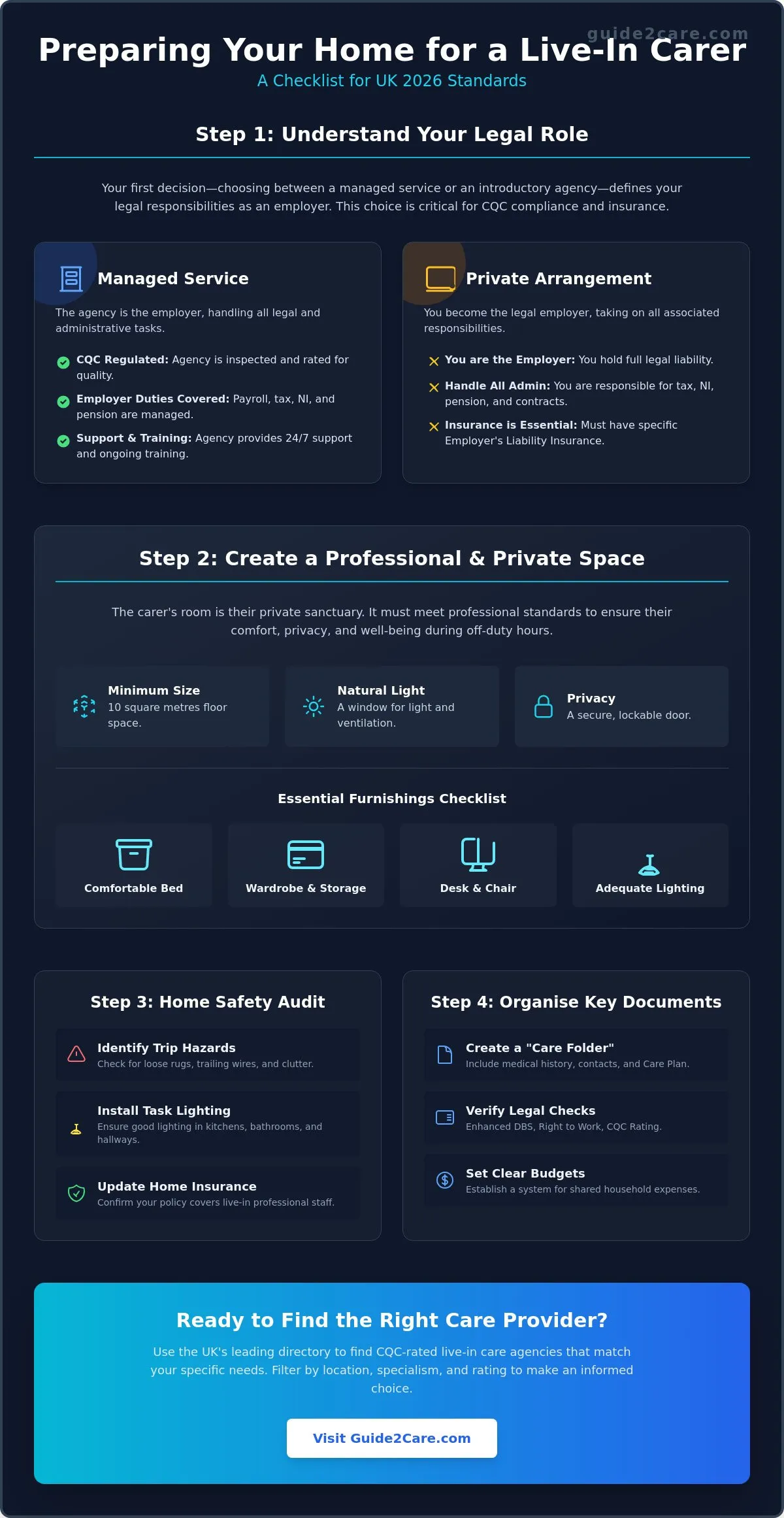
Choosing live-in care requires a solid understanding of UK regulations. You must first decide between a managed service and an introductory agency. This choice dictates your legal responsibilities and how you manage the household. Learning What is home care? helps clarify these options before you begin the process of learning how to prepare your home for a live-in carer.
To better understand this concept, watch this helpful video:
Managed Services vs. Private Hiring
Managed services are regulated by the Care Quality Commission (CQC). In this model, the agency is the employer. They handle payroll, training, and 24/7 support. For families seeking this level of professional oversight, Bloomfield Care offers high-quality, person-centered support that simplifies the transition to home-based care. Introductory agencies find candidates, but you or the person receiving care becomes the employer. This means you hold legal liability for tax, National Insurance, and pension contributions. Check your home insurance policy immediately. Standard domestic staff cover might not suffice for private care arrangements, and you may need specific employer's liability insurance.
The CQC monitors professional standards in England. They inspect providers and publish ratings ranging from "Outstanding" to "Inadequate." Always verify a provider’s current rating on the CQC website. For private hires, you must perform an enhanced Disclosure and Barring Service (DBS) check. This is mandatory for anyone working with vulnerable adults. You also have a legal requirement to conduct "Right to Work" checks. Hiring someone without the correct UK visa can result in civil penalties of up to £60,000 per worker.
Essential Documentation and Safeguarding
Safety starts with organization. Create a physical "Care Folder" for the home. It should include a detailed medical history, current prescriptions, and emergency contact lists. A clear Care Plan is essential for a smooth transition. It defines daily tasks, medication schedules, and specific dietary needs. This document ensures the carer knows exactly how to prepare your home for a live-in carer on their first day.
Ensure Power of Attorney (PoA) documents are accessible and understood. The carer needs to know who holds the legal authority to make health or financial decisions. Keep copies of the Lasting Power of Attorney (LPA) in the Care Folder, or utilize a digital platform like SafeKeep to securely organize and share essential legal records. This prevents confusion during medical emergencies or when discussing care adjustments with healthcare professionals. Clear documentation protects the carer, the family, and the individual receiving care.
- CQC Rating: Check the latest inspection report for any managed agency.
- DBS Check: Ensure the certificate is "Enhanced" and dated within the last 12 months.
- Right to Work: Verify original passports or share codes via the UK government website.
- Contracts: Define rest breaks and working hours clearly to comply with UK Working Time Regulations.
Essential Room Requirements: Creating a Private Space for Your Carer
When you consider how to prepare your home for a live-in carer, the designated bedroom is the most critical element. UK health and safety guidelines suggest a minimum floor space of 10 square metres for a single occupant. The room must have a window for natural light and adequate ventilation. A lockable door is Wang essential to ensure the carer has a private sanctuary during their off-duty hours. Provide a comfortable bed with a supportive mattress, a wardrobe, a chest of drawers, and a desk with a chair for personal use or administrative tasks. If you need to source these items temporarily, Life4Rent allows you to rent furniture and daily essentials from local listings.
- Bed: Standard single or double with a clean mattress.
- Storage: At least one wardrobe and a three-drawer chest.
- Workspace: A small desk or table for a laptop and paperwork.
- Lighting: A bedside lamp in addition to the main ceiling light.
Privacy and Personal Comfort
The room should serve as a neutral retreat. Remove personal family items or excessive clutter to help the carer feel settled. Provide two sets of clean bedding and at least three towels. Carers need control over their environment. Ensure the room has an adjustable radiator valve and accessible window handles. Good quality blackout curtains or blinds are necessary for rest, especially if the carer works a split-shift pattern. A small "welcome pack" with basic toiletries can help establish a professional and welcoming atmosphere from day one.
Connectivity and Communication Tools
Reliable Wi-Fi is a non-negotiable requirement in 2026. Carers rely on the internet to maintain contact with their families and to update digital care logs. Test the signal strength in the specific bedroom before they arrive. If the signal is weak, install a Wi-Fi booster or a powerline adapter. Provide a list of emergency contact numbers near a landline or ensure the room has a strong 4G or 5G mobile signal. Set up a dedicated charging station with at least four power outlets for their professional tablets and personal phones; to find these and other useful electronics, you can check out Life4Rent.
Bathroom access must be clearly defined. An en-suite is the ideal solution, but shared facilities are acceptable if a protocol is agreed upon. If the bathroom is shared, provide a dedicated shelf for the carer's items. Clear communication about these domestic arrangements helps prevent friction. Following these steps on how to prepare your home for a live-in carer ensures a sustainable working relationship. You can find the care you need by reviewing local providers and their specific accommodation requirements.
Adapting the Home Environment for Safety and Professional Care
Creating a safe environment is the first step in professional care delivery. Conduct a thorough trip-and-fall hazard audit across all shared spaces. Data from the Office for National Statistics shows that falls are a leading cause of hospital admissions for UK seniors. Remove loose rugs and secure trailing electrical cables with plastic trunking. This process is essential when you consider how to prepare your home for a live-in carer effectively.
Effective lighting reduces the risk of accidents during the night. Install motion-activated task lighting in hallways and bathrooms. Ensure the kitchen has bright LED strips under cabinets to eliminate shadows on work surfaces. If you need to source temporary safety equipment or household upgrades, Life4Rent provides a marketplace for a diverse range of daily items. A professional kitchen setup must prioritize hygiene. Provide the carer with:
- Colour-coded chopping boards to prevent cross-contamination.
- Antibacterial hand wash at every sink.
- Clear labelling for all food storage containers.
- A digital food thermometer to ensure safe cooking temperatures.
Physical Modifications and Mobility Aids
Evaluate the property for structural changes before the carer arrives. Install 35mm diameter grab rails in bathrooms and at main entry points. If the resident uses a wheelchair, verify that door widths are at least 750mm for clear passage. Adjust bed heights to roughly 45cm to 50cm to facilitate safer transfers. If a hoist is required, clear a 1.5-metre radius around the bed for safe operation. For families who need to source specialized equipment temporarily, you can discover Life4Rent to find a variety of care-related items for rent. Designate a lockable cabinet in a cool, dry area for medication and clinical supplies. This ensures all treatments are stored according to UK safety regulations.
Smart Technology and Emergency Systems
Integrate smart technology to provide an extra layer of protection. Use "Smart" fall detection sensors that utilize radar or infrared technology to maintain privacy while monitoring movement. These systems send instant alerts to a carer’s smartphone or a central monitoring station. Set up a shared digital calendar to track medication times and GP appointments. It's an efficient way to keep family members and professionals aligned. For those looking to trial these systems, Life4Rent offers a platform to rent various smart devices and home electronics. Smart thermostats prevent hypothermia in vulnerable residents by ensuring the home environment never drops below the NHS-recommended minimum of 18°C. Following these steps helps you understand how to prepare your home for a live-in carer while embracing modern safety standards.
Managing Household Logistics, Finances, and Professional Boundaries
Successful live-in care relies on clear structures. You must define how the household operates before the carer arrives. This includes financial management, insurance updates, and daily schedules. Establishing these rules early prevents friction and ensures the focus remains on high-quality support. When considering how to prepare your home for a live-in carer, financial transparency is a priority.
Finances and Household Expenses
Start by setting a weekly household budget. You're responsible for the carer's food and increased utility costs. On average, adding a live-in professional can increase domestic utility bills by roughly 10% to 15%. Decide if the carer will eat the same meals as the care recipient or if you'll provide a separate food allowance.
- Payment Systems: Provide a dedicated prepaid card or a petty cash tin for grocery shopping. Don't share personal debit card PINs.
- Transparency: Require the carer to keep all receipts. Use a simple logbook to track daily spending and reconcile it every week.
- Dietary Requirements: Confirm if the carer has specific allergies or religious dietary needs that impact the shopping list.
It is also important to address pet management, particularly if the carer has allergies or if the new routine disrupts your pet's schedule. For families seeking specialized feline support during such transitions, Mission Cats In-Home Care provides a professional model for in-home care that ensures pets remain comfortable and stress-free while you focus on human care arrangements.
Insurance and Legal Obligations
Updating your home insurance is a critical step to ensure coverage for live-in staff. Additionally, for medical professionals who are managing these home adjustments while considering their broader property portfolio, Mortgages for Doctors offers specialized advice to help navigate complex financial requirements. Ensuring your mortgage and insurance are aligned with your changing household needs is essential for long-term stability.
When selling property to fund live-in care, it is crucial to understand the tax implications; HomesGoFast provides a strategic 2026 guide on navigating capital gains tax to help families maximize their available funds.
The Emotional Transition: Respecting Boundaries
Understanding how to prepare your home for a live-in carer involves managing the social dynamic. A carer is a professional, not a family member or a houseguest. Maintain a supportive but professional distance to prevent burnout and ensure clear communication.
- Define Working Hours: Standard UK live-in care contracts usually include a 2-hour daily break. Establish exactly when this occurs.
- On-Call Periods: Clarify expectations for night-time assistance. Distinguish between "sleeping nights" and "waking nights" to ensure the carer gets sufficient rest.
- Communal Areas: Specify which rooms are shared. Define whether the carer should join the family for dinner or if they prefer to eat privately in their own space.
If your loved one has dementia, introduce the carer gradually. Start with short afternoon visits before the live-in arrangement begins. Schedule a formal 15-minute check-in every Friday. Use this time to discuss care quality and make adjustments to the routine. This prevents small misunderstandings from becoming larger conflicts.
Ready to find a professional provider? Find The Care You Need through our comprehensive directory.
Finding the Right Live-in Care Provider with Guide2Care
Once you understand how to prepare your home for a live-in carer, the selection of a provider becomes the priority. Guide2Care hosts a detailed directory of UK agencies to help you compare local and national options side-by-side. This central hub removes the need for manual searching across multiple websites, providing a direct route to regulated care services. For families seeking high-quality, person-centered support at home, you can learn more about Bloomfield Care to explore how professional domiciliary agencies manage these transitions.
Quality control is essential for long-term success. Filter your search results by Care Quality Commission (CQC) ratings to ensure the agency meets national standards for safety and effectiveness. In 2024, CQC data indicated that approximately 83% of home care agencies were rated as 'Good' or 'Outstanding'. You can also narrow your search by specialisms, such as dementia, Parkinson's, or palliative care. Reading verified reviews from other UK families offers practical insight into the reliability and professionalism of each provider.
Create a shortlist of three to five agencies to contact directly. Prepare specific questions for their management teams, including:
- What is your staff turnover rate for live-in carers?
- How do you match a carer's personality and skills with a client's needs?
- What are your contingency plans for carer sickness or emergencies?
- Are your carers directly employed or self-employed contractors?
How to Use Our Directory Efficiently
Start your search by entering your postcode to identify agencies with local management teams. Local oversight is beneficial for regular quality checks and face-to-face reviews. You must also choose between "Introductory" and "Fully Managed" services. Introductory agencies connect you with independent carers, while Fully Managed agencies take full responsibility for employment, training, and CQC compliance. Use our integrated resources to find information on local authority assessments and NHS Continuing Healthcare funding to understand your financial options.
The Final Checklist Before Care Begins
Schedule a final home walk-through with the agency manager. This confirms that you know exactly how to prepare your home for a live-in carer and that all safety modifications are in place. Ensure the carer has their own set of house keys and knows the alarm codes. Provide a written summary of household routines, including bin collection days and how to operate the boiler. To ensure all administrative details and vital records are securely organized in one central hub, you can visit SafeKeep. Clear communication during this handover phase prevents confusion during the first week of service.
Start Your Home Care Transition Today
Successful home care transitions depend on practical preparation and clear communication. You must ensure the designated bedroom provides privacy and includes essential amenities like a desk and reliable Wi-Fi. It's also vital to review home safety by installing necessary adaptations, such as grab rails or improved lighting, to meet CQC workplace safety guidelines. Understanding how to prepare your home for a live-in carer ensures that professional boundaries are established from day one. Managing these household logistics early prevents future friction and supports a high standard of care. To easily source the items and equipment needed for these home adjustments, you can visit Life4Rent.
Guide2Care simplifies the search for reliable professionals through our comprehensive database of CQC-regulated providers. We've provided independent and impartial guidance since our inception, helping thousands of families navigate the UK care system. You can use our easy-to-use search filters to find specialised care types tailored to your specific health requirements. Take the final step in your journey today and find a provider that aligns with your needs.
Find The Care You Need in our UK Directory
You're now equipped with the information needed to create a safe and professional environment for home-based support.
Frequently Asked Questions
Does a live-in carer need their own bathroom?
A live-in carer doesn't strictly require a private bathroom, but they must have access to clean toilet and bathing facilities. If a separate bathroom isn't available, you should provide a designated space within a shared bathroom for their personal items. Providing a private en-suite is often recommended to help attract high-quality candidates and ensure privacy for both the carer and the household.
What are the minimum room requirements for a live-in carer in the UK?
The carer must have a private, lockable bedroom that contains a comfortable bed and adequate storage for their belongings. When you learn how to prepare your home for a live-in carer, you must ensure the room includes a wardrobe, a chest of drawers, and a bedside lamp. If you need to furnish the room temporarily, you can discover Life4Rent to find local rental listings for these essentials. The space also needs a window for ventilation, a heater, and a desk or chair for their rest periods.
Do I have to pay for my live-in carer’s food?
You're responsible for providing the carer’s food and drink as part of the live-in arrangement. Most families include the carer in the weekly grocery shop with a typical budget of £30 to £40 per week. Alternatively, you can pay a food allowance directly to the carer if they prefer to buy their own meals. You must discuss dietary requirements before the placement begins.
Do I need to inform my home insurance company about a live-in carer?
You must notify your home insurance provider when a live-in carer moves into your property. Failure to disclose this change could void your policy in the event of a claim. Most UK insurers view live-in care as a standard domestic arrangement. However, some providers may require an endorsement for public liability coverage to protect against accidental damage or injury within the home.
What happens when my live-in carer takes their break or time off?
Can a live-in carer look after a couple?
A single live-in carer can look after a couple if the care needs of both individuals remain manageable for one person. This is often a cost-effective alternative to residential care for two people. You should expect to pay a higher weekly rate, often 20% to 30% more than the single person rate. This increase reflects the additional workload involved in supporting two clients simultaneously.
What is the average cost of live-in care compared to a residential home?
Live-in care costs in the UK typically start from £1,000 to £1,600 per week depending on the complexity of needs. According to data from LaingBuisson, the average weekly cost for a residential care home is approximately £800, rising to over £1,200 for nursing care. For couples, live-in care often provides a significant financial saving compared to paying for two separate care home beds.
Finding affordable and professional 24-hour home care is a priority for many families; for instance, Zuster in Huis provides dedicated live-in assistance throughout Belgium, offering a high-standard alternative to traditional residential facilities.
Is a live-in carer an employee or a contractor?
The carer's status depends on whether you use an introductory agency or a fully managed service. If you use a managed service, the agency acts as the employer and handles tax, National Insurance, and training. If you hire through an introductory agency or independently, the carer is often self-employed. In some cases, you may become their legal employer under UK HMRC rules and regulations.