Respite for Family Caregivers: A Practical Guide to Finding a Break in 2026

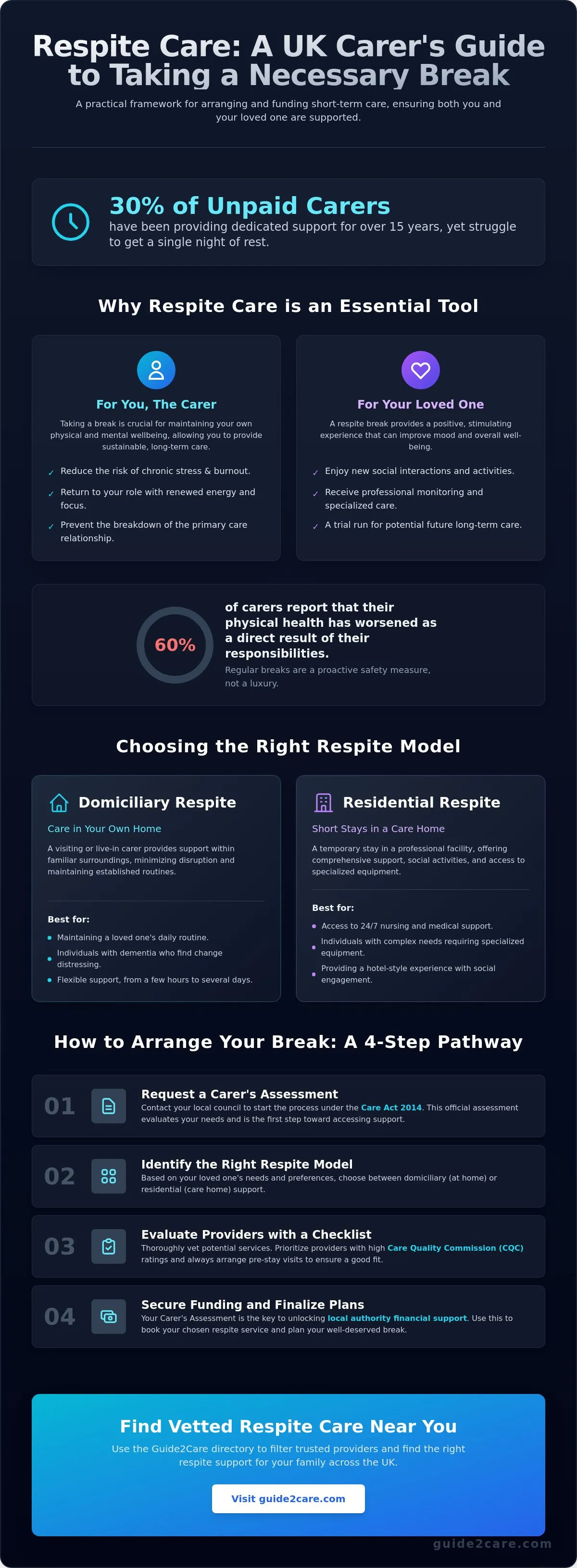
According to the 2024 State of Caring report, 30% of unpaid carers in the UK have been providing support for more than 15 years, yet many still struggle to access a single night of rest. You probably feel that stepping away from your responsibilities is impossible or that finding a trusted replacement is too complex. It's common to worry about the cost of professional help or feel guilty about leaving your loved one with someone new. However, maintaining your own health is essential for providing long-term care. Professional respite for family caregivers isn't a luxury; it's a necessary tool for sustainable support.
This guide provides a practical, step-by-step framework for arranging a break in 2026. Follow these instructions to remove the confusion surrounding UK care regulations and funding pathways. Learn how to request a Carer’s Assessment from your local council, identify different respite models like domiciliary care or residential stays, and find vetted providers in your area. Use these resources to secure the financial support and professional assistance you need to recharge effectively.
Key Takeaways
- Define the difference between planned breaks and emergency support to ensure you have a reliable backup plan in place.
- Compare the benefits of domiciliary support versus residential stays to choose the most appropriate environment for your loved one.
- Learn how to access local authority funding by navigating the Carer’s Assessment process under the Care Act 2014.
- Use a practical checklist to evaluate providers, focusing on Care Quality Commission (CQC) ratings and pre-stay visits.
- Find the care you need by using the Guide2Care directory to filter vetted options for respite for family caregivers across the UK.
What is Respite Care and Why is it Essential for Caregivers?
Respite care provides temporary, short-term support for both the carer and the individual receiving care. It acts as a planned or emergency bridge to ensure continuity of care while the primary caregiver takes a necessary break. You can find a detailed overview of What is Respite Care on Wikipedia, which outlines its history and global application. This support is essential for maintaining the health of the UK's 5.7 million unpaid carers who often manage complex needs without regular assistance.
Support typically falls into two categories. Planned respite involves scheduled breaks, such as a pre-booked week in a residential home or a series of domiciliary care visits while the carer takes a holiday. Emergency respite addresses unforeseen circumstances, such as a carer's sudden illness or a family crisis. Both forms of respite for family caregivers ensure that the person receiving care remains safe in a professional environment, a standard of care exemplified by agencies such as Providential Fijian Home Care that specialize in compassionate non-medical support.
The physical and mental health benefits of taking a break are significant. According to Carers UK, 60% of carers report that their physical health has worsened as a direct result of their caregiving responsibilities. Regular intervals of rest reduce the risk of chronic stress, high blood pressure, and clinical depression. Taking time away allows the carer to return to their role with renewed energy and focus, perhaps by enjoying a restorative wellness experience like those offered on clickyourguide.com.
Many carers experience a "guilt factor" when considering a break. It's helpful to view respite as a positive experience for the care recipient rather than an abandonment. These breaks provide social stimulation and a change of scenery that can improve the recipient's mood and cognitive engagement. It shifts the dynamic from a potentially strained routine to a fresh, professional interaction. For caregivers seeking their own restorative retreat during these periods, you can learn more about The Corner House Hotel for a peaceful stay in the heart of Somerset.
A change of scenery doesn't always require leaving the house; many families explore Aluminium Pergola designs to create a versatile outdoor room that provides a peaceful escape and fresh perspective within their own garden.
Signs You Might Need a Respite Break
Identifying the early signs of exhaustion is vital for maintaining a safe home environment. Look for persistent fatigue, increased irritability, and a tendency toward social withdrawal. Caregiver burnout is a clinical state of physical and emotional exhaustion. Regular breaks prevent the total breakdown of the primary care relationship. When a carer's health fails, the entire care structure often collapses, making respite a proactive safety measure.
To understand how professional non-medical support can assist in preventing caregiver burnout and maintaining a safe environment for seniors, read more about the comprehensive care options available.
A proactive care strategy also involves ensuring that all household dependents are looked after; for instance, finding specialized cat sitting san francisco can provide the professional in-home support needed to keep pets safe and stress-free while you take time to recharge.
The Benefits for the Person Receiving Care
Respite care offers the recipient opportunities for new social interactions and structured activities in a different environment. They receive professional medical monitoring and access to specialized care, such as dementia-specific activities or physiotherapy. These stays also serve as a practical trial run for potential future long-term care arrangements. This allows the individual to become familiar with a facility or a new care team without the pressure of a permanent move.
The principle of seeking support applies to all forms of caregiving; for those entering the world of fatherhood, they can discover GreatDad.com to find coaching and educational resources tailored for navigating pregnancy and early parenthood.
Types of Respite Care Available in the UK
The UK respite care system provides a variety of structures to support unpaid carers. Choosing the correct model depends on the medical complexity of the individual and the preferred environment. Primary options include home-based support, residential stays, and community-led initiatives. Finding the right respite for family caregivers involves balancing clinical requirements with personal preferences. Specialist support is also available for those with advanced dementia or those requiring palliative care, ensuring medical needs are met while the primary carer rests. To see how these specialized services are delivered by registered providers in other regions, you can discover Accessible Care. According to data from the 2021 Census, approximately 4.7 million people in England and Wales provide unpaid care, making these diverse services essential for national health infrastructure.
Beyond standard social care, some families require intensive medical oversight; you can check out Vitals Healthcare to see how 24/7 doctor-on-call services can be integrated into a home-based care plan.
Domiciliary Respite: Care in Your Own Home
Domiciliary respite allows a visiting carer or a live-in worker to provide support within the familiar surroundings of the home. This setup maintains the loved one's established routine and minimizes the stress of environmental changes. It's the preferred choice for individuals with Alzheimer's or other forms of dementia who often become distressed in new settings. A visiting carer can assist with medication, meal preparation, and personal hygiene for a few hours or several days. You can read more about how these agencies operate in our guide to Home Care Explained. This model ensures that the person receiving care remains in a comfortable, known environment while the primary carer takes a necessary break.
Residential Respite: Short Stays in Care Homes
Residential respite involves a temporary move to a professional facility. Many modern UK care homes offer a hotel-style experience for short-term residents, providing private rooms and communal social activities. These facilities offer 24/7 nursing support and access to specialized equipment like hoists or sensory rooms. This option provides a complete break for the carer, knowing clinical needs are managed by on-site professionals. Local authorities often use these stays to assess a person's long-term care needs. Use our resources for Finding a Care Home to evaluate local providers and check their latest CQC ratings. Stays can range from a single weekend to several weeks depending on the carer's requirements.
Day Centres and Community Breaks
Local day centres provide social engagement and structured activities during standard working hours. These hubs allow individuals to interact with peers while receiving personal care in a safe setting. Sitting services, often coordinated by charities like Carers Trust or Age UK, involve a volunteer or paid worker visiting for a few hours to provide company. Day centres often provide the most cost-effective form of regular respite. Identifying these Types of Respite Care helps carers build a sustainable support network that prevents burnout. These services are particularly effective for those who enjoy social interaction but require supervision. Organizing a break is a vital part of maintaining your own health. Explore Guide2Care to see which local services match your specific requirements.
How to Arrange and Fund Respite Care in 2026
Securing respite for family caregivers requires a formal process through your local council. Under the Care Act 2014, anyone providing unpaid care has a legal right to an assessment of their own needs. This legislation ensures that your health and wellbeing are prioritised alongside the person you support. You don't need the permission of the person you care for to request this help. It's a vital tool for maintaining your own long-term health while fulfilling your caring responsibilities.
In addition to professional care for your loved one, you might also consider support for other household members; for example, H&H Dog offers dog walking and grooming to ensure your pets are looked after while you focus on your well-being.
Step 1: Requesting a Carer’s Assessment
Contact your local Adult Social Care department to request this free service. Prepare detailed notes before the meeting. Document how your caring role affects your physical health, mental state, and ability to work or socialise. The assessment focuses on the carer’s needs, not the care recipient’s. International frameworks, such as the Lifespan Respite Care Program, highlight the importance of these structured evaluations in preventing caregiver burnout. If the assessment shows that a break is necessary to maintain your wellbeing, the council has a legal duty to help you find a solution.
Step 2: Understanding the Financial Assessment
Arranging respite for family caregivers involves several financial decisions. The council uses a "means test" to decide if they'll pay for your break. They examine your income and savings to determine your contribution. In 2026, the capital limit for care funding in England remains at £23,250. If your assets exceed this, you'll likely self-fund your care. If you qualify for support, you can request Direct Payments. This option provides the cash directly to you, allowing you to hire a specific provider rather than using council-selected services. You should also explore charity grants from organizations like Carers Trust if you're ineligible for council funding.
Step 3: Creating a Respite Care Plan
A successful plan turns your assessment results into a practical schedule. Use your personal budget or your own funds to book regular sessions. This consistency helps the person you care for get used to new faces. You should also apply for a Carer’s Emergency Card through the council. This card contains a unique ID and emergency contact details. It ensures that a backup care plan is triggered if you're suddenly unavailable. For more details on managing these costs, see our guide on Understanding Care Funding.
- Council-funded care: The local authority arranges and pays for the service.
- Self-funding: You manage the selection and payment of providers independently.
- Direct Payments: You receive council funds but maintain control over which respite provider you hire.
Choosing the Right Respite Provider: A Practical Checklist
Selecting a provider for respite for family caregivers requires a methodical approach to ensure safety and compatibility. Start by checking the Care Quality Commission (CQC) rating. This is the most reliable indicator of a service's performance in England. A provider might look excellent on a website, but the CQC inspection report reveals the actual data regarding safety, effectiveness, and leadership. You should also evaluate the staff-to-resident ratio. In high-quality residential settings, a ratio of one staff member to five residents during peak hours is a common benchmark for proactive care. Specialist training is equally vital. Ask if staff hold Level 2 or 3 Diplomas in Health and Social Care, particularly if your loved one has dementia or complex physical needs.
A pre-stay visit is a non-negotiable step in the process. For home-based care, arrange a "meet and greet" to see how the carer interacts with your family member. For residential stays, visit the home without an appointment if possible. Observe the environment. Is it clean? Are residents engaged in activities? The culture of the home should match your loved one’s personality. If they prefer quiet reflection, a high-energy environment with constant group activities might be overwhelming. Trust your observations during these visits more than the marketing brochures. This same diligence applies to pet care; you can visit The Fur Seasons to see how premium facilities maintain professional standards and provide a safe environment for animals.
Key Questions to Ask a Respite Agency or Home
- What is the daily routine, and can it be tailored to my loved one? Ask if wake-up times, meal choices, and hobbies are flexible or strictly scheduled.
- How do you handle medication and specific dietary requirements? Verify their system for tracking dosages and their ability to manage allergies or texture-modified diets.
- What is the total cost, including any "hidden" admin or assessment fees? Some providers charge a one-off assessment fee, often ranging from £150 to £500, which isn't always included in the weekly rate.
Verifying Quality and Safety Standards
The CQC monitors, inspects, and regulates all health and social care services in England. They publish ratings that help you compare providers quickly. You can learn more by reading our guide on CQC Ratings: Understanding Care Quality. The four main ratings are:
- Outstanding: The service is performing exceptionally well.
- Good: The service is meeting expectations and performing well.
- Requires Improvement: The service isn't performing as well as it should.
- Inadequate: The service is performing badly and the CQC has taken action against the provider.
Don't rely solely on the official rating. Search for recent reviews from other family caregivers on independent platforms. Reviews from the last 12 months provide the most accurate reflection of current management and staffing stability. If a home has a "Good" rating but recent reviews mention high staff turnover, proceed with caution. Consistent respite for family caregivers depends on a stable, well-trained team.
Ready to start your search? Find The Care You Need through our comprehensive directory of UK providers.
Finding Respite Services Near You with Guide2Care
Finding reliable respite for family caregivers requires access to accurate, localized data. The Guide2Care directory organizes thousands of UK providers into a searchable database. This system removes the need for manual searches across multiple council websites. Users can compare residential homes and home care agencies side-by-side within their specific local authority. The platform focuses on clarity, allowing you to identify providers that offer the exact level of support your family requires.
Using the Directory Filters Efficiently
Start by entering a postcode to identify the nearest care options. Use the filter menu to narrow results by specific care categories. Select "Short Stay" or "Respite" to exclude long-term placement providers. If the person requires specialized medical support, filter for "Nursing Care" or "Dementia Care" to find staff with appropriate training. The directory is updated regularly to reflect current CQC standings and inspection results.
- Postcode Search: Find residential or home-based care within a 5 to 50-mile radius.
- Care Type Filters: Narrow results to find "Domiciliary Care," "Supported Living," or "Nursing Homes."
- Specialisms: Select specific needs like "Learning Disabilities" or "Physical Disabilities" to ensure the provider is equipped.
In 2024, the Care Quality Commission (CQC) monitored over 15,000 adult social care services. Our platform tracks these status changes to ensure you view only compliant providers. This data-driven approach helps you avoid providers with "Inadequate" or "Requires Improvement" ratings, focusing instead on high-quality care options in your area.
Contacting and Booking Your Break
Contact providers directly through the platform to check real-time availability. First-time enquiries should include the exact start date and the expected duration of the stay. State any specific mobility, medication, or dietary requirements clearly to get an accurate quote. Use the direct contact buttons on each listing to reach care managers without middle-man delays. This direct line of communication helps verify if the facility has the right "feel" for your loved one.
Demand for respite beds often increases by 20% during peak months such as July, August, and December. Secure your booking 8 to 12 weeks in advance for these periods. For emergency situations, the "Domiciliary Care" filter helps identify agencies capable of starting care packages within 24 to 48 hours. Clear communication about the level of care required ensures a smoother transition for the person receiving support and provides you with true peace of mind.
To ensure all members of your household are cared for while you recharge, you can discover The Fur Seasons for premium pet services that provide professional support and peace of mind.
Secure Your Care Strategy for 2026
Arranging respite for family caregivers is a practical necessity for maintaining long-term health and wellbeing. Data from Carers UK shows that 72% of caregivers who don't take regular breaks report a negative impact on their mental health. You can access support through statutory Carer's Assessments or local authority funding to help manage the financial aspects of these services. It's important to verify that any provider you choose maintains a high CQC rating to ensure safety and quality standards are met. While focusing on UK care, many people also look to international leaders like Vitals Healthcare to understand global trends in at-home wellness and clinical support that can enhance a caregiver's personal recovery strategy.
Guide2Care provides the tools you need to organize these arrangements efficiently. Our comprehensive UK-wide directory includes CQC-rated providers for both home care and residential stays. We offer independent and neutral guidance designed to simplify your search process. You can quickly filter results to find local services that match your specific requirements and location. This structured approach removes the complexity from the care system, allowing you to focus on finding the right support for your family without unnecessary delays.
Take the next step toward organizing a sustainable support system today. Find The Respite Care You Need
Frequently Asked Questions
Is respite care free in the UK?
Respite care is not universally free in the UK. Most local authorities use means-testing to determine if they will fund the service. According to the 2014 Care Act, individuals with assets above £23,250 in England must usually pay the full cost of their care. If you qualify for support, the council might provide a personal budget or direct payment to cover the fees.
How long can a respite care stay last?
Respite care stays typically last from a few hours to four weeks. The duration depends on the specific needs identified in your carer’s assessment. Residential care homes often set a minimum stay of one week for respite guests. For longer breaks, such as six weeks or more, the arrangement might transition into a short-term residential placement rather than standard respite for family caregivers.
Can I get respite care if I am not a "registered" carer?
You don't need to be on a specific register to access respite care. The UK government doesn't maintain a central carer registry for eligibility. You qualify for support if you provide unpaid care to a friend or family member who cannot manage without help. To access council-funded options, request a carer’s assessment from your local social services department to document your situation.
What is emergency respite care and how do I get it?
Emergency respite care provides immediate support when a caregiver faces an unforeseen crisis, such as sudden illness or an accident. You can access this by contacting your local council's Adult Social Care team or their 24-hour emergency duty line. Many local authorities recommend creating an emergency plan in advance. This plan ensures the council has the necessary details to arrange care within 24 hours.
Does the person I care for have to agree to respite?
The person receiving care must generally give their consent to participate in respite services. If they have the mental capacity to make decisions, you cannot force them to enter a care home or accept home visits. Under the Mental Capacity Act 2005, if a person lacks the capacity to decide, a best interests meeting is held. This involves family and professionals deciding the safest course of action.
Will taking respite care affect my Carer’s Allowance?
You can continue to receive Carer’s Allowance during a respite break for up to 4 weeks in any 26-week period. This rule allows you to maintain your benefit while the person you care for is in a residential setting or receiving home care. If the person you care for is hospitalised, the rules differ and the allowance might stop after 12 weeks. Always notify the Carer’s Allowance Unit when a stay begins.
Can I use a respite stay as a trial for a permanent care home move?
Using a respite stay as a trial period for a permanent move is a common strategy. It allows the individual to experience the daily routine and facilities of a residential home without a long-term commitment. Most UK care homes offer these short-term stays, typically lasting 2 to 4 weeks. This period provides data on how well the facility meets the person's clinical and social needs before signing a permanent contract.
How often am I entitled to a respite break?
There is no set legal limit on how often you can take a respite break. Your entitlement depends on the results of your carer’s assessment and the person’s needs assessment. Local authorities often allocate a specific budget or a set number of days, such as 28 days per year, based on the 2014 Care Act guidelines. If you're self-funding, you can arrange respite for family caregivers as frequently as your budget allows.