Managing the Emotional Stress of Choosing Care: A Practical Guide for Families

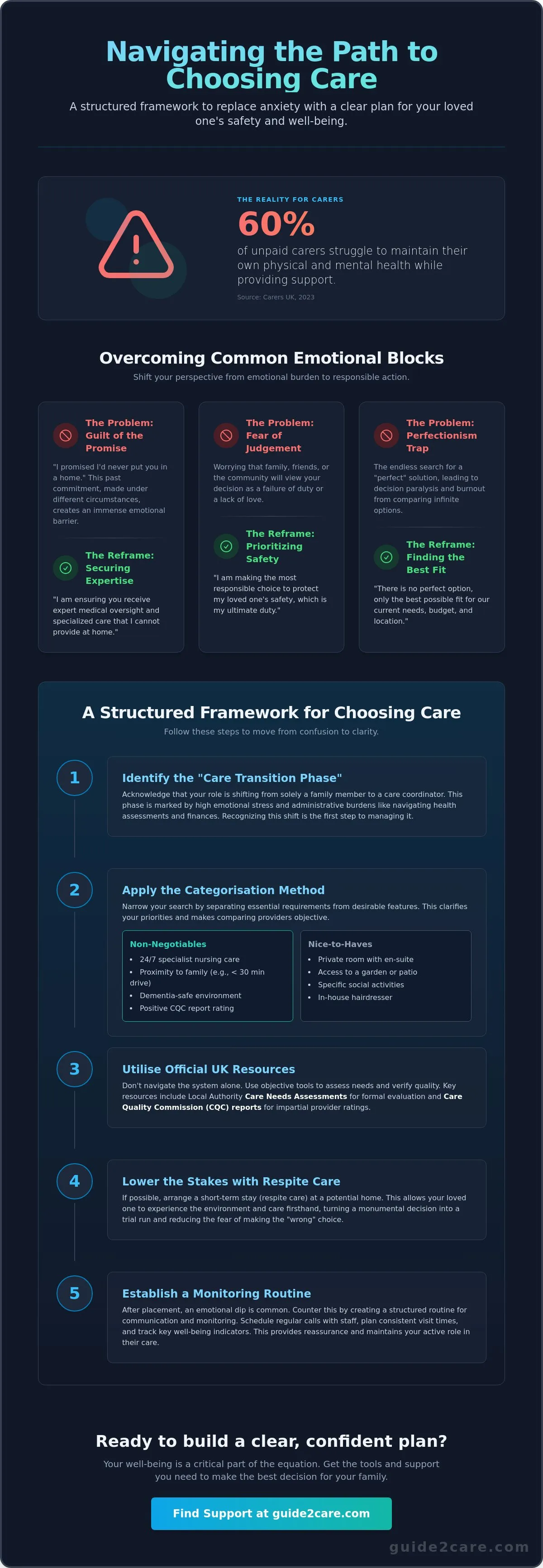
What if moving a loved one into professional support isn't a sign of failure, but the most responsible way to protect their safety? Research from Carers UK in 2023 indicates that 60% of unpaid carers struggle to maintain their own physical and mental health. Many families experience a heavy sense of guilt or fear about making the wrong decision. Managing the emotional stress of choosing care starts with acknowledging that your health is a vital part of the equation. It's difficult to provide effective support when you're experiencing burnout and decision paralysis.
This guide provides a functional framework to help you understand the UK care system without the usual confusion. Learn how to distinguish between residential and nursing care and how to use Care Quality Commission (CQC) reports to make an objective choice. Use our step-by-step process to compare providers and clarify common terminology. This article gives you the tools to replace anxiety with a structured plan, ensuring you find the right support for your family's specific needs.
Key Takeaways
- Identify the "Care Transition Phase" to understand the shift from family member to care coordinator.
- Learn practical strategies for managing the emotional stress of choosing care by reframing the "Guilt of the Promise."
- Apply the Categorisation Method to narrow your search by distinguishing between non-negotiables and nice-to-haves.
- Utilise UK resources like local authority Care Needs Assessments and respite care to lower the stakes of your decision.
- Establish a structured routine for monitoring care quality to navigate the emotional dip often experienced after a placement.
Understanding the Emotional Landscape of Choosing Care
The Care Transition Phase is a distinct period of high emotional volatility. It occurs when a loved one's independence declines and professional support becomes a necessity rather than an option. During this time, your role shifts from being a family member to becoming a care coordinator. This transition carries a heavy mental toll. You are suddenly responsible for navigating legal frameworks, health assessments, and financial planning. It's common to feel a sense of loss as your personal relationship is replaced by administrative tasks; for families also navigating substance misuse, Detox Rehab Clinics UK offers free, independent advice to help manage these complexities.
This period often coincides with a broader review of family documentation and legacy planning. For those with European roots, Cidadania e Visto can assist in navigating the complexities of Portuguese citizenship, providing a sense of security for the family’s future while you manage immediate care requirements.
In the UK, the care system often feels opaque. Information is fragmented across local authorities and private providers, making it difficult to find clear answers during a crisis. Managing the emotional stress of choosing care is complicated by the physical symptoms that accompany high-stakes decision-making. You may experience caregiver stress, which frequently manifests as chronic insomnia, persistent brain fog, or physical exhaustion. These symptoms are valid responses to the pressure of the situation.
To better understand the emotional demands of this role, watch this helpful video:
The Psychology of the Care Transition
Many families encounter anticipatory grief. This involves mourning the loss of a loved one’s capabilities or their previous way of life before they have actually passed away. You may also find yourself trapped in the Crisis Cycle. This happens when a sudden decline in health forces you to make major life changes in haste, which significantly increases cortisol levels. To manage these physiological impacts, clinical resources like Ready Health provide guidance on maintaining optimal vitality during high-stress periods. You must distinguish between necessary stress, which helps you complete tasks, and unproductive anxiety, which leads to circular thinking and paralysis.
Why This Choice Feels Overwhelming
The weight of responsibility is immense. You may feel like the sole arbiter of your loved one’s safety and future quality of life. This pressure is intensified by the complexity of UK care options. You must choose between domiciliary care in the home, residential care, or specialist nursing care. Each option has different implications for funding and daily routine. For families researching high-end clinical support in the capital, detoxrehab.co.uk offers a detailed guide to luxury rehab clinics. Decision fatigue is the mental exhaustion that occurs after spending hours reading Care Quality Commission (CQC) reports and comparing provider ratings. Managing the emotional stress of choosing care requires acknowledging that this fatigue is a natural result of the complex UK care market.
Identifying and Reframing Common Emotional Blocks
Managing the emotional stress of choosing care requires a direct assessment of the psychological barriers that stall decision-making. The most frequent hurdle is the "Guilt of the Promise." Many families struggle with a verbal commitment made years ago, often expressed as "I promised I'd never put you in a home." You must recognise that a promise made when a relative was healthy cannot always be kept when medical needs escalate. Refusing to seek professional help because of a past comment can lead to unsafe living conditions.
Fear of judgement from the community or other family members often adds a layer of unnecessary pressure. You might worry that neighbours or distant relatives will view professional care as a failure of duty. This is rarely the case. Most observers respect the difficult choice to prioritise a loved one's safety. You also need to avoid the "Perfectionism Trap." There is no 100% perfect care solution. There is only the best possible fit based on current health requirements, budget, and location. According to medical experts, finding ways to alleviate caregiver stress is a vital step in ensuring the whole family remains functional during this transition.
It's helpful to distinguish between your legal duty and your emotional capacity. While you have a responsibility to ensure your relative is safe and cared for, you don't have a legal or moral obligation to provide every hour of that care yourself. Recognising your own limits—especially when navigating specialized services like private drug rehab UK—is a sign of responsible management, not a lack of love.
The Guilt Reframing Technique
Shift your perspective from "abandonment" to "securing expert intervention." Professional care in a residential home or through domiciliary services provides medical oversight that a family member cannot match. By removing the burden of physical care tasks like bathing or medication management, you can restore your original relationship. You go back to being a daughter, son, or spouse. Remember the oxygen mask analogy: you cannot support your relative if you're physically or mentally broken. You can explore care options to find a balance that works for your family.
Navigating Family Conflict
Disagreements between siblings are common during this process. One person might handle the daily care while another lives further away and sees the situation differently. Use these strategies to manage tension:
- Shared Responsibility Meetings: Schedule regular calls to distribute the emotional and administrative load.
- Objective Data: Use Care Quality Commission (CQC) ratings and local authority needs assessments to settle subjective arguments.
- Third-Party Mediation: Involve a GP or a social worker to provide a neutral, professional perspective on the required level of care.
Basing decisions on external reports helps remove personal bias from the conversation, making it easier to reach a consensus.
A Structured Framework to Reduce Decision Paralysis
Decision paralysis often occurs when the number of available options feels infinite. Use the Categorisation Method to break your search into manageable chunks. Start by identifying "Non-Negotiables." These are essential requirements such as specialist dementia support, a specific geographical radius, or a set budget. For families whose non-negotiables include specialized addiction recovery, detoxrehab.co.uk offers free, independent advice to help identify suitable treatment paths. Contrast these with "Nice-to-Haves," which might include en-suite facilities or specific hobby clubs. This distinction allows you to narrow your directory search effectively and ignore irrelevant data.
Schedule "Care Research Blocks" to manage your time and mental energy. Dedicate 60 to 90 minutes each day to searching and contacting providers. This prevents 24/7 mental preoccupation and creates a boundary between your research and your personal life. Managing the emotional stress of choosing care becomes more sustainable when you set these limits. You can find Tips to manage caregiver stress to help maintain your health during this transition.
Step 1: Define the Care Requirement
A Care Needs Assessment is the essential foundation of any search. This free evaluation by local Social Services identifies the specific level of support required. It's vital to distinguish between social needs, such as companionship to combat loneliness, and medical needs like specialist nursing care. The Care Act 2014 ensures that local authorities must assess anyone who appears to need care, providing a clear legal framework for your rights. This professional assessment validates your choices with objective, expert data.
Step 2: Use Objective Data as an Emotional Buffer
Data removes the heavy emotional weight from difficult decisions. Use Care Quality Commission (CQC) ratings as a neutral benchmark for quality. Ratings such as "Outstanding" or "Good" provide immediate clarity on a provider's performance. Read the most recent inspection reports to look for specific "safety" markers and leadership scores. Use Guide2Care’s directory filters to remove irrelevant options immediately. This structured approach ensures you only spend time viewing providers that meet your core criteria, streamlining the process and reducing anxiety.
Leveraging Professional Support and UK Resources
Utilising official frameworks is a practical method for managing the emotional stress of choosing care. You don't have to make these decisions in isolation. The UK care system provides specific entry points designed to clarify requirements and reduce the burden on family members.
Working with Local Authorities
Under the Care Act 2014, local authorities have a legal duty to perform a Care Needs Assessment for any adult who appears to need support. This assessment identifies the specific level of assistance required. It provides an objective baseline for your search. You should also request a Carer’s Assessment. This evaluates your own ability to provide care and identifies support services available to you as a family member.
Social workers often serve as neutral mediators during the selection process. They provide an external perspective that helps resolve family disagreements about the "right" level of intervention. If you are also exploring specialized addiction recovery services, you can check out Detox Rehab Clinics UK for independent guidance. Early financial assessments are also vital. In England, the upper capital limit for local authority funding remains £23,250 for 2024. Knowing your financial position early removes the anxiety of unexpected costs later. This structured approach is essential for managing the emotional stress of choosing care effectively.
The Value of Independent Directories
A structured directory simplifies the shortlisting phase of your journey. Using a central hub like Guide2Care reduces search friction by consolidating provider data in one location. You can filter results by specific requirements such as domiciliary care, residential homes, or supported living. This allows for a side-by-side comparison of providers to see at-a-glance suitability without visiting dozens of individual websites.
Directories help you find local providers that match the required type of care. This focus on data and specifications shifts the process from an emotional struggle to a logical task. You can identify which homes have the correct certifications or specialised staff for conditions like Parkinson's or dementia before you ever pick up the phone.
Beyond directories, leverage specialist charities for advocacy. Admiral Nurses, supported by Dementia UK, provide specialist clinical and emotional support for families facing dementia. Age UK offers free advice lines to help you navigate the complexities of the care system and state benefits. For families navigating more specific health crises, such as substance misuse, Detox Rehab Clinics UK offers expert consultation to find appropriate treatment paths. If the decision feels too high-stakes, consider respite care. A short-term stay of one or two weeks acts as a trial period. It allows your loved one to experience the environment without a permanent commitment.
Transitioning and Maintaining Your Well-being
Completing the search for a provider does not immediately end the pressure. Many families experience a "Post-Placement Slump" once the decision is finalised. This emotional dip occurs when the high-adrenaline phase of managing the emotional stress of choosing care concludes, leaving room for exhaustion or guilt. Recognising this as a standard part of the process helps you move forward; to help process these feelings and maintain your wellbeing, you can check out Citizen Coaching and Counselling. You must now transition from being a primary carer to being a partner in care.
Establishing a new routine is essential for your mental recovery. Create a visiting schedule that provides consistency for your loved one without causing personal burnout. Use this time to monitor the quality of care through observation and regular check-ins with the registered manager. Focus on factual outcomes like hydration levels, social engagement, and medication adherence. This objective approach reduces anxiety and ensures the placement meets the agreed standards.
The First 30 Days
The initial month is an adjustment period for everyone involved. You will likely experience "Phone Call Anxiety," where every incoming call from the care home triggers a fear response. This feeling typically lessens by the third or fourth week as you become familiar with the home's communication style. Set clear boundaries for your own time. It's often helpful to limit visits in the first 72 hours to allow the residential home staff to build a direct bond with your loved one. This space is vital for long-term stability.
Building a Partnership with Providers
Effective communication with staff prevents misunderstandings and reduces your stress. Participate in "Care Plan" reviews but avoid micromanaging daily tasks. Trust the professionals to handle the routine while you focus on the quality of your relationship. You can recognise the placement is working through specific indicators:
- Your loved one participates in at least one communal activity or meal daily.
- Staff members can describe your loved one's personal preferences and history.
- Weight and physical health markers remain stable or improve.
- You feel a sense of relief, rather than panic, when leaving after a visit.
Long-term well-being requires you to rediscover your identity outside of the caring role. Use the time gained to return to hobbies or social circles that were sidelined. Reclaiming your life isn't a betrayal of your loved one; it's a necessary step to remain a healthy, supportive family member. If the stress of this transition has impacted your own health, consulting a private GP Wigan can help you get back on track and maintain your vitality.
This process of reclaiming your well-being often involves delegating other responsibilities; for instance, ensuring your pets are cared for at a professional center like The Fur Seasons can provide the peace of mind needed to focus on your own recovery and your loved one's transition.
In addition to day-to-day boarding, having a plan for medical emergencies is vital; Streatham Hill Veterinary Surgery provides 24-hour veterinary support in London, ensuring you aren't caught off guard by a pet crisis while managing family care.
To ensure your canine companion receives the most appropriate care based on their unique characteristics, you can click here to explore information on various breeds and pet care resources.
Move Forward with Clarity and Control
Managing the emotional stress of choosing care requires a shift from emotional reaction to practical action. You've learned how to identify common blocks and apply a structured framework to reduce decision paralysis. Data from the Care Quality Commission shows there are over 14,000 residential care homes in England, highlighting the need for an organised approach to filter your options. By using professional UK resources and focusing on specific care types, you can navigate this transition effectively while maintaining your personal well-being.
Guide2Care simplifies your search by providing a comprehensive UK-wide directory. Our platform offers categorised listings for residential, nursing, and home care, alongside detailed guides on funding and care types. These tools ensure you have the facts needed to make an informed choice for your family. Use our resources to bring order to your search and find the right solution quickly.
Explore our directory to find the right care provider for your family
You're now ready to secure the support your loved one deserves.
Frequently Asked Questions
Is it normal to feel guilty about moving a parent into a care home?
Guilt is a standard emotional response when transitioning a parent to a residential care home. A 2023 survey by Carers UK found that 48% of carers reported feeling guilty about their care decisions. It's important to recognize that professional care often provides a safer environment than home care can offer. Focus on the quality of time you spend together rather than the quantity of tasks you perform.
How do I tell my loved one that they need professional care?
Start the conversation early by focusing on safety and health requirements. Use "I" statements to express your concerns about their wellbeing. Mention specific incidents, such as a recent fall or missed medication, to explain why professional support is necessary. This approach helps in managing the emotional stress of choosing care by keeping the focus on objective needs rather than personal failings.
What happens if I choose a care provider and it doesn’t work out?
You can change care providers if the current arrangement is unsatisfactory. Most care home contracts include a notice period, typically 28 days, allowing you to terminate the agreement. Review the initial contract for specific terms regarding notice and fees. Transitioning to a new provider requires a fresh assessment to ensure the new setting meets all medical and social requirements.
Can I get help with the emotional stress of caregiving from the NHS?
The NHS website lists local support groups and counseling services specifically for carers. Managing the emotional stress of choosing care is easier when accessing these clinical resources early; for more tailored therapeutic support, you can check out Citizen Coaching and Counselling.
How do I handle family members who disagree with my care choice?
Facilitate an open meeting to discuss the options based on the person's needs assessment. Provide evidence from medical professionals or social workers to ground the discussion in facts. If disagreements persist, consider using a professional mediator. Statistics show that 1 in 5 families experience conflict during care transitions; seek external advice to reach a consensus based on the individual's best interests. If your situation involves addiction, you can visit Detox Rehab Clinics UK for independent advice.
What are the signs that I am suffering from caregiver burnout?
Common signs of burnout include persistent exhaustion, sleep disturbances, and withdrawal from social activities. Physical symptoms like frequent headaches or a weakened immune system often appear. Research indicates that 60% of caregivers report high levels of stress. If you experience these symptoms, contact your GP, a private medical clinic like Ready Health, or a local carer support service for an urgent review of your situation and respite options.
How can I be sure a care home is safe and high-quality?
Check the latest inspection report from the Care Quality Commission in England or Care Inspectorate in Scotland. These reports provide ratings such as "Outstanding" or "Good" based on safety and effectiveness. Visit the home in person to observe staff interactions and cleanliness. Ask for their most recent quality audit data and staff-to-resident ratios to verify their standards before signing any contract.
Does a local authority assessment help with the emotional decision?
A local authority needs assessment provides an objective evaluation of a person's care requirements. This document outlines exactly what support is needed, which removes the burden of making a purely subjective decision. The Care Act 2014 mandates that councils must carry out these assessments regardless of the person's financial situation. Having a formal plan reduces uncertainty and helps justify the chosen care path to the family.