Search for Care Homes by Postcode: A Complete UK Guide to Local Care

The distance between your home and a care facility is the primary factor in maintaining regular family visits and long term emotional wellbeing. When you search for care homes by postcode, you efficiently narrow your options from more than 17,000 registered care homes in the UK to providers that keep your loved one connected to their local community. This functional approach prevents you from wasting time on facilities that aren't practical for frequent contact.
You likely find the combination of CQC ratings, local authority funding, and various care categories confusing. It's a complex system, and the pressure to choose a high quality home is significant. This guide provides the clarity you need. You'll learn how to use postcode data to identify top rated local providers and understand the specific services they offer. We'll define the technical terms and outline a logical process to help you find the care you need within your preferred radius.
Key Takeaways
- Understand why maintaining community ties through local proximity is essential for long-term resident mental health and wellbeing.
- Execute an effective search for care homes by postcode by starting with a 10-mile radius and filtering by specific care requirements.
- Learn to decode CQC ratings and inspection reports to prioritise providers that are officially ranked as 'Safe' and 'Well-Led'.
- Assess practical logistics, such as travel times and public transport accessibility, to ensure frequent and easy family visits.
- Simplify your selection process by using Guide2Care’s comprehensive database to compare local UK providers and facility profiles instantly.
The Strategic Importance of Proximity in Care Home Selection
Selecting a facility involves more than comparing room sizes or CQC ratings. The UK care home system is complex, and location is the most vital factor for success. When you search for care homes by postcode, you're choosing to preserve a resident's social network. Maintaining these bonds isn't just a preference; it's a core component of effective care planning. Residents who remain near their community experience lower rates of isolation and depression.
Frequent family visits provide a natural safeguard for care quality. Homes with high visitor traffic often maintain higher standards. Staff stay more accountable when family members are present on different days and times. Local knowledge also helps you identify homes with strong community reputations. Consider these benefits of a local search:
- Direct Accountability: Easier access for family leads to more frequent, unscheduled check-ins.
- Social Continuity: Residents can keep their local GP, dentists, or hairdressers.
- Reputational Insight: Community feedback provides a realistic view of daily life in the home.
Why Proximity Matters for Long-Term Wellbeing
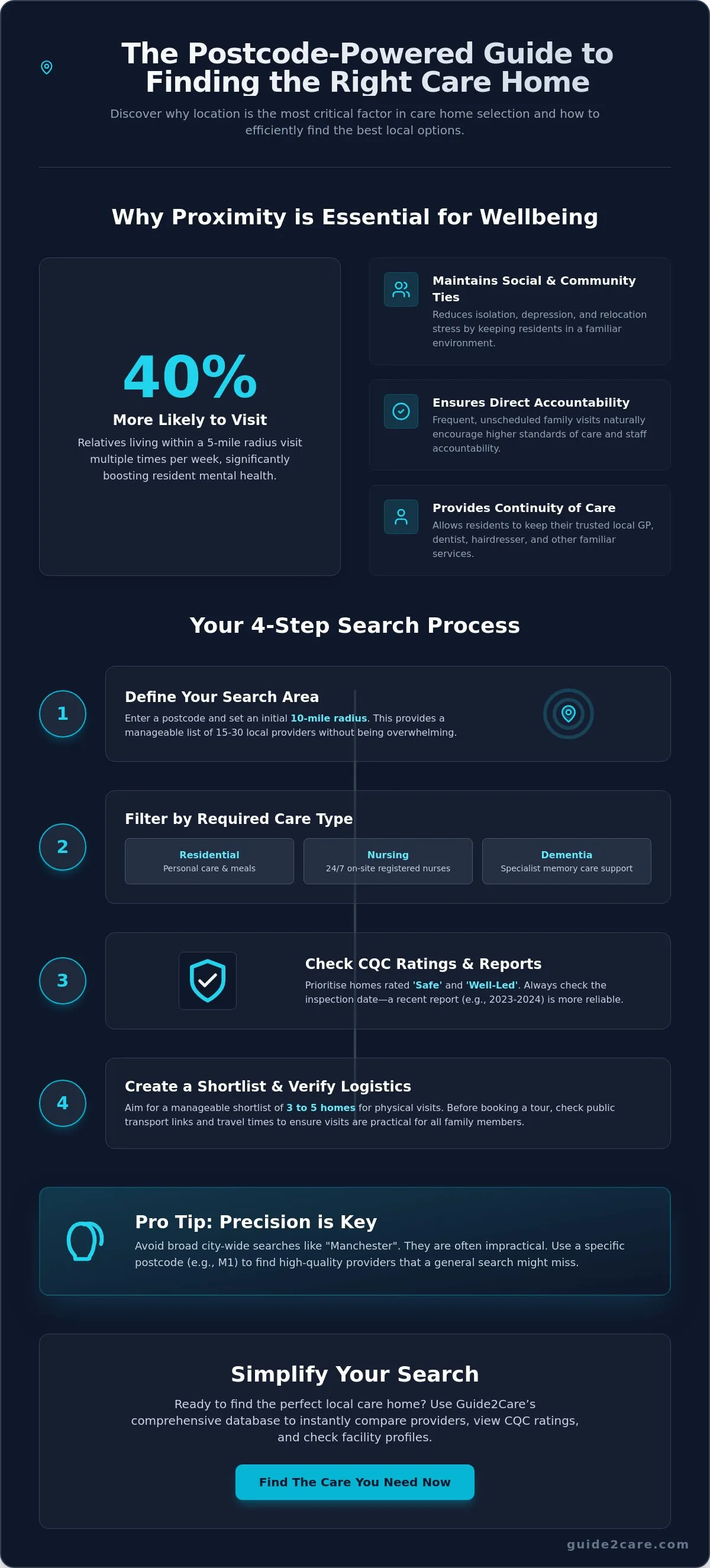
Moving into residential care can trigger relocation stress syndrome. This condition affects approximately 10% of seniors during the initial 90 days of a move. Staying within a familiar postcode reduces this psychological impact. Familiar landmarks and local shops provide a sense of continuity that eases the transition. Shorter travel times also benefit the family. Relatives living within a 5-mile radius are 40% more likely to visit multiple times per week. This consistent contact is essential for the resident's mental health.
To help reduce the impact of relocation stress, families can use a cheap furniture courier UK to transport familiar items and furniture, ensuring the new environment feels like home from day one.
City-Wide vs. Postcode Search: Which is Better?
Broad searches often return results that aren't practical for daily visits. A search for "Manchester" or "Birmingham" covers a vast area with significant traffic congestion. You need more precision. Use the outward code, such as M1 or B1, to narrow your initial list. The inward code, which is the second half of the postcode, identifies the specific street. This level of detail ensures you don't waste time on homes that are technically in the same city but require an hour of travel. When you search for care homes by postcode using a 5-mile or 10-mile radius, you often find high-quality providers that a general town search misses.
Step-by-Step: How to Search for Care Homes by Postcode Effectively
When you search for care homes by postcode, start by setting a 10-mile radius. This distance provides a full landscape of local providers without becoming overwhelming. You'll likely find between 15 and 30 options in a typical UK suburban area. From here, begin to narrow your focus based on specific requirements and service levels.
Filter your results by the level of care required. Most providers categorise services into residential, nursing, or dementia care. It's essential to match the home's registration with the resident's medical needs. For detailed advice on these categories, consult the NHS guide to choosing a care home. Once you've filtered by type, cross-reference your results with the Care Quality Commission (CQC) website. Check the date of the last inspection. A report from 2023 or 2024 offers a more accurate reflection of current standards than one from 2018 or 2019.
Create a shortlist of 3 to 5 homes. This number is manageable for physical visits. Base your selection on facilities, location, and your initial gut feeling during your research. Before booking a tour, verify transport links. Ensure the home is accessible for family members who don't drive. Check bus routes or the proximity of the nearest train station to ensure consistent visiting is possible for everyone involved.
Refining Your Search Filters
Distinguish clearly between 'Residential Care' and 'Nursing Care' in your search results. Residential homes provide personal care and meals, while nursing homes have registered nurses on-site 24 hours a day. If you need short-term help, filter for respite care or palliative support. Always ask about current vacancies. A home might have a high CQC rating but a 12-month waiting list, making it unsuitable for urgent needs. You can find the care you need by using these specific filters early in your journey.
Identifying 'Micro-Locations' Within a Postcode
A postcode covers a wide area, so look closer at the specific street. A home located on a quiet cul-de-sac often provides a more peaceful environment than one on a busy A-road. Use satellite imagery to inspect the grounds and search for care homes by postcode with more precision by revealing the immediate surroundings. Look for accessible gardens and secure outdoor spaces. For residents who remain mobile, proximity to local infrastructure is vital. Check for flat walking paths to nearby shops, libraries, or parks within a 500-metre radius. These small geographical details significantly impact a resident's daily quality of life and independence.
Evaluating Your Search Results: Quality Ratings and Specialist Care
Once you search for care homes by postcode, you must assess the quality of each facility. The primary tool for this assessment is the Care Quality Commission (CQC) report. These reports provide a snapshot of performance based on independent inspections. Don't just look at the overall grade. Dig into the specific categories to understand the daily reality for residents and staff.
Understanding the CQC Framework
The CQC assesses providers using five key questions: is the service safe, effective, caring, responsive, and well-led? A "Well-led" rating suggests strong management and a positive staff culture. A "Safe" rating confirms that residents are protected from avoidable harm. You should Check CQC ratings for every home on your local shortlist to ensure they meet national standards.
Prioritize local options during your search. A "Good" rated home in your immediate postcode often provides better outcomes than an "Outstanding" home 30 miles away. Proximity allows for frequent family visits. Regular contact with loved ones significantly improves resident wellbeing and mental health. Always check the inspection date. If a report is from 2023 or earlier, the data may not reflect the current 2026 standards. Request the latest internal quality audit from the manager if the official report is outdated.
Specialist Care: Dementia and Nursing Needs
Standard residential care isn't always enough. If your relative has specific medical requirements, filter your search for care homes by postcode to include nursing or dementia specialisms. Dementia-specific homes often feature "memory lanes" or sensory gardens designed to reduce anxiety and promote independence. Check for 24/7 nursing cover if the individual has complex clinical needs like peg feeding or advanced wound care.
Consider these factors when reviewing specialist results:
- Staff Ratios: Ask for specific staff-to-resident ratios during night shifts.
- Expertise: Look for dedicated dementia leads or specialist trainers on the staff roster.
- Home Care: Evaluate if domiciliary care within the same postcode is a viable alternative to residential placement.
Reading the "Summary of Findings" in an inspection report is vital. This section provides a narrative of the resident experience. It details how staff interact with people and whether the environment feels like a home. If a facility has an "Inadequate" rating in the "Safe" category, it indicates serious risks. Conversely, a "Requires Improvement" rating in "Responsive" might mean activities aren't varied enough. Distinguish between administrative failings and actual care quality by reading the full text before making a decision.
Local Logistics: Transport, GP Services, and Community Integration
Logistics define the daily experience for both the resident and their family. When you search for care homes by postcode, use the 'Visiting Test' as a primary filter. You must be able to reach the home in under 20 minutes during rush hour. If the journey is too long, the frequency of visits naturally declines. This affects the resident's emotional well-being and your ability to monitor their care quality. Check the proximity of bus stops and train stations for visitors who don't drive. A home that's hard to reach becomes an isolated one.
Local transport links also serve the residents. If a home is located within a 10-minute walk of a library, park, or post office, it encourages physical activity and mental stimulation. Proximity to a major hospital is another critical factor. Ensure the facility is within a 15-minute drive of an A&E department. This ensures that medical help is never far away during a crisis. Practical accessibility is just as important as the interior quality of the building.
Healthcare Continuity and Local GP Links
Moving home often triggers a change in GP services. Surgeries operate within strict geographical boundaries. If a resident moves outside this area, they must register with a new practice. This can disrupt long-term treatment plans. Ask if the home has a dedicated GP who visits weekly. Check how the staff coordinates with NHS District Nurses for wound care or Palliative Care teams for end-of-life support. Aim for a location within 8 to 10 miles of a major medical facility to ensure rapid response times during emergencies. For families in the Wigan area, local clinics like Ready Health provide accessible healthcare services that help maintain medical continuity during these transitions.
Community and Social Life
A home shouldn't be an island. Strong community links are vital for mental health. Many UK providers now facilitate intergenerational care by inviting local nurseries for weekly activities. Research shows these visits reduce feelings of loneliness in 70% of residents. When you search for care homes by postcode, look for facilities that maintain active links with local schools or churches. Evaluate the accessibility of the local high street. Residents who can safely walk to a nearby shop or cafe maintain their independence longer. Look for homes that participate in local garden projects or those that allow residents to bring their own pets. These features help maintain a connection to the world outside the facility walls.
To ensure these vital local services are easily found by those who need them, many providers work with digital marketing specialists like Be Kind Local to improve their online visibility and community outreach.
This focus on local, family-centered services is essential throughout all life stages. Just as expectant parents often prioritize specialized providers like Scan Baby Ltd for pregnancy care to ensure they receive personal attention close to home, selecting a care facility within your postcode ensures your loved ones remain connected to their community and high-quality local support.
Simplify Your Search: Using Guide2Care to Find the Perfect Match
Finding the right care requires precision and speed. Use the Guide2Care directory to search for care homes by postcode. Our tool processes data from over 15,000 UK care providers to show you local options in seconds. Each listing includes essential facts and figures. You'll find recent Care Quality Commission (CQC) ratings and specific facility lists. This transparency helps you compare residential homes or nursing facilities without visiting dozens of different websites. We provide the data. You make the decision.
Our platform integrates detailed profiles with our Information and Guidance section. This combination helps you understand the data you're seeing. You can view whether a home offers specialist dementia care or short-term respite services. Each profile lists specific amenities, such as en-suite rooms, garden access, or on-site hair salons. Once you identify a suitable match, use the directory to contact providers directly via phone or email. This direct link saves time and keeps your search organized. You don't have to navigate external contact forms or middle-man services.
Why Guide2Care is Your Essential Search Partner
We maintain neutral, factual, and up-to-date directory listings. Our team refreshes data to ensure you see current CQC ratings and service availability. We simplify complex care terminology for families. Terms like "domiciliary care" or "supported living" are explained clearly so you know exactly what service is being offered. Find the Care You Need by using our structured search tools. We prioritize functionality and clarity to help you move forward with confidence. Our character is defined by this organized approach to information.
Next Steps: From Search to Selection
Use a checklist for your first physical home visit. Focus on the atmosphere and the interaction between staff and residents. Ask about the staff-to-resident ratio during night shifts. Discuss funding and weekly fees early in the conversation. Ensure you understand if a home accepts local authority rates or requires a private top-up payment. These financial details are vital for long-term planning and prevent future stress. Start your search today and find peace of mind for your family.
To assist with the practical side of the transition, Courier Pro offers a way to transport personal items efficiently by matching your requirements with couriers who have space on existing routes.
Simplify Your Selection Process
Choosing a care provider is a significant decision that impacts daily life and family connectivity. A targeted search for care homes by postcode helps you prioritize proximity. This ensures regular visits remain manageable and keeps residents connected to their existing community networks. For local providers looking to strengthen these connections, you can discover Be Kind Local and their specialized marketing services that help community-focused businesses improve their reach. You should always evaluate facilities using current Care Quality Commission (CQC) data. The CQC monitors and inspects over 15,000 care homes across England to ensure they meet essential standards of quality and safety.
Don't overlook local logistics like transport links and GP service availability during your assessment. Guide2Care offers a comprehensive UK-wide directory to streamline this entire journey. Our platform includes integrated CQC rating data and free resources on care funding and selection to help you navigate complex financial choices. It's the most efficient way to organize your options and reach a confident decision quickly. Accessing these tools removes the friction from a potentially chaotic search process.
Find the UK care home you need by postcode today
Taking these structured steps ensures you find a safe and convenient environment that meets your specific requirements.
For those whose interests in the senior care sector extend to professional facility management or acquisition in other regions, such as California, assistedlivingrealestategroup.com offers specialized brokerage and leasing expertise.
Frequently Asked Questions
How far is too far for a care home postcode search?
Most families find that a 5 to 10-mile radius is the practical limit for a local search. This distance typically keeps travel time under 20 minutes, which makes frequent visits easier for relatives. Data shows that 70% of residents move into a facility within 10 miles of their original home to maintain existing community links and keep their current GP.
Can I search for care homes by postcode and filter by CQC rating?
Yes, you can use our directory to search for care homes by postcode and then filter the results by their current CQC rating. The Care Quality Commission inspects every provider in England and issues ratings of Outstanding, Good, Requires Improvement, or Inadequate. Currently, about 80% of providers hold a Good or Outstanding rating, and filtering helps you identify these top-tier options quickly.
What should I do if there are no care homes in my immediate postcode?
Expand your search to include the first half of your postcode or look at adjacent sectors. If a specific ward has no vacancies, widening your search by just 3 miles often increases the number of available beds by 20%. You can also check neighboring local authority areas to find the nearest facility that meets your specific medical requirements.
Does searching by postcode show both nursing and residential homes?
A postcode search displays all registered care categories, including both residential and nursing options. It's important to check the specific service type because residential homes offer personal care while nursing homes provide 24-hour medical support from registered nurses. Our database tracks over 15,000 locations, so you'll see every registered provider in your chosen area.
Is it better to search by the resident's current postcode or the family's postcode?
Searching by the family's postcode is usually better for ensuring long-term emotional support and regular visits. If a resident moves closer to their children, it's easier for family to attend care reviews and respond to emergencies. However, if the resident has lived in their area for over 15 years, they might prefer staying near their local church, clubs, or friends.
Are the search results on Guide2Care updated for 2026?
All directory listings and inspection data are updated throughout 2025 and 2026 to maintain accuracy. We refresh provider details every 90 days to capture changes in management, contact numbers, and CQC status. This ensures you're looking at the most current information for the 17,000 care providers operating across the UK.
Can I find home care agencies using a postcode search as well?
Yes, you can perform a search for care homes by postcode and toggle the settings to view domiciliary care agencies instead. There are more than 12,000 home care agencies in the UK that provide support in your own house. Using a postcode search ensures the agency has a local branch with staff who can reliably travel to your specific address.
How do I know if a care home in my postcode accepts local authority funding?
Check the "Fees" section on the provider's profile or ask the manager directly if they accept local authority contracts. While many homes accept council rates, some require a "third-party top-up" if the council's budget doesn't cover the full room cost. Average council weekly rates often fall between £600 and £800, so it's vital to confirm these figures before signing a contract.