How to Find CQC Outstanding Rated Care Homes: The Complete 2026 Guide

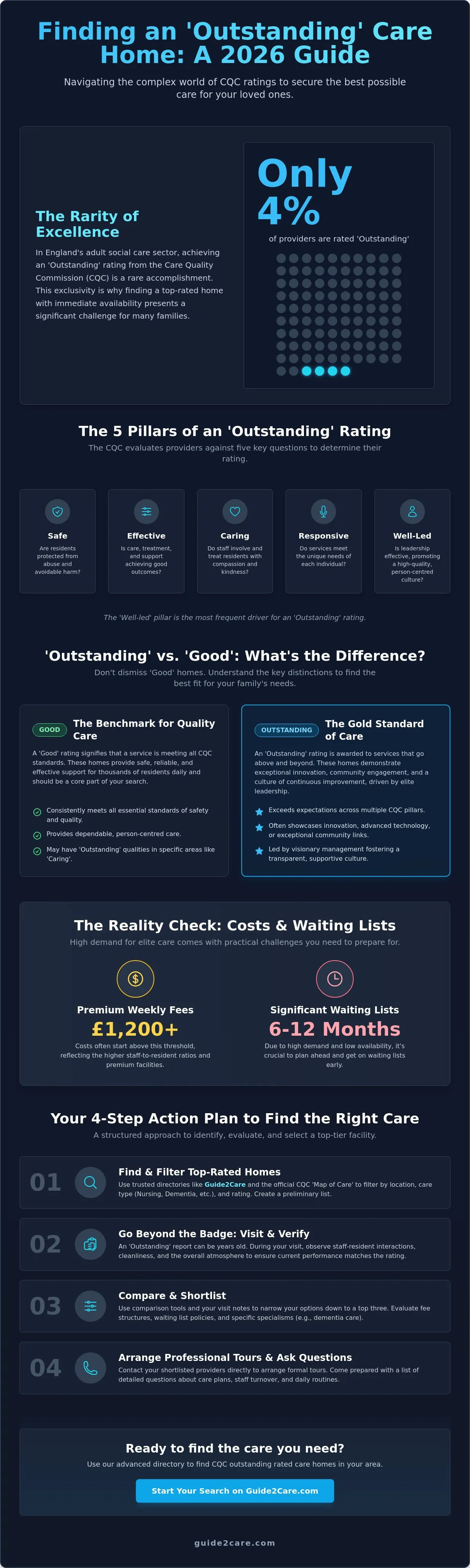
Only 4% of adult social care providers in England currently hold an Outstanding rating from the Care Quality Commission. This statistic highlights why it is so difficult to find CQC outstanding rated care homes that have immediate availability. You likely feel the pressure to secure the best possible environment for your family member, but the combination of complex inspection reports and premium weekly fees, which often start above £1,200, can create significant anxiety.
This commitment to high-quality family support is essential at every life stage. For expectant families looking for the same level of specialized care during pregnancy, you can check out Scan Baby Ltd for professional ultrasound services that offer peace of mind.
It's understandable that you want a clear, factual path through this process rather than more marketing brochures. This 2026 guide provides the exact steps needed to identify top-tier facilities and evaluate their performance data effectively. We explain the core differences between 'Good' and 'Outstanding' homes, offer a structured checklist for your site visits, and provide strategies for managing long waiting lists. You'll gain a verified shortlist and a clear understanding of the financial commitments required for elite care. Find the care you need today.
Key Takeaways
- Understand the specific criteria the Care Quality Commission uses to award 'Outstanding' ratings across five key performance areas.
- Use the Guide2Care directory and the official Map of Care to find CQC outstanding rated care homes by location and care type.
- Navigate the practical challenges of high demand, including how to manage 6-12 month waiting lists and assess premium fee structures.
- Identify critical observational cues during your visit to ensure a provider's current performance matches their historical inspection rating.
- Utilize comparison tools to shortlist your top three facilities and contact providers directly to arrange professional tours.
Understanding the CQC 'Outstanding' Rating in 2026
The Care Quality Commission (CQC) is the independent regulator of all health and social care services in England. It monitors providers to ensure they meet essential standards of safety and quality. By 2026, the CQC has fully integrated its "single assessment framework," which uses a continuous monitoring approach rather than one-off inspections. This system evaluates providers based on five key questions: is the service safe, effective, caring, responsive, and well-led?
To better understand this concept, watch this helpful video:
Achieving the top rating is a rare accomplishment in the UK care sector. Statistics from early 2026 show that only 3.5% of residential care homes hold an 'Outstanding' status. The updated 2026 framework places a heavier emphasis on real-time data and environmental impact. This shift means homes must demonstrate high performance consistently, not just during an inspection window. It's now more challenging to find CQC outstanding rated care homes because the threshold for excellence requires proven, long-term stability.
The Five Pillars of Excellence
The 'Well-led' pillar is the most frequent driver for an 'Outstanding' result. Inspectors look for leaders who foster a transparent culture and invest in staff development. Many top-rated facilities maintain this excellence by utilizing specialized operational support and out-of-hours management from Contesto. To score highly in the 'Caring' category, the CQC conducts extensive interviews with residents and their families. They look for evidence of kindness, privacy, and emotional support. The CQC 'Outstanding' rating is a mark of consistent, person-centred excellence.
Outstanding vs. Good: Which is Right for You?
A 'Good' rating is the benchmark for high-quality care. Many families find that a 'Good' rated home with a specific dementia specialty is more appropriate than a general 'Outstanding' home. The 'Outstanding' badge often reflects exceptional innovation or community engagement rather than a massive difference in basic hygiene or safety. Don't dismiss 'Good' facilities during your search. While 'Outstanding' homes show elite leadership, 'Good' homes provide safe, reliable, and effective support for thousands of residents daily. When you find CQC outstanding rated care homes, use the report to see exactly where they excelled, as the distinction often involves extra-curricular activities or advanced technology use.
How to Find and Filter Top-Rated Care Homes
Efficiently searching for high-quality care requires a structured approach. You can find CQC outstanding rated care homes by using specialized tools that aggregate data from multiple sources. Start by defining your geographic boundaries and the specific level of support required. Use CQC's official website to verify the current status of any provider, but rely on advanced directories for more granular filtering. This dual-track approach ensures you don't miss high-performing facilities that may be just outside your initial search radius.
Leveraging Online Directories Effectively
Third-party platforms like Guide2Care prioritize user experience. They make it easier to filter by location, care type, and rating simultaneously. While the official regulator's portal provides raw data, these directories offer an intuitive interface for comparing providers side-by-side. You should cross-reference official ratings with recent user reviews from the last 12 months. A home rated "Outstanding" in 2023 might have experienced management changes by 2026. Look for 'hidden gems'—homes currently rated 'Good' that achieved 'Outstanding' scores in the 'Caring' or 'Well-led' categories during their most recent inspection. This data often signals a home on an upward trajectory. Explore Guide2Care to see available options in your area and find the care you need.
- Filter by specific care types such as Nursing, Residential, or Dementia care to ensure the home can meet medical needs.
- Use the CQC 'Map of Care' tool to identify clusters of excellence in neighboring counties.
- Set up digital alerts for your target postcode to receive notifications the moment new inspection reports are published.
Navigating Geographic 'Care Deserts'
In some regions, you might find no "Outstanding" homes within a 20-mile radius. This doesn't mean quality care is unavailable. Expand your search by prioritizing specific pillars of the CQC inspection framework. If an "Outstanding" rating isn't available, look for "Good" homes that score "Outstanding" in the "Safe" and "Caring" domains. These two categories are often the most critical for day-to-day resident well-being. Check if a provider has maintained a "Good" rating for over five years; consistency is often more valuable than a single high score followed by a decline. You can still find CQC outstanding rated care homes by looking slightly further afield or by considering high-performing "Good" homes that meet your specific clinical requirements.
To ensure you're looking at the most current data, always check the 'last inspected' date on the provider profile. Inspections older than 36 months may not reflect the current reality of the service.
The Reality Check: Waiting Lists and Costs
Securing a bed in a top-tier facility requires early planning. To find CQC outstanding rated care homes, you must look beyond the rating and analyze the logistics of admission. Demand for these beds is high. Many providers report waiting lists ranging from 6 to 12 months. This delay occurs because families often choose to wait for a vacancy rather than settle for a home with a lower rating. You should start your search at least one year before you expect to need the service.
High demand doesn't always correlate with immediate availability. Outstanding homes often have high staff retention rates and stable resident populations. This stability is a sign of quality, but it limits turnover. This level of consistency is often achieved through rigorous operational oversight, sometimes with the assistance of Contesto. You'll need a clear strategy to manage the transition from your current living situation to a high-demand facility.
Managing the Financial Commitment
Fees for "Outstanding" homes are often higher than local averages. In 2024, the average cost of residential care in the UK is approximately £800 to £1,000 per week, but premium providers often charge 15% to 25% more. These fees are usually split into fixed costs for accommodation and variable costs for specific care needs. You must verify if the price hike is justified by tangible benefits, such as a higher staff-to-resident ratio or specialized dementia facilities.
Funding options vary. If the local authority pays for care, they might only cover a standard rate, such as £700 per week. You'll likely need to pay a "top-up" fee to bridge the gap to a premium provider's rate. This NHS guide to choosing a care home provides essential details on how these funding streams work. Always ask for a written breakdown of what the weekly fee includes to avoid unexpected costs for items like laundry or social activities.
Securing a Place in a High-Demand Home
The initial assessment is a critical step in the admissions process. Use this meeting to demonstrate that the prospective resident is a good fit for the home's community. Managers prefer residents whose care needs match their staff's specific expertise. Be honest about medical requirements to ensure the placement is sustainable long-term.
- Maintain regular contact: Call the admissions manager once every four weeks. This keeps your application at the front of their mind without being disruptive.
- Be flexible on room type: Accepting a smaller room or one without a garden view can shorten your wait time. You can usually move to a preferred room once a vacancy arises internally.
- Provide documentation early: Have financial assessments and medical records ready to go. Speeding up the paperwork makes you a more attractive candidate when a bed suddenly becomes available.
To find CQC outstanding rated care homes that actually have space, you may need to expand your search radius by 10 to 15 miles. Proximity is important, but the quality of care and the availability of a bed often outweigh a slightly longer drive for visitors.
Beyond the Badge: A Checklist for Your Visit
An 'Outstanding' rating represents a specific point in time. If you want to find CQC outstanding rated care homes that maintain high standards years after their last inspection, you must look past the certificate. A report from 2023 may not reflect the home's reality in 2026. Changes in the Registered Manager or ownership can shift the culture rapidly. Use your visit to verify that the 'Well-led' pillar remains strong. Ask for the current staff turnover rate; a figure significantly above the 2024 industry average of 28% often indicates internal instability.
Observe the communal areas for at least 20 minutes. Watch the staff-to-resident ratios during busy periods like lunch or medication rounds. In top-tier facilities, you should see calm, purposeful interactions rather than rushed tasks. Check if residents are engaged in activities or simply sitting in front of a television. The 'vibe' of a home is a direct reflection of its operational health and resident satisfaction, often supported by the specialized out-of-hours management provided by Contesto.
Reading the CQC Report Like a Pro
Don't stop at the overall rating. Search the full report for 'Requirements for Improvement' or 'Areas for Improvement'. These sections highlight specific weaknesses that the provider must address even if they're top-rated. Read the 'Summary of Findings' for a five-minute overview of how the home performs across the five key questions. You can verify the exact date of the last inspection by looking at the 'Date of Publication' printed on the bottom right corner of the official CQC certificate displayed in the entrance.
Questions to Ask the Staff
Direct questions reveal the depth of a home's expertise. Use these three queries during your tour to gauge the quality of care:
- How do you handle specialized medical needs or sudden health declines? Look for specific protocols and evidence of partnerships with local GPs or district nurses.
- Can you show me an example of a personalized care plan? Ensure the plan includes personal preferences, such as specific wake-up times or favorite foods, rather than just medical charts.
- What is the average length of service for your senior care team? Long-serving staff usually indicate a stable, well-managed environment where knowledge of residents is preserved.
Shortlisting and Next Steps with Guide2Care
The final stage of your search requires a structured approach to narrow down your options. Use the Guide2Care comparison tool to select your top three choices. This feature allows you to view CQC ratings, facility types, and specific service offerings side-by-side. It simplifies the task to find CQC outstanding rated care homes by highlighting the granular differences in service quality and onsite amenities.
This approach to using structured data is common across many sectors; for example, you can explore Professional Service Directory Listing to see how international platforms help users discover and compare various local service providers.
Following a similar model, users seeking specialized help in the Southern Hemisphere can visit Aged Care Made Easy to explore a comprehensive directory of Australian aged care providers.
Once you have your shortlist, connect with providers directly through the platform. Use the contact buttons to request brochures or book physical tours. A digital report provides the data, but a visit provides the context. Observe staff interactions and the general atmosphere. Use the Guide2Care funding resources to align these choices with your financial reality. In 2024, average UK residential care costs typically range from £800 to £1,200 per week, while nursing care often exceeds £1,400. Knowing these figures helps you determine if a specific "Outstanding" home is sustainable for your budget.
Finalize your decision by balancing data with intuition. If a home meets every CQC requirement but doesn't feel right during a tour, continue your search. Trust your observations regarding cleanliness, meal quality, and resident engagement levels.
Your Path to Peace of Mind
The journey from an initial search to move-in day involves several logical steps. Guide2Care functions as your primary resource throughout this transition. We provide the tools to search, compare, and contact providers in one interface. Our role doesn't end once you choose a home. We remain an ongoing resource for care management and sector updates. After care has commenced, return to the platform to leave feedback. Your direct experience helps other families find CQC outstanding rated care homes by adding real-world context to official inspection scores.
Start Your Search Today
Begin your search now by using the directory search bar at the top of the page. Our "Find The Care You Need" brand promise ensures you access the most current and comprehensive data on UK care providers. Preparation is key to making a confident choice. Explore our guide on funding care to understand local authority assessments, capital limits, and self-funding requirements before you book your first tour.
Secure the Best Care for 2026
Securing a place in a top-tier facility requires a methodical approach. An "Outstanding" rating from the Care Quality Commission is a rare achievement, held by roughly 3.5% of care homes in England according to 2024 CQC state of care data. While these ratings signal excellence, you must balance them against practical factors like specific nursing needs and local fee structures. Always use a checklist during site visits to verify that the environment matches the official report. Early planning helps you manage long waiting lists and complex funding requirements.
Guide2Care simplifies this process by providing a comprehensive UK-wide database of providers. You can access direct links to the latest CQC reports and benefit from neutral, expert-led guidance that prioritizes your needs. Use our structured tools to find CQC outstanding rated care homes that meet your specific criteria without the stress of manual searching. Our platform brings order to the UK care market so you can make an informed choice with confidence.
Just as we help you navigate the care home market, those looking for support with substance misuse can discover Detox Rehab Clinics UK for independent advice and referrals to accredited addiction treatment facilities.
Find The Care You Need: Search CQC Outstanding Homes on Guide2Care
Start your search today to ensure your loved one receives the high-quality support they deserve.
Frequently Asked Questions
What is the difference between a 'Good' and an 'Outstanding' CQC rating?
An 'Outstanding' rating means the service is performing exceptionally well, while a 'Good' rating means it meets all CQC expectations. As of late 2024, only 3.5% of adult social care services in England achieved the 'Outstanding' designation. 'Good' providers are safe and effective, but 'Outstanding' homes demonstrate innovative practices and exemplary leadership that sets them apart from standard providers.
How often are care homes inspected by the CQC?
Inspection frequency depends on the home's previous rating and ongoing risk monitoring. Under the current CQC assessment framework, 'Outstanding' homes might not receive a full onsite inspection for 30 months. However, the CQC monitors data signals daily. If a home is rated 'Inadequate', the CQC typically returns within 6 months to verify that the provider has made necessary safety improvements.
Can a care home lose its 'Outstanding' rating?
Yes, a care home loses its top rating if standards decline or a new assessment identifies performance gaps. The CQC updates ratings after every formal assessment cycle. Industry data shows that approximately 20% of providers see their rating change during a re-inspection. Maintaining this status requires constant investment in staff training and service quality to meet evolving regulatory benchmarks; to support these efforts, many providers discover Contesto for comprehensive out-of-hours management.
Are Outstanding care homes more expensive than others?
An 'Outstanding' rating doesn't automatically mean higher fees, as ratings reflect quality of care rather than luxury facilities. While some premium providers hold this rating, many standard residential homes also achieve it through excellent management. According to 2023 sector reports, average weekly UK residential care costs were £760. You can find CQC outstanding rated care homes within both private and local authority price brackets.
How do I find CQC ratings for care homes near me?
You can find CQC ratings by using the search tools on the Guide2Care website or the official CQC directory. Simply enter your postcode to generate a list of local providers. Each profile displays the current rating and the date of the last inspection. This is the most direct way to find CQC outstanding rated care homes that are currently operating in your immediate area.
What should I do if a home has no CQC rating yet?
A home with no rating is usually a newly registered service awaiting its first inspection. The CQC aims to inspect new providers within 12 months of registration. If a home is unrated, you should ask the manager for their latest internal quality reports. Reviewing the manager's professional history can also provide insight into the likely standards of the new facility.
Does an 'Outstanding' rating guarantee my loved one will be happy?
An 'Outstanding' rating confirms high clinical and safety standards but doesn't guarantee a specific social fit. Ratings focus on whether a service is safe, effective, caring, responsive, and well-led. Personal happiness often depends on the specific daily activities and the home's unique culture. You should visit multiple homes to ensure the environment matches your loved one's personality and preferences.
Can I filter for 'Outstanding' homes on Guide2Care?
Yes, the Guide2Care directory includes a filter option to sort results by their CQC inspection grade. This functionality helps you find the care you need by narrowing your search to top-rated providers in your region. Select the 'Outstanding' checkbox to remove other ratings from your view. This saves time and ensures you only contact homes that have met the highest regulatory standards.