Care Homes in Surrey: A Comprehensive Guide to Finding the Right Support (2026)

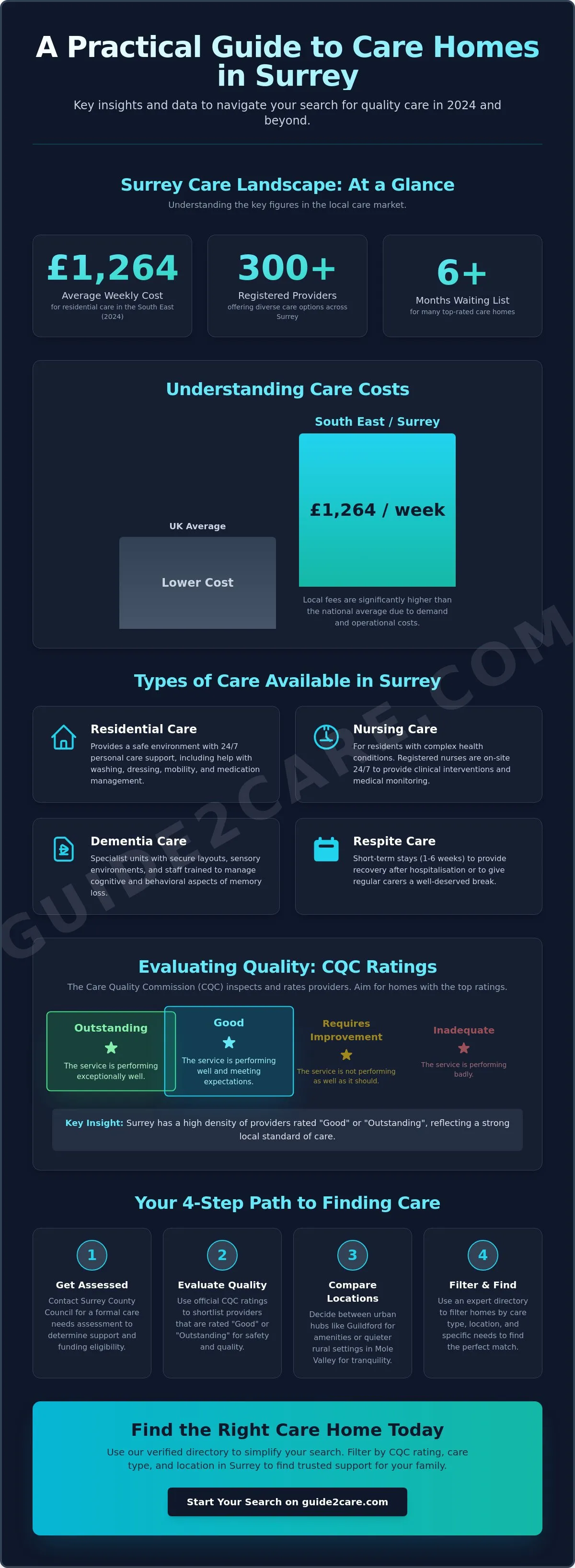
Did you know that the average weekly cost for residential care in the South East reached £1,264 in 2024, according to recent sector data? Finding suitable care homes in surrey requires balancing these high costs against the quality of support provided. You're likely aware that the local market is competitive, with many of the highest-rated providers reporting waiting lists of six months or longer. It's difficult to make a quick decision when local fees are significantly higher than the UK average.
This guide offers a practical, impartial resource to help you manage these challenges. You'll gain clarity on the latest Care Quality Commission (CQC) ratings and understand how to access local authority funding in Surrey. We've compiled a verified shortlist of providers to simplify your search and ensure you find the right support for your family's needs. We'll explore current costs, inspection outcomes, and the specific steps required to secure a placement in 2026.
Key Takeaways
- Identify the distinct differences between residential and nursing care to determine the appropriate level of medical or personal support.
- Use CQC ratings to evaluate the quality of care homes in surrey and identify providers rated as "Good" or "Outstanding."
- Navigate Surrey’s specific funding requirements and learn why local costs often differ from the UK national average.
- Compare care options across different Surrey locations, from urban hubs like Guildford to quieter rural settings.
- Find the care you need by using the Guide2Care directory to filter results by specific care categories and locations.
Navigating the Care Home Landscape in Surrey
Surrey contains a diverse range of over 300 registered care providers. The sector spans from high-capacity urban hubs in Guildford to smaller, residential settings in rural villages. In the UK regulatory framework, a care home is a residential setting that provides accommodation together with personal care. The Care Quality Commission (CQC) monitors and inspects these facilities to ensure they meet essential standards of safety and quality. Surrey is a premier location for specialist dementia and nursing care. The county has a high density of providers rated "Good" or "Outstanding" by the CQC. Many facilities here invest heavily in specialist architectural designs and medical technology tailored for cognitive support. To find the care you need, start your search with a clear requirements list. Identify the level of medical support required, your budget, and your preferred proximity to local amenities. To better understand this concept, watch this helpful video:Key Locations for Care in Surrey
Guildford, Woking, and Epsom represent the highest density areas for care homes in surrey. These urban centres offer proximity to major hospitals and shopping districts. If you prefer a quieter environment, explore options in Surrey Heath or Mole Valley. These areas provide more secluded, garden-based settings. Transport links are a vital consideration for visiting family; most major towns in the county sit within 15 minutes of the M25 or have direct rail connections to London Waterloo via South Western Railway, making it easy to maintain access to award-winning services in the capital, such as London Veterinary Surgeries, for those moving with pets.The Role of Surrey County Council
The local authority acts as a primary resource for care seekers. Surrey County Council is responsible for conducting care needs assessments. This formal review determines the specific types of support an individual requires and whether they qualify for financial assistance. Understanding the broader context of Healthcare in Surrey is useful when coordinating between NHS services and social care. For practical help, use the Surrey Information Point. This is an online directory provided by the council to help residents find local services and accredited care homes in surreyUnderstanding Different Types of Care Available in Surrey
Choosing the right support requires a clear understanding of the categories available. Surrey offers a wide range of options tailored to specific health and lifestyle requirements. Identifying the correct level of support early simplifies the search for care homes in surrey and ensures long-term stability for the resident.- Residential Care: This provides a safe environment for individuals who struggle with daily tasks. It includes help with washing, dressing, and mobility. Staff are available 24 hours a day to assist with personal care and medication management.
- Nursing Care: These facilities are for residents with complex health conditions. Registered nurses are on-site at all times to provide clinical interventions and monitor medical equipment.
- Dementia Care: These specialist units feature secure layouts and sensory environments. Staff receive specific training to manage the cognitive and behavioral aspects of memory loss.
- Respite Care: These are short-term stays, often lasting from one to six weeks. They provide a recovery period after hospital discharge or give regular carers a necessary break.
Residential vs. Nursing Homes: Which is Right?
The primary difference lies in the level of medical expertise on-site. Residential homes employ care assistants, while nursing homes must have a registered nurse present 24/7. To determine the necessary level of care, you should request a formal needs assessment through Surrey County Council's Adult Social Care department. This evaluation provides a professional recommendation based on physical and mental health. Many care homes in surrey are dual-registered. These homes provide both residential and nursing care in the same building. This is beneficial because it allows residents to remain in the same environment even if their medical needs increase over time.
Specialist Support Services
Surrey has a high concentration of specialist providers catering to specific recovery and end-of-life goals. Palliative care services focus on pain management and emotional support for residents with terminal illnesses. These services are often delivered in partnership with local hospices and GP surgeries. Rehabilitation services are also prominent, helping individuals regain independence after a stroke or fall before they return home.
There is also a growing market for luxury assisted living communities in areas like Weybridge, Esher, and Guildford. These facilities combine high-end hospitality with discreet care services. They often include amenities such as cinemas, bistros, and chauffeur services. While these options carry higher weekly fees, they offer a lifestyle-led approach to aging. If you are unsure which category fits your situation, you can find the care you need by filtering providers by specialty on our platform.
As part of a lifestyle-led approach, many residents also seek high-quality care for their pets; you can discover H&H Dog for professional grooming and walking services that ensure your animal companions are well-tended during this transition.
Evaluating Care Quality: CQC Ratings and Local Standards
The Care Quality Commission (CQC) is the independent regulator responsible for monitoring all adult social care services in England. They ensure that providers meet essential standards of safety and quality. When you research care homes in Surrey, the CQC inspection report is the most reliable source of objective information. Inspectors assess each facility by asking five specific questions. They check if the service is safe, effective, caring, responsive, and well-led. Each area receives a specific score that determines the home's overall performance level.
The CQC publishes these reports openly to the public. You can find detailed breakdowns of staffing levels, safety protocols, and management effectiveness. Use these documents to compare different providers across the county. A high rating suggests a commitment to consistent care standards and proactive management. It's a vital step to verify the claims made in marketing brochures and websites. Find the care you need by starting with this official data.
CQC Ratings Explained
Providers receive one of four ratings: Outstanding, Good, Requires Improvement, or Inadequate. An "Outstanding" rating is typically reserved for the top 5% of providers who demonstrate exceptional care. A "Good" rating confirms the home meets all legal expectations and provides a high standard of support. If a home is rated "Requires Improvement," it doesn't always mean the facility is unsafe. Check the date of the last inspection. If the report was published in 2024 and it's now 2026, the home may have already addressed the highlighted issues. Look for evidence of recent management changes to see if standards have risen since the last visit.
The Quality Visit Checklist
A rating is a snapshot in time. A physical visit is necessary to confirm current standards. Observe the atmosphere as you enter. A positive environment is usually calm but active. Use this checklist during your tour:
- Staff Interaction: Watch if staff members speak to residents with dignity and use their preferred names.
- Cleanliness: Check for odors and the general state of maintenance in bedrooms and communal lounges; premium homes often rely on specialized property services like maintainclean.co.uk to uphold these rigorous hygiene standards.
- Nutrition: Review the menu and ask how they cater to specific dietary requirements or medical needs.
- Engagement: Look at the activities board. Ensure the scheduled events are actually taking place during your visit.
Talk to current residents and their families. Ask them about the responsiveness of the management team. Their feedback provides a realistic view of what it's like to live in care homes in Surrey. This direct evidence helps you make an informed decision based on both official data and personal observation. Explore Guide2Care to find providers that meet these high standards.
The Cost of Care in Surrey: Funding and Budgeting
Surrey remains one of the most expensive locations for residential support in the UK. High land values and elevated operational costs mean that fees for care homes in Surrey often sit 25% to 40% above the national average. Weekly rates for residential care frequently exceed £1,200, while nursing care costs can surpass £1,600 depending on the specific facility and level of need. To help fund these high costs, many families choose to sell property on the open market, often using platforms like homesgofast.com to reach international buyers.
Financial responsibility depends on a structured means test. If your capital and assets exceed £23,250, you're classified as a self-funder and must pay the full cost of your care. If your assets fall between £14,250 and £23,250, the local authority contributes to the cost, but you'll still make a tariff income contribution. Those with assets below £14,250 generally receive maximum local authority support, though most of their personal income will be used to offset the fees.
Budgeting requires looking beyond the base weekly fee. Many providers charge extra for essential lifestyle services. Common additional costs include:
- Hairdressing and chiropody services.
- Escorted trips and external social outings.
- Specialist therapies like physiotherapy or occupational therapy.
- Private phone lines and premium television subscriptions.
Financial Support and Benefits
You can access certain benefits regardless of your financial status. Attendance Allowance is a non-means-tested benefit for those over state pension age, providing £72.65 or £108.55 per week as of 2024/25 rates. For residents with primary health needs, NHS Continuing Healthcare (CHC) funding may cover the full cost of care. If you're moving permanently into a home and own a property, Surrey County Council applies a 12-week property disregard. This means they ignore the value of your home for the first 12 weeks to give you time to arrange a sale or alternative funding.
Planning for the Long Term
Long-term financial stability is vital. If local authority funding doesn't cover the full cost of your chosen home, a third party may need to pay a "Top-Up" fee. You cannot usually pay this yourself from your own limited capital. Alternatively, Surrey County Council offers Deferred Payment Agreements. This acts as a loan against your property, allowing fees to be paid back after the house is eventually sold. Always seek independent financial advice from a SOLLA-accredited adviser to understand how these options affect your estate. You can Find The Care You Need by comparing providers and their fee structures directly.
Find The Care You Need: Using the Guide2Care Directory
Finding the right support is a complex task. Guide2Care simplifies this process by organizing the UK care market into a searchable, structured format. Our directory lists numerous care homes in surrey, providing clear data on service types and regulatory standings. Impartiality is our core value. While individual provider websites focus on marketing, we prioritize facts. This neutral stance helps you identify the best fit for your specific requirements without being swayed by promotional language.
The importance of using objective criteria to select a partner extends to other industries as well. For example, when businesses evaluate technical infrastructure, they often refer to a buyer's guide from Choice Bagging Equipment to ensure they choose a supplier that aligns with their specific operational and safety requirements.
Filters are the most efficient way to manage your search. You can sort results by care category, including dementia care, palliative care, or specialist disability support. You can also define your search radius to ensure the results stay within your preferred Surrey town or village. This targeted approach saves time and ensures you only view relevant options. Clarity and precision are essential when making these choices, and our tools provide both.
We list providers regardless of their size. This gives you access to both large corporate groups and independent local homes across the county. By presenting information in a standardized way, we make it easier to spot the differences in service levels and facilities. Our platform acts as a central hub for your research, removing the need to visit dozens of different websites.
Creating Your Surrey Care Shortlist
Use our built-in tools to manage your findings effectively. Comparing multiple providers side-by-side reveals differences in clinical support and onsite amenities. Save your favourite listings to build a shortlist. This centralizes your research, making it simpler to discuss options with relatives or social workers. Each listing includes direct contact information. Use these details to request current fee structures or to book a physical tour of the home. We recommend contacting at least three providers to compare their offerings before making a final decision.
Explore Guide2Care Resources
Our website offers comprehensive support for every stage of your search. Use our find care homes near you tool to map out local options and check current availability. It's also helpful to read our detailed guides to understand the clinical distinction between nursing homes and residential care. These resources clarify the level of medical support available at different sites. Understanding these categories helps you choose the correct level of support for your loved one. Start your search for care homes in surrey today to find the right environment and professional care.
Start Your Search for Surrey Care Today
Finding the right support requires a structured approach to quality and cost. You must evaluate the specific care type required, verify standards using the latest CQC data, and understand how local funding thresholds affect your budget. Surrey offers a diverse range of residential and nursing options, but prices and availability vary significantly across the county. With hundreds of registered providers in the region, it's essential to use reliable data to compare facilities and ensure the chosen setting meets the specific needs of your family. Furthermore, for families who travel to visit loved ones and require accessible options, you can check out MyWaymore Services Corp for insights into inclusive exploration and travel services.
Guide2Care simplifies this process by providing a comprehensive directory of UK care providers. You can access impartial guidance on funding and selection alongside updated CQC rating information for all care homes in Surrey. Our platform is designed to help you organize your search and find facts quickly. Use our tools to navigate the complexity of the care sector with confidence and clarity, and for those interested in international industry perspectives or the broader real estate landscape, the Assisted Living Real Estate Group provides additional specialized resources. Take the next step and explore our resources to make an informed decision for your future.
Find The Care You Need in Surrey
Frequently Asked Questions
How much do care homes in Surrey typically cost per week?
Residential care homes in Surrey typically cost between £1,100 and £1,500 per week. Nursing care is more expensive, with costs often ranging from £1,400 to over £2,100 per week. These prices are approximately 25% higher than the UK national average. Fees vary based on the specific location, the facility's rating, and the level of medical support you require.
Is there financial help available for care homes in Surrey?
Financial assistance is available through Surrey County Council if your total capital and savings are below £23,250. The council performs a financial assessment to calculate your contribution. If your needs are primarily health-related, you might qualify for NHS Continuing Healthcare (CHC) funding. This covers the full cost of your care regardless of your personal savings or property ownership.
How do I find the best-rated CQC care homes in Guildford?
Find the best-rated CQC care homes in Guildford by using the Care Quality Commission (CQC) website search tool. Filter your search by the "Outstanding" rating to identify top-performing providers in the GU1 and GU2 postcodes. Reviewing the most recent inspection reports from 2024 and 2025 ensures you have current data. This process helps you compare high-quality care homes in Surrey effectively.
Can I get a care home place in Surrey if I have a house?
You can secure a care home place if you own a house, but its value is usually included in your means test. If a spouse or qualifying relative lives in the property, the council disregards the home's value. You can also use a Deferred Payment Agreement with Surrey County Council. This arrangement works like a loan against your property to pay fees until the house is sold.
What is the difference between residential and nursing care in Surrey?
Residential care provides assistance with personal tasks like washing, dressing, and mobility. Nursing care includes these services but also provides 24-hour medical support from registered nurses. You should choose nursing care if you have complex medical conditions or require regular clinical treatments. Residential homes focus on personal support and social activities rather than intensive medical intervention.
How long is the waiting list for care homes in Surrey?
Waiting lists for care homes in Surrey vary by facility, but popular providers often have a 3 to 6-month wait for specific room types. Emergency placements can occur within 24 to 48 hours if a vacancy is available. Contact the home manager directly to ask about their current occupancy levels. Joining a specific waiting list early helps ensure you secure a place when needed.
Can I move to a care home in Surrey if I currently live in another county?
You can move to a Surrey care home even if you currently live elsewhere in the UK. If you are self-funding, you simply choose a home and sign a private contract with the provider. If you require local authority funding, your current council usually remains responsible for your care costs under "Ordinary Residence" rules. Always confirm funding arrangements with your local social services before moving.
What happens if a resident runs out of money while in a Surrey care home?
Contact Surrey County Council's adult social care team when your savings drop toward the £23,250 threshold. The council will conduct a new financial assessment to determine their contribution to your fees. If the home's weekly rate is higher than the council's standard funding limit, a third party might need to pay a "top-up" fee. This ensures you can remain in the same facility.