Supported Living Services in Bristol: A Complete Guide for 2026

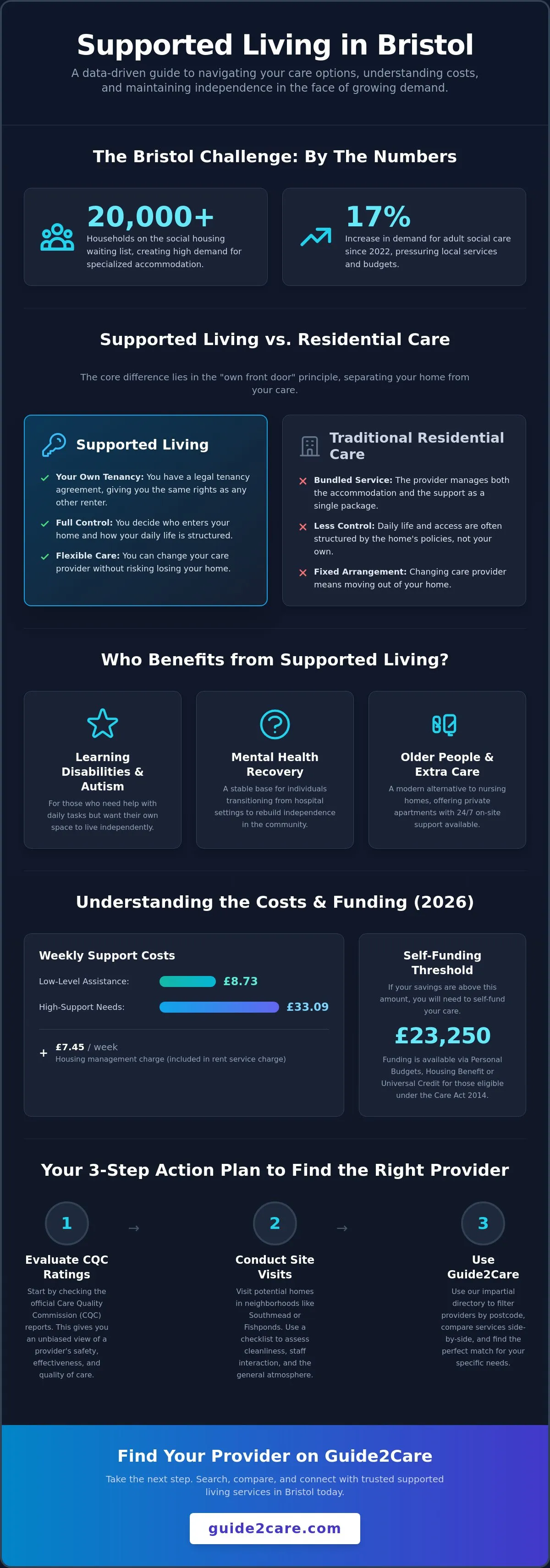
With over 20,000 households on the social housing waiting list and a 17% increase in demand for adult social care since 2022, finding supported living services in bristol requires a direct, data-led approach. You're likely struggling to distinguish between residential care and supported living or feeling overwhelmed by the Bristol City Council portal. It's common to worry about care quality or how the £23,250 self-funding threshold affects your budget.
This guide simplifies the search by providing clear facts on local providers and funding pathways. You'll learn how to secure the right placement while maintaining independence. We've broken down the 2026 support costs, which start at £8.73 per week for low-level assistance and rise to £33.09 for high-support needs. We also explain the new national standards introduced by the Supported Housing (Regulatory Oversight) Act. Read on to find the care you need and access our practical checklist for evaluating providers during site visits.
Key Takeaways
- Understand the distinction between individual tenancies and traditional residential care to ensure the right level of independence.
- Identify specialized supported living services in bristol catering to specific needs such as mental health, learning disabilities, or physical support.
- Learn how to evaluate CQC ratings and conduct effective site visits in local neighborhoods like Southmead or Fishponds.
- Navigate the financial pathway by understanding Care Act 2014 eligibility and the mechanics of Personal Budgets for Bristol residents.
- Use the Guide2Care directory to filter providers by postcode and compare services on a single, impartial platform.
What is Supported Living in Bristol?
Supported living represents a specific housing model where individuals rent their own home and receive a bespoke package of care. This approach prioritizes independence and choice. In the Bristol area, there are currently 28 primary supported housing schemes that facilitate this arrangement. When researching What is Supported Living?, it's clear that the model focuses on empowering the individual rather than fitting them into a rigid institutional structure.
The core difference between supported living services in bristol and traditional residential care homes lies in the "own front door" principle. In a care home, the provider manages both the building and the support. In supported living, the person has a legal tenancy agreement. This distinction gives residents the same rights as any other tenant in the city, including control over who enters their home and how their daily life is structured.
To better understand this concept, watch this helpful video:
Residents in these schemes pay rent and service charges, often supported by Housing Benefit or Universal Credit. As of May 2026, Bristol City Council includes a weekly housing management charge of £7.45 within the rent service charge for these tasks. This financial separation ensures that the care you receive is not tied to the roof over your head. It allows for a more flexible life that adapts as your requirements change.
This flexibility also allows residents to maintain personal commitments, such as caring for a cat. Even if you are not in their primary service area, the approach of Mission Cats In-Home Care provides an excellent example of how stress-free, in-home support can be integrated into a resident's daily life.
The Legal Distinction: Tenancy vs. Care
The legal framework for supported living in the South West separates the provision of housing from the delivery of personal care. This separation is vital for safeguarding and personal autonomy. If a resident is unhappy with their care agency, they can change providers without the risk of losing their home. This model provides vulnerable adults with significantly more leverage and control over their lives. It ensures that the care provider remains accountable to the individual's needs and preferences rather than the landlord's requirements.
Who is Supported Living for in Bristol?
This model serves a diverse range of residents across Bristol's neighborhoods. It's particularly effective for:
- Adults with learning disabilities or autism: Individuals who require help with daily tasks but want to live in their own space.
- Mental health recovery: People transitioning from hospital settings who need a stable base to rebuild their independence.
- Older people: Residents in areas like Southmead or Bedminster who prefer sheltered environments over traditional nursing care.
With the rising demand for adult social care in the city, supported living services in bristol offer a scalable solution that respects individual dignity. It provides a pathway for people to live in the community while receiving the specific level of assistance they need to stay safe and healthy.
For many individuals, the journey toward supported living begins with a formal diagnosis. If you are seeking clarity on neurodivergent needs, a private ADHD assessment UK from ADHD Clinic can provide the clinical evidence required to tailor support packages effectively.
Types of Supported Living Services Available Locally
Bristol's landscape for care is diverse. It categorizes providers by specific expertise to ensure residents receive targeted assistance. These supported living services in bristol range from high-intensity medical support to low-level welfare checks. For individuals with neurodevelopmental conditions, services like ADHD Clinic can help identify the precise level of support required. The goal is to match the environment to the individual's level of independence.
Providers must now align with the national standards for supported housing to ensure safety and quality. This regulatory focus is vital. The UK government published its response to the Supported Housing Act on April 16, 2026. This move precedes a new locally-led licensing regime for all providers starting in 2027. Local authorities must also publish a new Supported Housing Strategy by March 31, 2027.
In neighborhoods like Southmead and Bedminster, "Extra Care" housing is expanding to meet the needs of an aging population. These schemes allow seniors to live in private apartments while accessing 24-hour on-site support. With over 20,000 households on Bristol's social housing waiting list, these specialized units provide a necessary alternative to traditional residential homes. For younger residents, specialist 16+ transition services help those leaving the care system. These programs focus on developing essential life skills like budgeting and cooking in a safe environment.
Accommodation types vary based on personal preference and funding levels:
- Shared Housing: Residents have private bedrooms but share communal kitchens and living areas. This fosters social interaction and reduces isolation.
- Self-Contained Flats: Individual units within a larger complex. These provide maximum privacy while maintaining immediate access to staff support.
Mental Health and Complex Needs Support
Local providers like Milestones Trust manage complex behavioral requirements through specialized step-down services. These programs bridge the gap between hospital discharge and full community living. They often include integrated day opportunities where residents participate in local Bristol activities to build confidence. This structured approach reduces hospital readmission rates and promotes long-term stability. Staff focus on recovery-led goals that empower residents to manage their own health effectively, a philosophy shared by organizations like Accessible Care that provide specialized disability support services.
Learning Disability and Autism Specialists
Newer developments in Bristol prioritize sensory-friendly environments. These buildings use specific lighting and acoustic designs to reduce overstimulation for autistic residents. Local agencies often employ the "Active Support" model. This method ensures staff don't just perform tasks for the individual. Instead, they encourage residents to participate in every aspect of their daily life. Many specialist providers also offer expertise in non-verbal communication tools. This ensures every resident can express their needs clearly and maintains their dignity. This focus on clear communication is also central to international disability support; for example, an NDIS speech therapist Melbourne can help individuals achieve similar goals for independence through specialized clinical intervention.
To find a provider that matches your specific requirements, you can explore the Guide2Care directory.
How to Choose the Best Bristol Care Provider
Selecting the right provider involves more than reviewing a list of names. While the official Bristol City Council Supported Housing directory identifies 28 specific locations, it doesn't provide quality indicators. You must evaluate each agency's performance and local reputation independently. High-quality supported living services in bristol should demonstrate strong links to the local community and a commitment to transparent reporting.
The Care Quality Commission (CQC) is your primary resource for assessing care standards. Aim for agencies rated 'Outstanding' or 'Good'. If a provider is rated 'Requires Improvement', check the date of the last inspection. A report from early 2025 might not reflect the current improvements made by May 2026. Pay close attention to the 'Well-led' category. This rating indicates whether the management team is stable and capable of delivering consistent, high-quality care over time.
Staffing levels are a critical indicator of service quality. Ask providers about their staff turnover rates and how they handle absences. In Bristol's competitive labor market, reliable providers invest in local training standards and offer clear career paths to their employees. This stability directly impacts the quality of care residents receive. A provider with deep local knowledge will also understand how to access community resources like the Bristol Wellbeing Network, ensuring residents are integrated into their local neighborhood.
Analysing CQC Reports for Bristol Agencies
Find the most recent inspection data on the CQC website for any Bristol-based service. Search for red flags in the 'Safe' and 'Well-led' categories. Look for mentions of inconsistent record-keeping or gaps in safety checks. A 'Requires Improvement' rating isn't always a dealbreaker if the provider has a clear, documented action plan for recovery. Check if the agency has multiple sites in areas like Fishponds or Easton and compare their ratings. Consistent quality across different locations suggests a strong central management team.
The Site Visit Checklist
Visit potential schemes in areas like Clifton, Easton, or Fishponds before making a final choice. Observations during a visit are more valuable than any brochure. Use this checklist to evaluate the environment:
- Staff Interaction: Do staff address residents by their preferred names and treat them with visible respect?
- Property Maintenance: Is the building clean, well-lit, and accessible for those with mobility issues?
- Atmosphere: Does the location feel like a private home or a clinical facility?
- Resident Engagement: Are people participating in daily activities or do they appear isolated in communal areas?
Confirm that the provider understands the specific needs of the Bristol community. Effective supported living services in bristol should help residents navigate local transport links and access nearby shops or community hubs. This level of local expertise is essential for fostering true independence.
This autonomy also includes the ability to maintain personal routines and pet care; you can learn more about Mission Cats In-Home Care to see how professional services can help residents keep their beloved companions in a stress-free environment.
Funding and the Bristol City Council Pathway
Accessing supported living services in bristol starts with a formal assessment of both your care needs and your financial situation. The Care Act 2014 mandates that Bristol City Council must assess anyone who appears to have a need for care and support. This process determines your eligibility for a Personal Budget. Many residents choose to receive this budget as a Direct Payment. This option allows you to manage your own funding and select a provider that aligns with your specific lifestyle goals.
Funding for supported living is split into two distinct categories: housing and care. Housing costs, such as rent and a weekly housing management charge of £7.45, are generally covered by Housing Benefit or Universal Credit. Support costs are handled separately. As of May 2026, Bristol City Council has established three weekly support tiers. Low support costs £8.73, medium support is £16.72, and high support is £33.09 per week. If you're entitled to Housing Benefit or receive Universal Credit toward your rent, you don't have to pay these support costs.
Requesting a Care Act Assessment
Trigger the assessment process by contacting the Bristol Adult Social Care team through their official portal. Prepare for this meeting by compiling your medical history and a list of daily challenges. Clearly define your goals for independence. In the current 2026 climate, the council is managing a budget that has increased by £48 million since 2022 to keep up with rising demand. Because of this volume, provide as much detail as possible to avoid delays. A social worker will use this information to decide if your needs meet the national eligibility criteria.
Understanding Local Authority vs. Private Pay
Your capital and savings dictate whether the council contributes to your care costs. If your capital exceeds £23,250, you're considered a self-funder and must pay the full cost of your services. For those with capital between £14,250 and £23,250, partial financial support is available. You'll contribute from your income plus a "tariff income" of £1 per week for every £250 of capital between these amounts. If your capital is less than £14,250, the council provides financial support without a tariff income charge.
Self-funders who prefer the council to arrange their non-residential services must pay an initial administration fee of £300. There is also an annual administration fee of £198. If you choose a provider that charges more than the council's standard rate, you may need to arrange a "top-up" payment from a third party to cover the difference. This is common when seeking premium facilities in more expensive Bristol postcodes.
To begin comparing eligible providers and their specific specialisms, search the Guide2Care directory.
Finding Your Provider on Guide2Care
Identifying the right supported living services in bristol is a methodical task. The Guide2Care directory simplifies this by centralizing data from various providers across the city. With over 20,000 households currently on Bristol’s social housing waiting list, securing a placement requires proactive research. Our platform allows you to filter options based on specific care requirements and geographical preferences. This approach ensures you only spend time on services that meet your criteria. It's an efficient way to manage a process that can otherwise feel overwhelming.
Impartiality is a core feature of the directory. While individual provider websites only showcase their own facilities, Guide2Care presents a comprehensive market view. You can evaluate council-led schemes alongside private agencies in neighborhoods like Fishponds or Clifton. This transparency helps you identify the most suitable environment for your needs or those of a family member. Our directory is updated to reflect the 2026 landscape. This includes tracking which providers are preparing for the new licensing requirements mandated by the Supported Housing (Regulatory Oversight) Act. Using these filters ensures you're looking at agencies that prioritize national standards.
Using Our Bristol Directory Filters
Effective searching begins with the right filters. Distinguish between "Supported Living" and "Home Care" to ensure the service level matches your independence goals. Use the map view to locate schemes near vital transport links or family members. This is particularly useful for residents in areas like Bedminster or Southmead who want to remain integrated in their local community. Reading verified user reviews provides an additional layer of insight. These reviews offer honest perspectives on the daily reality of care, helping you look beyond the marketing brochures. You can also filter for specialized expertise in dementia or physical disabilities to find agencies with the correct training and facilities. If you're a self-funder with capital above £23,250, use the directory to find private providers who accept direct placements.
Contacting Providers Directly
Once you've narrowed your list to three or four potential providers, take the next step. Use the platform to request a brochure or schedule a call back. Prepare a list of specific requirements before your first conversation. Ask about staff training for complex needs and the current availability of units. Arrange a site visit to observe the environment firsthand. This visit is the best way to confirm if a location feels like a home rather than a facility. Focus on the interactions between staff and residents as discussed in our site visit checklist. Taking these structured steps ensures you find a placement that balances safety with personal autonomy.
Find the supported living service you need in Bristol today and begin your search with confidence.
Take Control of Your Care Journey in Bristol
Securing a placement within the 28 primary supported housing schemes in Bristol is a process that demands clarity. You now understand the legal importance of the "own front door" principle and how your capital limits, specifically the £23,250 threshold, impact funding eligibility. By using CQC data from May 2026 and conducting site visits in neighborhoods like Easton or Fishponds, you can ensure quality. Finding the right supported living services in bristol is achievable when you follow a structured pathway.
Guide2Care provides the tools you need to simplify this search. Our platform offers a comprehensive UK-wide directory of CQC-registered providers and detailed local search filters for the South West. It's an impartial resource for guidance on funding and selection. You don't have to navigate fragmented sources alone; just as you might check out Book Your Road Test to simplify scheduling driving exams in Canada, use our map views and verified reviews to compare options efficiently and find the right fit for your specific requirements.
Find The Care You Need: Browse Bristol Supported Living Providers
You're ready to take the next step. Begin your search today to find a safe environment that respects your independence and meets your personal goals.
Frequently Asked Questions
What is the difference between a care home and supported living in Bristol?
The primary difference is the legal status of your housing. In a care home, you receive an all-inclusive package in an institutional setting. In supported living services in bristol, you have a legal tenancy agreement and your own front door. This model separates your housing from your care. It allows you to change your care provider without having to move out of your home.
How much does supported living cost in Bristol in 2026?
Costs include rent, service charges, and care fees. Bristol City Council sets weekly support rates at £8.73 for low support and up to £33.09 for high support. A £7.45 weekly housing management charge also applies to most tenancies. If your savings exceed £23,250, you'll pay the full cost as a self-funder. Those with less than £14,250 in capital receive the most financial assistance.
Can I choose my own care provider if Bristol City Council is funding my placement?
Yes, you can choose your own provider by requesting Direct Payments. This gives you a Personal Budget to spend on the CQC-registered agency of your choice. It's an effective way to access specialized support that might not be available through council-led schemes. You must ensure your chosen provider meets the council's quality and safety standards before the funding is approved.
Is supported living available for young adults (16-25) in Bristol?
Specialized 16+ transition services exist specifically for young adults leaving the care system or moving from residential schools. These schemes focus on building essential life skills like budgeting, cooking, and managing a tenancy. They provide a safe environment while young people gain the confidence to live independently. Bristol has several providers that specialize in this age group to ensure the support is age-appropriate.
How long is the waiting list for council-supported housing in Bristol?
Waiting times vary based on your priority level and specific needs. Bristol currently has over 20,000 households on its social housing waiting list, which impacts availability. Urgent cases involving significant safety risks are prioritized for immediate placement. You should contact the Adult Social Care team early to begin the assessment process. This helps you understand the likely timeline for your specific situation.
What happens if my care needs increase while I am in supported living?
Your care package is flexible and can be adjusted through a formal reassessment. If your needs grow, your social worker can increase your support tier from medium to high. You don't usually need to move house to receive more assistance. The provider simply scales up the hours or intensity of the staff visits to ensure you remain safe and supported in your existing home.
Are pets allowed in Bristol supported living schemes?
Pet policies depend on the specific tenancy agreement and the type of property. Because you rent your own home in supported living services in bristol, many landlords are open to pets. However, shared houses often have stricter rules to protect the health and comfort of other residents. If you are a cat owner, utilizing a service like Mission Cats In-Home Care can help maintain your pet's routine and well-being within your living space. Always check the individual provider's policy and the landlord's rules before you sign a tenancy agreement.
How do I complain about a supported living provider in Bristol?
Start by using the provider's internal complaints procedure as required by law. Every registered care agency must have a formal process for handling feedback. If the issue isn't resolved, you can escalate your complaint to Bristol City Council or the Local Government and Social Care Ombudsman. You can also contact the Care Quality Commission (CQC) if you have serious concerns about safety or care standards.