Dementia Care in Hampshire: A Guide to Local Support and Services (2026)

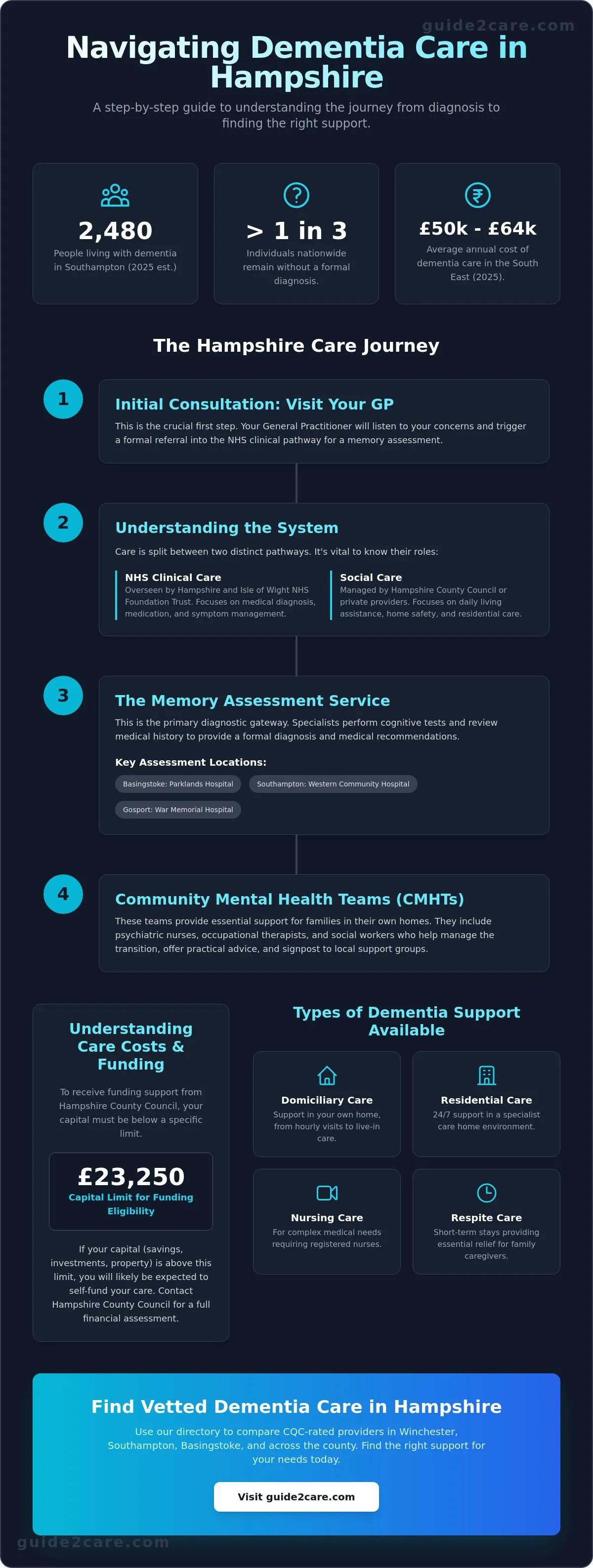
Did you know that in 2025, an estimated 2,480 people were living with dementia in Southampton, yet over a third of individuals nationwide remain without a formal diagnosis? Securing high-quality dementia care in Hampshire requires a clear understanding of both NHS clinical pathways and local social care options. You likely feel the pressure of choosing the right provider in Winchester or Basingstoke while managing the financial reality of South East care costs. In 2025, these costs averaged between £50,000 and £64,000 per year.
We recognize that the distinction between clinical memory assessments and residential support is often unclear. This guide provides the practical information you need to navigate the system with confidence. You'll find a step-by-step breakdown of the Hampshire care journey, from initial diagnosis to selecting vetted local providers. We also clarify the £23,250 capital limit for funding eligibility and explain how to contact Hampshire County Council for a financial assessment. Use this resource to find the care you need today.
Key Takeaways
- Identify the roles of the Hampshire and Isle of Wight NHS Foundation Trust within the local care ecosystem.
- Explore different types of dementia care in hampshire, including domiciliary support and residential options in Winchester and Southampton.
- Review 2026 care cost trends and the social care funding pathways managed by Hampshire County Council.
- Use CQC ratings and practical visiting checklists to evaluate providers in Basingstoke and Fareham.
- Compare local providers side-by-side using the Guide2Care directory to find the specific facilities you need.
Navigating the Dementia Care Landscape in Hampshire
The process of finding dementia care in hampshire starts with a visit to your local GP. This initial consultation serves as the trigger for a formal referral into the NHS clinical pathway. For 2026, the Hampshire and Isle of Wight NHS Foundation Trust oversees the medical aspects of care, ensuring patients receive a timely diagnosis. It's vital to distinguish between clinical NHS support and social care. Clinical services focus on medical diagnosis, medication, and symptom management. Social care, often managed by Hampshire County Council or private providers, focuses on daily living assistance, home safety, and residential placement. Dementia is a complex condition that requires this integrated approach to ensure both medical and personal needs are met. Hampshire County Council is currently implementing its new Dementia Strategy, following a public consultation in early 2026, which aims to better align these two sectors.
The 2026 landscape is defined by a shift toward person-centered care and improved workforce training. With dementia being the sixth most common primary cause of death in England, local authorities have prioritized creating a more structured, outcome-driven support model. To improve accessibility, many local care providers now work with digital agencies like Be Kind Local to enhance their online visibility, making it easier for families to discover these specialized services. This involves closer cooperation between the NHS and private providers to reduce undiagnosed cases, which currently account for over a third of individuals living with the condition in the UK.
The Hampshire Memory Assessment Service
The Memory Assessment Service is the primary diagnostic gateway in Hampshire. Patients typically attend an appointment at a local clinic where specialists perform cognitive tests and review medical histories. Key locations for these assessments include:
- Basingstoke: Parklands Hospital
- Southampton: Western Community Hospital
- Gosport: Gosport War Memorial Hospital
You'll receive a detailed assessment report that confirms the diagnosis and outlines immediate medical recommendations. This step is essential before you can access specific local support services or specialized residential care. Assessments in 2026 focus on early intervention to improve long-term outcomes and help families prepare for future needs.
Community Mental Health Teams (CMHT)
CMHTs provide essential support for families within their own homes across the county. These teams consist of psychiatric nurses, occupational therapists, and social workers who help manage the transition from a new diagnosis to long-term care planning. They offer practical advice on managing behavioral changes and ensuring home environments remain safe. CMHTs also signpost families to local Hampshire support groups and charities, such as the Alzheimer’s Society Hampshire branches. This community-based support helps delay the need for residential care by maximizing independence. Use the Guide2Care directory to find local specialists who work alongside these NHS teams. This coordination ensures that the social care you choose aligns with the clinical advice provided by your CMHT.
Types of Dementia Support Available Across the County
Dementia care in Hampshire is structured into three primary categories: domiciliary care, residential care, and nursing care. Each level of support serves a different stage of the condition. In major hubs like Winchester, Portsmouth, and Southampton, providers offer specialized services tailored to local needs. Families often begin with home-based support to maintain independence for as long as possible. As needs become more complex, transitioning to a specialist environment becomes a practical necessity. Respite care is also widely available across the county, providing essential short-term relief for family caregivers. You'll find these services in most major towns, allowing for local support that keeps families connected.
Hampshire offers various respite options to prevent caregiver burnout. These include day centres in Southampton or short-term stays in residential homes in Winchester. Respite stays allow caregivers to take a break while the individual with dementia receives professional support in a safe setting. Most providers require an advance booking for these services, especially during peak holiday periods. Don't wait for a crisis to explore these options; early planning ensures you have a backup plan when needed. Explore Guide2Care to find local respite providers with current availability.
Dementia Home Care in Hampshire
Staying in a familiar environment often reduces the confusion associated with memory loss. Domiciliary care providers in towns like Winchester and Fareham offer flexible visits that adapt to changing needs. Specialized agencies like Bloomfield Care provide person-centered support ranging from hourly medication prompts to 24/7 live-in care. Many families utilize Hampshire County Council dementia resources to access reminiscence materials that support home-based activities. Local specialists focus on maintaining daily routines and ensuring the home remains safe from hazards.
Residential and Nursing Dementia Excellence
When home care is no longer sufficient, specialist facilities in the South East offer structured environments. 'Dementia Residential' homes provide a safe, communal living space with assistance for daily tasks. 'Dementia Nursing' homes provide these same services but also include 24-hour medical supervision from registered nurses. This is essential for individuals with physical health complications or late-stage symptoms. Choosing the right dementia care in hampshire requires a clear assessment of these specific medical requirements.
Modern dementia-friendly environments in Hampshire prioritize design features that reduce anxiety. These include clear signage and color-coded corridors to aid navigation. Many homes also feature secure sensory gardens for safe outdoor access and themed communal rooms that encourage social interaction. Providers in areas like Basingstoke and Portsmouth are increasingly adopting these outcome-driven designs. This approach ensures the individual receives appropriate medical and social stimulation without unnecessary intervention. Focus on homes that emphasize person-centred care, where staff understand the individual's history and preferences rather than just their clinical diagnosis.
Understanding Care Costs and Funding in Hampshire
Managing the financial aspects of dementia care in hampshire requires a clear understanding of regional cost trends and local authority thresholds. In 2026, residential care costs in South East England typically range between £50,000 and £64,000 annually. For those requiring nursing care, weekly rates often fall between £900 and £1,400, while specialist dementia care can exceed these figures. Most residents either self-fund their care or receive support from Hampshire County Council, depending on their total capital and savings. It's important to recognize that there is currently no lifetime cap on care costs in the UK, making early financial planning essential.
You should also determine if the individual qualifies for NHS Continuing Healthcare (CHC). This funding is not means-tested and covers the full cost of care, including accommodation, if the individual's primary need is health-related. Eligibility is decided through a rigorous assessment of the complexity and intensity of the person's health needs. If you don't qualify for CHC, you'll likely transition into the social care funding system managed by the local council.
The Financial Assessment Process
Hampshire County Council uses a formal means test to decide how much you must contribute toward your care. In 2026, the upper capital limit remains £23,250. If your savings and capital exceed this amount, you're classified as a 'self-funder' and must pay the full cost of your care. For individuals with capital between £14,250 and £23,250, the council assumes a 'tariff income' of £1 per week for every £250 of capital held. The council advises residents to contact them on 0300 555 1386 when their capital decreases to £40,000 to begin the transition toward state-assisted funding. Self-funders should regularly review provider rates to ensure their chosen care remains sustainable over the long term.
Additional Funding Streams
Even if you're self-funding, you may be entitled to non-means-tested benefits. Attendance Allowance and Personal Independence Payment (PIP) provide weekly financial support for those with disability-related needs, including dementia. If you own a property but have limited liquid assets, the Hampshire Deferred Payment Agreement allows the council to pay for your care costs, with the debt secured against your home to be repaid later. NHS Funded Nursing Care (FNC) is a fixed weekly contribution paid by the NHS directly to Hampshire nursing homes to cover the cost of care provided by registered nurses. These various streams can help offset the high cost of specialized support in the South East.
How to Evaluate and Choose a Hampshire Care Provider
Selecting the right dementia care in hampshire involves more than just a convenient location. You must verify the quality of support through objective regulatory data and physical inspections. The Care Quality Commission (CQC) is the independent regulator of health and social care in England. Use their latest inspection reports to filter providers in Winchester, Basingstoke, or Fareham. These reports provide a detailed breakdown of how a service performs against national standards. Don't rely solely on marketing brochures. Physical visits are essential to observe the daily atmosphere and staff interactions. Find the care you need by using our directory to compare local Hampshire providers and their current CQC standings.
Interpreting CQC Ratings for Dementia Care
CQC inspectors evaluate providers based on five core standards: safety, effectiveness, care, responsiveness, and leadership. An 'Outstanding' rating in a dementia setting indicates that the provider delivers exceptional, person-centred care that goes beyond basic clinical requirements. It shows they prioritize the individual's history and preferences. A 'Good' rating in the 'Caring' category is a non-negotiable requirement for dementia patients. This rating confirms that staff treat residents with kindness, respect, and dignity. Be aware that the CQC is developing a new dementia strategy and will begin co-producing new guidance for care providers from autumn 2026. Look for providers that already demonstrate a proactive approach to these evolving standards.
The 'Dementia-Friendly' Checklist
When you visit a home in Hampshire, use a structured checklist to evaluate the environment. Dementia-friendly design reduces anxiety and promotes independence. Check for these specific features:
- Signage: Are there clear, pictorial signs for toilets, dining rooms, and bedrooms?
- Lighting: Is the lighting bright and consistent to eliminate dark corners or shadows that cause confusion?
- Secure Gardens: Does the facility offer level-access outdoor spaces with secure boundaries for safe wandering?
- Staffing Ratios: Ask specifically about staff-to-resident ratios during night shifts and peak morning hours.
- Specialized Training: Verify if staff have completed dementia-specific training credentials, such as Level 2 or 3 Awards in Dementia Care.
- Activity Programs: Look for evidence of cognitive stimulation therapy and social programs tailored to different stages of memory loss.
Ask the manager how they handle "sundowning" or increased agitation in the late afternoon. A high-quality provider will have clear, non-pharmacological strategies to manage these behavioral changes. Inspect the most recent safety logs and check if the home has a stable management team. Frequent turnover in leadership often impacts the consistency of care. By combining CQC data with a thorough physical inspection, you can choose a provider that offers both safety and a high quality of life.
Finding the Right Dementia Care in Hampshire with Guide2Care
Guide2Care functions as a comprehensive directory to simplify your search for dementia care in hampshire. After understanding the clinical requirements and funding limits discussed in previous sections, you need a central resource to identify specific providers. Our platform allows you to filter search results by care type, such as "Dementia Residential" or "Dementia Nursing," across major Hampshire hubs like Portsmouth and Winchester. You can view side-by-side comparisons of facilities, including current CQC ratings and available amenities. This structured approach removes the ambiguity of searching across multiple fragmented websites. We provide the tools to move from a broad search to a specific shortlist within minutes.
The directory provides factual summaries of each provider's specialisms and facilities. For instance, you can verify if a home in Basingstoke offers the specific cognitive stimulation programs or the sensory gardens mentioned in our evaluation checklist. By centralizing this data, we help you transition from the planning phase to the selection phase efficiently. You can also access supplementary resources on funding pathways and legal frameworks within the UK care sector. Our goal is to empower you with direct information, allowing you to make a choice based on data rather than marketing claims. This objective perspective is essential when managing the high costs and complex needs associated with memory loss in the South East, and for those coordinating travel to the region, MyWaymore Services Corp provides a useful directory of local businesses and accommodations.
Explore the Guide2Care Hampshire Directory
To find the care you need, begin by entering your specific postcode or town name into the search bar. This filters the directory to show only those providers within a practical distance of your location, covering postcodes from SO to PO and RG. Each listing includes verified contact details for both residential homes and domiciliary care agencies. You'll find direct links to the latest CQC reports, ensuring you have the data required to perform the safety checks outlined in section four. Use the search filters to narrow results by specific needs, such as "secure outdoor space" or "24-hour nursing." This targeted search functionality ensures you don't waste time on providers that don't meet your specific criteria.
Take Action Today
Once you've shortlisted three to five potential providers, the next step is to arrange physical site visits. Don't rely on virtual tours alone; visit the homes in person to observe the atmosphere in communal areas and the responsiveness of the staff. If you are traveling into Hampshire for these visits, mywaymore.com can help you find the best local businesses and accommodations nearby. Use our downloadable checklist to ensure you ask the right questions about staff training and environment design during your tour. Contact the featured Hampshire providers directly through our platform to request a brochure or a formal care assessment. Moving from research to direct engagement is the most effective way to secure a placement that meets the individual's needs. Start your search now to ensure you have time to evaluate every option thoroughly.
Find the dementia care you need in Hampshire today by exploring our comprehensive local listings and comparing the best available support in your area.
Secure the Right Support for Your Future
Finding dementia care in hampshire requires a structured approach that combines clinical awareness with financial planning. You now understand the £23,250 capital threshold for social care funding and the importance of monitoring savings as they approach the £40,000 mark. Use the CQC ratings and the dementia-friendly checklist to verify that providers in Winchester or Basingstoke meet high safety standards. These practical steps ensure that you move beyond clinical diagnosis to find a safe, supportive living environment, and many local agencies now partner with Be Kind Local to ensure their specialized services are clearly visible to those who need them most.
Guide2Care offers a comprehensive UK-wide directory to simplify this process. We provide neutral and impartial guidance alongside up-to-date CQC rating information for every listed provider. This data allows you to compare local home care and residential facilities side-by-side without the bias of marketing brochures. Take the next step in your care journey by accessing our verified local resources.
Find The Care You Need in Hampshire and begin your search with confidence. You're now equipped to navigate the system efficiently.
Frequently Asked Questions
How do I get a dementia diagnosis in Hampshire?
You begin by visiting your local GP to discuss symptoms and memory concerns. The GP provides a referral to the Hampshire Memory Assessment Service, which acts as the primary diagnostic gateway. Specialists at clinics in Basingstoke, Southampton, or Gosport perform cognitive tests to confirm the condition. Receiving a formal diagnosis is the first step toward accessing specialized dementia care in hampshire and planning future support.
What is the average cost of dementia care in Hampshire in 2026?
In 2026, residential care costs in South East England average between £50,000 and £64,000 per year. Weekly nursing care rates typically range from £900 to £1,400. Specialist dementia care often exceeds these figures due to higher staffing ratios and specialized training requirements. These costs reflect regional market conditions and the increasing complexity of health needs for residents entering care homes at a later stage of illness.
Will Hampshire County Council pay for my dementia care?
Hampshire County Council provides financial support only if your capital and savings are below the £23,250 threshold. They conduct a financial assessment to determine your contribution. If your assets exceed this limit, you're responsible for the full cost of your care. The council suggests contacting them on 0300 555 1386 when your capital drops to £40,000 to begin the transition toward state-assisted funding.
What is the difference between dementia care and nursing care?
Dementia residential care focuses on providing a safe environment and assistance with daily tasks like dressing or eating. Nursing care includes these services but adds 24-hour medical supervision from registered nurses. This higher level of clinical support is necessary for individuals with complex health needs or those in the later stages of the illness. Choosing the right dementia care in hampshire depends on these specific medical requirements.
Can I get home care for dementia in Southampton or Portsmouth?
Yes, you can find various domiciliary care providers in both Southampton and Portsmouth. These agencies offer flexible support, ranging from short hourly visits for medication prompts to 24/7 support; you can explore Live-in care to see how this model provides a safe alternative to residential placement. Home care allows individuals to remain in a familiar environment while receiving professional assistance. Use the Guide2Care directory to filter by postcode and find vetted agencies operating in these specific Hampshire urban areas.
What happens if a dementia patient refuses to go into a care home in Hampshire?
You must follow the guidelines of the Mental Capacity Act 2005 if an individual refuses care. Professionals will assess whether the person has the mental capacity to make that specific decision. If they lack capacity, a "best interests" meeting involving family and health professionals determines the next steps. This process might involve Deprivation of Liberty Safeguards (DoLS) to ensure the person's safety in a residential setting.
Are there specialist dementia support groups in Winchester or Basingstoke?
Winchester and Basingstoke have several active support groups managed by charities and local authorities. The Alzheimer’s Society and Andover Mind provide peer support sessions and memory cafés for both patients and caregivers. Additionally, Hampshire County Council libraries offer "Pictures to Share" and reminiscence collections specifically designed for cognitive stimulation. These local groups provide essential social interaction and practical advice for families navigating the care journey.
How do I check the quality of a Hampshire care home?
The most reliable method is to check the latest inspection reports from the Care Quality Commission (CQC). The CQC rates providers as Outstanding, Good, Requires Improvement, or Inadequate across five key areas. Pay close attention to the "Caring" and "Safe" ratings for dementia-specific services. You should also visit the home in person to observe staff-to-resident ratios and the overall quality of the dementia-friendly environment.