Planning for Future Care Needs: The Comprehensive UK Guide 2026

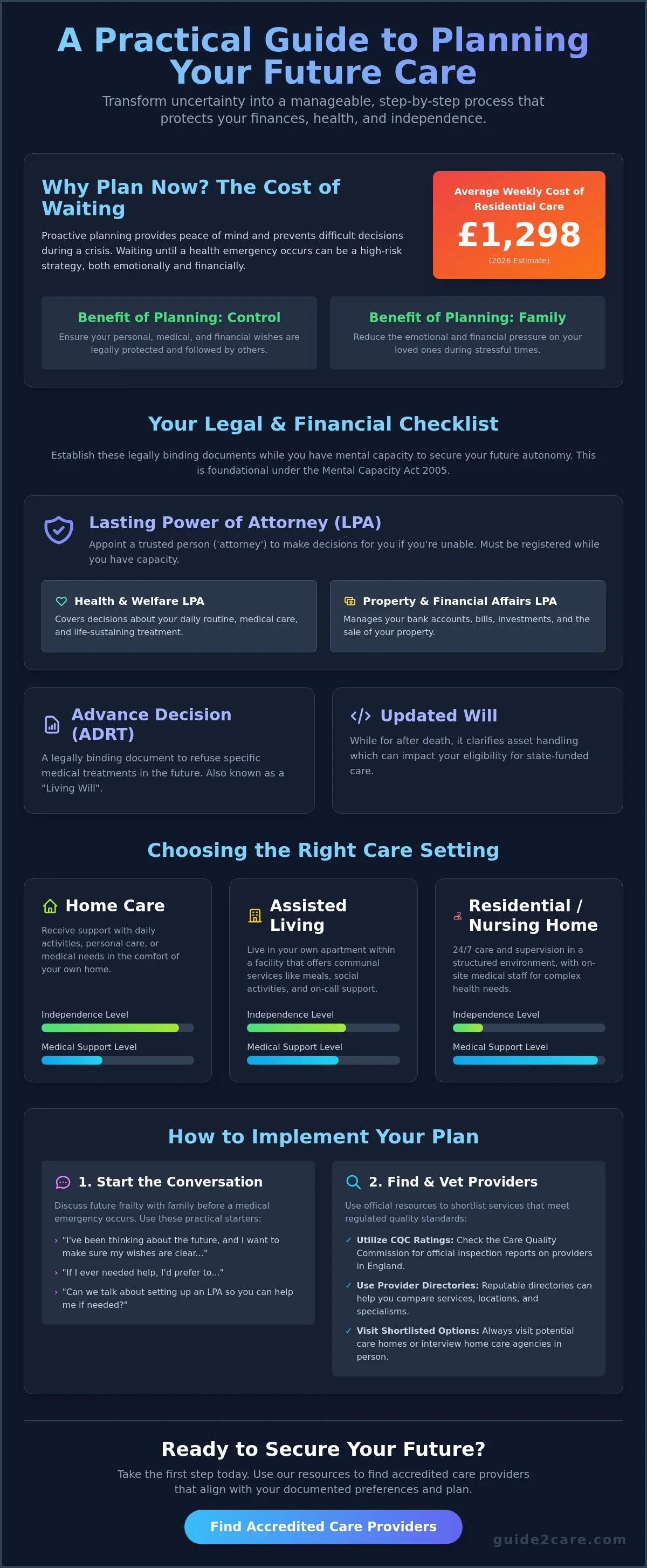
With residential care costs now averaging £1,298 per week, waiting for a crisis to occur is a high-risk strategy. You likely feel confused by the shifting boundaries between NHS support and social care. It's common to worry about losing control over your medical preferences or your financial assets as you age. Effective planning for future care needs transforms these uncertainties into a manageable, step-by-step process that protects your independence.
This guide provides a functional framework for your preparations, ensuring your wishes remain central to every decision. Use the information below to identify essential legal documents and distinguish between various care settings. You'll gain a clear understanding of current 2026 funding thresholds and learn how to select a provider that meets your specific requirements with confidence. Follow this logical path to organize your future and secure the support you need.
Key Takeaways
- Identify the differences between medical advance decisions and social care arrangements to build a proactive strategy for health and finance.
- Register both types of Lasting Power of Attorney while you still have mental capacity to ensure your health and financial wishes are legally protected.
- Compare home care, assisted living, and residential options to find a balance between independence and your specific medical needs.
- Use practical conversation starters to discuss future frailty with family members before a medical emergency occurs.
- Utilize CQC ratings and provider directories when planning for future care needs to shortlist services that meet regulated quality standards.
What is Planning for Future Care Needs?
Planning for future care needs is a structured strategy designed to manage your health, social, and financial requirements before a crisis occurs. This process ensures your preferences remain the priority if you eventually require assistance with daily activities. It involves understanding the framework of Social care in the United Kingdom, which operates separately from the NHS and is often subject to different funding rules. While medical "Advance Decisions" allow you to refuse specific treatments, social "Care Planning" focuses on your daily living preferences, such as where you live and who provides your support.
The Mental Capacity Act 2005 provides the legal foundation for these preparations in England and Wales. It empowers you to make decisions now that will be respected if you lose the ability to communicate them later. This legislation assumes you have capacity unless it's proven otherwise and ensures you receive support to make your own choices. Planning isn't reserved for the elderly or those with existing illnesses; just as young families might seek early health insights from Scan Baby Ltd, any adult can benefit from establishing a clear roadmap for their future support. By documenting your wishes while you have full capacity, you provide a legally recognized guide for your representatives and care providers.
To better understand this concept, watch this helpful video:
The Benefits of Proactive Planning
Effective planning for future care needs allows you to maintain control over your daily routines and personal preferences. By documenting your choices early, you prevent others from making assumptions about your lifestyle or medical care. This preparation also reduces the emotional and financial pressure on your family members. Without a plan, relatives often face difficult decisions during stressful hospital stays or sudden health declines. With residential care costs averaging £1,298 per week in 2026, having a clear financial strategy ensures your assets are managed according to your specific instructions.
When Should You Start Planning?
The most effective time to start is while you're healthy and have the clarity to evaluate different service types. Key life milestones such as retirement, receiving a new medical diagnosis, or noticing subtle changes in your mobility serve as practical prompts to review your options. Similar to how expectant parents utilize Scan Baby Ltd to monitor wellbeing during a significant life transition, planning for future care ensures you have professional support when you need it most. Don't wait for a fall or a sudden hospital admission to begin this process. Early planning provides significant peace of mind, knowing that a framework exists to support your independence. These plans aren't static; you should treat them as fluid documents. Review your care plan annually or after any significant change in your health to ensure it remains accurate and achievable.
The Legal and Financial Essentials of Care Planning
Securing your future autonomy requires more than just verbal agreements with family. You must establish legally binding documents to ensure your preferences are followed if you lose the ability to communicate. To understand the foundational elements of what is future care planning, you must first address the legal instruments that protect your autonomy. An Advance Decision to Refuse Treatment (ADRT) allows you to specify medical treatments you don't want to receive in the future. This document is legally binding in England and Wales. Additionally, keep your Will updated; to help organize these vital records in one central hub, you can check out SafeKeep. While a Will manages your estate after death, it also clarifies how you intend your assets to be handled, which impacts your eligibility for state-funded care.
Understanding Lasting Power of Attorney (LPA)
An LPA is a legal document where you appoint one or more "attorneys" to make decisions on your behalf. There are two distinct types. A Property and Financial Affairs LPA manages your bank accounts, bills, and property sales. A Health and Welfare LPA covers your daily routine, medical care, and life-sustaining treatment. You must register these documents with the Office of the Public Guardian while you still have mental capacity. If you wait until you're unwell, it's often too late. Without an LPA, your family may need to apply to the Court of Protection to become deputies. This process is expensive and takes months. When choosing an attorney, select someone who is trustworthy, organized, and understands your values. Once you've established these legal foundations, you can begin to search for accredited care providers that align with your documented preferences.
Financial Planning and Care Funding
Care funding in the UK is means-tested, and the rules vary by nation. In England for the 2026/27 period, the upper capital limit remains £23,250. If your assets exceed this, you're responsible for the full cost of your care. Residential care now averages £1,298 per week, and the proposed £86,000 cap on costs has been scrapped. This means your financial liability is potentially unlimited. Local Authority funding only applies if your capital falls below the threshold. However, you might qualify for NHS Continuing Healthcare (CHC) if your primary need is health-based rather than social. CHC is not means-tested and covers the full cost of care. For those self-funding, the Attendance Allowance provides up to £114.60 per week at the higher rate to help with costs. Seek independent financial advice to explore options like immediate need annuities or deferred payment agreements to protect your estate.
Choosing the Right Care Setting: A Comparison
Selecting the environment where you receive support is a critical part of planning for future care needs. Most individuals prefer to remain in their own homes for as long as possible. However, your choice must balance personal independence with physical safety and medical requirements. Start your search early to avoid making rushed decisions during a health crisis. Use the Guide2Care directory to browse local options and compare the specific services available in your area.
The following table summarizes the primary care settings available in the UK, based on 2026 data. Review these categories to determine which environment aligns best with your health status and budget.
| Care Setting | Independence Level | Avg. Weekly Cost (2026) | Primary Support Type |
|---|---|---|---|
| Home Care | High | Variable (hourly) | Personal care and domestic help |
| Assisted Living | Moderate | Variable | Self-contained flats with on-site staff |
| Residential Care | Low | £1,298 | 24-hour personal care and meals |
| Nursing Home | Low | £1,535 | 24-hour clinical care by registered nurses |
Home Care vs. Residential Care
Specialist Care: Dementia and Nursing Needs
Specific health conditions require specialized clinical environments that general residential homes cannot provide. Nursing homes are essential if you have complex medical needs that require the regular intervention of registered nurses. For those managing cognitive decline, specialized dementia care units offer secure layouts and staff trained in behavioral support. These units currently average £1,343 per week. Refer to our Understanding Dementia guide to identify which stage-based support is appropriate for your current or expected needs. Selecting a specialist provider ensures that the care environment adapts to the progression of your condition.
In addition to dementia and nursing services, some individuals may need to plan for specialized addiction recovery. For free and independent guidance on finding the right treatment facility, detoxrehab.co.uk provides a consultation and referral service to help you navigate these specific healthcare needs.
How to Start the Conversation with Family
Discussing future frailty or death is often the most significant barrier to effective planning for future care needs. Many families avoid these topics until a medical emergency forces a decision. To facilitate these important conversations, you can explore SafeKeep Premium to ensure all your vital documents and wishes are organised in one secure hub. This delay often leads to rushed choices and increased emotional stress. Approach these discussions as a series of short, practical meetings rather than one overwhelming event. Focus on the objective of maintaining independence and safety rather than the loss of ability.
Use specific conversation starters to break the ice. If you are the individual planning your care, try saying: "I've started organizing my future preferences to make things easier for everyone later." If you are an adult child, you might say: "I want to ensure your wishes are respected if your health changes, so can we look at some options together?" If disagreements arise, return to the documented preferences of the individual as the primary guide. Professional assessments from a GP or social worker can also provide an impartial perspective to resolve family conflicts.
Documenting Your Preferences
A formal discussion should result in clear documentation. The ReSPECT (Recommended Summary Plan for Emergency Care and Treatment) process is a clinical framework used across the UK. It records your preferences for emergency care, including whether you want certain life-sustaining treatments. Keep copies of your completed ReSPECT form and your care plan with your GP, local hospital, and immediate family. A Statement of Wishes is a non-legally binding document that provides a vital guide for carers regarding your daily routines, food preferences, and personal values. Once you've documented these preferences, compare local care providers to see which services can accommodate your specific requirements.
Overcoming Common Obstacles
Denial is a frequent challenge when a parent's needs increase. If a loved one refuses to discuss care, focus the conversation on safety and the preservation of independence. Avoid highlighting their failures; instead, discuss how specific services can help them stay at home longer. Adult children often face intense guilt when suggesting residential care. Reframe this decision as a way to ensure professional medical support that family members aren't trained to provide. In 2026, nursing home costs average £1,535 per week, reflecting the high level of clinical expertise available. Acknowledge that choosing professional care is often the most responsible way to support a parent's wellbeing while maintaining your own role as a supportive family member.
Implementing Your Plan: Finding and Vetting Providers
Once you've established your legal and financial foundations, the next step in planning for future care needs is identifying specific providers. Use a comprehensive directory to filter options based on location, service type, and budget. Shortlist at least three to five providers to allow for effective comparison. Focus on services that align with the personal preferences you've already documented. This transition from theory to practice requires a methodical approach to ensure the provider can meet your long-term requirements.
In some cases, your plan may involve seeking advanced medical treatments or second opinions from international specialists. If you are exploring high-quality healthcare options outside the UK, check out Jabez Medical Guide for expert assistance in connecting with leading hospitals in South Korea.
When evaluating providers, look beyond the marketing materials. Independent reviews from other families provide essential context that official brochures might miss. Look for patterns in feedback regarding staff consistency and responsiveness. Observe the environment and the interaction between staff and current clients during your visits. A provider's willingness to be transparent about their operations is a key indicator of their reliability and quality of service.
Understanding CQC Ratings and Reports
The Care Quality Commission (CQC) is the independent regulator of health and social care in England. They provide four distinct ratings: Outstanding, Good, Requires Improvement, and Inadequate. Use these ratings to verify the safety, effectiveness, and leadership of any agency or care home. A provider rated "Good" meets all essential standards, while an "Outstanding" rating indicates exceptional service. Refer to our CQC Ratings guide for a deeper analysis of inspection reports. These reports often highlight specific areas of concern that a single rating might hide, such as staffing levels or medication management.
Finalizing the Choice
Most providers offer a trial period, typically lasting four weeks. Use this time to assess if the care setting truly meets your requirements before committing to a long-term contract. Transitioning from the planning phase to active care is more successful when you maintain open communication with the provider's management team. Monitor the quality of support against your original "Statement of Wishes" to ensure consistency. If you're ready to begin your search, Search the Guide2Care directory to find highly-rated providers in your area today. This tool simplifies the vetting process by centralizing regulatory data and contact information in one location.
When you visit a facility or interview a home care agency, use a structured checklist to evaluate their suitability. Ask the following questions:
- What is the staff-to-resident ratio during night shifts?
- How does the provider handle specialized medical needs or emergencies?
- Can you see the most recent full inspection report?
- What is the specific process for feedback or complaints?
Securing Your Independence Through Proactive Planning
Proactive planning for future care needs is the most effective way to protect your autonomy. You've learned how to secure your legal standing through an LPA and how to manage the financial reality of the £23,250 capital threshold. By comparing care settings and initiating family discussions early, you prevent the stress of a sudden crisis. It's about turning complex information into a functional roadmap for your later years. For many, this process also highlights the importance of maintaining digital proficiency; squareskills.com offers accredited IT training and career development programmes that can help you stay confident in managing your affairs online.
Use reliable data to move from planning to action. Our platform offers a comprehensive directory of UK-wide care providers with detailed CQC rating integration to ensure quality. Explore our expert guides on funding and selection to finalize your strategy with confidence. Find the right care provider for your future needs on Guide2Care. Securing your professional support today creates a stable foundation for your independence tomorrow.
Frequently Asked Questions
What is the difference between an Advance Decision and a Statement of Wishes?
An Advance Decision is a legally binding document used to refuse specific medical treatments in the future. In contrast, a Statement of Wishes is a non-binding guide that outlines your general preferences for daily life, such as food, hobbies, or religious practices. Both documents are essential components of planning for future care needs to ensure that medical professionals and social carers understand your priorities clearly.
Can I change my future care plan once it is written?
You can update your care plan at any time as long as you still have the mental capacity to do so. It's recommended to review these documents annually or after any significant change in your health or living situation. Regular updates ensure that the information remains accurate and reflects your current wishes, especially regarding preferred service providers or medical interventions.
Does the NHS pay for long-term care in the UK?
The NHS only pays for the full cost of care if you meet the criteria for NHS Continuing Healthcare (CHC). This is based on a primary health need rather than social care requirements. Most long-term support is means-tested by local authorities. In England, you'll self-fund your care if your assets exceed £23,250, though the NHS provides a nursing contribution of £267.68 per week.
What happens if I do not have a Lasting Power of Attorney?
If you lose mental capacity without an LPA, your family must apply to the Court of Protection to become deputies. This legal process is significantly more expensive and time-consuming than registering an LPA in advance. During this period, your bank accounts may be frozen, and relatives won't have the legal authority to make urgent decisions about your medical treatment or living arrangements.
How do I know if a care home is high quality?
Verify the quality of a care home by reviewing its latest inspection report from the Care Quality Commission (CQC). These reports provide a rating of Outstanding, Good, Requires Improvement, or Inadequate across five key areas. Additionally, visit the home in person to observe staff interactions and read independent reviews from other families. High-quality providers are transparent about their safety records and staffing levels.
Is future care planning only for people with a terminal illness?
Who should have a copy of my future care plan?
Distribute copies of your care plan to your GP, your appointed attorneys, and close family members. If you have a ReSPECT form or an Advance Decision, ensure a copy is kept in an accessible place in your home for emergency responders. Many people also upload these documents to their digital health records or use a dedicated service like mysafekeep.com to ensure that hospital staff and family can view them immediately during an admission.
How much does it cost to set up a Lasting Power of Attorney?
You'll encounter two primary costs: a mandatory government registration fee for each document and optional legal fees if you hire a solicitor. Fees for legal advice vary significantly based on the complexity of your estate and the firm you choose. Some individuals qualify for fee exemptions or reductions based on their income or benefit status, which can lower the total setup cost.