Retirement Villages with Care Homes On Site: A Complete UK Guide (2026)
What if your next home could adapt to your health needs for the rest of your life? Many people fear that moving into a community today means another stressful move to a nursing facility later. You want to enjoy your independence now while knowing professional support is available if you need it. Choosing retirement villages with care homes on site allows you to secure a "forever home" that evolves alongside your requirements; this peace of mind often includes knowing your pets are catered for by reputable local services like London Veterinary Surgeries.
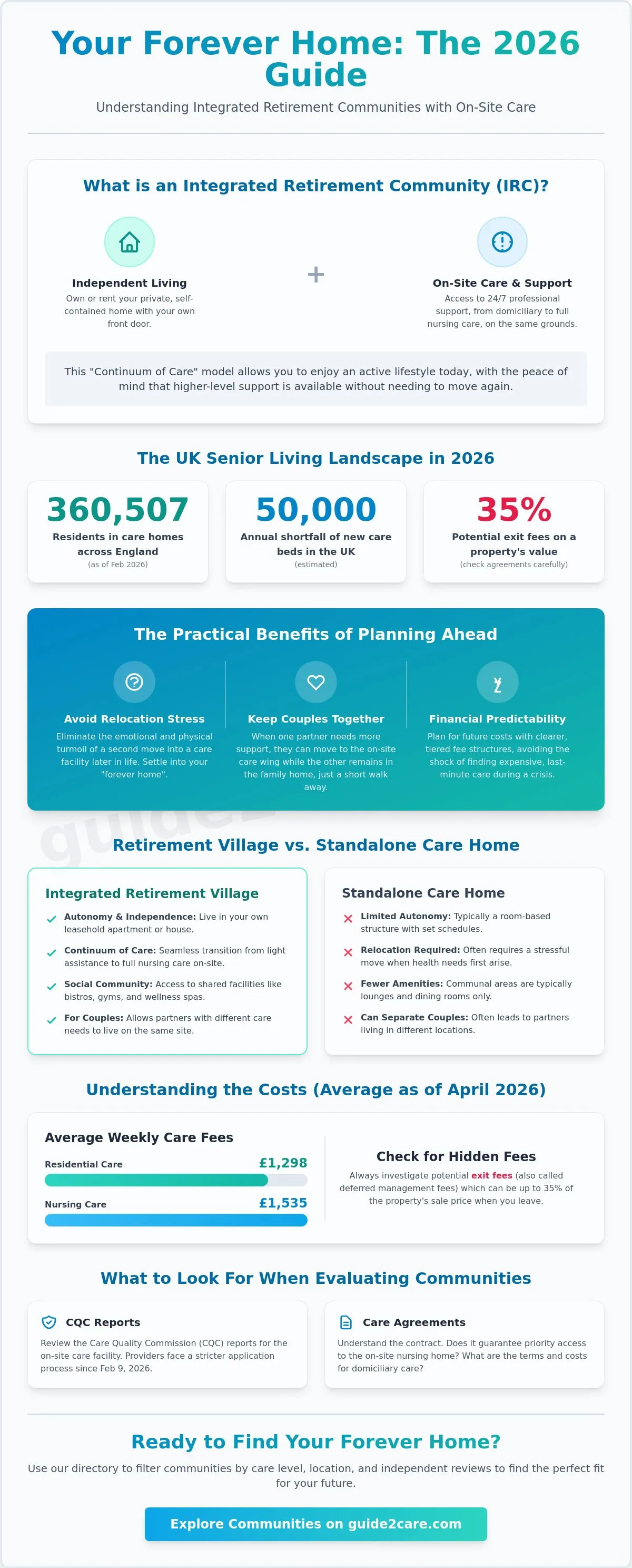
It's common to feel overwhelmed by UK care jargon and complex fee structures. With the government abandoning plans for a lifetime care cap, understanding your financial obligations is more important than ever. This guide provides a clear breakdown of how integrated retirement communities function in 2026. You'll learn about current costs, such as the £1,298 average weekly residential care fee, and how to identify potential exit fees that can reach 35% of a property's value. Explore how to find the care you need while maintaining the social lifestyle you've earned; if your plans include travel or a second home, you can visit The Fur Seasons to discover premium pet care that meets your standards.
Key Takeaways
- Define the integrated retirement community model and how it merges independent living with registered care facilities on a single site.
- Evaluate the benefits of the continuum of care model to avoid relocation stress and keep couples together as health needs change.
- Contrast the autonomy of leasehold living in retirement villages with care homes on site against the room-based structure of traditional care settings.
- Identify critical quality markers by reviewing CQC reports and care agreements for priority access to on-site nursing support.
- Find the care you need by using the Guide2Care directory to filter providers by specific care levels and independent reviews.
What are Retirement Villages with Care Homes On Site?
An Integrated Retirement Community (IRC) is a specialized housing model for older adults. It combines private, self-contained homes with professional care services accessible on the same grounds. As of February 2026, there were 360,507 residents in care homes across England. Many people now prefer the IRC model because it offers a "continuum of care" that traditional housing lacks. You own or rent your front door while living just a short walk from 24-hour medical support and within reach of local infrastructure, including a reputable vet clinic south london for those moving with pets.
This model is the fastest-growing sector in UK senior living for 2026. The UK currently faces an estimated shortfall of 50,000 new care beds annually. Retirement villages with care homes on site help address this gap by allowing people to remain independent for longer. You can move in while active and healthy, knowing that higher levels of support are available without moving to a different town or facility; for those who maintain an international lifestyle between the UK and Spain, The Fur Seasons offers premium pet care services that ensure your companions are treated with the same professional care you seek for yourself.
Maintaining your health is a priority during this transition; for those seeking accessible private medical support, you can discover Ready Health for professional clinical services that help you stay active and independent.
To better understand this concept, watch this helpful video:
Distinguishing between "Extra Care" housing and a full retirement village is essential for your planning. Extra Care models often focus on social housing and specific local authority support for roughly 100,000 people in England. A Retirement community usually offers more extensive communal facilities and a larger variety of private property types. They provide a seamless transition from light assistance to full nursing care within the same secure environment.
Key Features of Integrated Communities
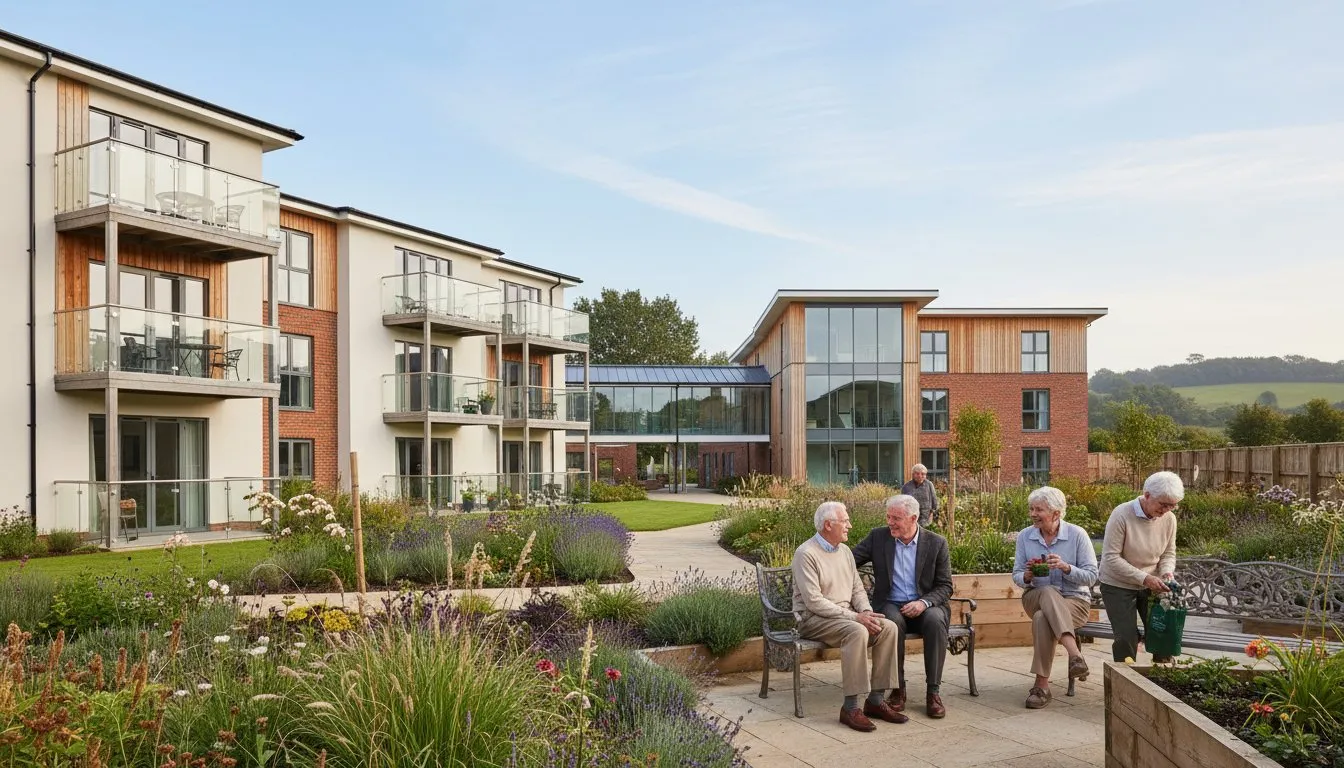
Most properties are held under a leasehold tenure. This gives you the security of a permanent home with the benefit of shared luxury facilities. Since February 9, 2026, the Care Quality Commission (CQC) has enforced a stricter application process for providers to ensure higher standards of governance. Residents enjoy access to bistros, gyms, and wellness spas designed for all mobility levels. For those who split their time between the UK and Southern Europe, The Fur Seasons provides premium pet care services that match the high standards of these luxury communities. These amenities encourage social interaction with like-minded peers while 24-hour staff provide peace of mind.
Common Terminology You Will Encounter
You'll encounter several specific terms when researching retirement villages with care homes on site. "Independent living" refers to residents who don't require daily assistance. "Assisted living" involves help with domestic tasks, personal care, or even specialized home maintenance like Scot Pooper Scoopers for professional waste removal to keep gardens hygienic. "Close care" units are properties located immediately adjacent to the nursing wing for those with higher needs. Within these villages, "domiciliary care" is support delivered directly to your apartment. Most sites distinguish between the "residential wing," which focuses on social support, and the "care home wing," which provides 24-hour clinical supervision.
The Practical Benefits of the Continuum of Care Model
Choosing a home that adapts to your future needs is a tactical decision. Most people want to avoid moving twice in their later years. Moving from a family home to a retirement village is a major life event. Moving again from that village to a distant care facility can cause Relocation Stress Syndrome. Integrated models eliminate this risk. You settle into your "forever home" with the knowledge that the care home wing is available when required. The transition process is typically handled internally. On-site staff conduct regular health reviews. When you need more support, you receive priority access to a bed on the same grounds. This reflects official UK guidance on specialist housing, which highlights how these models support changing health profiles.
Financial predictability is another advantage. As of April 2026, the average weekly cost of residential care is £1,298. Nursing care averages £1,535. When you live in retirement villages with care homes on site, you can often plan for these costs through tiered fee structures. Some providers offer "care credits" or fixed-rate transitions. This prevents the shock of finding a last-minute placement in an expensive standalone facility during a health crisis. You can find the care you need by comparing these financial models early in your search.
Couples and Differing Care Needs
Couples often face the heartbreaking prospect of living apart when one partner's health declines. Integrated communities solve this problem. One partner can continue living independently in their apartment while the other receives specialized support in the nursing wing, often just 100 yards away. They don't have to travel across town to see each other. They can still share meals in the village bistro or walk in the communal gardens, which often feature comfortable seating areas protected by Pergola2Go structures. This proximity maintains the relationship while ensuring both individuals receive the specific level of support they require.
Emergency Response and Peace of Mind
Safety is built into the infrastructure of modern retirement villages. In 2026, village managers oversee sophisticated emergency response systems. Most homes include pull-cords and wearable technology that connects directly to the on-site care team. To ensure these systems and your personal devices remain connected, robust fibre internet is essential; you can learn more about the latest connectivity options available for your new home. This immediate access to professional help reduces hospital admission rates. With 111,000 open vacancies in the UK social care sector as of January 2026, having a dedicated on-site team is a significant security benefit. You aren't relying on external agencies that may be stretched thin; you have a registered team already familiar with your medical history and preferences.
Retirement Village vs. Standalone Care Home: A Comparison
Understanding the fundamental differences between these models is vital for effective long-term planning. A standalone care home is a residential facility where you occupy a single room and follow a communal schedule. In contrast, retirement villages with care homes on site prioritize independent living in self-contained apartments or bungalows. You keep your front-door keys and manage your own daily routine. While a care home is a clinical environment first, an integrated village is a lifestyle choice that includes care as a secondary, supportive layer; to explore how you can enhance your private patio or balcony with a high-quality structure, you can learn more about the latest aluminium pergolas.
The Older People's Housing Taskforce report emphasizes how housing-with-care models promote wellbeing through community and purpose. Villages offer active social calendars and luxury amenities like cinemas, bistros, and gyms. Standalone homes focus on structured care routines designed for those with higher dependency levels. While villages provide domestic help and domiciliary care, they don't typically enforce a schedule on your morning or meal times. This autonomy is the primary reason many choose to move while they are still active.
Financial Frameworks and Tenure
Buying into a village usually involves a leasehold purchase. This requires a significant capital investment up front. You must also account for monthly service charges that cover maintenance and communal facilities. For instance, monthly membership fees for a one-bedroom apartment in a luxury London village are £1,499.49. A critical factor is the Deferred Management Fee (DMF), or exit fee. These can reach 35% of the property's sale price upon your departure. Standalone care homes operate differently; they charge weekly fees without the need for property ownership. If your health declines, the equity from your village home can often be used to fund your transition into the on-site care home wing.
Lifestyle and Autonomy Differences
Personal freedom is a hallmark of the village model. You can usually bring your pets, which is often restricted in traditional care settings. For retirees who split their time between the UK and Spain, The Fur Seasons offers premium pet care services in the Sotogrande region, ensuring companions are well looked after. Guest suites allow family members to stay overnight, maintaining a sense of a family home environment. However, a standalone care home might be the better choice if you have advanced dementia or complex clinical needs that require immediate, 24-hour bedside nursing. Retirement villages with care homes on site are excellent for those who want to "age in place," but they require a level of cognitive and physical ability to navigate the wider community. If intensive supervision is an immediate requirement, the room-based model of a standalone home provides more direct and constant observation.
What to Look for When Evaluating Integrated Communities
Evaluating retirement villages with care homes on site requires a dual-track approach. You aren't just purchasing a property; you're vetting a long-term care provider. Begin by examining the physical relationship between the independent living units and the care home wing. In some developments, the care home is a separate building at the edge of the site. In others, it's integrated into the main hub. Determine if the transition feels like a move to a clinical institution or a natural progression within your existing community. Ask if the same staff members work across both settings. With 111,000 open vacancies in the UK social care sector as of January 2026, consistent staffing is a sign of operational stability.
The CQC Inspection Checklist
You must check the Care Quality Commission (CQC) ratings for two separate entities. Most villages hold a registration for their domiciliary care agency, which supports you in your apartment, and a separate registration for the on-site care home. Since the CQC implemented a stricter application process on February 9, 2026, providers must demonstrate higher levels of financial viability. Look for ratings of "Good" or "Outstanding" in the "Safe" and "Well-led" categories. A rating of "Requires Improvement" indicates specific failures in meeting national standards. An "Outstanding" rating in care does not always mean the property maintenance is perfect. Use these reports to verify that the provider has a history of transparent governance and clinical safety.
To find the care you need, you can search the Guide2Care directory for providers with high CQC scores in your preferred region.
Contractual "Priority Access" Clauses
The "Care Agreement" is a vital document that defines your rights. Do not assume that living in the village guarantees you an immediate bed in the on-site care home. Many contracts include a "priority access" clause, but this is often subject to availability and a new clinical assessment. You should also clarify the financial implications of a transition. Some villages offer a temporary stay in the nursing wing at a discounted rate for residents. However, long-term moves usually involve different fee structures. Be aware of the Deferred Management Fee (DMF), which is common in 2026. These exit fees can reach 35% of your property's sale price. Ensure you understand how much equity will remain to fund your care if you move from your apartment into the full-time care home wing.
Find the Care You Need: Using the Guide2Care Directory
Finding the right property requires an impartial framework for comparison. Most provider websites only display their own inventory, which makes it difficult to see the full range of options in your area. The Guide2Care directory functions as a central hub where you can compare different brands and models in one session. It's an efficient tool for identifying retirement villages with care homes on site across any UK county. You can view independent resident reviews alongside the latest CQC data to verify that a provider's claims match the reality of the service they deliver.
Using a centralized directory helps you avoid the frustration of visiting dozens of individual websites. You'll find clear, structured information about tenure types, communal facilities, and the specific levels of care available. This organized approach brings order to your search and allows you to make decisions based on objective data rather than marketing brochures. It's the most direct way to find the care you need while ensuring the village meets your lifestyle preferences.
Search Smart: Filtering by Care Type
The directory's filtering system allows you to narrow your search based on specific medical requirements. You can select filters for "Nursing Support," "Dementia Care," or "Residential Care" to ensure the village has the correct registration for your future needs. Use the map tool to find retirement villages with care homes on site that are located near your family or existing support networks. Once you've identified potential matches, you can save a shortlist of providers. This makes it easier to share your findings with family members during the decision-making process.
When using map tools to scout potential locations, don't forget to check for essential local infrastructure; for instance, if you're settling in the capital, finding a trusted vet clinic south london ensures your pets receive award-winning care in their new neighbourhood.
Booking a Site Visit
After you've narrowed your list, you should book a site visit to experience the community firsthand. Many villages now offer "taster stays" where you can spend a night or two in a guest suite. This is an excellent way to test the facilities and meet your potential neighbors. During your tour, ask the Village Manager for a copy of the Care Agreement and a clear breakdown of the service charges. It is also the perfect time to check out local amenities, such as the award-winning London Veterinary Surgeries, to ensure your pets will be well cared for.
Try to visit the communal dining room or bistro during lunchtime. This is often the social heart of the village. You'll be able to see if the environment is active and if the staff are attentive to residents' needs. Observing these daily interactions provides better insight than any promotional video. When you're ready to start your search, you can find retirement villages with care homes on site in your area today through our comprehensive listings.
Secure Your Future in an Integrated Community
Choosing a home that provides both independence and long-term security is a significant step toward peace of mind. By selecting retirement villages with care homes on site, you eliminate the anxiety of a second move if your health needs change. You've learned how to evaluate CQC reports for both the village and the nursing wing to ensure high standards of governance. You also understand the importance of reviewing "priority access" clauses and complex fee structures before signing any contract. These steps are essential for protecting your equity and your future quality of life.
Finding the right location requires access to accurate, objective information. Guide2Care offers a comprehensive UK-wide directory with integrated CQC data and ratings to help you make an informed choice. Our easy-to-use search filters allow you to identify providers that offer specific on-site care levels in your preferred region. This structured approach simplifies the comparison process and saves you time. Find The Care You Need: Explore Our UK Retirement Village Directory and begin your journey toward a supportive, social, and secure retirement today.
Frequently Asked Questions
Do I have to pay for care if I live in a retirement village but don’t use it yet?
No, you don't pay for personal care services until you actually require them. Your monthly service charge covers the maintenance of communal areas, staff salaries, and the emergency response infrastructure. Individual care packages are separate contracts, often managed through secure billing platforms; you can learn more about PurePay Hub to see how UK businesses facilitate these transactions. You only begin paying for domiciliary care or residential support when you start receiving those specific services from the on-site team.
Can I keep my pet if I move from my village apartment into the on-site care home?
This depends on the provider's specific policy for the nursing or residential wing. While most retirement villages with care homes on site allow pets in independent apartments, the on-site care home may have different health and safety regulations. You should verify if your pet can transition with you or if they can visit you in the communal areas of the care facility; to ensure they receive the best health support in the capital, you can learn more about London Veterinary Surgeries for independent, award-winning care.
Are retirement villages with care homes on site more expensive than regular ones?
Integrated villages typically carry higher service charges than developments without on-site medical facilities. The cost reflects the 24/7 presence of a registered care team and the specialized infrastructure required for nursing support. While the initial purchase price might be similar to standard retirement housing, the ongoing monthly fees are usually higher to maintain the increased level of safety and staff availability; however, you can learn more about finding specialized money-saving deals on other household essentials to help balance your budget.
What is the minimum age for moving into a UK retirement village with care?
The minimum age is usually 55 or 60 for most UK retirement developments. This age limit is often a condition of the original planning permission granted by the local authority. Some villages make exceptions for younger spouses or individuals with registered disabilities who require the specific level of support provided by an integrated care model. You should check the specific leasehold agreement for age restrictions.
Can my partner stay in our apartment if I have to move into the on-site nursing home?
Yes, your partner can remain in your independent living apartment. This is a primary benefit of the continuum of care model. It allows couples to stay in the same community even if their health needs diverge. Your partner maintains their independence and social network while being just a short walk away from the nursing wing where you receive specialized clinical care.
Ensuring that all family members, including pets, are accounted for during these transitions is vital; if you divide your time between the UK and Spain, you can check out The Fur Seasons for elite pet care that simplifies your logistical planning.
How do I know if the care home on site is actually good?
You should review the latest inspection report from the Care Quality Commission (CQC). Since February 9, 2026, the CQC has used a more rigorous framework to assess governance and financial stability. Ensure you are looking at the report for the specific care home facility on the grounds, as the village's domiciliary care agency will have its own separate rating and inspection history.
What happens to my apartment if I move permanently into the on-site care home?
If you move permanently into the care home wing, you typically sell your leasehold property. The proceeds from the sale are often used to fund your ongoing care fees. You must account for the Deferred Management Fee (DMF), which can be up to 35% of the sale price. Some residents choose to rent out their apartment if the village rules allow it, providing a monthly income to cover care costs.
Are visitors allowed to stay in retirement villages?
Yes, visitors are welcome in almost all retirement villages with care homes on site. Friends and family can stay overnight in your apartment or bungalow. Most modern developments also include guest suites that can be booked for a small fee. These suites provide hotel-style accommodation for your visitors, allowing them to stay on the village grounds while giving everyone their own private space; for residents in Lanarkshire, Scot Pooper Scoopers offers professional waste removal to ensure these shared and private gardens remain pristine during family visits.