Technology to Help Elderly Live at Home: The Complete 2026 UK Guide
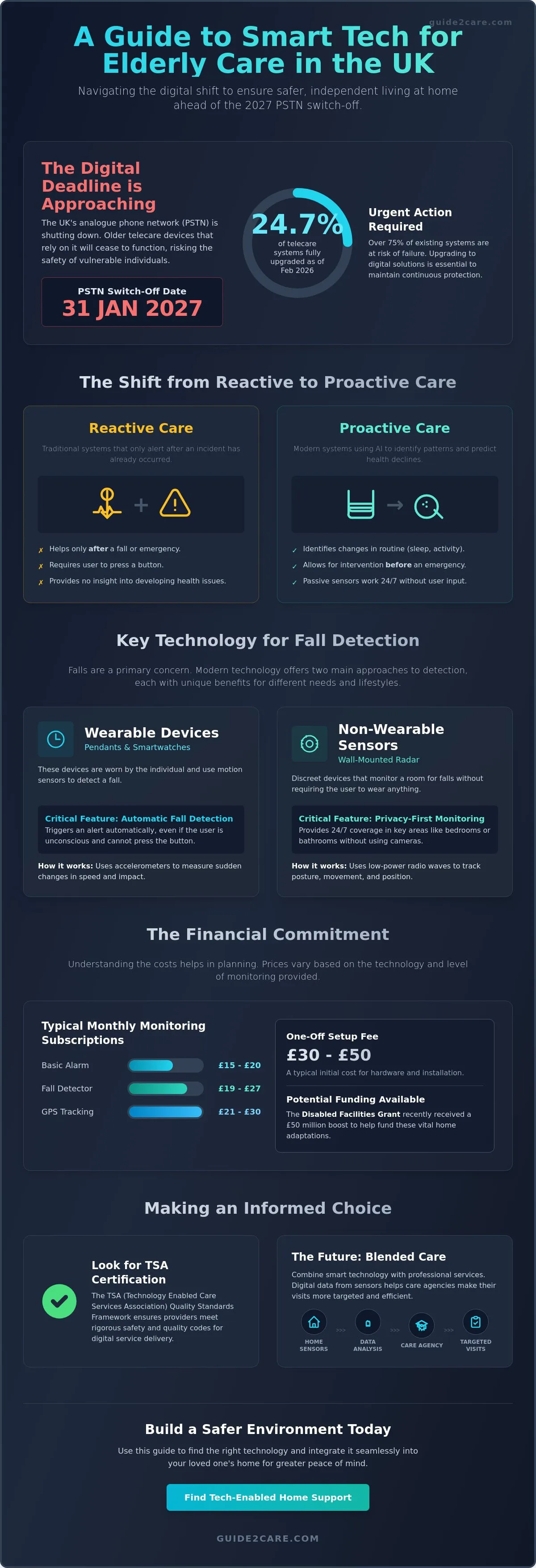
As of February 2026, only 24.7 percent of the UK telecare market has fully upgraded to digital systems ahead of the January 2027 PSTN switch-off. This transition means many households currently rely on analogue equipment that will soon become obsolete. Finding the right technology to help elderly live at home is now a time-sensitive priority for families across the country.
You likely believe that maintaining independence is the most important goal, yet you worry about undetected falls or missed medication. It is difficult to know which UK brands are reliable or how to integrate new devices without being intrusive. This guide provides a clear roadmap to the latest smart home tech and assistive devices that act as a digital bridge to more effective care. You will learn about essential hardware, current costs for personal alarms, and how the recent 50 million pound boost to the Disabled Facilities Grant helps fund these vital home adaptations. Use this information to build a safer environment and reduce caregiver burnout today.
Key Takeaways
- Compare wearable fall detection devices with radar-based technology to identify the most effective safety solution for specific mobility needs.
- Implement smart medication dispensers and remote patient monitoring tools to manage chronic health conditions accurately and prevent dosing errors.
- Select the appropriate technology to help elderly live at home by balancing safety requirements with privacy-first sensor systems.
- Evaluate the financial commitment of home adaptations by comparing one-off hardware costs against ongoing monthly monitoring subscriptions.
- Discover how "Blended Care" models use digital data to make professional home care agency visits more targeted and efficient.
The Evolution of Independent Living: Why Technology is Vital in 2026
Most UK seniors want to stay in their own homes as they age. This concept, known as "Ageing in Place," is the preferred choice for approximately 90 percent of people over 65 in the UK. Achieving this goal requires a structured approach to home modifications. Modern home automation for independent living provides the necessary infrastructure to manage safety and health remotely.
The foundation of this support lies in the integration of Telecare and Telehealth. Telecare focuses on environment safety, such as smoke or flood sensors, while Telehealth monitors clinical data like blood pressure or heart rate. Together, they represent the primary technology to help elderly live at home effectively without requiring 24-hour physical supervision.
To better understand this concept, watch this helpful video:
Time is running out for legacy systems. The UK's analogue public switched telephone network (PSTN) will shut down permanently on January 31, 2027. Data from February 2026 shows only 24.7 percent of the telecare market has fully transitioned to digital systems. If your current alarm relies on a traditional phone line, it will stop working soon. You must upgrade to digital-first solutions now to maintain continuous protection and peace of mind.
The Shift from Reactive to Proactive Care
Traditional alarms are reactive; they only help after an incident occurs. Modern systems use Artificial Intelligence (AI) and data analytics to identify patterns and predict health declines before an emergency happens. Passive monitoring sensors track movement, sleep, and hydration levels without requiring the user to wear a device or press a button. This shift significantly reduces hospital admissions by allowing families to intervene at the first sign of a change in routine. Unlike active wearables which can be forgotten, passive sensors work in the background to ensure safety while maintaining the user's dignity.
Understanding the UK Telecare Landscape
Navigate the market by looking for the TSA (Technology Enabled Care Services Association) Quality Standards Framework. This body ensures providers meet rigorous safety codes for digital service delivery. 2026 is a critical year because the UK digital health market has reached a projected value of £18.40 billion. This growth has resulted in a wider variety of specialized tools designed for specific conditions like dementia. Distinguish between consumer smart home tech, like basic voice assistants, and regulated care tech approved by the MHRA. While consumer devices are affordable, regulated devices offer higher reliability and direct links to professional emergency response centers.
Critical Safety Technologies: Fall Detection and Home Security
Safety is the primary concern for families adopting technology to help elderly live at home. Effective systems combine immediate emergency response with preventative measures. Fall detection remains the most requested feature, but the hardware has evolved significantly by 2026. You can now choose between traditional wearables and discreet, wall-mounted sensors.
Basic personal alarms typically require an initial setup fee of £30 to £50. Monthly subscriptions range from £15 to £20. Dedicated fall detectors carry a similar setup fee, but monthly costs are slightly higher at £19 to £27. GPS tracking alarms are the premium option, costing £21 to £30 per month. These costs reflect the level of monitoring and the complexity of the sensors involved. If you require help implementing these tools, find local care providers who specialize in tech-enabled home support.
Advanced Fall Detection Systems
Most wearable fall detectors use accelerometers to measure sudden changes in speed and impact. Pendants and watches are common, but "automatic fall detection" is the critical feature to look for. This technology triggers an alert even if the wearer is unconscious or unable to press a button. Wall-mounted radar sensors offer a non-wearable alternative. These devices use radio waves to track posture and movement without cameras. They provide 24-hour monitoring in high-risk areas like bathrooms where residents often forget to wear their pendants. This data often integrates directly with family smartphone apps for real-time peace of mind.
Securing the Home Perimeter and Entry
Home security technology now focuses on protecting vulnerable adults from external threats and internal risks. Video doorbells are a vital tool for preventing doorstep crime. Prices for these devices start at around £49.99 for budget options, while high-end models cost £179.99 or more. They allow seniors to screen visitors via a tablet or smartphone without opening the door.
Smart locks offer another layer of safety. They allow trusted care providers to enter using a secure digital code. This removes the need for external key safes, which can sometimes signal that a vulnerable person lives alone. For those with cognitive impairments, motion sensors can alert family members if a loved one opens an external door at unusual hours. Consult the Carers UK guide to smart technology for more detailed equipment recommendations.
Lighting also plays a major role in fall prevention. Install automated, motion-activated LED lights in hallways and bedrooms. These lights turn on instantly when a resident gets out of bed at night. This simple addition reduces the risk of trips and helps seniors navigate their environment safely during low-light hours.
Managing Health and Wellbeing with Digital Health Tools
Digital health tools are now essential for managing long-term conditions. They serve as a critical technology to help elderly live at home by reducing the need for frequent clinical visits. Data from late 2025 shows over 39 million registered users of the NHS App. This widespread adoption allows for more precise health tracking from the comfort of a living room. Use these tools to create a proactive health environment that supports both the individual and their medical team.
Medication Management and Compliance
Manual pill organisers are often insufficient for complex prescriptions. Replace them with automated, timed carousel dispensers. These devices use audible alarms and flashing lights to prompt the user. They only release the specific dose required at the scheduled time, which prevents accidental over-dosing. Many modern dispensers integrate with smartphone apps to notify family members if a dose is missed.
Link these systems to UK pharmacy apps to automate the prescription reordering process. This ensures a continuous supply of medication without manual intervention. For individuals with visual impairments, implement "talking" labels. These audio-enabled stickers read out dosage instructions when scanned with a dedicated reader or smartphone. This technology increases user autonomy and reduces the risk of medication errors.
Monitoring Vital Signs at Home
Remote Patient Monitoring (RPM) is standard practice in 2026 for chronic conditions like COPD or diabetes. Use blood pressure cuffs and pulse oximeters that sync directly with GP digital records. This creates a continuous data stream for medical professionals to review. Smart scales are also valuable for heart failure patients. These scales detect sudden weight changes that indicate fluid retention, allowing for early medical intervention.
These innovations are revolutionising retirement living by enabling clinical-grade care in domestic settings. The future of this field includes "contactless" monitoring. Smart bedding and mirrors are now entering the market to track heart and respiratory rates without requiring wearables. These systems provide a non-intrusive way to monitor health trends overnight.
Hydration and Cognitive Health
Hydration is vital for maintaining cognitive function and preventing urinary tract infections. Install smart kettles or hydration sensors to track fluid intake. These devices alert family members if the kettle hasn't been boiled by a certain time, which can indicate a change in routine. Combine these with tablets designed for senior cognitive profiles. These devices feature simplified interfaces and high-contrast buttons. While 80 percent of 55 to 75 year olds in the UK own a smartphone, only one in three feels confident adopting new technology. Choose devices with remote management features so you can troubleshoot settings from your own phone. This keeps your loved one connected to the digital world without the frustration of complex navigation.
Privacy, Cost, and Implementation: Planning Your Tech Ecosystem
Selecting the right technology to help elderly live at home involves more than just picking a device. You must consider how the system fits into a daily routine without compromising personal privacy. High costs and technical complexity are common barriers. UK financial support schemes can reduce these burdens significantly. Follow this structured approach to build a sustainable and respectful tech ecosystem.
Navigating the Privacy and Safety Debate
Address the fear of being watched by prioritizing non-intrusive sensors over cameras. Motion sensors and heat-mapping technology provide safety data without recording identifiable images. This maintains dignity while ensuring help is available if needed. Use this checklist for ethical monitoring:
- Involve the senior in every decision to ensure they feel in control.
- Define exactly who has access to the data and where it is stored.
- Choose systems with clear privacy mode settings for personal time.
- Focus on sensors in high-risk areas like the kitchen or bathroom rather than private living spaces.
Select digital-ready hardware to ensure your system remains functional after the 2027 analogue switch-off. Avoid proprietary systems that do not offer interoperability with other brands. Future-proof your investment by choosing devices that can receive over-the-air software updates.
Budgeting and UK Financial Support
UK residents with chronic illnesses or disabilities are often eligible for a 20 percent VAT exemption on mobility and care aids. Confirm with your supplier if the specific technology qualifies for this relief before purchasing. This applies to equipment designed specifically for disability or chronic illness support.
For those seeking specialized mobility solutions alongside digital upgrades, you can explore 電動及手動輪椅 via the FIVESTEP 五步健 platform, which offers a wide range of products designed for senior independence.
Request a Needs Assessment from your local council's social services department. This is a free service that determines if you are eligible for council-funded telecare or equipment. The council may provide basic alarms or refer you to grant schemes for more complex needs.
The UK government increased Disabled Facilities Grant (DFG) funding to £761 million for the 2025-26 period. This £50 million boost helps around 5,000 more people adapt their homes. While the statutory upper limit per grant is £30,000, the average award is approximately £10,000. Use these funds to install smart home infrastructure that supports long-term independence.
If you need help identifying which providers offer these integrated systems, browse our directory of care specialists who can assist with implementation.
Blending Technology with Professional Care Services
Technology is not a replacement for human care; it's a vital enhancement. The most effective support models now use "Blended Care." This approach combines scheduled physical visits from professional carers with remote monitoring and digital check-ins. It's an efficient way to use technology to help elderly live at home while ensuring human contact remains the priority. This integration allows for a level of oversight that was previously impossible without 24-hour live-in support.
This holistic approach to independent living also benefits from maintaining a high standard of home hygiene. For families in the North West, Carpet Cleaner In Manchester provides professional services to ensure that the living environment remains clean and free from allergens, which is essential for seniors who spend the majority of their time indoors.
How Data Empowers Home Care Agencies
Modern home care agencies use real-time data to make their visits more targeted. Passive sensors in the home track daily routines, such as when a client uses the kettle or opens the fridge. This information tells a carer if a client has already hydrated or eaten before the visit begins. Instead of spending time on basic welfare checks, the carer can focus on more complex personal care or social interaction, often supported by Doctoria to automate the necessary clinical documentation and record-keeping.
Finding the Right Tech-Forward Care Provider
Not all agencies have adopted digital workflows yet. As the digital switchover deadline approaches, it's vital to choose a provider that is already digital-ready. The Care Quality Commission (CQC) increasingly views the use of technology to help elderly live at home as a marker of high-quality, responsive care. To meet these standards, many care professionals enhance their digital literacy through Square Skills, ensuring they can manage advanced monitoring systems. Tech-forward agencies can identify health declines, such as reduced mobility or changes in bathroom usage, days before they become emergency situations.
When interviewing a potential home care agency, ask these specific questions:
- Do you use digital care records that family members can access remotely?
- How do you integrate sensor data into your daily care planning?
- Are your staff trained to troubleshoot basic assistive devices?
- What is your plan for maintaining connectivity after the analogue phone network closes?
Selecting a provider that embraces these tools ensures a more resilient support system. Search our directory to find tech-enabled home care providers in your area to begin building your integrated care plan.
Secure Your Future Independence with Digital Support
Implementation of the right technology to help elderly live at home is a critical step toward securing long-term independence. You now have the tools to transition from reactive alarms to proactive, AI-driven monitoring. Ensure your home is digital-ready before the analogue network shuts down on January 31, 2027. By combining passive sensors with professional "Blended Care" models, you can maintain a safe environment that respects personal dignity and privacy.
Take control of your home care strategy by utilizing available UK financial resources. Check your eligibility for VAT exemptions or the recently increased Disabled Facilities Grant funding. These steps reduce the financial barrier to advanced home adaptations. Access our comprehensive UK-wide directory to find a tech-enabled home care provider near you today. Use our CQC-aligned guidance and free resources for family caregivers to make informed, practical decisions. You can build a reliable support system that provides peace of mind for the entire family.
Frequently Asked Questions
Is there a grant for technology to help the elderly live at home in the UK?
Yes, the Disabled Facilities Grant (DFG) is the primary funding source. For the 2025-26 period, the UK government increased DFG funding to £761 million. This grant supports older people in adapting their homes with essential assistive technologies. While the statutory limit is £30,000, the average grant awarded is approximately £10,000. Apply through your local council to see if your specific requirements for technology to help elderly live at home qualify for this support.
Can I get VAT relief on smart home technology for my elderly parents?
You can claim a 20 percent VAT exemption on products designed specifically for people with chronic illnesses or disabilities. This relief applies to mobility aids and certain technology to help elderly live at home. To qualify, your parents must have a long-term condition or disability. You don't need to be registered disabled to apply. Ask your supplier for a VAT relief self-declaration form at the point of purchase to remove the tax immediately.
What is the best fall detection device that doesn’t require a wearable pendant?
Wall-mounted radar sensors are the most effective non-wearable solution. These devices use radio frequency waves to track movement and posture without using cameras or microphones. They identify a fall by analyzing the speed and angle of a person's descent. This technology is ideal for high-risk areas like bathrooms where residents often forget to wear pendants. Radar systems provide 24-hour protection while maintaining complete visual privacy for the resident in their own home.
How do I introduce technology to a senior who is resistant to change?
Introduce technology by focusing on how it preserves their independence rather than highlighting their limitations. Start with passive sensors that work in the background and require no daily interaction or charging. Show them how simple tools like smart plugs or video doorbells make daily tasks easier. Explain that these devices act as a digital bridge. This allows them to stay in their own home longer while giving the family much-needed peace of mind.
Will smart home technology work if the internet goes down?
Most professional-grade systems include a battery backup and a secondary cellular connection. If your home broadband fails, the device automatically switches to a 4G or 5G mobile network to send alerts. This ensures that critical safety features like fall detection remain active during a power cut or internet outage. Always verify that your chosen equipment includes "cellular failover" and check the battery life duration with the manufacturer before completing your home installation.
Do I need a landline for a personal alarm system in 2026?
You don't need a landline, and you should actively avoid analogue systems. The UK's analogue phone network will be completely shut off by January 31, 2027. Traditional landline alarms will stop working after this date. Modern personal alarms use digital technology and built-in SIM cards to connect to emergency services. Ensure any new technology to help elderly live at home is digital-first to avoid service interruptions when the PSTN switchover is finalized next year.
How does a local authority "Needs Assessment" help with technology?
A Needs Assessment is a free evaluation conducted by your local council's social services. It identifies the specific support required to keep an individual safe at home. The assessment looks at mobility, health conditions, and daily routines to recommend appropriate telecare solutions. Based on the results, the council may provide equipment directly or offer guidance on which grants or private services are most suitable for your parents' current living situation and physical needs.
Is AI monitoring in the home safe from hackers?
No system is entirely immune, but choosing TSA-certified equipment significantly reduces the risk. These devices follow strict industry standards for data privacy and cybersecurity. Ensure your home Wi-Fi is secure and use strong, unique passwords for all connected care accounts. Look for systems that offer end-to-end encryption. This prevents unauthorized parties from accessing health data or sensor feeds, keeping the monitoring process private and secure for the user and their family.